

Key actors — tap for context
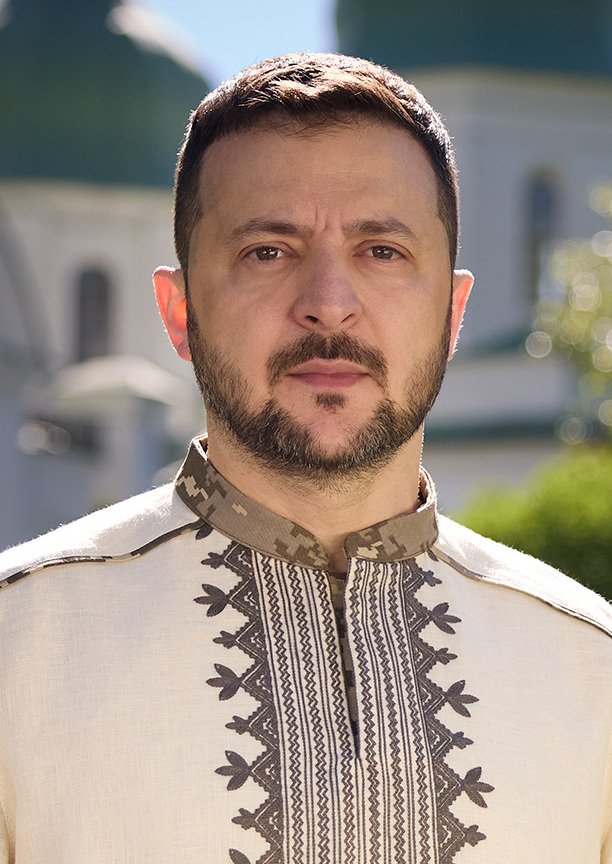
Riivo Valge
Brigadier General and commander of the Estonian Air Force.
Why here: The only NATO representative to describe the night from the inside - how many drones they saw, when fighter jets took off, and which aircraft crossed the border.
More info →
Margus Tsahkna
Estonian foreign minister from the Eesti 200 party.
Why here: Confirmed the violation of Estonian airspace and described the incident as a direct consequence of Russia's war against Ukraine.
More info →Uku Arold
Colonel and head of strategic communications for the Estonian Defence Forces.
Why here: Added that the drones flew along the eastern border of Estonia and Latvia, linking the Estonian and Latvian alerts into a single event.

Alexander Drozdenko
Russian economist and politician, governor of Leningrad Oblast since May 2012.
Why here: The only source of information about the fire and damage directly at the port; his claims cannot be independently verified.
More info →
Ust-Luga
Russian port at the mouth of the Luga River on the southern shore of the Gulf of Finland, west of St Petersburg.
Why here: Its oil terminal is one of the main hubs for Russian oil exports and has been a repeated target of Ukrainian drones.
More info →
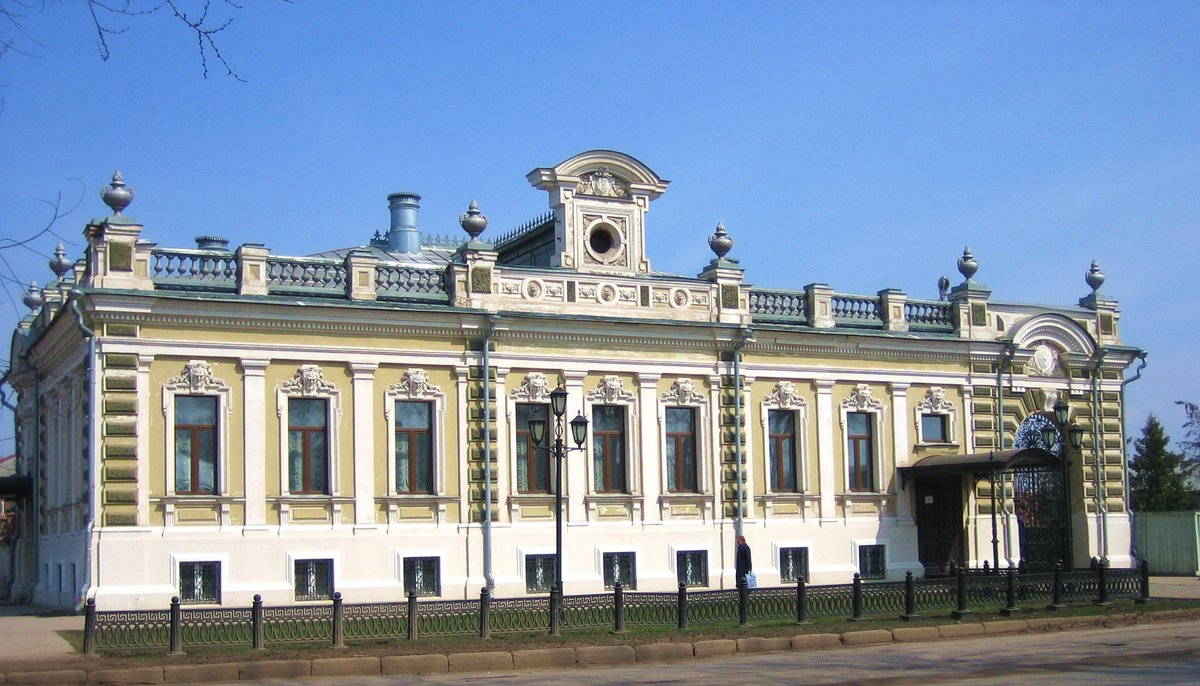
Ämari
Estonian military air base in Harju County, southwest of Tallinn.
Why here: Turkish fighter jets from NATO's rotating mission took off from here when the drone approached Narva.
More info →
Kotka
Finnish port city on the southeastern coast near the mouth of the Kymi River.
Why here: This is where the Finnish military closed the sea area and airspace.
More info →
Alūksne
Town and municipality in eastern Latvia near the borders with Estonia and Russia.
Why here: The second of two Latvian air alerts that night ended there, after which fighter jets from NATO's Baltic air policing mission took off.
More info →
NATO
The North Atlantic Treaty Organization, an intergovernmental defense alliance founded in 1949.
Why here: Its rotating air patrol over the Baltics was in action that night in both Estonia and Latvia.
More info →The port that burned for hours
Leningrad Oblast governor Alexander Drozdenko announced on Telegram that drones had damaged the port area in Ust-Luga and that a fire had broken out there. According to him, Russian air defenses had shot down 38 drones over Leningrad Oblast by 6 a.m., 17 of them directly over the port area. Later that morning he spoke of 44. Kyiv Independent ↗ Ilta-Sanomat ↗Local authorities told Reuters shortly after 9 a.m. that the fire had been extinguished. The Finnish newspaper Helsingin Sanomat summed it up in a headline by saying the port had been burning for hours. Helsingin Sanomat ↗
Ust-Luga is one of the largest Russian ports in the Baltic Sea, and its oil terminal is one of the main hubs for exports of oil and petroleum products. It lies west of St Petersburg, far from the Ukrainian border, and is an important source of revenue for the state budget. It has been targeted repeatedly. The Ukrainian military attacked it in March and April, most recently on 14 August, when, according to the General Staff, it damaged two processing facilities. Kyiv Independent ↗
What exactly happened this time is not certain. The extent of the damage was not immediately clear, and Kyiv Independent explicitly notes that it cannot verify the claims made by Russian officials. Ukraine did not officially claim responsibility for the attack. Kyiv Independent ↗
Russia - where it burned
116 km
Finland - a closed-off stretch of sea
140 km
Estonia - two alerts
365 km
Latvia - two alerts
Finland: a precautionary measure, no drone
Shortly after half past three in the morning, the Finnish Defence Forces imposed temporary restrictions on air traffic and shipping in the eastern part of the Gulf of Finland. The airspace restriction was lifted at 6 a.m., and the sea area restriction at 6:10. Ilta-Sanomat ↗According to the transport agency Fintraffic, the closed sea area was off the city of Kotka, bounded to the west by the island of Kaunissaari, to the north by the port of Hamina, and to the east and south by the territorial waters boundary. Helsingin Sanomat ↗
The military also stressed that not a single drone entered Finland. "The restrictions were a precautionary measure intended to ensure the safety of uninvolved persons and create conditions for the authorities to act against any drones," it said on X. Yle ↗
More important than the incident itself is the note attached to it by the Finnish public broadcaster Yle. The military has declared such zones in the Gulf of Finland several times in recent weeks, and each time it was linked to Ukrainian drone attacks on Russia. So this is not an exception, but a routine that has settled in. Yle ↗
Estonia: one drone crossed the border
While Finland is talking about a precautionary step, Estonia is reporting something else. The commander of the Estonian Air Force, Brigadier General Riivo Valge, said in a morning broadcast on public broadcaster ERR that around 2 a.m. it was already clear to them that these were Ukrainian drone strikes on western Russia, and that Estonian systems had seen about a dozen aircraft near the border. ERR ↗At 3 a.m., one of them headed toward Narva. The Estonians activated ground-based air defense units, and Turkish fighter jets from the Ämari base took off; they are stationed there as part of NATO's rotating mission. That drone eventually turned back to Russia and did not violate Estonian airspace. ERR ↗
About half an hour later, a second incident followed, and this one ended differently. "This one crossed the Estonian border and stayed close to the border zone. Its behavior was unpredictable, though, and I should point out that there were more of them just beyond our border," Valge said. A second alert followed, this time in six southern counties. In total, warnings were issued to residents in eight counties between 3 and 4 a.m., and people there were told to seek shelter if they spotted a drone. The danger passed at 5:30 a.m. ERR ↗
"Fortunately for us, the drones did not fall in Estonia, the aircraft did not start shooting, so we don't have a missile lying around anywhere either," Valge summed up. ERR ↗
Colonel Uku Arold from the Estonian military's strategic communications added that the drones were moving parallel to the eastern borders of both Estonia and Latvia. That matches what was happening further south the same night. Latvia reported two air alerts in its east, first in Ludza County and then in Alūksne County near the Estonian border, and fighter jets from NATO's Baltic air policing mission took off there as well. ERR ↗
Estonian Foreign Minister Margus Tsahkna wrote on X that the drones had "entered Estonian airspace." "NATO reacted quickly and exactly according to plan. The alliance is vigilant and ready to defend allied territory. Such incidents are a direct consequence of Russia's war of aggression against Ukraine and underline the need to increase pressure on Russia to end its aggression," he said. ERR ↗
Why it happens to these three countries
The explanation is contained in a single sentence that ERR attaches to both of its reports as routine context. Previous alerts in Estonia came when Ukrainian attack drones went off course, often because of GPS jamming, during strikes on Russian oil infrastructure on the Baltic coast. ERR ↗Russian oil terminals on the southern shore of the Gulf of Finland sit in a narrow strip between three alliance countries. Ust-Luga is only a few dozen kilometers from the Estonian border and across the width of the gulf from the Finnish coast. In previous cases, Estonian sources described drones as potentially straying because of GPS signal jamming. A similar mechanism would explain why some of the aircraft end up over the territory of states that are not parties to the war, even though in a specific flight this is usually not confirmed by anyone.
At the same time, the campaign that triggers this effect is a success from Ukraine's point of view. According to Kyiv Independent, strikes on Russian fuel depots and refineries are deepening the domestic fuel crisis, which has already brought export bans, rising prices, and sales restrictions. Kyiv Independent ↗
That leads to an uncomfortable proportion. The more effectively Kyiv hits Russian oil infrastructure near the Baltic, the more often Finns will close off a stretch of sea and Estonians will send people alerts to hide.
Zelensky declared Russian airspace effectively closed and warned airlines. "Safe days in Russian skies are over," he told carriers, saying that drones over Russia will keep increasing as long as the war continues. Eighteen newsrooms across Europe picked up the story in one window. (Kyiv Post ↗, Welt ↗, France 24 ↗)
Flight disruptions are already measurable. On Moscow's Sheremetyevo, 21 flights were canceled and another 235 delayed on Tuesday; at Vnukovo, 22 were canceled and 94 delayed. By Wednesday afternoon, according to FlightRadar24, almost all scheduled flights at both airports were delayed or canceled. Russia's aviation agency Rosaviatsia commented with a single sentence about "temporary restrictions on arrivals and departures" and otherwise insists that Russian airspace is safe. (Kyiv Independent ↗, Onet ↗)
Kyiv has taken the case to the UN aviation body, which has called on states to strengthen protection for civilian aircraft. Ukraine has formally informed the International Civil Aviation Organization that Russian airspace is not safe and is seeking a ban on regular traffic over it; the organization is also updating safety rules for flights over combat zones. The Belgian newspaper quotes its warning that "the likelihood that commercial aircraft will become targets of attacks is increasing." (Le Figaro ↗, Censor.NET ↗, NRK ↗, Het Laatste Nieuws ↗)
Moscow promises it will not disrupt airspace - and some carriers do not believe it. A Moldovan newspaper recorded the Russian promise and the fact that some airlines canceled flights anyway. Greek media speak directly of alarm in civil aviation. (Ziarul de Gardă ↗, Protothema ↗)
Putin called it "an application for state terrorism" and said there is no negotiating with terrorists. He also said the negotiation process is frozen and ordered the military to strike Ukraine's energy sector. Ukrainian intelligence chief Budanov responded that Ukrainian drones and missiles will continue to dominate Russian skies. (Censor.NET ↗, Ukrainska Pravda ↗, Interfax ↗)
Putin added that anyone who stays silent about the drone threat becomes complicit in international terrorism. According to Interfax, he was primarily targeting Western allies of Ukraine. He also linked Zelensky's warning to the prospects for talks for the first time: in his view, the threat to civilian flights "complicates the possibility of holding bilateral peace talks." (ANSA ↗, Newsmaker ↗)
Also read: Germany is preparing a response to the drone in Leipzig. It did not name the culprit even after nearly a month
What is not certain in this report
Everything we know about what happened directly at the port comes from the Russian governor. Kyiv Independent describes it as unverified, and the extent of the damage remains unknown. Ukraine has not confirmed the attack.But the fact that drones were indeed flying over western Russia that night does not rest on Moscow alone. It was independently described by the commander of the Estonian Air Force, who said Estonian systems saw about a dozen aircraft near the border. So what is disputed is not whether drones were flying near the Estonian border that night. What remains open is exactly what happened at the port and what damage was caused there.
The figures for the number of drones shot down also differ, and they kept rising during the morning; those are also Russian-side numbers. And the difference between the Finnish and Estonian reports is not a formality. Helsinki says nothing entered its airspace, while Tallinn says the border was violated. These are two different degrees of the same problem, and it is worth not mixing them together.
Illustrative photo: aerial view of the Ust-Luga port complex on the southern shore of the Gulf of Finland, with terminal tanks in the background on the right. Photo: Novotrans press service, Wikimedia Commons, CC BY-SA 4.0.
What hotinfo is watching
- Ukraine's general staff claimed the attack on Ust-Luga.
- The Ust-Luga terminal resumed full operation, or the outage showed in Russian oil exports through the Baltic.
- The Finnish military declared another zone restricting air and sea traffic on the Gulf of Finland.
- Estonia or Latvia changed its public warning rules or the regime of NATO's Baltic air policing mission.
- A stray drone came down on the territory of a NATO member state and the alliance's response is known.