
Key actors — tap for context

Ilan Shor
Israeli-Moldovan pro-Russian oligarch born in 1987, a key figure in the 2014 banking fraud in which roughly a billion dollars disappeared from three Moldovan banks. He has held Russian citizenship since 2024 and lives in Russia.
Why here: He founded the A7 network, through which $6.9 billion reportedly flowed according to the documents.
More info →A7
A fintech and payment network established in late 2024 in Russia and Kyrgyzstan. It is linked to the ruble stablecoin A7A5, which has digital financial asset status in Russia.
Why here: The network whose internal documents form the core of the Financial Times investigation.
More info →
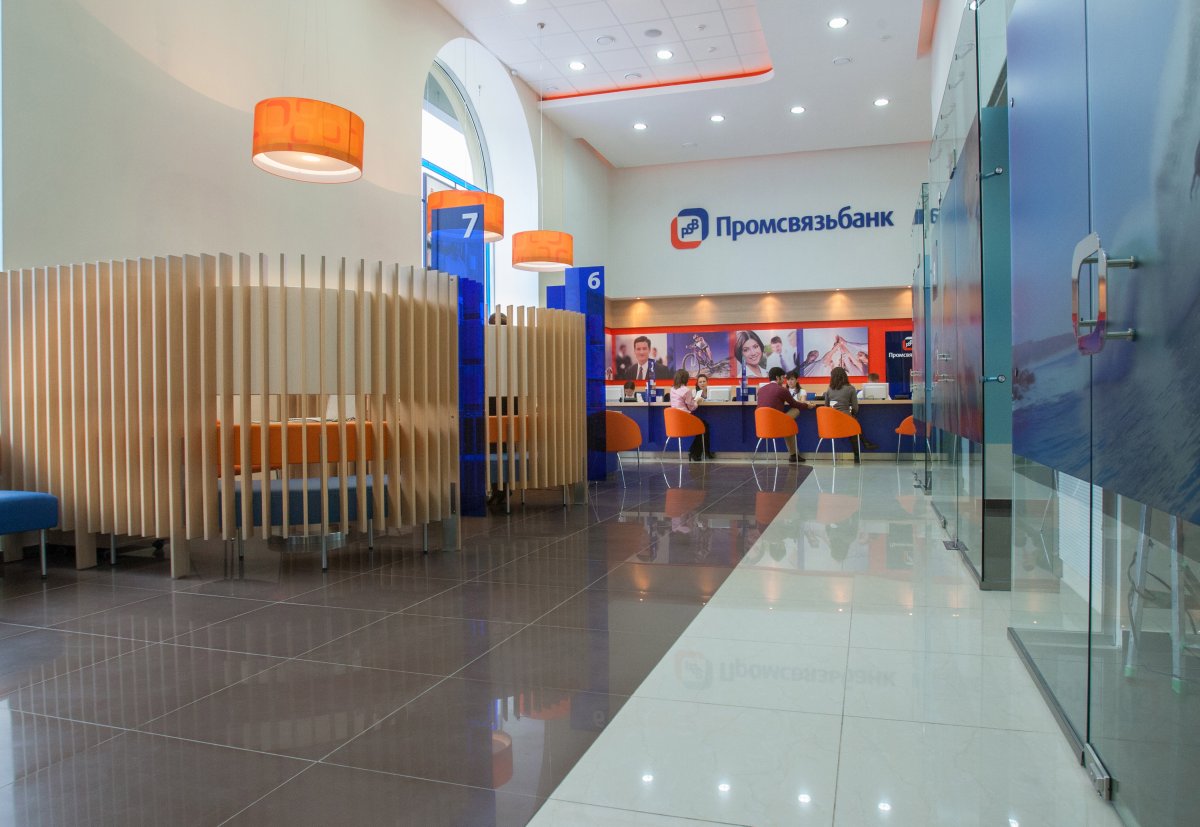
Promsvyazbank
A Russian state bank closely tied to the defense industry, through which financing for Russian arms contracts passes.
Why here: According to the Financial Times, it supported the creation of the A7 network.
More info →
Financial Times
A British economic daily founded in 1888, one of the world's leading outlets for financial investigative journalism.
Why here: It obtained hundreds of thousands of internal A7 documents and published an investigation based on them.
More info →
Standard Chartered
A British bank with a strong presence in Asia and the Middle East, listed in London.
Why here: About $1.1 billion arrived at accounts in its Hong Kong branch from entities linked to A7.
More info →
First Abu Dhabi Bank
The largest bank in the United Arab Emirates.
Why here: Seventeen shell companies in the network sent outgoing payments totaling more than $1.8 billion through it.
More info →
Deutsche Bank
Germany's largest bank.
Why here: Its European clients received roughly $18 million from the A7 circle.
More info →
Citigroup
An American banking group, one of the largest in the world.
Why here: Its clients received $74 million from the network's circle.
More info →
SWIFT
The international system for exchanging messages between banks, the backbone of cross-border payments. Key Russian banks were cut off from it after the invasion of Ukraine.
Why here: The system to which the network was buying back access through shell companies.
More info →
GRU
Russia's military intelligence service.
Why here: According to the Financial Times, the company Interconsul, for which the network purchased machine tools, belongs to a network run by the GRU.
More info →
Alisher Usmanov
A Russian-Uzbek billionaire with wealth in steel and telecommunications, long tied to the Kremlin.
Why here: The day after the investigation was published, the EU removed him from its sanctions list.
More info →
Mikhail Fridman
A Russian billionaire, co-founder of Alfa Group.
Why here: Along with Usmanov, he disappeared from the EU's sanctions list.
More info →A Factory for Forgeries
Despite its cryptocurrency facade, the entire mechanism rested on a very old foundation. Financial Times journalist Chris Cook described it directly in the newspaper's podcast as old-fashioned money laundering. The network set up or used shell companies in countries with normal access to the international banking system, sent money to their accounts, and these companies then paid the invoices that Russian clients needed. If a Russian company had to pay a supplier in China, the payment would appear in the banking system as, for example, a transfer from a company in the United Arab Emirates. HotNews ↗When banks requested proof of the origin and purpose of a transaction, what the newspaper describes as a genuine forgery factory kicked in. Employees had access to thousands of company stamps, some manufactured and some copied from documents of real businesses that were unaware their data was being misused. Customs codes for sanctioned goods were replaced with the nearest codes for non-sanctioned products, and Cyrillic script and any other Russian trace were removed from invoices. Rzeczpospolita ↗
The most illustrative case involves five hundred night-vision sights worth approximately $510,000, which the network procured for a Russian customer in February 2025. In the documentation, they were declared as safety glass. Internal communications show that employees also considered a footwear variant but decided it would not match the recipient's invoice history, so they stuck with glass. HotNews ↗
The network also purchased CNC machine tools worth €1.77 million for the company Interconsul, which Britain sanctioned in June of this year and which the Financial Times links to a network tied to Russia's military intelligence service, the GRU. Rzeczpospolita ↗
Where the Money Flowed
The newspaper identified a hundred shell companies that actually carried out the payments, and the documents mention at least another hundred. Most were located in Hong Kong and the United Arab Emirates, with others in Kyrgyzstan and Indonesia, and at least three in Britain. The largest payer was a now-dissolved Kyrgyz state company, established by the country's Ministry of Economy in October 2024, which managed to process transactions worth $2.5 billion. More than half of all the flows tracked ultimately ended up in accounts in China and Hong Kong. Rzeczpospolita ↗The names of the world's largest banks appeared in individual links of the chain. About $1.1 billion arrived at accounts in Standard Chartered's Hong Kong branch between late 2024 and August 2025, more than $1.8 billion in payments went out through First Abu Dhabi Bank, $273 million was directed to Singapore's DBS, $74 million to Citigroup clients, and roughly $18 million to Deutsche Bank's European clients. According to the newspaper, accounts at JPMorgan Chase were also used. Index ↗
Safeguards only began to kick in after some delay. In February 2025, Standard Chartered noticed that transfers were being split into small transactions and blocked the accounts. Some of the activity then shifted to the Emirates. First Abu Dhabi Bank confirmed to the newspaper that it had identified and closed all accounts linked to the network. DBS stated that it had taken appropriate measures against the identified client. The other Western banks contacted limited themselves to general statements about their commitment to fighting money laundering. Neither A7 itself nor Shor responded to the Financial Times' questions. Newsmaker ↗
The Hungarian Trail the Newspaper Did Not Name
For a Central European reader, the most sensitive sentence in the investigation is this one: when it comes to purchases within the European Union, the main channel for payments into the bloc appears to be a single company in Hungary. The newspaper does not name it and phrases the point cautiously, without disclosing details about its role. Budapest's Index, which reported the story as domestic news, summed it up bluntly right in its headline: a Russian money-laundering network also operated through Hungary and moved enormous sums. Index ↗The scope may not even be final. Approximately 17,500 payments in the leaked data remain unvalued, and the documents also include promissory notes issued by the network with a nominal value exceeding $20 billion. Zach Tvarozna, an analyst at the Open Source Centre who has long studied A7's activities, told the newspaper that the new evidence points to a scale substantially larger than anyone had previously assumed. Rzeczpospolita ↗
The Day Before the Sanctions List Got Shorter
The timing gives the whole affair a second dimension. The newspaper published its investigation on Monday, and our Monday round-up of the European press gave it a single sentence. On Tuesday morning, Latvia was still blocking a compromise under which two Russian billionaires were to be removed from the European Union's sanctions list, but member states approved the agreement that afternoon. Sanctions against roughly three thousand Russian and Belarusian individuals and entities were extended by 36 months, that is, until September 2029, and Alisher Usmanov, Mikhail Fridman, along with another individual and one entity, were removed from the list. So the day after the newspaper described the industrial-scale circumvention of the sanctions regime, that same regime shrank by a few names. SITA ↗This concerns Slovakia directly. The daily SME wrote that Slovakia got its way on this point and that Robert Fico had long lobbied for both billionaires. But Slovakia was not alone: the removal of Usmanov had been pushed since early September mainly by France, citing national security, with Luxembourg joining in on Fridman's case. Ukraine's Foreign Minister Andrii Sybiha called their removal shameful and unjustifiable. Estonia's Foreign Minister Margus Tsahkna told Reuters on Tuesday on the sidelines of the UN General Assembly that France needs to explain its actions, since the removal sends a very bad signal at a very inappropriate time. SME ↗
Also read: Dispute over removing Usmanov and Fridman blocks extension of EU sanctions
A7 itself is not an unknown quantity. Britain sanctioned it back in May 2025, and both the company and its stablecoin gradually came under European Union measures as well. Money nevertheless kept flowing through banks in Hong Kong, the Emirates, and Europe. The documents obtained by the newspaper extend to August 2025, so they say nothing about what the network did afterward. In July, Shor still boasted about his system's resilience in an interview with Russia's TASS news agency, saying it offers companies and countries freedom because the system is immune to sanctions. The Financial Times used the quote in its investigation. HotNews ↗
Limits of This Account
The investigation rests on internal documents leaked from a single company, and the Financial Times itself notes that it cannot put a value on part of the payments. The companies and banks that appeared in the chain are not automatically accomplices. Processing a payment alone does not prove a bank knew about sanctions evasion. First Abu Dhabi Bank reviewed and closed the suspicious accounts, and Standard Chartered blocked them. The Hungarian company is not named, so for now we know nothing about its owners or whether they were aware of the nature of the payments. Although sources agree on the key figures, they diverge on details of A7's ownership structure, so this text does not state them. Rzeczpospolita ↗What hotinfo Is Watching
- Maďarské úrady sa vyjadrili k firme, ktorá mala byť kanálom platieb siete A7 do Európskej únie
- Médiá pomenovali maďarskú firmu zapojenú do platieb siete A7
- Regulátor otvoril konanie voči banke zapojenej do platieb siete A7 pre zlyhanie kontrol proti praniu špinavých peňazí
- Francúzsko vysvetlilo svoj tlak na vyradenie Ališera Usmanova zo sankčného zoznamu EÚ
- Európska únia rozšírila opatrenia proti sieti A7 alebo jej stablecoinu A7A5