



Key actors — tap for context

Giorgia Meloni
Italian prime minister
Why here: her coalition pushed the law through and the opposition disputes it
More info →
Sergio Mattarella
Italian president
Why here: signed the law on 9 October, though critics say it intrudes on his role in choosing the prime minister
More info →Giovanni Amoroso
president of the Italian Constitutional Court
Why here: says the court can halve its deadlines to rule before the election
More info →Roberto Zaccaria
coordinator of the Rete per un voto libero e uguale network
Why here: is organizing 30 lawsuits against the law
Enrico Grosso
lawyer, former chair of the "No" committee in the March constitutional referendum
Why here: summarized the six constitutional objections

Romano Prodi
former Italian prime minister
Why here: is among the signatories of the lawsuits
More info →What the law changes
According to Il Post, a coalition that wins at least 42% of the vote in both chambers will receive a bonus of 70 deputies and 35 senators, up to a maximum of 220 of 400 seats in the Chamber and 113 of 200 seats in the Senate. If no coalition reaches 42%, pure proportional representation applies. Parties with at least 3% and coalitions with 10% enter parliament. Voters can give up to three preferences, of which at least one must go to a woman and one to a man, but the candidate list is headed by a fixed leader who is elected first. A Youtrend estimate says that fewer than half of deputies will be elected through preference votes, and simulations suggest the share of women in parliament could fall from 33% to 15–20%. Coalitions must announce a candidate for prime minister, but his or her name does not appear on the ballot. Il Post ↗After the law's approval, Meloni said voters will be able to choose a party, a coalition, a programme, a candidate for prime minister, and their own deputy. ANSA ↗ The Chamber passed the law with 227 votes. ANSA ↗
The law's approval and Meloni's reaction, as covered by TG La7 on October 8 (in Italian, 2 min).
Six objections
The lawsuits were prepared by the Rete per un voto libero e uguale network, led by Roberto Zaccaria. According to Il Fatto Quotidiano, the text was drafted by 99 lawyers, and the network so far has about 500 signatories, including Prodi and Pier Luigi Bersani. Il Fatto Quotidiano ↗ The content was summarized by Enrico Grosso, who called the law "fortemente incostituzionale," meaning strongly unconstitutional. La Repubblica ↗The objections can be summarized as follows, according to ANSA and Il Fatto Quotidiano:
- The majority bonus is, according to critics, too large and grants seats disproportionately.
- The national bonus in the Senate, which under the constitution is elected by region.
- Opaque allocation of seats to specific candidates, so voters cannot know how their vote affects who gets elected.
- Gender alternation at the top of candidate lists.
- The name of the prime ministerial candidate, while the president retains the role of appointing the prime minister.
- The number of signatures that parties without parliamentary representation must collect.
ANSA ↗ According to Open, constitutional lawyer Azzariti argues that the clause preserving presidential powers does not resolve the problem with the prime minister's name. Open also notes that the Court, in 2017, in the case of the Italicum law, upheld a majority bonus at 40%. Open ↗ Former Constitutional Court president Silvestri called the law "opportunistic" and said it indirectly introduces a premiership system. La Repubblica ↗
The path to the Constitutional Court
The Constitutional Court cannot be approached directly. According to Amoroso, a case must first go before an ordinary judge, who raises the question of constitutionality; the order is then published in the Gazzetta Ufficiale, and only after that does the proceeding begin, which takes at least a month. Il Fatto Quotidiano ↗ Lawyer Pietro Adami expects the first hearing no earlier than mid-January 2027 and a ruling in spring, before summer. Il Fatto Quotidiano ↗Time is working against the plaintiffs
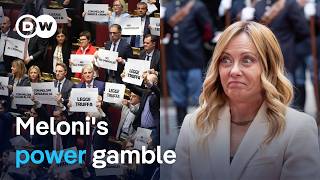
Amoroso says that if elections are held at the natural end of term, the ruling will definitely come in time; in the case of spring elections it would be "on the edge," and the Court can halve its own deadlines, which is the only tool it has. Il Fatto Quotidiano ↗ Salvini, for his part, maintains that elections will be held at the end of the legislature, in autumn 2027. ANSA ↗ According to Il Fatto Quotidiano, however, Meloni prefers early elections, even though ministers and deputies publicly deny this. The plaintiffs themselves admit that if elections are held earlier, the Court may not manage to rule in time, and in corridors there is talk of the end of May 2027. Il Fatto Quotidiano ↗A DW News analysis from October 10 asks whether Meloni is changing the rules to stay in power (in English, 12 min). The headline is a question, not a finding.
Limits of this view
We rely on the Italian press and on statements by the plaintiffs, who are predominantly figures from the center-left. The objections are their claims, not a court ruling. The effective date of 26 October is taken from La Repubblica; some other sources give 24 October, and the decisive factor is publication in the Gazzetta Ufficiale, which we did not have access to. Sources differ on which courts the lawsuits will be filed with (courts of appeal, and according to one text also civil tribunals), so we do not state this precisely. We did not find, in the available texts, the governing parties' view on the law's constitutionality.What hotinfo is watching
- Plaintiffs filed lawsuits against the electoral law on 26 October
- A judge referred the electoral law's constitutionality to the Constitutional Court
- The Constitutional Court ruled on the electoral law before the election
- A date for early elections was announced
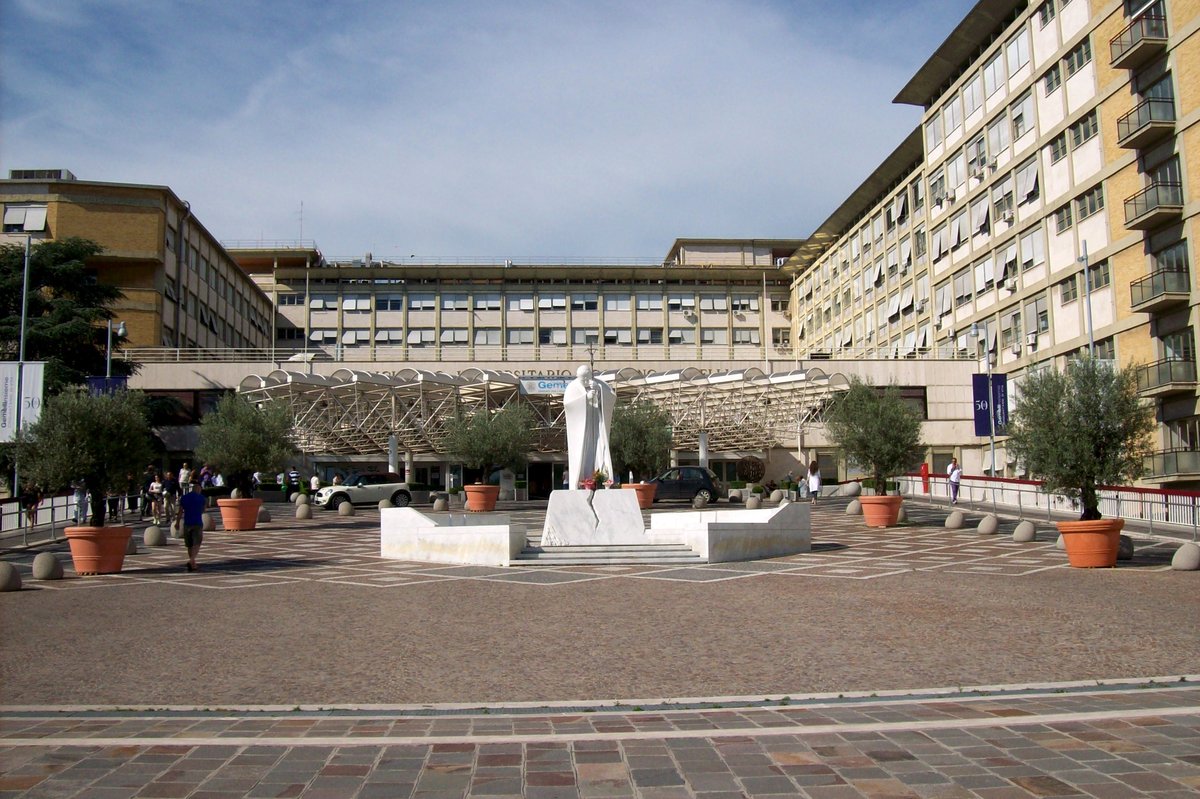
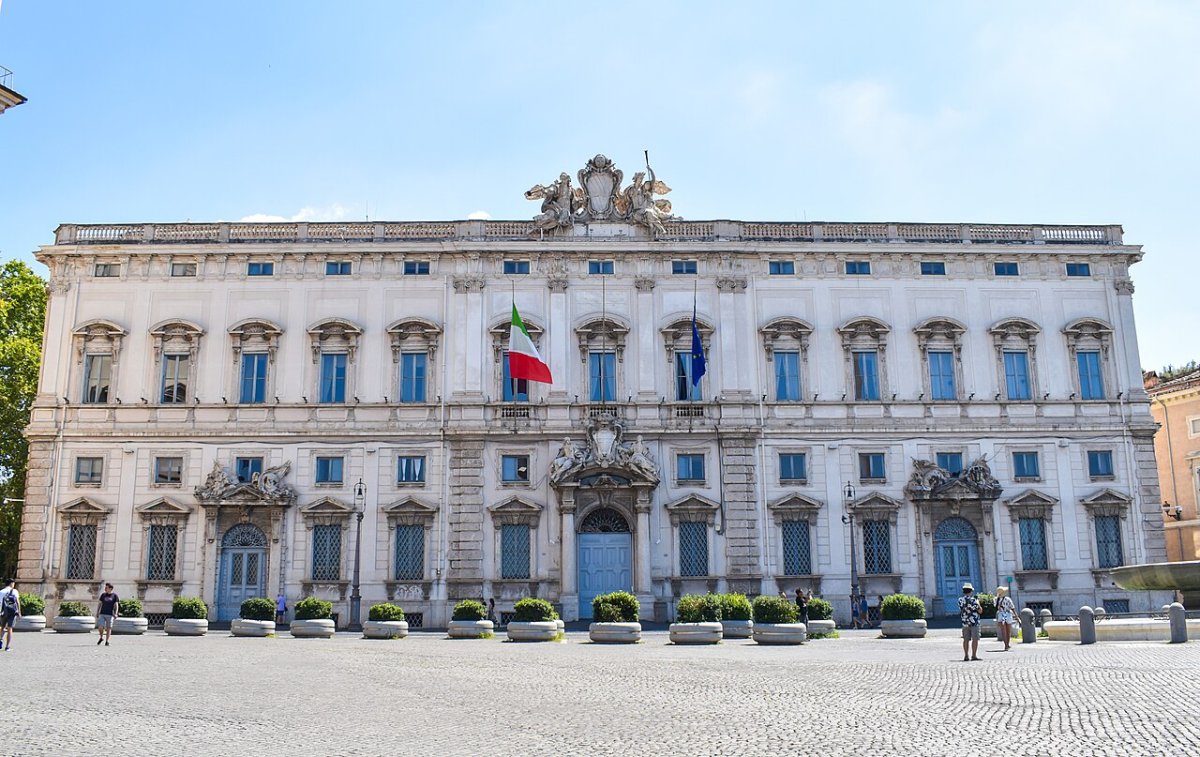
*Illustrative photo: Palazzo della Consulta in Rome, seat of the Constitutional Court (Julian Lupyan, Wikimedia Commons, CC0).*