




Key actors — tap for context

Liège
Belgian city whose airport is the largest cargo hub in the country and the main gateway for shipments from Asia to the Union.
Why here: It was here that the Belgian customs authority measured a 53 percent decline in small parcels.
More info →
Jan Jambon
Belgian deputy prime minister and finance minister, long-serving politician of the Flemish N-VA.
Why here: He presented the first results of the duty as a step toward restoring border control.
More info →
David Clarinval
Belgian deputy prime minister, politician of the francophone liberal party MR.
Why here: He was present at the release of the first figures on the revenue of the new duty.
More info →Shein
Chinese ultra-fast fashion giant that ships goods directly from Asian warehouses.
Why here: One of the platforms targeted by the duty and the new French penalty.
More info →Temu
Chinese online marketplace of PDD Holdings group, known for extremely low prices.
Why here: Along with Shein, the main target of the measure; it recently agreed on delivery via state post in Romania.
More info →
AliExpress
Chinese internet marketplace owned by Alibaba group.
Why here: The third major platform affected by the new handling fee.
More info →
Amazon
American online retailer and the world's largest e-commerce platform.
Why here: According to dpa agency, the new fee should also apply to its shipments ordered outside the Union.
More info →
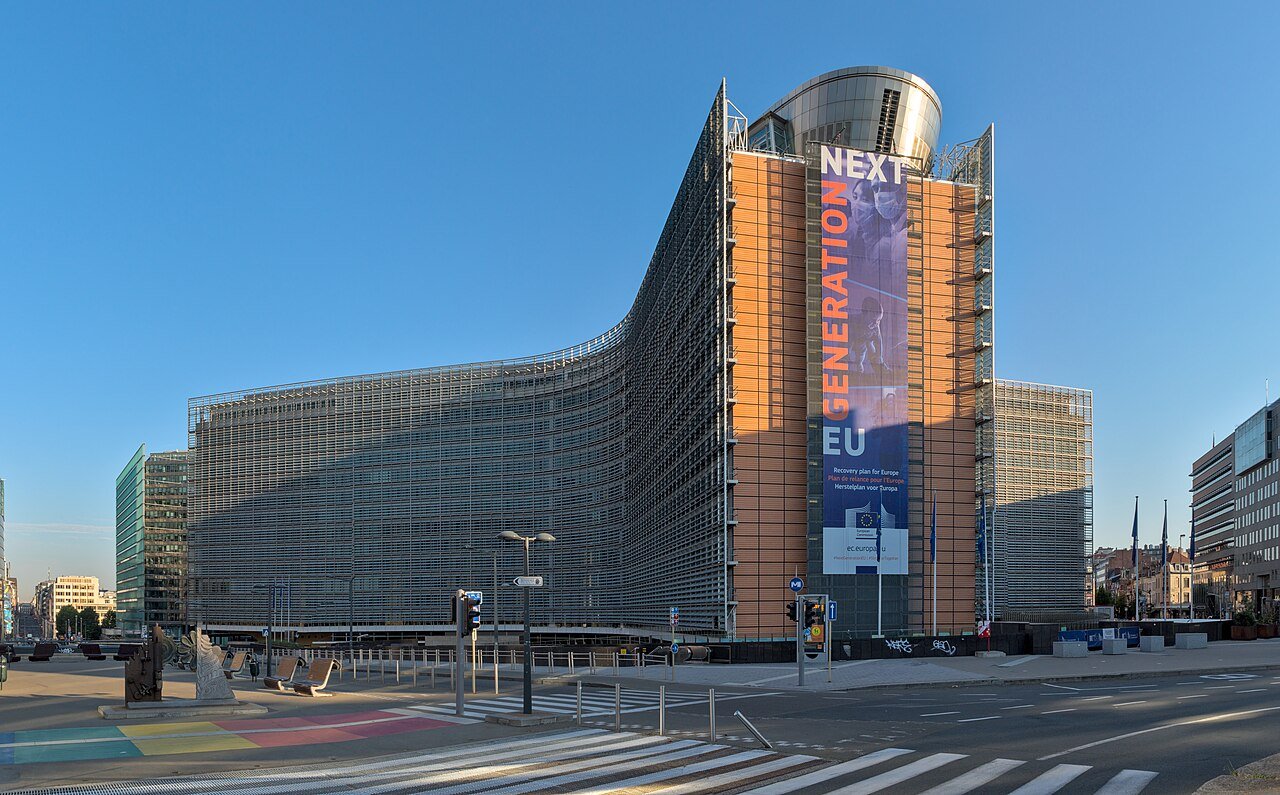
European Commission
The executive body of the European Union that proposes and implements common rules.
Why here: It is to set the amount of the handling fee to be introduced no later than November 1.
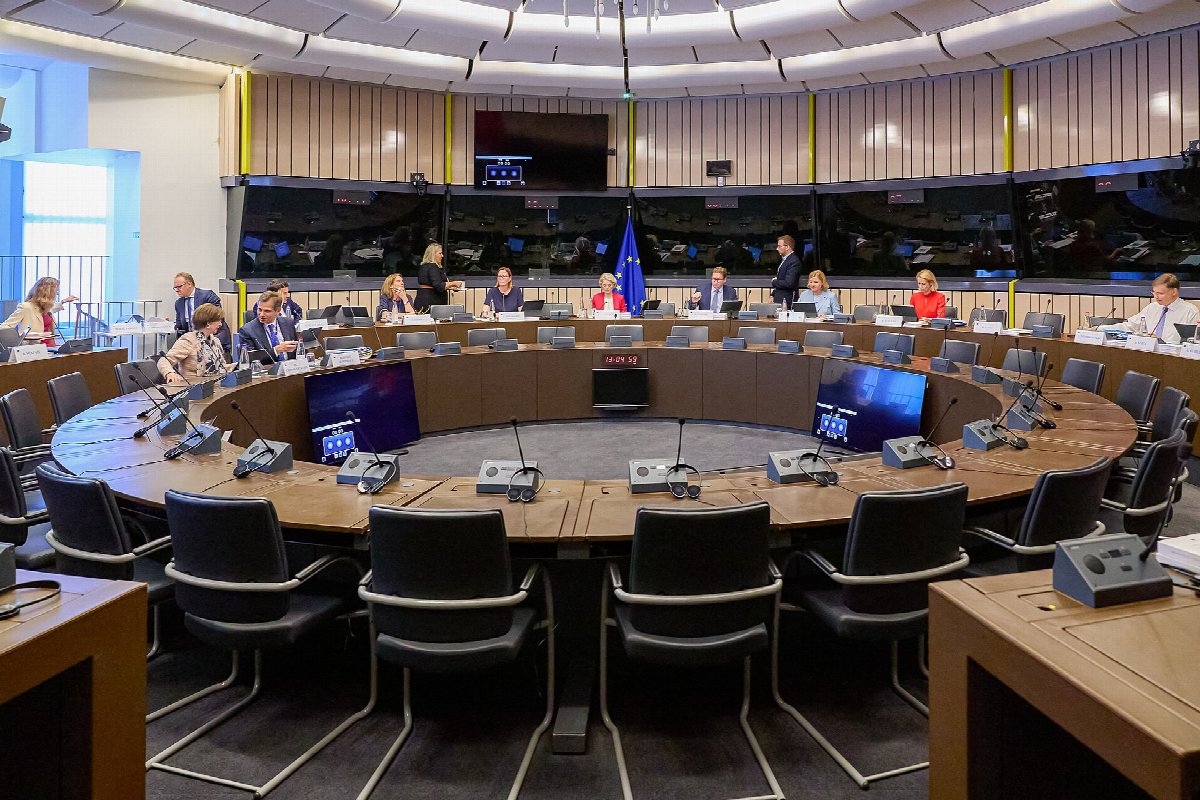
More info →Council of the European Union
Institution where ministers of member states decide on legislation.
Why here: On Thursday, it approved the most comprehensive customs reform in a decade.
Huang Ling
Spokeswoman of the Commerce Ministry of the People's Republic of China.
Why here: Threatened France with measures if it does not abolish the penalty on ultra-fast fashion.

Lille
Northern French city near the Belgian border.
Why here: According to dpa agency, a new EU customs agency is to be based here from 2027.
More info →
Poșta Română
Romanian state postal operator that processes over half a million shipments daily.
Why here: Signed a memorandum with Temu for delivery services for Romanian sellers.
More info →What Belgian figures showed
The Belgian customs authority presented the first results on Thursday in the presence of deputy prime ministers Jan Jambon and David Clarinval. After "spectacular" growth in the number of small parcels in the first half of the year, the volume in July dropped sharply — after a European rule canceling the customs exemption for shipments up to 150 euros came into effect on July 1. According to the presented figures, customs duty brought in 223 million euros, of which 75 percent goes to the Union and 25 percent to Belgium, with revenues averaging 32 million euros weekly. La Libre ↗"The duty is a first step toward the customs authority regaining control at our borders," declared Jambon. According to him, it is about better monitoring goods entering European territory, both for the competitiveness of European companies and for consumer safety. The very inability of customs authorities to inspect billions of small shipments was the original argument for abolishing the exemption. La Libre ↗
The scope of the problem is illustrated by previous years. In 2025, nearly 5.9 billion small parcels entered the European market, or more than 180 every second, which is four times more than in 2022. Of this number, 93 percent came from China. Consolidated EU-wide evaluation is not yet available. French customs authorities estimate a decline in small parcel imports across the entire Union of 30 to 40 percent, but this is a national estimate, not verified EU statistics. BFM TV ↗
Parcels didn't disappear, they just regrouped
More interesting than the decline itself is the second figure. The average value of imported goods nearly doubled and rose above 10 euros, which Belgian customs services interpret as evidence that platforms and their customers have adapted to the new regime. Fewer parcels thus does not mean less goods — it means larger orders, where the three-euro fee per customs category gets diluted. BFM TV ↗This is confirmed by the structure of customs declarations. The number of reports of goods valued above 150 euros was higher in July 2026 than in July 2025, which according to Belgian customs authorities corresponds to one of the Union's goals — to have small parcels imported in larger batches and only then distributed within the European market. La Libre ↗
The shift in logistics to within the Union can also be traced in individual countries. Romanian state operator Poșta Română, which according to its own data can handle over 500,000 parcels daily, signed a memorandum with Temu on an integrated service — from picking up parcels from Romanian sellers through sorting at local centers to delivery at home, to pick-up points, to automated boxes or post offices. For the platform, this means a domestic distribution network. The memorandum in itself is not proof of circumventing the duty, it speaks first and foremost about Romanian sellers. Adevărul ↗
Czech journalists summed it up straightforwardly as early as early September: shops are looking for ways to avoid the duty, and the most effective is to keep goods in warehouses on the European side of the border. A shipment that has already been released into free circulation in the Union is not subject to import duty. Blesk ↗
Read also: The era of cheap parcels from Temu and Shein is ending: from July 1, a 3-euro duty is added for each type of goods in the shipment
The second fee will come in November, no one has yet announced its amount
On the same day Belgium released the figures, the second part of the story was closed in Brussels. The Council of the European Union gave the green light to a customs framework reform, which Slovak news agency coverage described as the most comprehensive of its kind in the last decade. According to dpa agency, the text still needs to be formally confirmed by the European Parliament, so the last step of the legislative process is ahead of it, not behind it. The reform says, among other things, that e-commerce platforms based outside the Union are considered importers of goods when selling into it — not end consumers — and bear responsibility for customs formalities and payments. SME ↗A sanctions regime is also being added. For the most serious violations of customs obligations, operators may be fined up to six percent of the annual import value of their goods from the previous year, may lose customs benefits, and may have their access to online platforms restricted. The package also includes a new decentralized Union customs agency and a central data center to help member states identify the highest-risk shipments. According to dpa agency, the agency is to begin operating in 2027 in French Lille. SME ↗
For the customer, however, another sentence is most important. By November 1, 2026, a Union-wide handling fee for small parcels is to be introduced to cover the costs of monitoring the growing number of shipments, and the European Commission is only now to set its amount. According to member states, it should be paid by trading platforms, not by end consumers in Europe, and for shipments ordered outside the Union it should apply to Shein, Temu, AliExpress and Amazon. The agreement between the European Parliament and member states' negotiators was already reached in March. Tagesspiegel ↗
That this is a second fee within a few months was also noted outside the Union. An Albanian news website presented it as a simple sequence — from July there is a three-euro duty per product category, which in many cases ends up with the consumer, and now another payment is being added to it. Balkanweb ↗
Beijing threatens retaliation for the first time — for now against Paris
The third thing that happened on Thursday is China's reaction. France has been applying as of Tuesday what is known as a penalty on ultra-fast fashion clothing, which is aimed primarily at goods sold on Chinese platforms. The measure stems from an anti-fast fashion law that the French parliament passed in late June, and provides for a fine of up to 19.50 euros per piece in 2030, capped at 50 percent of the price without tax. BFM TV ↗The Chinese Ministry of Commerce declared on Thursday that if France does not immediately abolish the penalty, Beijing will resort to countermeasures. "If France continues on this path, China will take necessary measures to protect the legitimate rights and interests of Chinese enterprises," said ministry spokesperson Huang Ling, noting that Paris proceeded despite Chinese objections and caused significant operational losses to the affected companies. The same stance was presented by the Lithuanian public broadcasting station. LRT ↗
The difference between Paris and Brussels is, however, substantial. The three-euro duty is a Union measure that affects all shipments equally, while the French penalty is a national law aimed at one business model. According to La Libre, Belgium is inclined to seek a response at the European level and is not preparing its own penalty. If Beijing actually launches retaliation, the first test would be whether it remains a bilateral dispute with France or affects the entire Union. La Libre ↗
What has not yet been in Slovak media
Slovak media on Thursday took over the agency report on the customs reform approval, that is, the part of the story about what was decided. It lacks the first signal of whether the measure so far is even working — and that is provided by Belgian figures, which have not yet reached Slovak or Czech media coverage. Likewise missing is Thursday's Chinese threat directed at Paris.The limits of this perspective need to be named. Belgian data are for one month and one airport, albeit a key hub for shipments from Asia, and were released by a government with a political interest in the success of the measure. Moreover, the 53 percent decline figure says nothing about how much goods shifted to European warehouses and entered the market by another route.
What hotinfo is monitoring
- The European Commission has set the level of the handling fee for small parcels.
- China has adopted concrete countermeasures against France over the ultra-fast fashion penalty.
- Consolidated EU-wide data on the drop in small parcel imports have been published.
- The new EU customs agency has started operating in Lille.
- The European Parliament has formally confirmed the customs reform.→ Zollreform: EU führt neue Gebühr für kleine Online-Pakete einEuroparlament 16.9.2026 colnú reformu definitívne schválil; poplatok za malé zásielky do 150 € sa má vyberať najneskôr od 1.11.2026, výšku ešte určí Komisia (Tagesschau).