




Key actors — tap for context

COSCO
Chinese state-owned shipping conglomerate based in Shanghai, the world's fourth-largest container shipping company. It was formed in 2016 through the merger of two state-owned carriers.
Why here: Company whose ships, according to two U.S. officials, are said to carry hidden signal-collection technology.
More info →
Piraeus
Greece's largest port near Athens and one of the largest container transshipment hubs in the European Union.
Why here: The port whose management is 67 percent controlled by COSCO.
More info →Tollerort
One of the container terminals in the Port of Hamburg, operated by HHLA.
Why here: In 2023, the German government approved COSCO's minority stake here after a long dispute.
Noatum
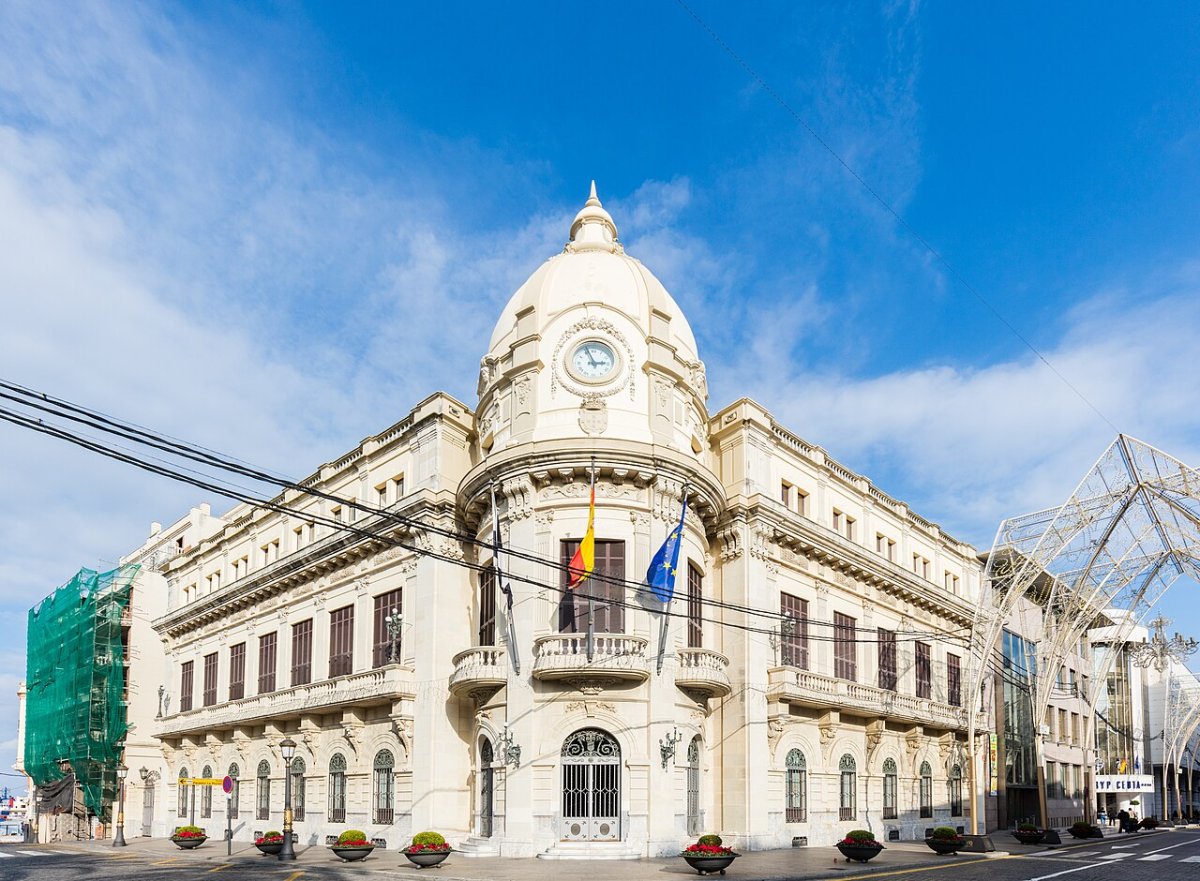
Spanish terminal holding company with container terminals in Valencia and Bilbao and rail transshipment hubs in Madrid and Zaragoza.
Why here: Through this holding company, COSCO holds its Spanish terminals.

Hapag-Lloyd
Germany's largest container shipping company, based in Hamburg.
Why here: A benchmark for COSCO's size, which moved ahead of it into fourth place globally.
More info →Theo Notteboom
Belgian academic who has long studied port economics and maritime transport.
Why here: Author of the analysis attributing Piraeus's volume decline to the Red Sea crisis.

Xi Jinping
Chinese president and general secretary of the Communist Party of China.
Why here: He is due to meet Donald Trump in Washington, with the meeting being prepared for the end of September.
More info →Jeremy Daum
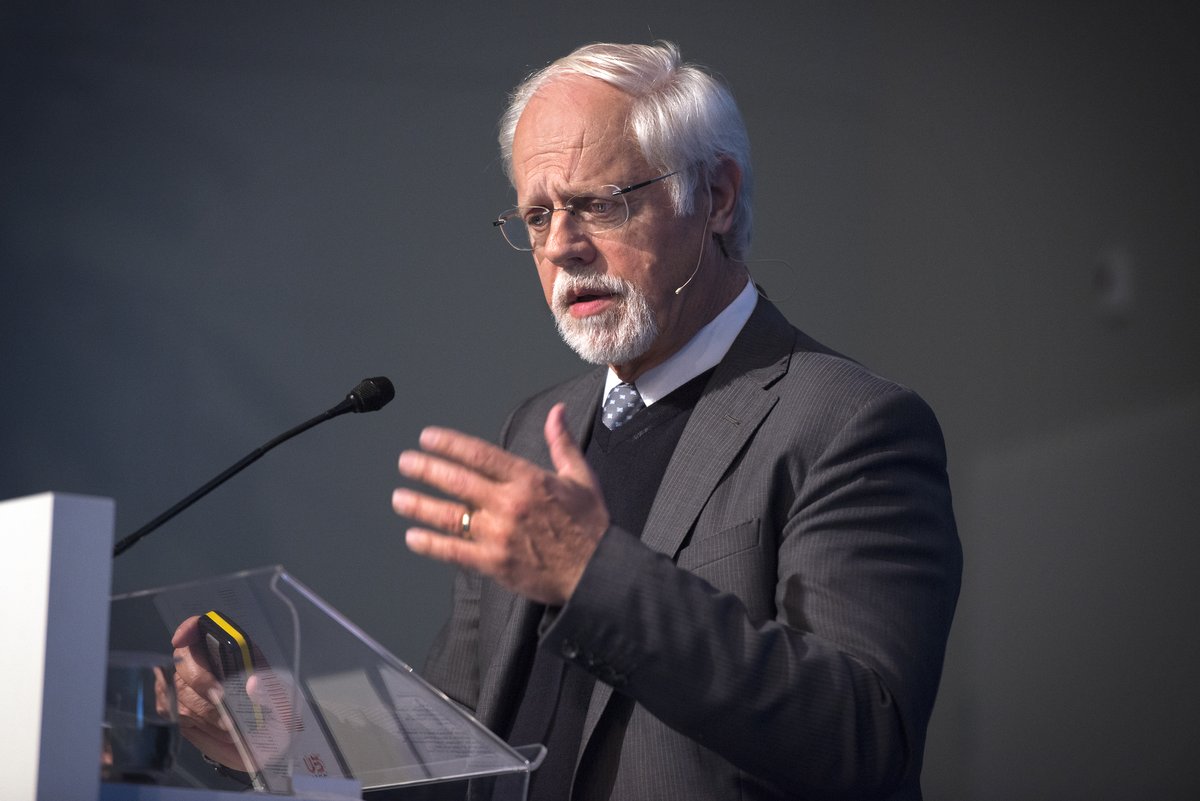
American legal analyst who translates and explains Chinese law in the China Law Translate project.
Why here: He warns that the most frequently cited article of China's intelligence law is often overinterpreted.
Isaac Kardon
American expert on Chinese maritime strategy at the Johns Hopkins School of Advanced International Studies.
Why here: He notes that COSCO is so deeply embedded in U.S. commerce that it cannot simply be cut out.
Rail Cargo Group
Freight division of Austrian Federal Railways ÖBB.
Why here: Operates a weekly connection between Budapest and Belgrade along part of the planned corridor from Piraeus to Central Europe.
What the two U.S. officials say
Both spoke on condition of anonymity. According to them, advanced platforms for collecting signal intelligence are installed on COSCO vessels, and these are not ordinary communications systems for a cargo ship. The equipment is said to intercept signals from ships and aircraft off the coasts of the United States, as well as in Europe and Asia. According to the same two sources, their focus is on military communications technology, the development of encryption, and monitoring maritime routes used for both trade and military navigation. Protothema ↗The same officials, without presenting evidence, claim that COSCO's cooperation with China's intelligence apparatus has lasted for decades and that Beijing uses the collected data for naval intelligence, early warning of foreign military movements, and strengthening its position in territorial and maritime disputes. They did not specify the exact type of equipment. The idea itself is not new. A March 2025 report from the U.S. Naval War College described it as plausible that the Chinese military uses the country's fishing and commercial fleets for intelligence and surveillance purposes. The Pentagon added COSCO to a list of firms linked to the Chinese military in January 2025. This does not automatically trigger formal sanctions, but the designation brings reputational damage and a ban on government procurement in the United States. Reuters ↗
For Athens, this is not new territory. When the Pentagon published the list last January, Piraeus continued to operate normally and the Greek government examined the possible impact. "I do not see an impact on Piraeus, but it is still early," a Greek official told Reuters at the time. Another official added that Greece was following the situation and had discussed it with partners in the European Union. There were concerns in the sector at the time that companies would begin self-sanctioning out of fear of U.S. consequences. COSCO did not stay silent then, unlike today. It said that none of the entities on the list was a military company, that its global operations continued without interruption, and that it would clarify the matter with U.S. authorities. Reuters/Baird Maritime ↗ n-tv ↗
The Chinese embassy replied that China would never ask a company or an individual to collect data or intelligence abroad in violation of local laws. "We reject the smearing of China by spreading a completely unfounded narrative about obtaining secrets," spokesman Liu Chang said.
Why this also concerns Europe
COSCO is the world's fourth-largest container shipping company, just ahead of Germany's Hapag-Lloyd. In European ports, however, it is not only a customer; it also owns stakes in them, and the scale varies from case to case.Its biggest footprint is in Greece. In 2016 it bought 51 percent of the Port of Piraeus Authority for 280 million euros in a privatization deal, then added another 16 percent for 88 million in October 2021, bringing it to 67 percent. It therefore did not buy a terminal, but the company that manages the entire port. Container News ↗
Hamburg is a different case. There COSCO holds just under 25 percent in the Tollerort container terminal, a stake below the threshold that would give it a veto right. The German government approved the entry in May 2023 after a long internal dispute. Merics ↗
In Spain, the company bought a 51 percent majority stake in the Noatum holding company for 203 million euros in June 2017. The package included container terminals in Valencia and Bilbao, as well as two rail transshipment hubs in Madrid and Zaragoza. FreightWaves ↗
Piraeus container terminals are among the EU's top five, but volumes have fallen
The Piraeus terminals are among the five largest in the European Union, but their volume fell by eight percent in 2024. Analyst Theo Notteboom attributes this to the Red Sea crisis and the collapse in transits through the Suez Canal, after which, in his view, the eastern Mediterranean became a maritime backwater. Volume in Valencia rose by 14 percent in the same year, and Valencia overtook Piraeus. PortEconomics ↗The ranking, however, counts only berths II and III, which COSCO operates, and excludes the container terminal of the port authority itself. The actual volume of the entire port is therefore higher than the ranking suggests. Container News ↗
The route from Piraeus toward Central Europe
In Chinese transport plans, Piraeus appears not only as a destination but also as a gateway. The China-Europe land-sea express route is meant to run from Piraeus through the Balkans to Central Europe and shorten transit time compared with sailing around Spain to northern European ports. A key link is the upgraded Budapest-Belgrade railway, financed mainly by a loan from China's Export-Import Bank.The Hungarian section between Budapest-Ferencváros station and Kelebia on the Serbian border opened to freight traffic at the start of this year. According to Hungarian media, operations are still significantly limited because the European ETCS signalling system on the line is not yet functioning and the line does not yet have all the required permits. Railway PRO ↗
Commercial carriers are already using the route. Rail Cargo Group launched a regular weekly intermodal connection between Budapest and Belgrade at the end of July. RailFreight ↗
Limits of this view
The entire allegation rests on two unnamed officials from one government. No evidence was made public, no photograph of any device, no specific ship. COSCO is under no sanctions in either the United States or the European Union and remains among the largest carriers calling at U.S. ports.An expert who has long followed Chinese maritime strategy is also skeptical. Isaac Kardon of the Johns Hopkins School of Advanced International Studies says the U.S. government will have trouble dealing with a risk framed in this way, because COSCO is too deeply embedded in American commerce. "Ripping COSCO out of our supply chains and transport networks could be a life-threatening operation for American commercial networks," he said. Washington also planned last year to impose billion-dollar port fees on Chinese shipping companies including COSCO, but suspended the plan after an October agreement with Beijing on a one-year truce in the trade war. Reuters ↗
Timing also matters. The accusation came shortly before the planned meeting between Donald Trump and Xi Jinping in Washington, and the trade-war truce between the two countries is due to expire in November. The espionage claim therefore enters a dispute in which it may also acquire bargaining value.
In similar cases, the seventh article of China's National Intelligence Law of 2017 is regularly cited, according to which all organizations and citizens support and assist the state's intelligence work. Legal analyst Jeremy Daum of the China Law Translate project points out that this provision is often overinterpreted. It appears in the general part of the law, similar wording also appears in Chinese police, counterterrorism and counterespionage laws, and it lacks an enforcement mechanism. The law allows penalties only for obstructing intelligence work, not for refusing to help.
The same analyst, however, adds an argument that does not favor the opposite reading either. A Chinese citizen or company, he says, would have a hard time resisting a direct request from the security services regardless of what the law says, because the courts would not protect them. The law is therefore neither proof of the allegation nor its refutation. China Law Translate ↗
Illustrative photo: the Port of Piraeus, seen from the hills above Keratsini, May 2026. By Aaaatu, Wikimedia Commons, CC BY-SA 4.0 license. Image cropped.
What hotinfo is watching
- The United States has presented evidence for the allegation or added COSCO to sanctioned entities.
- The Greek government, which approved the privatization of Piraeus, or the European Commission has taken a position on the allegation.
- Donald Trump and Xi Jinping discussed the issue at their meeting.
- Germany reconsidered COSCO's stake in the Hamburg terminal Tollerort.
- The ETCS signalling system began operating on the Hungarian section of the Budapest-Belgrade line, and operations were eased.
- The trade truce between the United States and China was extended before the November deadline.→ Bessent oznámil predĺženie obchodného prímeria medzi USA a ČínouDoplnené kontrolou 7.10.2026: Prímerie predĺžené do januára, pred novembrovým termínom.