


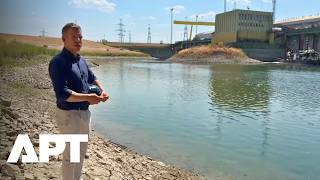
The power plant is no longer in crisis. It reached full capacity on the evening of August 26, when the turbines of all four units started up. TASR ↗ The investigation thus does not come in the middle of the hardest operational restrictions, but a week after they ended.
Key actors — tap for context

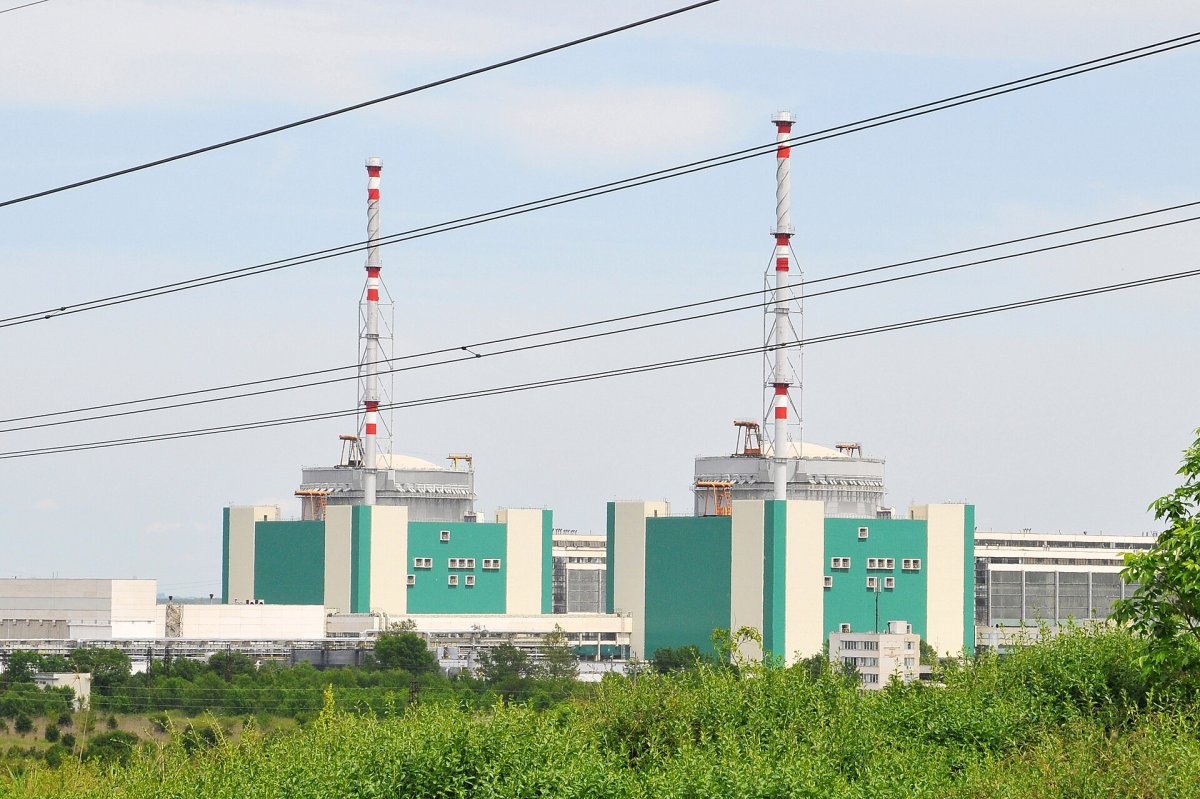
Paks
Hungary's only nuclear power plant, four units with total capacity of around 2000 megawatts, covers approximately one third of the country's electricity consumption
Why here: It is cooled directly by water from the Danube, which is why the record low water level in August reduced it far below normal capacity
More info →
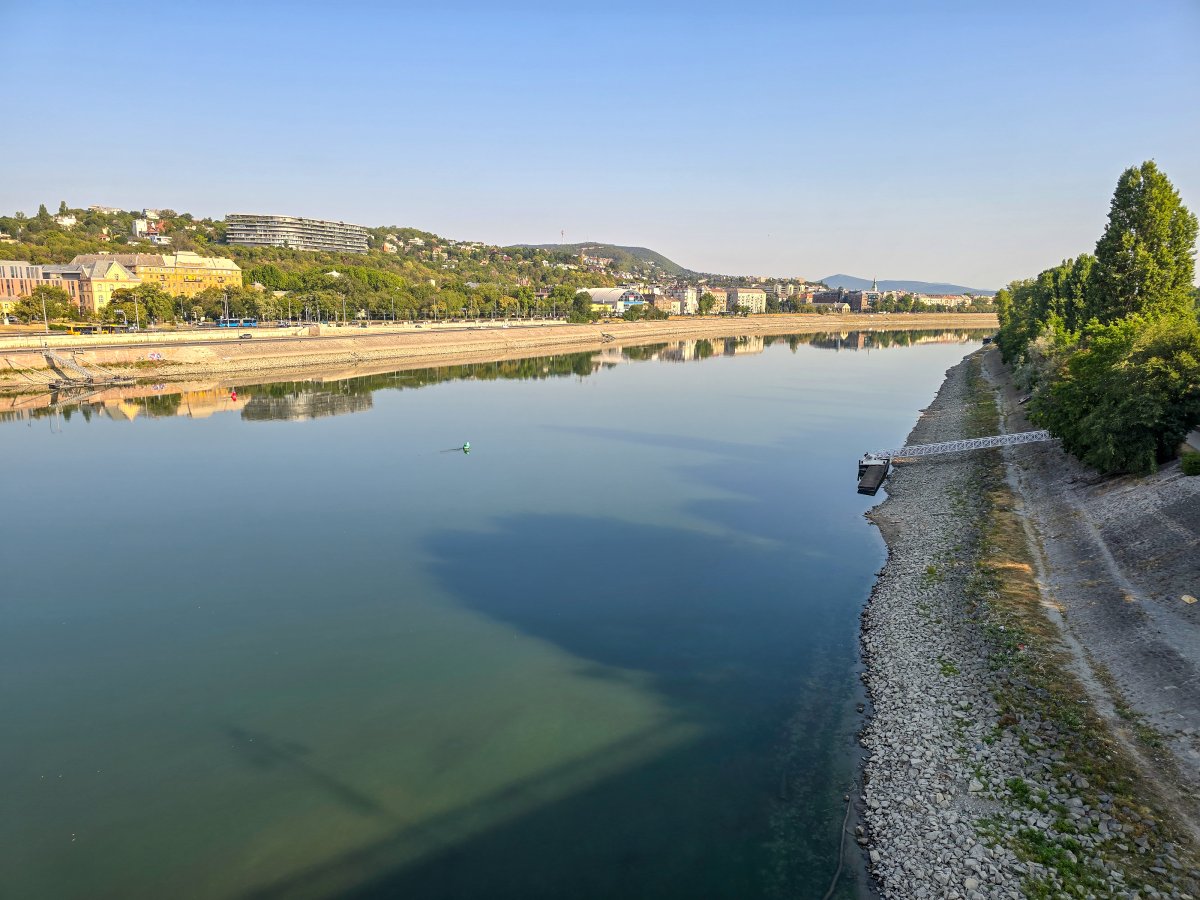
Danube
Europe's second longest river, flowing through ten countries from Germany to the Black Sea
Why here: Its August decline is the reason for both government resolutions
More info →
Péter Magyar
chairman of the Hungarian government, took office in 2026
Why here: His cabinet ordered investigation of negligence and criticized the previous government for the Paks situation at the end of August
More info →
István Kapitány
Hungarian minister of economy and energy
Why here: He is responsible for both reports, the one on Paks by September 11 and the analysis of supply risks by October 31
More info →
Viktor Orbán
chairman of the Hungarian government from 2010 to 2026
Why here: Magyar attributed responsibility for the state of the power plant to him on August 27
More info →
Gabčíkovo
Slovakia's largest hydroelectric power plant, eight turbines with installed capacity of 720 megawatts on the Danube in Dunajská Streda district
Why here: Produces approximately eight percent of Slovak electricity and faces replacement of all turbines for 465 million euros without tax
More info →
Tomáš Taraba
Slovak minister of environment
Why here: With the prime minister announced on August 31 the renewal of Gabčíkovo turbines and claims the investment will not burden the state budget
More info →
Robert Fico
prime minister of the Slovak Republic
Why here: On August 17 explained why Slovak nuclear power plants do not face the scenario from Paks
More info →
Mochovce
Slovak nuclear power plant near Levice
Why here: Together with Jaslovské Bohunice it is cooled by cooling towers, not by direct intake of river water
More info →Andritz Hydro
division of Austrian engineering group Andritz headquartered in Graz, supplies water turbines and technologies for power plants
Why here: Won the tender with Slovak company VUJE for the renewal of Gabčíkovo
More info →
MVM
Hungarian state energy group, operator of Paks nuclear power plant
Why here: According to the resolution it should participate in the investigation together with the National Atomic Energy Authority
More info →
Paks II
project to expand the power plant by two new units, agreed with Russian Rosatom
Why here: At the end of August Hungarian police began investigating it, it is a separate matter from the August cooling crisis
More info →
Bohunice
Slovak nuclear site in Trnava district, today with its V2 units in operation
Why here: Fico cited them as an example of a facility cooled by cooling towers, not by direct intake from the river
More info →
Igor Matovič
prime minister of the Slovak Republic from 2020 to 2021
Why here: During his government in February 2021 the tender for Gabčíkovo turbines from 2017 was cancelled, in which the price was around 80 million euros
More info →Magyar Közlöny
Hungarian official gazette, where laws, regulations and government resolutions are published
Why here: Both resolutions on extraordinary review of energy sector appeared in its Thursday issue
András Lányi
Hungarian writer and retired university lecturer, author of opinion texts on ecology
Why here: Already on August 20 wrote on Telex that inaction against predicted consequences of climate change was "sinful irresponsibility"
Two resolutions, two deadlines
The resolutions differ in scope. The narrower one concerns Paks and four ministers are to participate in preparing the report, namely the minister of economy and energy, the minister for environment, the minister of transport and investments and the minister of interior. The National Atomic Energy Authority and the state energy group MVM are also to be involved. Telex ↗The broader one targets the entire electricity supply system and critical infrastructure. The government justifies it by saying that in recent years deficiencies were revealed in how the system adapted to circumstances affecting security. The minister of economy and energy is to submit by October 31 an analysis of technical, legal and economic risks affecting supply, with emphasis on dangers connected with Paks operation and prevention options. Portfolio ↗
The question that looks backward
The sharpest part of the assignment is not technical. The resolution asks for a specific answer to whether experiences and risks from similar low-water periods in previous years were properly signaled to decision-making bodies. The economic portal Economx adds that the investigation is to determine how the government was informed about similar situations and what measures it proposed based on those experiences. Economx ↗Debate on the same issue was already taking place in Hungary in August. On Telex, writer András Lányi in an opinion commentary called it "sinful irresponsibility" that nothing was done against consequences of climate change predicted for decades, including that the power plant's cooling remained dependent on the Danube. Telex ↗ The government is now translating the same question into official form with a deadline.
The resolution names no one. The political context is, however, readable, because Paks faced restrictions under a government that took office only this year, while the years of low water that the question refers to fall into the era of its predecessor. Prime Minister Péter Magyar attributed responsibility for the state of the power plant to his predecessor Viktor Orbán on August 27. TASR ↗ At the end of August, Hungarian police also began investigating the Paks II expansion project. SME ↗
Slovak media captured from the Hungarian Thursday package an action plan for sustainable water management, namely water retention in the country, restoration of river branches and changes in agriculture. SME ↗ The resolution on negligence and the September 11 deadline were not among them.
Read also: Bulgaria for the first time in 52 years reduced nuclear capacity. The Danube near Bratislava no longer gives water, but takes it
Why to follow this from Slovakia
The Slovak energy sector has no direct analogy. Bohunice and Mochovce are cooled by cooling towers, not by direct intake from the river, and Prime Minister Robert Fico referred to this when on August 17 he explained that the Paks scenario does not threaten Slovak nuclear plants. Hospodárske noviny ↗Slovakia is, however, bound to the Danube differently. Gabčíkovo with eight turbines and installed capacity of 720 megawatts, according to newspaper SME, produces approximately eight percent of Slovak electricity, and in the same week when Budapest ordered the investigation, its renewal was being dealt with here. A similar type of question emerges here too, the same one the Hungarian resolution raises, namely what happened with the signal that came long ago.
The manufacturer, according to newspaper SME, already warned in 2010 that turbines could stop performing their function. Preparations for renewal began in 2015, the first major tender was announced in 2017 with a price of around 80 million euros, in February 2021, during Igor Matovič's government, it was cancelled on the grounds that conditions were set discriminatorily, followed by a tender from 2024, which failed in February 2025. The contract was ultimately awarded to Austrian Andritz Hydro in a consortium with Slovak company VUJE for 465 million euros without tax, thus 572.6 million with tax. STVR ↗ Two of the three bidders were excluded. SME ↗
The dispute over the contract is, however, completely open and runs across the coalition. Coalition SNS rejects the contract and wants the new minister to cancel it. TASR ↗ Environment minister Tomáš Taraba, on the other hand, claims that the mega-investment will not burden the state budget and explains the price increase by inflation as well as the deteriorating condition of the power plant. Štandard ↗
The difference from Budapest is not that nothing happened here. It is in the type of question. The Hungarian government formally tasked a review of why the known risk did not translate into decisions over the years, and gave it a deadline. In Slovakia, public communication is dominated by dispute over price and supplier. A separate review of why sixteen years elapsed from the manufacturer's warning to signing has not yet been announced.
Limits of this view
Paks and Gabčíkovo are not the same thing. In Paks it is about cooling a nuclear facility, thus a safety parameter, while in Gabčíkovo it is about worn turbines and lost output. What can be compared is how a risk known in advance was handled, not the degree of threat.The Hungarian resolution is so far only an assignment. It says nothing about the result and the one-week deadline is short enough to potentially bring more of a summary of what is already known than new findings. At the same time, it is true that the new government is reviewing the period of its predecessor, which is legitimate, but politically not neutral.
Portfolio states in its article that an artificial intelligence assistant participated in its preparation and the final content was edited and checked by a journalist. Therefore, we also verified the content of the resolutions through Telex and Economx, which describe them identically.
What hotinfo monitors
- Four ministers submitted their report to the government on the circumstances of the critical situation at Paks
- The contents of the report on the failures became public
- The report answered whether risks from earlier low-water periods were reported to decision-makers
- The economy and energy minister submitted the analysis of electricity supply and critical infrastructure risks
- The tender for refurbishing the Gabcikovo turbines was cancelled or definitively confirmed