

The Netherlands Environmental Assessment Agency (PBL) has run the numbers on the package of measures with which the government of Prime Minister Rob Jetten intends to cut nitrogen emissions, and concluded that the target is within reach but that the package alone will not get there even in the best case. The country wants to cut ammonia emissions from agriculture by 42 to 46 percent by 2035 compared with 2019. The measures worked out so far are not enough for that, the agency says, so an across-the-board cut of five to ten percent in livestock farmers' production rights will also be needed. The government describes such a cut as a last resort, to be used only if the targets cannot be met any other way. PBL ↗
The package, presented by the government on 26 June, changes the basis of the entire policy. Instead of measuring the nitrogen that settles in nature, the government wants to measure what a business emits — every livestock holding is to receive its own enforceable emission standard and a maximum number of cattle per hectare of land. Zones with less intensive farming are to be created around the nitrogen-sensitive sites of the European Natura 2000 network, and a nitrogen fund of 20 billion euros has been set aside for the whole transition up to 2035. Just under half of it is earmarked for those zones, where emissions are to fall by a percentage yet to be set, possibly by as much as sixty. NRC ↗
The condition on which the calculation rests is crucial. The PBL assumed a situation in which every livestock farmer cooperates fully and achieves their reduction, the state manages to implement everything, and nothing goes wrong. It calls this a conditional scenario — a calculation that holds only if everything works out — and immediately adds that the nitrogen file has repeatedly shown in recent years that plenty does not work out. Even in this most favourable case, the Netherlands will not escape the so-called nitrogen lock, the situation in which exceeded limits slow or block permits for housing construction and for the expansion of businesses. NRC ↗
That shows up in the nature the policy was created for. Of the 120 nitrogen-sensitive Natura 2000 sites, only fourteen will drop below the critical threshold by 2035, the level above which damage to nature cannot be ruled out. Across more than half of their area too much nitrogen will still be deposited, although the degree of exceedance will fall sharply. The package also has a side effect the agency rates positively: thanks to measures affecting the water regime around protected sites, the risk of desiccation could be removed for more than two thirds of the plant and animal species living there. NRC ↗ PBL ↗
"Nitrogen will remain an important factor for decades to come," PBL director Marko Hekkert told reporters. He also objected to the name given to the problem: talking about a lock, he said, suggests there is a key that can be turned. "It is very hard to come up with a package that gets the Netherlands out of the lock in one go," he said. He estimates the plans will leave the country with about 30 percent fewer cows. Asked what it would have been like had the measures been introduced five or ten years earlier, he replied that "it would have been a blessing" — farmers would have had more time to adapt to the stricter requirements. NOS ↗
The agency's second objection is not about the target but about whether it can be met in time. For the measures to work, 180,000 hectares — roughly a tenth of Dutch farmland — would have to be reorganised, and land consolidation of that kind has got off the ground only to a very limited extent in recent years. The system of enforceable emission standards for individual farms is not yet operational. Delivery will demand "an effort bordering on what is feasible in ten years", the PBL says. PBL ↗
The farming organisation LTO responded the same evening, taking aim at precisely those five to ten percent. "Talking about an across-the-board reduction is unnecessary, it is counterproductive, and for LTO it is not open to discussion," it wrote. The threat of an across-the-board cut is ruinous for livestock farmers, it argues, because nobody can invest in the future of a business without knowing whether they will have to shrink it a few years later anyway. The PBL voiced the same concern, writing that the threat of an across-the-board cut undermines not only the business model of individual farms but probably also the acceptability of the policy itself. LTO ↗
The organisation also challenged the calculation itself. Measures such as the delineation of zones, the separate programme for the Veluwe area and limits on emissions from fields were either left out of the assessment or counted insufficiently, it says, because they have not yet been worked out. Concluding from such an incomplete set that the remaining gap must be closed by an across-the-board cut is what it called a "meaningless sum". LTO ↗
Agriculture Minister Jaimi van Essen makes a similar argument. The agency, he says, did not count the rules being prepared for spreading manure on fields, because they are not yet specific enough. "We are already working on that, and once it is finished the package adds up and we will meet our nitrogen targets," said the minister, who, like the prime minister, comes from the liberal D66. He stressed that the assessment shows "the movement we want, so that permitting becomes possible again", and that the government is doing everything it can with this package. The trade paper Nieuwe Oogst noted that the agency evidently did not intend its line about effort at the limit of what is feasible as a compliment. Nieuwe Oogst ↗
The objections are not coming from livestock farmers alone. The province of Overijssel broadly supports the package but warns that the accumulation of national standards may prove unmanageable for many holdings — signals from the field suggest that even farms which have already invested heavily in innovation would struggle to comply. It also points out that the fixed bands of 500 or 1,000 metres around protected sites mostly do not match the boundaries the province has worked with so far. Nieuwe Oogst ↗
Zeeland is not adopting the state's proposals in advance. "We want the facts on the table before we draw conclusions," said provincial executive Wilfried Nielen. The province wants to concentrate on zones around two protected sites, while the state is adding five more. Nieuwe Oogst ↗ Friesland spoke out most sharply: the agricultural chapters of the minister's letter, in the words of provincial executive Abel Kooistra, "can go in the bin", because they cannot be carried out in that province. An emission standard tied to phosphate rights, combined with the requirement to hold matching land, does not fit Frisian farm policy at all, he says. The province put its concerns to the ministry in writing but has had no reply, according to Kooistra, which is causing irritation. The ministry does not recognise itself in the criticism. Nieuwe Oogst ↗
The government, meanwhile, is talking. LTO chairman Ger Koopmans and Gerben Boom, chairman of the young farmers' organisation NAJK, met Prime Minister Jetten, Minister van Essen and two state secretaries, describing the conversation as "pressing and sharp, but also constructive". The government delegation promised room for adjustments, they say, and together they called on the provinces to come up with their own proposals for drawing the zones so that fewer farms are affected. Van Essen said at the meeting that the provinces are already working on proposals and that there could be dozens of them in all. LTO ↗
Slovak and Czech media have not covered the assessment. This is not a Dutch peculiarity: the Natura 2000 network and the duty not to allow protected sites to deteriorate are a shared European framework. In the Netherlands it has grown into an economic problem large enough that nitrogen limits are holding up permits for housing as well. What the government there is testing, then, is not merely an agricultural reform but an answer to the question of how an emissions ceiling can be written down to the level of individual businesses without putting some of them out of business.
Photo: A dairy farm on Kattewaardweg near the Eilandbrug bridge in the municipality of Kampen, March 2021. By Agnes Monkelbaan, via Wikimedia Commons, CC BY-SA 4.0. The image has been downscaled.
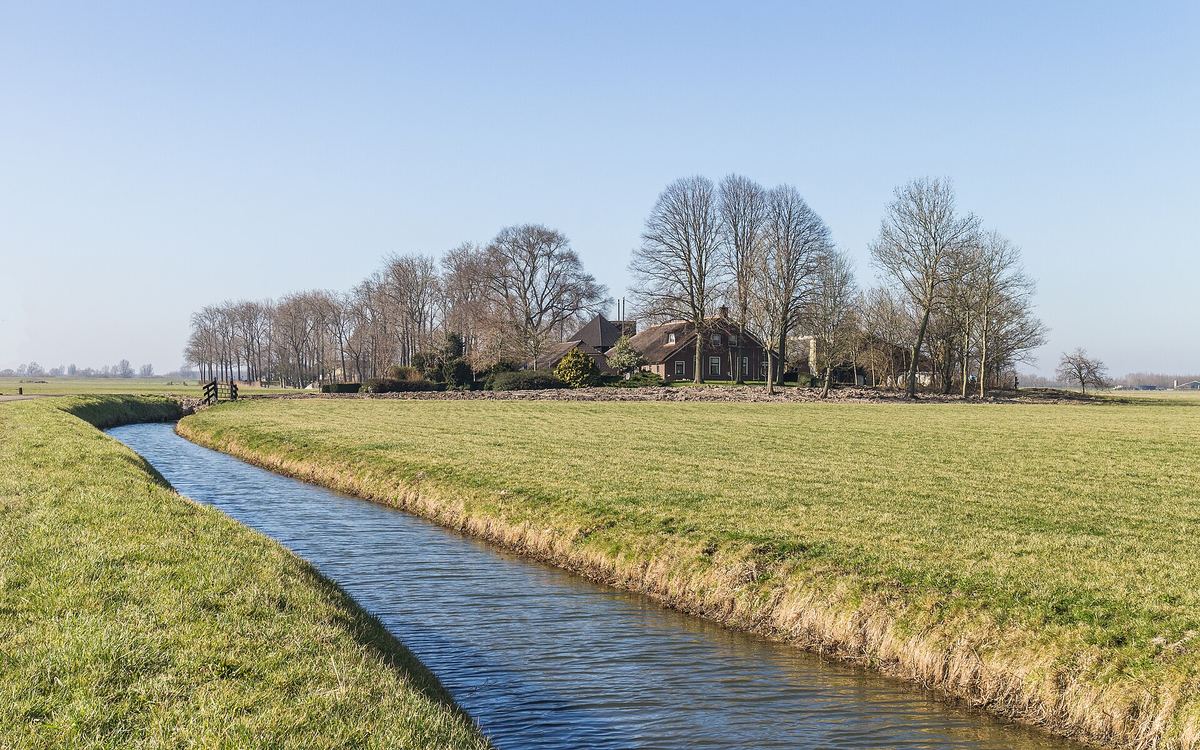
Dutch livestock farmers face a cut in production rights. A 20-billion-euro nitrogen package is not enough on its own, the state agency finds
🔥 You might also like
European Union
What Europe Is Writing About: US Senators Want to Scrap Deal with Putin, Guilfoyle's Fall, Pope Has Lung Cancer
US senators demand cancellation of Trump's oil deal with Putin, Ambassador Guilfoyle forced to resign, Pope diagnosed with lung cancer. Overview from 37 countri …
Culture
Amsterdam museum returned ancient vase to Sicily, theft revealed by 1976 wedding photo
Allard Pierson Museum returned a 3rd-century BC pyxis to Sicily. A photographer's negatives from Centuripe proved illegal excavation.
European Union
What Europe is writing about: Houthis attack Riyadh, Trump establishes AI Force, critics question Greenland deal
Houthis attacked Riyadh, Trump establishes AI Force, criticism of the Greenland deal, and a violent protest in The Hague dominated Europe. Overview from 37 coun …
Geographic locations



From our newsroom original
All →
Putin navrhol summit s Trumpom a Si Ťin-pchingom o Ukrajine
Lietadlo Austrian Airlines odklonili do Sofie pre hrozbu bombového útoku

Macron po nepokojoch sľúbil tvrdý postup proti výtržníkom
French freezers at 50 °C and Dutch empty shelves: no evidence of a joint attack yet
What Europe is writing about: Diesel deal with Putin under criticism, federal agents search Omar's home, NATO unveils victory theory
What Slovakia is writing about: The budget heads to final vote, Kamenický refuses to resign. Matovič could lose his bodyguard detail, Fico attacks Plaváková's wedding
What the Czech media are writing about: ANO lost in the big cities, support fell below thirty percent. Coalitions are bypassing it in many of them
In Zurich, police were bombarded with rockets and stones, no one has been arrested yet