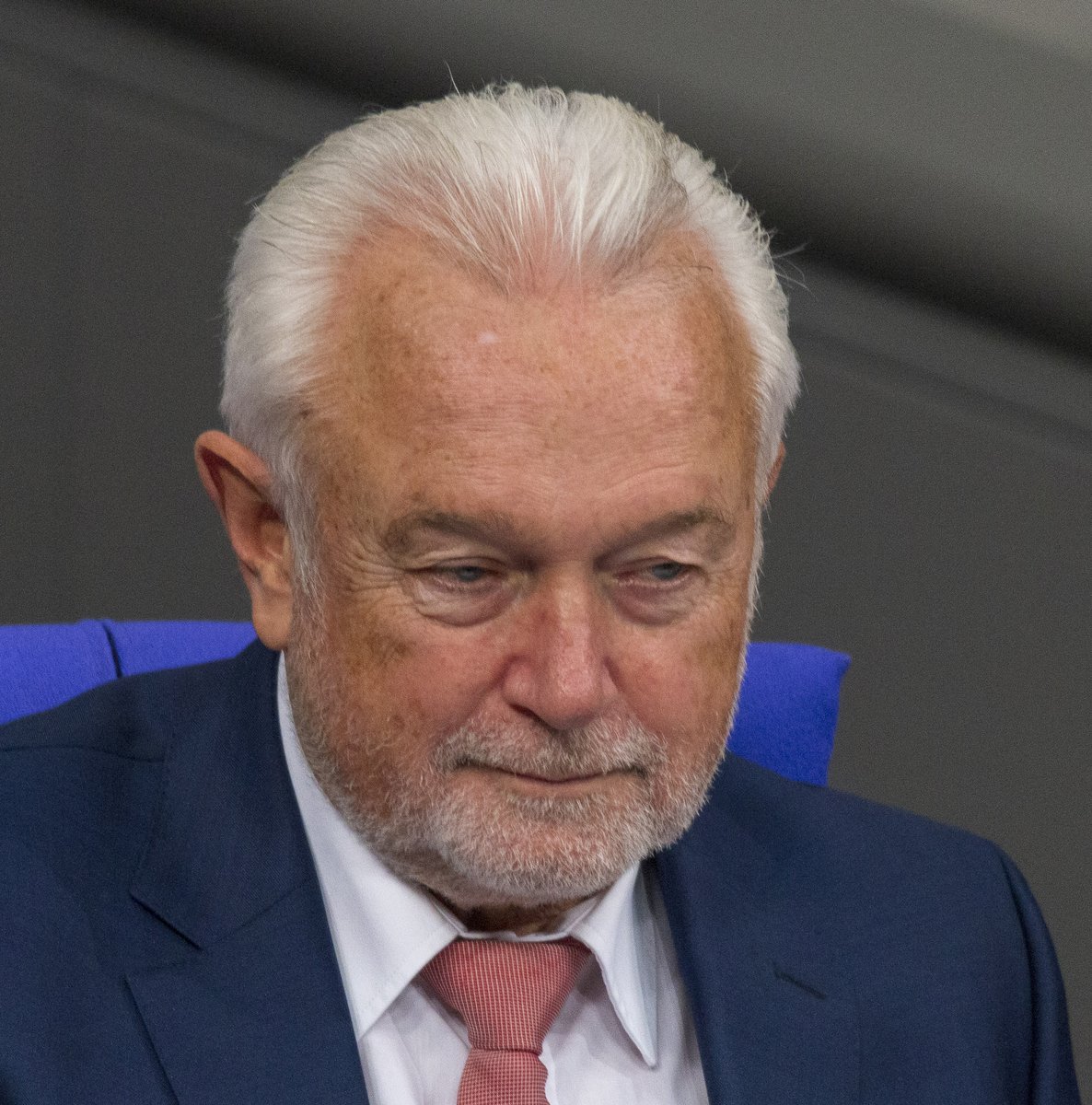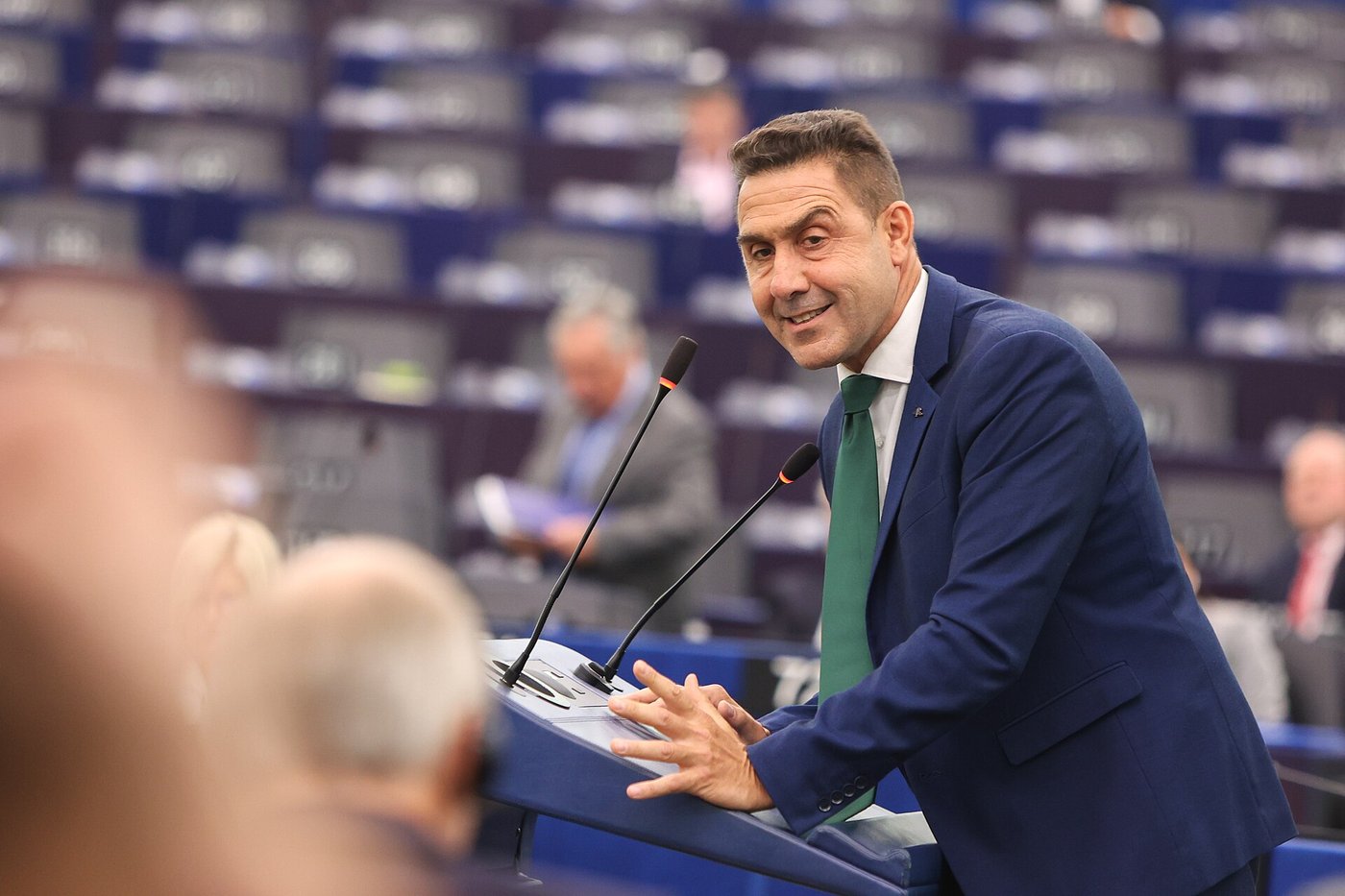



Key actors — tap for context

Alexander Dobrindt
German Federal Minister of the Interior for the CSU, in office since 2025.
Why here: Speaks of a "new quality of threat" and called an emergency meeting with heads of security services on Wednesday evening.
More info →
Oleksij Makejev
Ukrainian diplomat, Ambassador of Ukraine to Germany since September 2022.
Why here: Asks who else besides Russia could be behind it and questions the very term "hybrid".
More info →
Roderich Kiesewetter
Bundestag member for the CDU and former Bundeswehr officer, focuses on defense and foreign policy.
Why here: Calls for Germany to initiate consultations with NATO under Article 4 of the North Atlantic Treaty.
More info →
Jan Redmann
Brandenburg Interior Minister for the CDU.
Why here: Calculated that there are 60 to 90 seconds between drone detection and possible defense, and is preparing a law that would give operators the right to shoot down drones.
More info →
Armin Schuster
Saxon Interior Minister for the CDU, previously head of the federal office for civil protection.
Why here: Called the Leipzig discovery a very serious security incident.
More info →
Burkhard Jung
Mayor of Leipzig for the SPD, in office since 2006.
Why here: Calls for the federal government and individual states to contribute more financially to infrastructure protection.
More info →Antonov Airlines
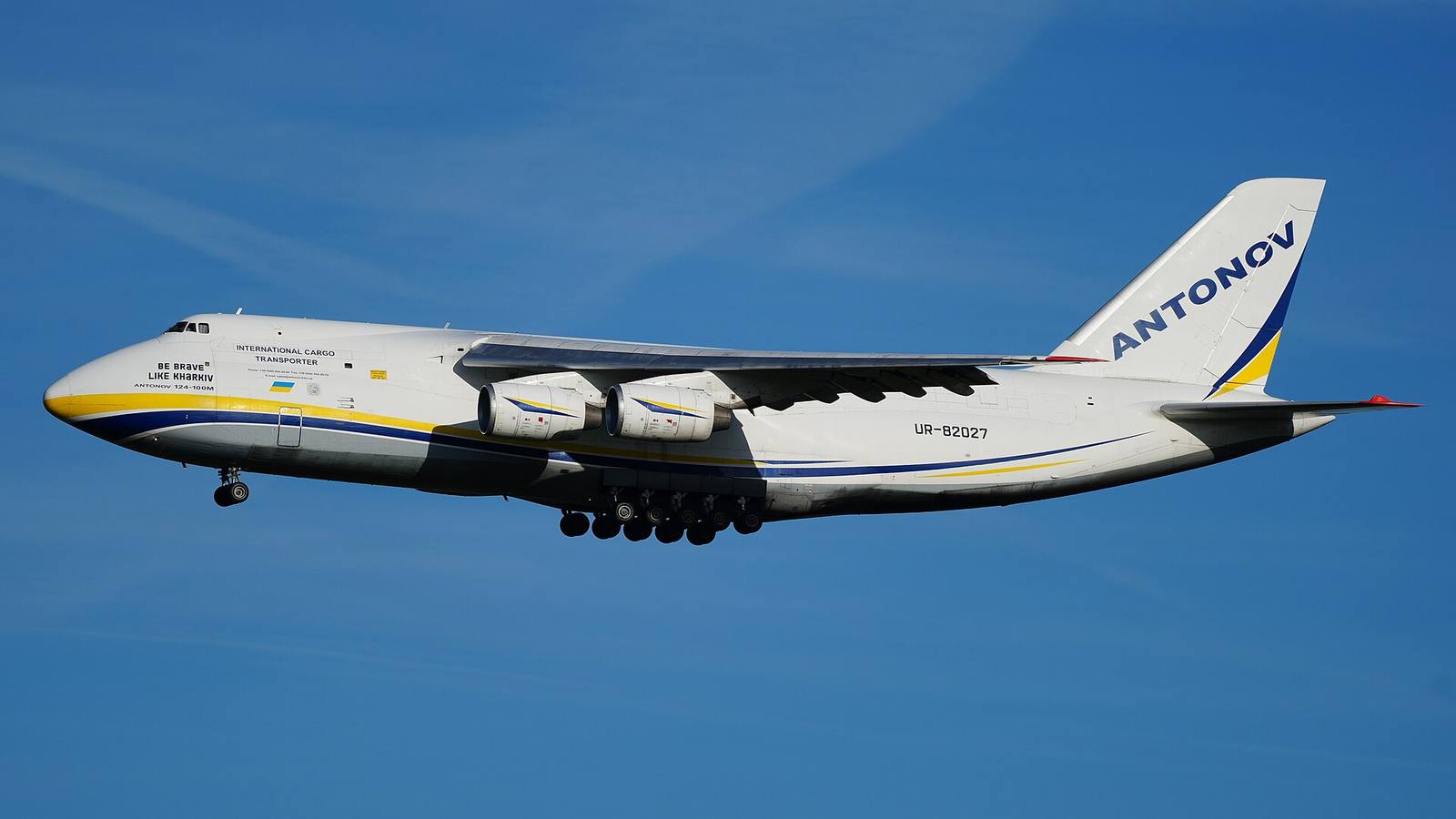
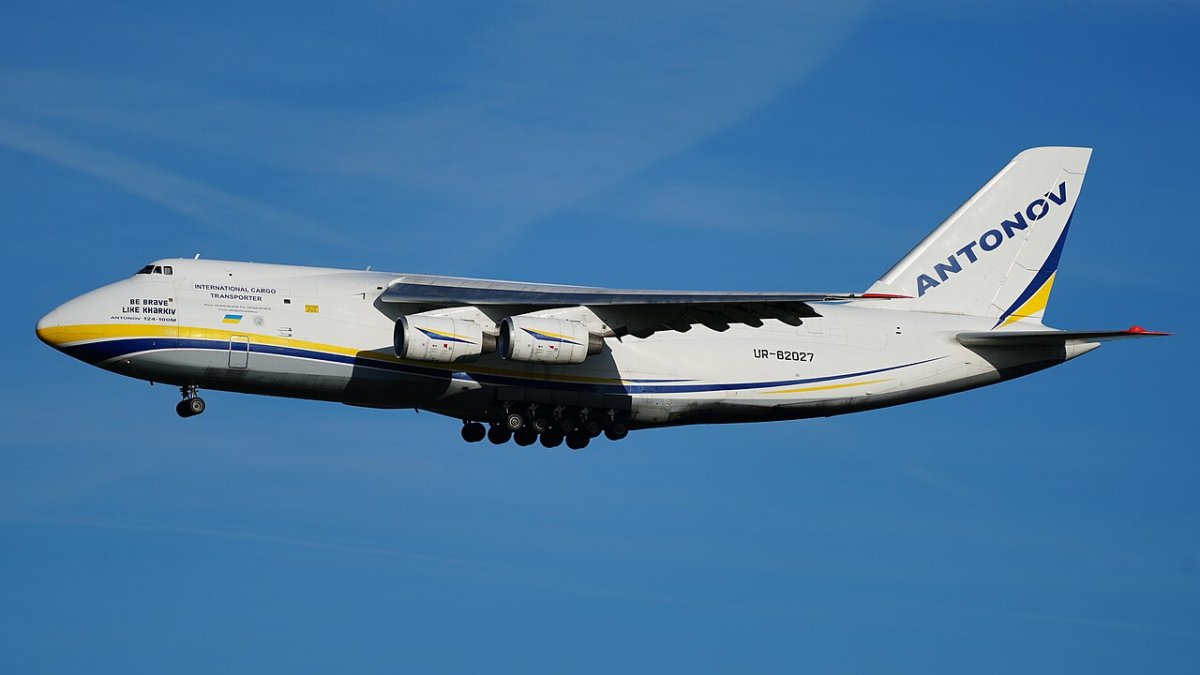
Ukrainian cargo airline, operator of the world's largest transport aircraft of the An-124 type.
Why here: Has been operating in Leipzig since 2006, after the destruction of its home airport in Hostomel it also moved the rest of its fleet there. The drone lay near its aircraft.
More info →
DHL
German logistics group DHL Group, for which Leipzig/Halle is the main European hub.
Why here: Its cargo aircraft collided in the air with an unknown object after being diverted.
More info →
Tobias Meyer
German manager, chairman of the board of DHL Group since May 2023.
Why here: Described the incident as an event with tangible operational impacts.
More info →
Thomas Haldenwang
German lawyer, from 2018 to 2024 head of the Federal Office for the Protection of the Constitution, i.e., domestic counterintelligence.
Why here: About the fire of a shipment in Leipzig in 2024, he said it was pure luck that it burned on the ground and not in flight.
More info →
Pavel Žáček
Member of Parliament for ODS, member of the Chamber of Deputies committees for defense and security.
Why here: Called the incident an unambiguous provocation and suspects Russia, but awaits analysis.
More info →Jasper von Altenbockum
Commentator for Frankfurter Allgemeine Zeitung newspaper.
Why here: Wrote that this time it was not about smuggled cargo but an open attack, and questioned the designation "hybrid".
Jiří Vojáček
Czech military analyst.
Why here: Told Radio Journal that it was not strictly a war act, but rather an action by intelligence services.
Landeskriminalamt
Regional criminal police office, in this case the Saxon branch in Dresden.
Why here: Together with the Dresden prosecutor's office assumed the investigation and does not rule out a political motive.

Friedrich Merz
German Chancellor since 2025 and chairman of the CDU.
Why here: Interrupted his vacation because of the incident and conducted a meeting of the National Security Council by phone.
More info →
Sebastian Fiedler
Bundestag member for the SPD and criminal chief inspector, chairman of the Association of German Criminal Investigators from 2018 to 2021.
Why here: Said that if Russia is behind the drone, it is an act of war, and that the incident revealed a significant gap in anti-drone defense.
More info →
Detlef Seif
Bundestag member for the CDU and lawyer, coordinator of CDU/CSU members in the interior committee.
Why here: Described to Reuters how a bus driver kicked the drone away, and called it courageous but very dangerous.
More info →Pierre Thielbörger
German legal scholar, professor of public and international law at the Ruhr University Bochum and director of its Institute for the Law of Peace and Humanitarian International Law.
Why here: Explained to NZZ why the Leipzig drone is a violation of international law but not yet an act of war.
More info →Three announcements in one night
- The barracks from the fourth wave got the name of its contents: underneath the facility is a storage of parts for Patriot systems. Greek and Bosnian media clarified what the drones above the German military base were actually tracking. Naftemporiki ↗Radio Sarajevo ↗
- The Bulgarian thread meanwhile turned: Sofia summoned the Ukrainian ambassador over a drone that exploded near a gas pipeline on the border with Romania. Kyiv speaks of an unintentional incident. We wrote about it in detail in a separate article. Kyiv Independent ↗RÚV ↗
- Bundeswehr reports drones over a barracks in North Rhine-Westphalia. Police and military police saw overflights above the facility, where material for Patriot systems is stored 130 meters underground. The case from Leipzig thus ceases to be isolated. (Welt ↗, Tagesspiegel ↗, G4Media ↗)
- American intelligence assessments link the drone to Russia. According to American officials familiar with intelligence reports, the device "most likely" belongs to the Russian government, wrote the Wall Street Journal. An American defense official in Europe told CNN more precisely that the drone belonged to the Russian intelligence service and carried military-grade explosives. An official accusation has not been heard in either Berlin or Washington so far CNN ↗Digi24 ↗
- We know more about the construction of the payload. Spanish newspaper ABC describes a very homemade device: an ordinary can emptied, filled with semtex and soldered, with an opening left for a detonator. The drone also had a drop mechanism and each of the two SIM cards had a different function — one controlled the flight, the other was to trigger the drop. According to the newspaper, it stood near Antonov for about four hours before being spotted by an airport bus driver shortly before midnight ABC ↗
- We know more about the bus driver. Detlef Seif, coordinator of CDU/CSU parliamentarians in the Bundestag's interior committee, told Reuters that the driver kicked the drone in low flight, the aircraft fell and remained lying on the ground. Whether it was still capable of flight at that moment is not clear. "The bus driver's actions were very brave and courageous, but also very dangerous," said Seif. "Perhaps by his intervention, he prevented the target of the attack." Salzburger Nachrichten ↗
- The case was taken over by the federal prosecutor in Karlsruhe. It is investigating it as an act endangering the state, not as ordinary damage to property Tagesschau ↗ORF ↗Kurier ↗
- The drone had two SIM cards and the payload was hidden in a can. Belgian Het Laatste Nieuws provided the first technical details of the assembly Het Laatste Nieuws ↗
- "Enough evidence that the incident was an assassination attempt." That's how Belgian media summed it up, citing the German investigation Het Laatste Nieuws ↗
- An airport employee knocked the drone out of the air—with a kick. A detail brought by Luxembourg's Wort shows how improvised the first reaction was Luxemburger Wort ↗
- Spiegel confirmed that the drone contained semtex. So far it was only unverified information from Bild and the Leipzig newspapers; the plastic explosive is now confirmed Spiegel ↗
- Süddeutsche already writes about the incident as an assassination attempt on a loaded aircraft, not as a "drone find" Süddeutsche Zeitung ↗
Flight operations stopped completely after the discovery. One passenger flight and nineteen cargo aircraft had to be diverted to other airports, the north runway opened shortly before 2 a.m. and the south runway remained closed while pyrotechnicians examined the drone. Feuerwehrmagazin ↗
One of the diverted aircraft, a DHL cargo plane heading to Hannover, collided with another unknown object. According to Bild, this happened about six kilometers from the airport at an altitude of about 400 meters. The aircraft landed safely and federal police then documented minor damage to the front section. DHL chief Tobias Meyer spoke of noticeable operational impacts. SITA ↗
Investigators are thus working with at least three reports — the original observation of an unknown aircraft, the drone found on the ground, and the object that hit the DHL aircraft. It is not yet clear whether some of them do not overlap. Leipzig police spokesman Olaf Hoppe added that drones repeatedly appear above the airport and some of them cannot be identified. Tagesspiegel ↗
Why Leipzig specifically
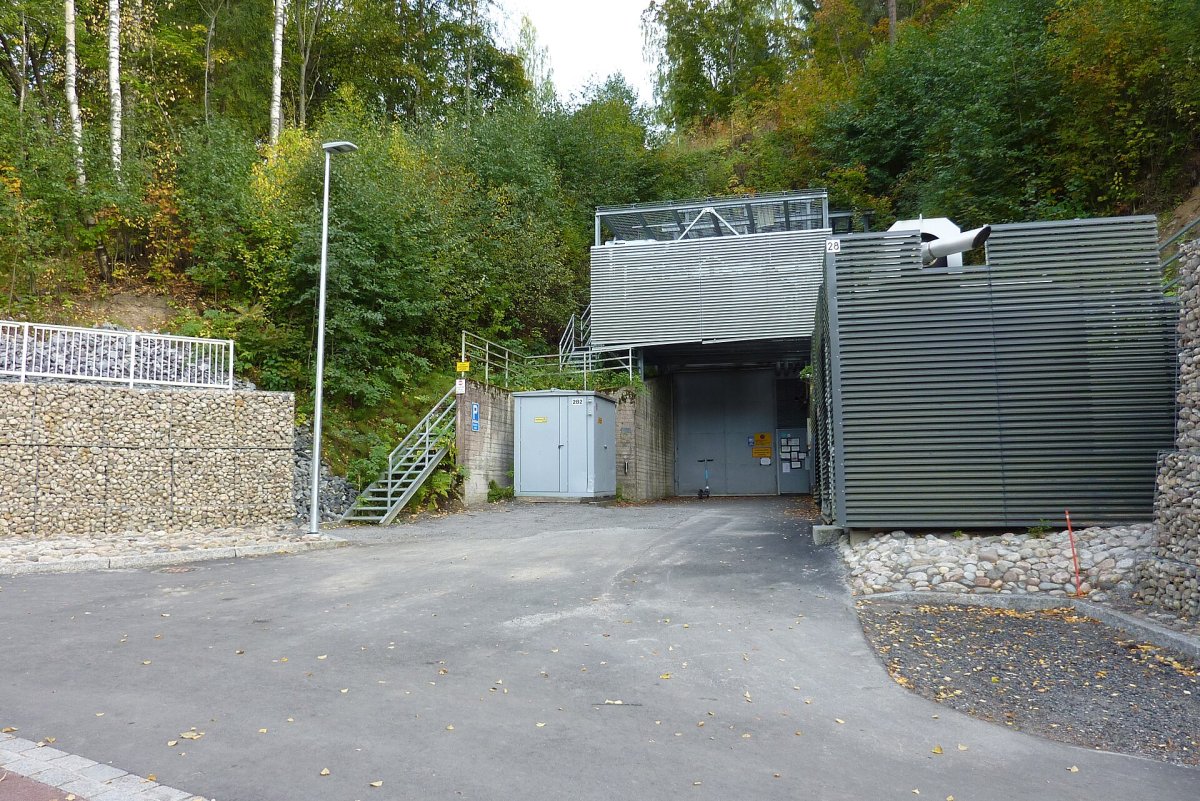
- Two days after Leipzig, drones circled over the Bundeswehr's "Patriot workshop." In Mechernich on the edge of the Eifel, 130 meters underground is a protected material warehouse with an area of 30,000 square meters and at the same time a repair shop for Patriot air defense systems, probably the only one of its kind in Europe. According to WDR, NDR and Süddeutsche Zeitung, security company employees counted six overflights there on the night of Friday between 10 p.m. and 5 a.m. Police called from Euskirchen saw at least one, and one drone circled directly over their heads for a while. Bundeswehr officially confirmed two observations Tagesschau ↗Süddeutsche Zeitung ↗n-tv ↗
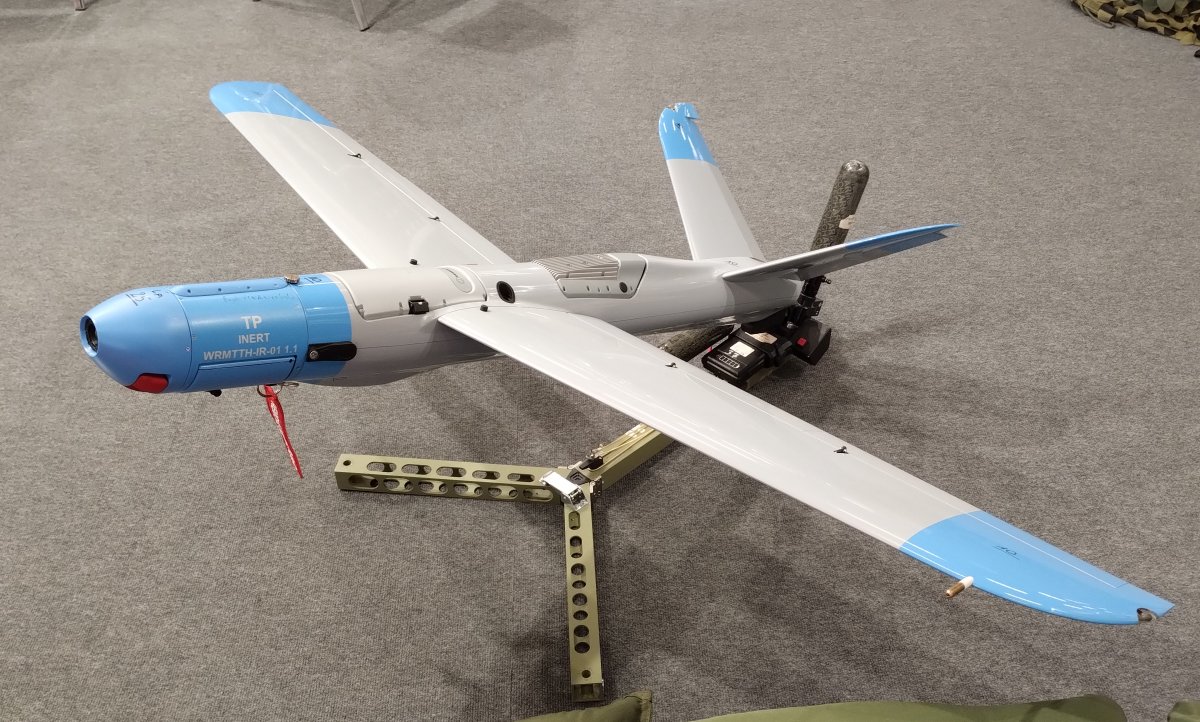
- Military police preliminarily identified the type from forty meters: Fly-380 VTOL. Wingspan around 3.8 meters, range up to 400 kilometers, payload capacity over ten kilograms. According to a confidential police report, the investigation so far does not suggest that this was a stray measurement drone, and police are handling the matter on suspicion of surveillance of military installations endangering security. The military counterintelligence office MAD and the Berlin Joint Counter-Drone Defense Center are also involved Tagesschau ↗
- Anti-aircraft missiles are scarce. CNN recalls that American stocks have been significantly depleted in the war with Iran — almost 80 percent of pre-war THAAD system missile stocks have been consumed and about half of Patriot missiles CNN ↗
- The German Defense Ministry now denies that the An-124 contained ammunition. This directly contradicts yesterday's information that Ukrainian agencies attributed to the same ministry — and this is so far the sharpest contradiction of the entire case (De Standaard ↗, De Morgen ↗, Censor.NET ↗)
- According to Ukrainian agencies, the German Interior Ministry confirmed that the target was an aircraft with ammunition cargo for Ukraine. Estonian Postimees summarized it the same way: a Ukrainian aircraft full of ammunition stood near the drone Interfax Ukraine ↗Kyiv Independent ↗Postimees ↗
- NZZ recalls that Antonovs have been in Leipzig since 2006 as part of an alliance program — the airport has strategic significance for both Ukraine and NATO Neue Zürcher Zeitung ↗
- Hungarian Portfolio writes that a massive explosion was prevented, as it examines what could have been the target Portfolio ↗
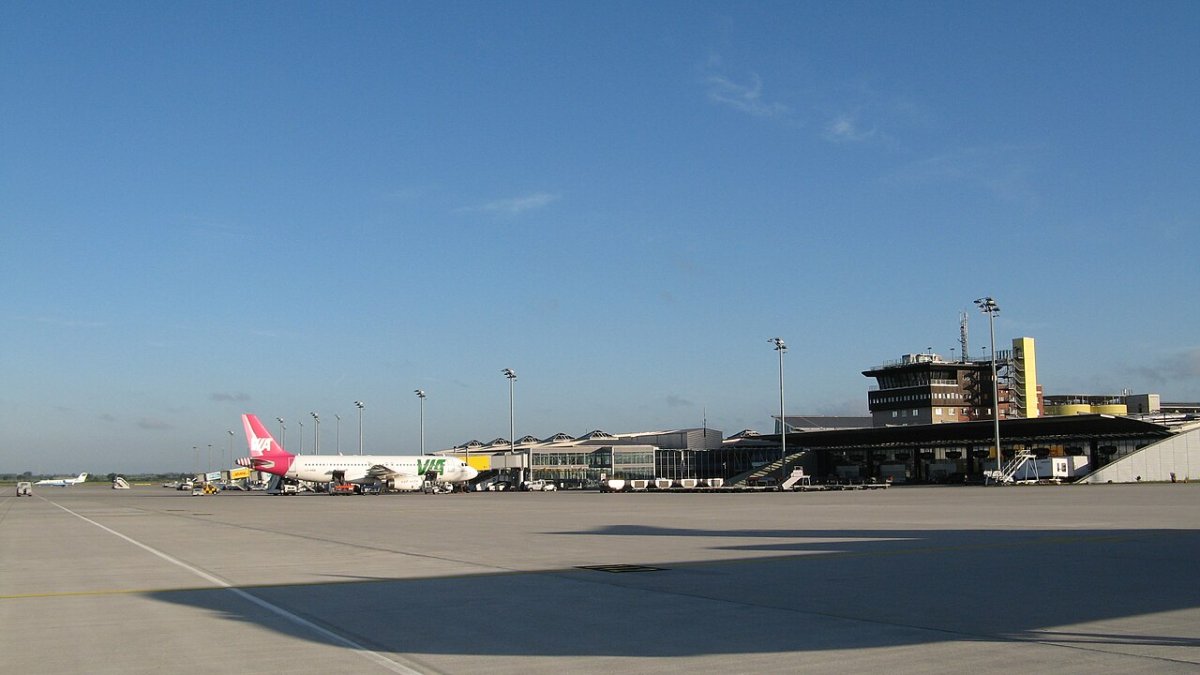
The site of discovery is extraordinarily sensitive from a security perspective. Antonov Airlines has been operating in Leipzig since 2006 as part of an alliance program for the leasing of transport capacity, and after the destruction of much of its home airport Hostomel near Kyiv in 2022, it moved the rest of its fleet there. It keeps six aircraft there. Its giant An-124 aircraft are leased by several EU and NATO states for strategic transport, that is, for moves of equipment that they cannot handle with their own fleets. The drone was lying near four of them. Feuerwehrmagazin ↗
That same south runway is also the main hub of Europe's DHL cargo network. Leipzig/Halle thus combines two things at once: a civilian transshipment point through which parcels flow throughout central Europe, and a parking area for heavy air transport of the North Atlantic alliance. TASR ↗
Airport that burned once before
Leipzig has a history in this agenda. In July 2024, a package submitted from Vilnius caught fire at the local DHL cargo center shortly before it was supposed to be loaded onto a plane. The then-head of German counterintelligence, Thomas Haldenwang, said it was pure luck that the package burned on the ground and not during flight. PBS NewsHour ↗The Lithuanian General Prosecutor's Office later stated that a series of incendiary packages in Europe were organized by Russian citizens with links to military intelligence, and that this was a test run of a plan to set fire to cargo flights heading to the United States. CNN ↗
It was precisely this case that Ukrainian Ambassador to Germany Oleksiy Makeiev referred to. "Who else could it be if not Russia?" he said, adding that Russia has been conducting this war for a long time. RTÉ ↗
The word "hybrid" is no longer fitting
- Dobrindt stopped describing it as an incident: "We are a daily target of hybrid warfare." The German interior minister said this after a drone incident and refers to a study attributing the campaign to Russia. n-tv ↗Berlingske ↗
- The targets are no longer just objects, but people: Rheinmetall's CEO got personal protection. "Retreating is not an option," he signaled. Tagesspiegel ↗
- NZZ approaches the question pragmatically: what can be learned in hybrid warfare from Poland and the Balts. Neue Zürcher Zeitung ↗
- Kyiv Post asks directly whether the Leipzig drone is part of Moscow's hybrid warfare. The Ukrainian editorial notes that their own Antonovs were the targets. Kyiv Post ↗
- Ouest-France summed up the entire week as "a week of hybrid warfare in Europe" — an explosive drone, fake videos, and a series of incidents across the continent. Ouest-France ↗
- The Russian embassy spoke up before Russia was officially accused. It issued a statement in Berlin in Russian in which it called itself concerned about a "new wave of anti-Russian hysteria in Germany" and called the finding a "staged provocation that serves only the interests of the Kiev regime and the militarist wing of Europe's political establishment." According to it, the greatest threat to Germany is not "alleged hybrid attacks from Moscow, which don't exist," but "politicians who enthusiastically develop scenarios of imminent war with Russia." Spiegel called it a preemptive stance — no one had officially accused Russia at that point. Spiegel ↗Salzburger Nachrichten ↗
- "Either it was Russia, or someone wanted it to look that way." Bundestag member for the SPD and former criminal investigator Sebastian Fiedler said this on Friday in the ARD-Morgenmagazin show. If Russian involvement is proven, according to him it would be an "act of war" and the government must respond harshly. According to Fiedler, the incident revealed a noticeable gap in defense, although the anti-drone issue has been a priority for both federal and state interior ministers for at least a year and a half. Salzburger Nachrichten ↗
- Lawyers gave Kiesewetter only a more modest right. NZZ asked experts on international law: an attempted drone attack by a foreign state violates territorial integrity and the prohibition on the use of force, but it is not an act of war. "There would have to be an armed conflict between the affected states, which does not apply in the case of Russia and Germany," says Pierre Thielbörger from the Ruhr University in Bochum. Article 5 therefore does not apply to Leipzig, because it too presumes an armed attack. What remains is Article 4, namely consultations, which was last requested by Estonia after repeated violations of airspace by Russian fighters. Neue Zürcher Zeitung ↗
- The legal question hinges on whether it was a one-time act. If so, according to Thielbörger, Germany is left with hardly enforceable claims for damages. If the incident is part of a long-term sabotage project, Berlin can resort to countermeasures — for example, ban the activities of the "Russian House" in Berlin, whose operator is already on the EU sanctions list and, according to findings by the French government, serves as an extended arm of Russian intelligence. Neue Zürcher Zeitung ↗
- The same intelligence report also speaks of a NATO test. American assessments according to the Wall Street Journal and CNN assume that Putin may in the coming years test the cohesion of the Alliance with a limited attack on a member state — from a cyber attack to a minor ground incursion, i.e., below the threshold that would trigger a joint response. According to one of the sources, the most likely target is the Baltic states or Poland. European editors framed the same assessment very differently, from "as early as this fall" to "over the next few years." CNN ↗Kyiv Independent ↗
- De Morgen speaks of a turning point: "the Leipzig incident goes absolutely further than anything we've experienced so far." The Belgian newspaper frames it as a turning point in hybrid warfare. De Morgen ↗
- Italian counter-terrorism expert: "it was a very serious attack, NATO involvement should be considered." La Repubblica thus openly raises the question of Article 4. La Repubblica ↗
- De Telegraaf: a kamikaze drone in a member state must seriously concern the Alliance. De Telegraaf ↗
- ZDF: experts reject the "false flag" version and explain what speaks against it. ZDF heute ↗
- taz: the incident opens the age of electronic warfare. taz ↗
- Serbian Nova summed it up most harshly: "only the detonator failed." And asks whether Europe is entering a new phase of war. Nova ↗
- For the first time in Germany, the word "state terrorism" was heard. "The suspicion is very close that Russia is the perpetrator of this planned terrorist attack," or "it lies close that this is Russian state terrorism." Welt ↗Welt ↗
- Zurich's Tages-Anzeiger speaks directly of a new level of escalation: "Plastic explosives, special drone — this attack marks a new level of escalation." Tages-Anzeiger ↗
- Ouest-France turns it into a continental story — "In war against Europe" — and BFM asks whether the war is spreading to the rest of Europe. Ouest-France ↗BFM TV ↗
- Dutch NU.nl: "Everything points to Russia: gigantic escalation"; a Swedish expert says the same word. NU.nl ↗Svenska Dagbladet ↗
- Bulgarian and Macedonian media directly link the incident to fears of Russian interference in German elections, a Polish expert warns of "a new phase of Russian actions against NATO." 24 Chasa ↗Nezavisen ↗Rzeczpospolita ↗
- Dobrindt is conspicuously silent on the matter, Spiegel notes a day after he himself named the incident. Spiegel ↗
- Dobrindt eventually leaned toward the word that Makejev challenged. The German interior minister after midnight called the incident a "hybrid attack scenario" — precisely the type of naming that the Ukrainian ambassador said downplays the substance. Tagesschau ↗ZDF heute ↗
- Berlin admits the participation of "foreign powers." According to Tagesspiegel and RFI, the ministry does not rule out that foreign state actors are behind the drone, but does not officially name a specific country. Tagesspiegel ↗RFI ↗
- Serbian and French media read the statement more directly. Politika summarized it as "more than a security incident," Kurir writes that "Berlin points the finger at Moscow," and BFM TV broadcast a show with the question of whether there isn't a shadow of the Kremlin behind it. Politika ↗Kurir ↗BFM TV ↗
- Handelsblatt turned the question back on Germany itself. A commentary asks how long the country wants to remain defenseless in hybrid warfare. Handelsblatt ↗
What is more interesting than the suspicion itself is what Makejev said next. "The word hybrid somehow downplays the fact that Russia is waging war not only against Ukraine, but also against Europe," he stated. (RTÉ ↗)
The same doubt was independently reached by commentator Jasper von Altenbockum of the Frankfurter Allgemeine Zeitung, who directly poses the question in his text of what is still hybrid about the daily attacks. So far, according to him, it has been about incendiary devices smuggled onto aircraft, which in itself was not harmless. But this time an open attack was conducted, and that is, according to him, a new level. (FAZ ↗)
So a conservative German commentator and a Ukrainian diplomat agreed on what German politics has so far been unable to agree on: that the standard vocabulary is no longer corresponding to what is happening. Brandenburg's interior minister Jan Redmann called it an escalation and a new quality of threat. "Russia is trying to attack strategically important structures in Germany," he told the Märkische Allgemeine newspaper. (Tagesspiegel ↗)
Germany has 60 to 90 seconds to react
- Dobrindt wants to expand anti-drone defense research. After the radar at Leipzig airport from the fifth wave, this is the second concrete step — from reaction to program. Tagesschau ↗
- Preparedness also has a civilian aspect, and it's creaking. In Lithuania, some apartment residents refuse shelters in basements — they don't want to let strangers in. LRT ↗
- An anti-drone radar is already standing at Leipzig airport. The operator built it shortly after the incident, and a new guard post was also added — exactly the layer that Germany was missing according to FAZ. n-tv ↗Tagesspiegel ↗Het Laatste Nieuws ↗
- Swiss former army chief Süssli is calling for a national drone center. He is reacting directly to the attempted attack in Leipzig — the argument is that individual airports and bases cannot assemble the defense on their own. Tages-Anzeiger ↗
- SRF explains why anti-drone defense is so difficult. Small machines with short flight times escape classical radars, and jammers are problematic in civilian operations — which fits into Germany's 60 to 90-second window. SRF ↗
- Merz interrupted his vacation due to the incident. The National Security Council held a meeting on Friday under his leadership by phone, government spokesman Stefan Kornelius announced. The Federal Prosecutor's Office is conducting the matter as an attempted bombing and a dangerous interference with air traffic Salzburger Nachrichten ↗Tagesschau ↗The Irish Times ↗
- There is no state anti-drone system in Leipzig yet. The Interior Ministry promised detection and defense systems to seven airports — Berlin, Munich, Düsseldorf, Stuttgart, Hamburg, Leipzig/Halle, and Cologne/Bonn. A spokeswoman for the ADV airport association confirmed to NZZ that the system is ready in Frankfurt, but in Leipzig none has been installed yet. DHL, which operates at the airport, has its own, but the company did not respond to the question of whether it triggered an alarm on the night of Wednesday. And even if it had, a private company in Germany cannot disable a drone on its own; it must call the police Neue Zürcher Zeitung ↗
- Prague is dealing with the same question. Prague Airport announced that it is analyzing the Leipzig incident together with security services, Prime Minister Andrej Babiš told Deník N that the Czech Republic will strengthen the protection of its airports, and the police headquarters reminded that the country is already operating at an increased level of terrorist threat. The government bill on anti-drone protection of critical infrastructure being prepared, which the government submitted before Leipzig, is aimed at the same place as Redmann's proposal in Germany — today only police or soldiers can disable a drone in the Czech Republic České noviny ↗
- Strack-Zimmermann sees Russia behind the drone, the CEO of Rheinmetall warns that there will be only more such incidents Welt ↗Censor.NET ↗
- A dispute has started over whether to centralize anti-drone defense. Tagesspiegel maps the camps, ZDF cites an expert: "it's simply not enough" Tagesspiegel ↗ZDF heute ↗
- The Swiss immediately ask themselves: how is Zurich airport protected against drones Tages-Anzeiger ↗
- "In the lower airspace we're simply blind," says Handelsblatt — Germany doesn't have sensors for drones below the radar horizon Handelsblatt ↗
- A concrete legislative proposal has emerged: to authorize operators of critical infrastructure to disable drones themselves. The debate is moving from diagnosis to law Welt ↗Tagesschau ↗
- NZZ adds a price tag: "Effective anti-drone defense has its price. German society must know that" Neue Zürcher Zeitung ↗
- British airports already have a secret cyber system against "bomb drones" — The Sun describes it precisely in response to Leipzig The Sun ↗
- Belgium asks equally practically: where did the drone come from and could it happen to them as well 7sur7 ↗
- An expert warns of a new category of threat. Tagesspiegel cites an expert according to whom armed drones are changing the nature of the threat to critical infrastructure, not just its degree. Tagesspiegel ↗
- A reshuffle in the command of Russian drone units. NZZ writes that Putin has just reshuffled the generals responsible for drone forces — without a direct connection to Leipzig, but at the same time. Neue Zürcher Zeitung ↗
The practical part of the debate is more unpleasant than the rhetorical one. Redmann calculated that between detecting a drone and possible defense, there remains 60 to 90 seconds. "In combating drones at critical infrastructure, it's certainly not the answer for someone to call 110 and then a police anti-drone unit to rush out from Potsdam," he said. Such a unit cannot be stationed at every water treatment plant and power plant, which is why he is preparing a law that would allow operators to take action against drones independently. The debate is set to begin after the summer break. Tagesspiegel ↗
According to him, moreover, it is only rarely possible to find the pilot of a drone, so as a rule it is not even possible to distinguish whether it was a prank, curiosity, industrial espionage, or reconnaissance of weak points before an attack. FAZ adds that last year Germany recorded approximately a thousand drone flights, and an effective countermeasure is not yet in sight. FAZ ↗
Political reactions have therefore moved quickly. Saxon Interior Minister Armin Schuster called the finding a very serious security incident, Leipzig Mayor Burkhard Jung is demanding that the federal government and individual states contribute more financially to protecting infrastructure, and Federal Interior Minister Alexander Dobrindt is talking about a new quality of threat and on Wednesday evening called an extraordinary meeting with the heads of security services. CDU member of parliament Roderich Kiesewetter goes the furthest — he considers the incident to be a targeted attack directed by Russia and is asking the government to launch consultations with allies according to Article 4 of the North Atlantic Treaty. This allows any member to call a meeting when it considers its territorial integrity, political independence, or security to be threatened. It is not about the automatic initiation of collective defense, only about a political consultation mechanism that can precede further steps by the alliance. ZDF heute ↗
What we don't know yet
- A ranking of European intelligence services according to Digi24 shows who has the capacity for such cases — and why Ukraine shot up so high in it. Digi24 ↗
- Drones are changing the rules at sea too: Turkey has restricted shipping to the Black Sea due to growing risks and is calling for a moratorium on attacks on ships. Klix.ba ↗Kyiv Independent ↗
- The supply chain also runs in the opposite direction. A Belgian company is asking for an exemption to continue operating in a Russian drone node — and according to the Kyiv Independent, it operates there anyway. Kyiv Independent ↗
- Drones in allied airspace in this window were not only Russian. In Bulgaria, a drone exploded near a gas pipeline, which according to Sofia is used by the Ukrainian army; Bulgaria summoned Kyiv's ambassador and Romanian radars detected nothing in the meantime. Ukraine's foreign ministry denies that anything was heading to Bulgaria. (24 Chasa ↗, ANSA ↗, Interfax Ukraine ↗, Digi24 ↗)
- NZZ outlined two scenarios and both have weak points. In the first, these were "disposable agents," cheap and interchangeable, recruited where there's a shortage of money or pro-Russian conviction, with a multi-level chain of command keeping the originator in the background. That the drone could be knocked down with a kick could mean a poorly trained pilot — or just a technical malfunction or weak radio connection. In the second scenario, it was professionals and the second flying object was a repeater, i.e., a relay station amplifying the signal so the operator could be far away. That's how it's done in Ukraine. However, the wreckage of the second drone has not yet been found — if it is found, the version with professionals will be strengthened Neue Zürcher Zeitung ↗
- A summary that's not pleasant to read. The Berlin correspondent of The Irish Times put it this way: between Leipzig and catastrophe stood nothing other than a faulty fuse and an observant bus driver The Irish Times ↗
- What explosive it was and what that implies — Tages-Anzeiger analyzes what can be gleaned from the material Tages-Anzeiger ↗
- Gazeta Wyborcza: "colossal luck and the mystery of the explosive" Gazeta Wyborcza ↗
- And a historical parallel: what connects German flying bombs V1 with today's kamikaze drones Luxemburger Wort ↗
- A direct contradiction has emerged between police and government. "That there was supposed to be ammunition there is incorrect according to my information," was heard in Welt; Die Zeit and Austrian ORF cite the ministry the same way. Ukrainian agencies, however, quote the same ministry the opposite way Welt ↗Die Zeit ↗ORF ↗
- Flemish VRT counts a scenario that didn't happen: "NATO perhaps escaped dangerous escalation" — what if the drone had exploded VRT NWS ↗
- Austrian Die Presse already designates the incident directly as an attack, although the Dresden prosecutor's office and the Saxon Landeskriminalamt have not yet named the perpetrator. Die Presse ↗
- Portuguese, Icelandic, Lithuanian, and Finnish outlets adopt the formulation "a new dimension of threat" and Público adds that the drone effectively closed the airport. RTP ↗, Público ↗, RÚV ↗, 15min ↗, Helsingin Sanomat ↗
For all the forcefulness of the statements, distance must be kept. The investigation was taken over by the Dresden General Prosecutor's Office and the Saxon Landeskriminalamt, which did not rule out a political motive, but have not yet named a suspect or attributed the act to anyone. Russia has long denied involvement in similar incidents. Al Jazeera ↗
Caution is also warranted about what exactly was on the drone. Authorities officially speak only of an unknown explosive device and of a package that tested positive for nitrates. That it was Semtex was stated by Bild citing investigation sources; the figure of approximately 800 grams was provided by the local Leipziger Volkszeitung. Authorities have confirmed neither, and the information remains unverified that the fuse was faulty or came off. aeroTELEGRAPH ↗
Kiesewetter's call for Article 4 is so far the position of one MP, not a government action. And with the second object, it has still not been confirmed that it was a drone. Czech military analyst Jiří Vojáček noted for Radiožurnál that it was not strictly speaking an act of war, but rather an intelligence service operation. ODS MP Pavel Žáček speaks of unmistakable provocation and suspects Russia, but awaits analysis. iROZHLAS ↗
What hotinfo is monitoring
- Whether wreckage of a second flying object is found — that determines whether this was amateurs or a team with a repeater.
- Who was behind the overflights of the Patriot maintenance depot at Mechernich and whether the Fly-380 VTOL type is confirmed.
- Whether Berlin reaches for countermeasures against Russian institutions in Germany, such as the "Russian House" in Berlin.
- What the Saxon state criminal police analysis shows — what payload the drone carried, where it came from and whether the pilot can be identified.
- Whether the German government actually asks allies for Article 4 consultations, or Kiesewetter's call stands alone.
- Redmann's bill allowing operators of critical infrastructure to bring down drones themselves — the debate is due to open after the summer recess.
- Whether police or air accident investigators can determine what the DHL cargo aircraft collided with in the air.
- Whether operations on the southern runway, DHL's main European hub, return to normal without further restrictions.