
It is a movement that the Finnish Supreme Administrative Court struck from the register of political parties a year later - and that returned to it within thirteen months. On Friday, six people from the far-right movement Junge Tat will also appear in court in Zurich. Two unrelated cases and two different legal systems, but the same principle applies in both: against an organisation as such, the state either has no ordinary tool, or it has one and is trying to use it at the door. What remains is a case against individuals for specific acts.
Key actors — tap for context
Sinimusta liike
Finnish nationalist party that emerged from an ethno-nationalist dispute within the True Finns party and the collapse of its youth organisation. Yle classifies it as far right and says it has also been described as openly racist and fascist.
Why here: According to Yle, in 2023 a man who is now in custody over explosives ran for it.
More info →Junge Tat
Swiss far-right action group with an estimated 20 to 50 members; it advocates remigration and the "great replacement" theory.
Why here: Six of its members go before the Zurich District Court on 4 September.
More info →
Supo
Finnish Security and Intelligence Service.
Why here: It ranks the far right and radical Islamism as the two most significant terrorist threats to Finland.
More info →
Äänekoski
Industrial town in the Central Finland region at the southern end of Lake Keitele.
Why here: Police found weapons and explosives here, and the local man ended up in custody.
More info →Arto Jääskeläinen
Electoral director at the Finnish Ministry of Justice.
Why here: He explained why the ministry had to readmit Sinimusta liike to the register of political parties.
Dirk Baier
Swiss criminologist and extremism researcher at the Zurich University of Applied Sciences.
Why here: He described how Junge Tat changed the visual style of the far right.
Tobias Lingg
One of the two public leaders of Junge Tat; 23 years old.
Why here: The prosecution is seeking fifteen months in prison for him.
Manuel Corchia
The other leader of Junge Tat; 25 years old.
Why here: The prosecution is seeking the same sentence for him as for Lingg.

Dělnická strana
Czech far-right and neo-Nazi party dissolved by the Supreme Administrative Court on 17 February 2010.
Why here: The Constitutional Court rejected its complaint against the dissolution in May 2010 and upheld the decision.
More info →
Tomáš Vandas
Former secretary of Miroslav Sládek's Republicans and chairman of Dělnická strana.
Why here: After the party was dissolved, he moved to the leadership of its successor, Dělnická strana sociální spravedlnosti.
More info →
Ľudová strana Naše Slovensko
Slovak far-right party of Marian Kotleba, which entered the National Council in 2016.
Why here: The prosecutor general proposed its dissolution; the Supreme Court rejected the proposal in 2019.
More info →
Marian Kotleba
Chairman of Ľudová strana Naše Slovensko and former chair of the Banská Bystrica self-governing region.
Why here: He heard the decision not to dissolve his party in the courtroom in person.
More info →Jaromír Čižnár
Prosecutor General of the Slovak Republic from 2013 to 2020.
Why here: In May 2017 he filed a motion with the Supreme Court to dissolve Kotleba's party.
More info →
Maroš Žilinka
Prosecutor General of the Slovak Republic since 2020.
Why here: Unlike his predecessor, he saw no grounds for dissolving the party and did not file a motion.
More info →Äänekoski: weapons, explosives, and a 2023 candidacy
Central Finland police reached the man on the basis of a tip and searched his apartment. On Monday, 31 August, the District Court of Central Finland remanded him in custody because there are probable grounds for doing so - according to the remand information, the acts he is suspected of were to have taken place between 22 and 27 August directly in Äänekoski. The seized weapons, their parts, and the ammunition will be tested for functionality, the explosives and explosive substances will go for analysis, and further questioning and expert assessment of the entire set of acts are to follow. Ilta-Sanomat ↗The police are not entirely unfamiliar with him. According to Yle, he has an older criminal record, including a 2024 conviction for a firearms offence; Ilta-Sanomat adds an indictment for drunk driving. What the man ultimately faces depends on how the investigation ends - the lead investigator is not commenting on the case for investigative reasons, and police have said nothing so far about the motive. Yle ↗
The domestic intelligence service adds context. In its threat assessment, Supo keeps Finland at level three out of five and has for several years listed radical Islamism and the far right as the two most significant terrorist threats in the country. According to it, the most likely attack scenario is precisely an individual or a small group, not an organised structure. Supo ↗
The court struck the party off, and a year later the ministry had to readmit it
Sinimusta liike entered the Finnish register of parties in June 2022. In April 2024, the Supreme Administrative Court struck it from the register, stating that the aims of its general programme were incompatible with human rights and fundamental rights. Suomenmaa ↗Then came what turned the judgment into an episode. The movement revised its programme, gathered another five thousand supporting signatures, which Finnish law requires for party registration, and submitted a new application. Ministry of Justice electoral director Arto Jääskeläinen summed up the key point in a sentence: "If the law is followed, such a general programme must be approved." According to him, the ministry had no alternative. Demokraatti ↗ The movement returned to the register on 28 May 2025, thirteen months after the court removed it from it. Suomenmaa ↗
Zurich: six defendants and a movement outside the usual ban
In Switzerland, a trial opens on Friday that approaches the matter from the opposite direction. Six supporters of Junge Tat are before the Zurich District Court, and at the centre of the proceedings are two of its leaders, 23-year-old Tobias Lingg and 25-year-old Manuel Corchia, who regularly appear on behalf of the organisation under their own names and faces. The Zurich-Sihl prosecutor's office is seeking fifteen months in prison for both of them, six months unconditional and nine months suspended, plus fines. Watson ↗The acts relate to the period from February 2022 to April 2024, and the indictment labels them as racial discrimination, interference with freedom of religion, coercion, damage to property, an offence under the Explosives Act, disturbing public order, and trespassing. 20 Minuten ↗ The most serious are two Zurich cases from 2022. On 19 June, members of the movement brought a white wooden cross with a massive concrete base and the inscription "No Pride Month" through a side entrance into the Church of St. Peter and Paul during a Pride service, damaging the stone floor to the tune of 8,945 francs. 20 Minuten ↗ In October of that year, three of them entered Zurich's Tanzhaus for the children's reading event Drag Story Time with fifty visitors, recorded conversations, and tried to unfurl a banner while others outside set off pyrotechnics and handed out leaflets. Watson ↗
Junge Tat is a small group - estimated at twenty to fifty people - that builds on remigration and the conspiracy theory of the "great replacement," and it succeeds precisely where the old far right was clumsy. Criminologist Dirk Baier summed it up by saying, "It's no longer that flat-headed skinhead in combat boots": the heroic video aesthetic on social media talks about homeland, nature, and masculinity, while the radical goal remains underneath. SRF ↗
But banning the movement itself is an exceptional step in Switzerland. The Federal Department of Defence states directly on its website that concerts or gatherings of left-wing or right-wing extremist groups are not banned in the country. VBS ↗ A ban on an organisation as such rests on a special federal law or on a decision by the United Nations, so the list of banned organisations consists of al-Qaeda, the Islamic State, and, after a parliamentary vote in December 2024, Hamas as well. A domestic far-right movement does not get onto it without such a special legal basis. SRF ↗
The same attempt has played out in the Czech Republic and here too
For a Slovak reader, this is not an alien problem, because both scenarios have already played out - one in the Czech Republic, the other at home.The Czech Republic has the tool and used it. On 17 February 2010, the Supreme Administrative Court granted the government's motion and Dělnická strana was dissolved. It was the second attempt - the court had rejected the first motion in a ruling of 4 March 2009, and the Interior Ministry then drew up a new one that reflected the court's requirements and had 85 annexes. Ministerstvo vnitra ČR ↗ In practice, though, it changed less than expected. The party leadership was prepared for dissolution, and after the verdict the officials and a significant part of the membership moved to Dělnická strana sociální spravedlnosti, headed by the former chairman of the dissolved party, Tomáš Vandas. Romea ↗
The Slovak court also had the tool, but refused to use it. Prosecutor General Jaromír Čižnár filed a motion in May 2017 to dissolve the parliamentary party Ľudová strana Naše Slovensko, and the Supreme Court rejected it on 29 April 2019. Panel chair Jana Zemková explained that the decisive element was the immediacy of the threat to democracy and that the risk was not immediate enough, because the party did not have enough MPs to pass anti-democratic laws on its own. The court also stated that a party cannot be dissolved merely because it criticises the state's constitutional and legal order and participates in public debate, and that it is not the court's job to stand in for the plaintiff and gather evidence on its behalf. Party chairman Marian Kotleba also heard the decision in the courtroom. TASR ↗ New Prosecutor General Maroš Žilinka later said that he saw no grounds for dissolving the party and would not file a motion. Pravda ↗
Finland therefore stands somewhere between the two. The court acted and really did dissolve the party, which is more than the Slovak prosecution achieved. But the result is Czech: the organisation continues under the same name and with its paperwork in order.
Limits of this view
The two cases are unrelated, and linking them is our editorial frame, not something investigators established. Nothing suggests that the actors knew of each other.The Finnish man is a suspect, not charged with terrorism, and the court remanded him in custody on probable grounds, which is not a verdict. The link to Sinimusta liike is information from Yle, not a statement by police or the court, and a candidacy from three years ago tells us nothing by itself about what the movement knew or wanted. Nothing is known about the motive yet.
It would also be a mistake to put the two cases on the same level. In Switzerland, the offence under the Explosives Act concerns pyrotechnics used at actions, not homemade charges - it is a different class of act and a different level of danger. The presumption of innocence applies to all defendants and suspects.
And finally, dissolving parties is itself a contentious tool. The Slovak Supreme Court's reasoning from 2019 is a legitimate liberal position, not a failure, and the Finnish case shows that the court there did not circumvent anything: the movement revised its programme so that it now complied with the law, and the ministry had no basis on which to reject it. Saying that the judgment was circumvented is an interpretation, not a proven fact. Demokraatti ↗
What hotinfo is watching
- Finnish prosecutors have brought charges in the Äänekoski case and its legal classification is known.
- Finnish police or Supo have said something about the suspect’ motive and whether he had ties to an organised structure.
- The Zurich district court has delivered its verdict in the trial of six followers of the Junge Tat movement.
- A debate has opened in Switzerland after the trial about a general tool for banning domestic extremist organisations.
- The Finnish justice ministry or parliament have raised the question of how to prevent a deregistered party from returning to the register.
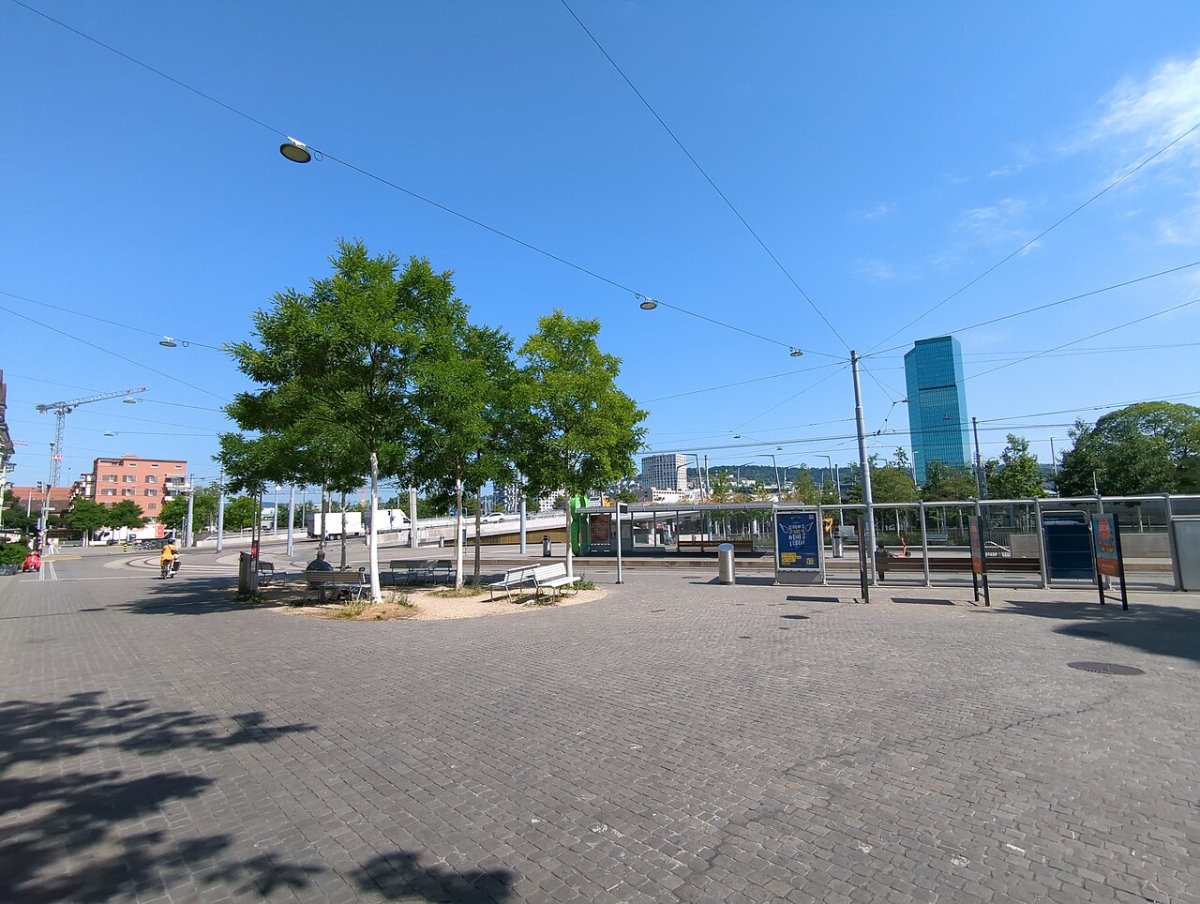
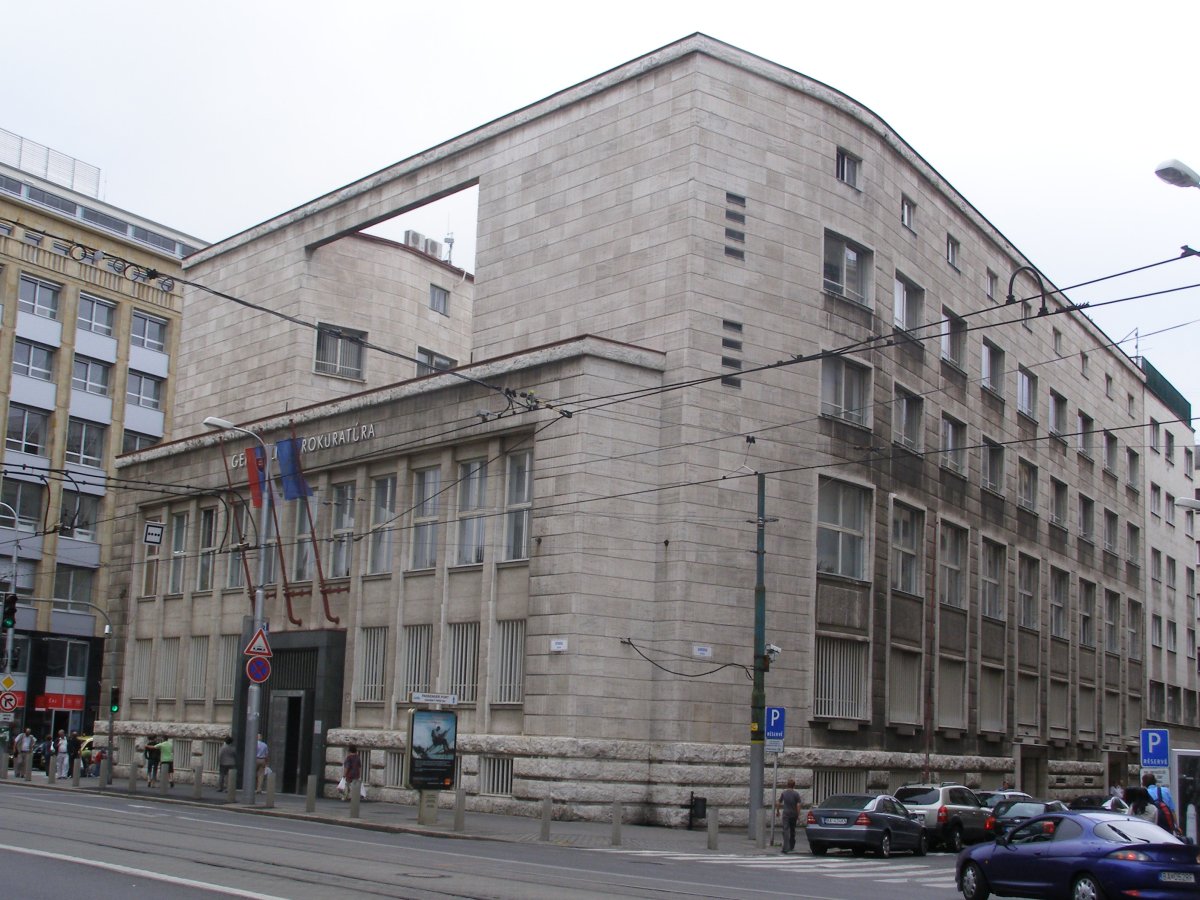
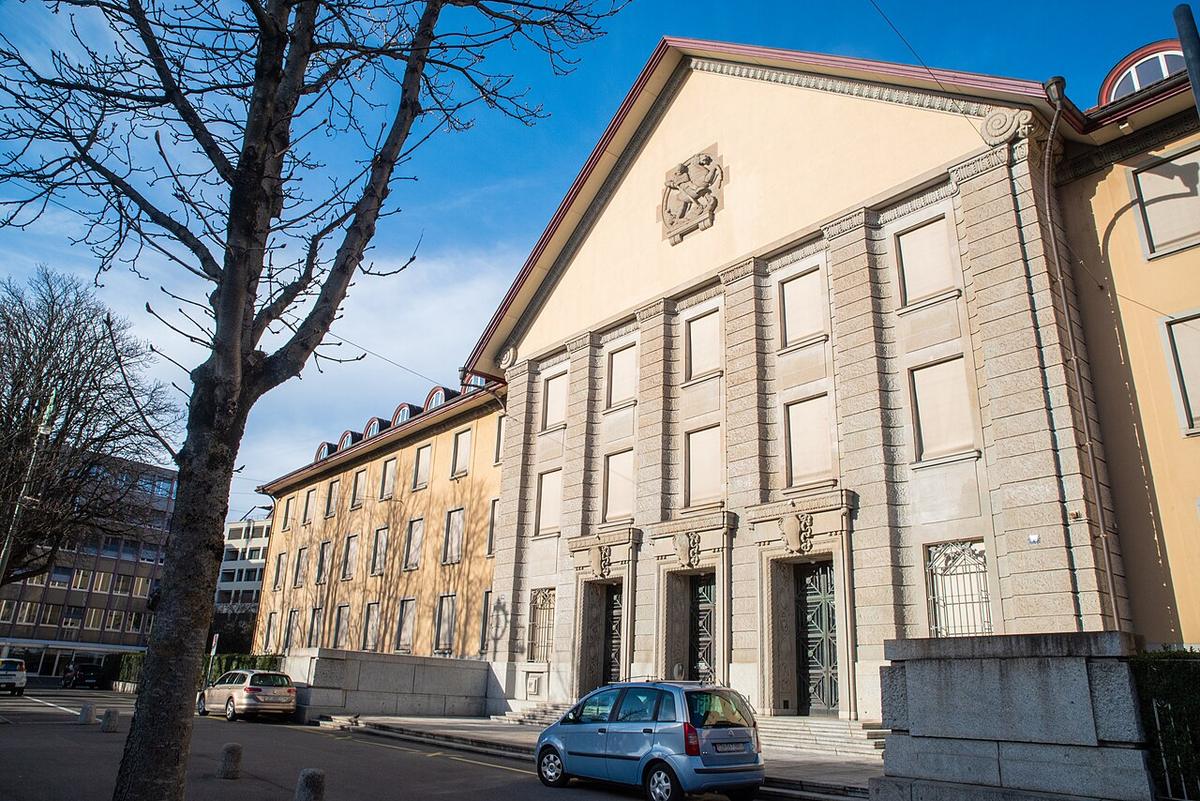
Illustrative photo: building of the Zurich District Court, March 2025. Author Balise42, Wikimedia Commons, CC BY 4.0.