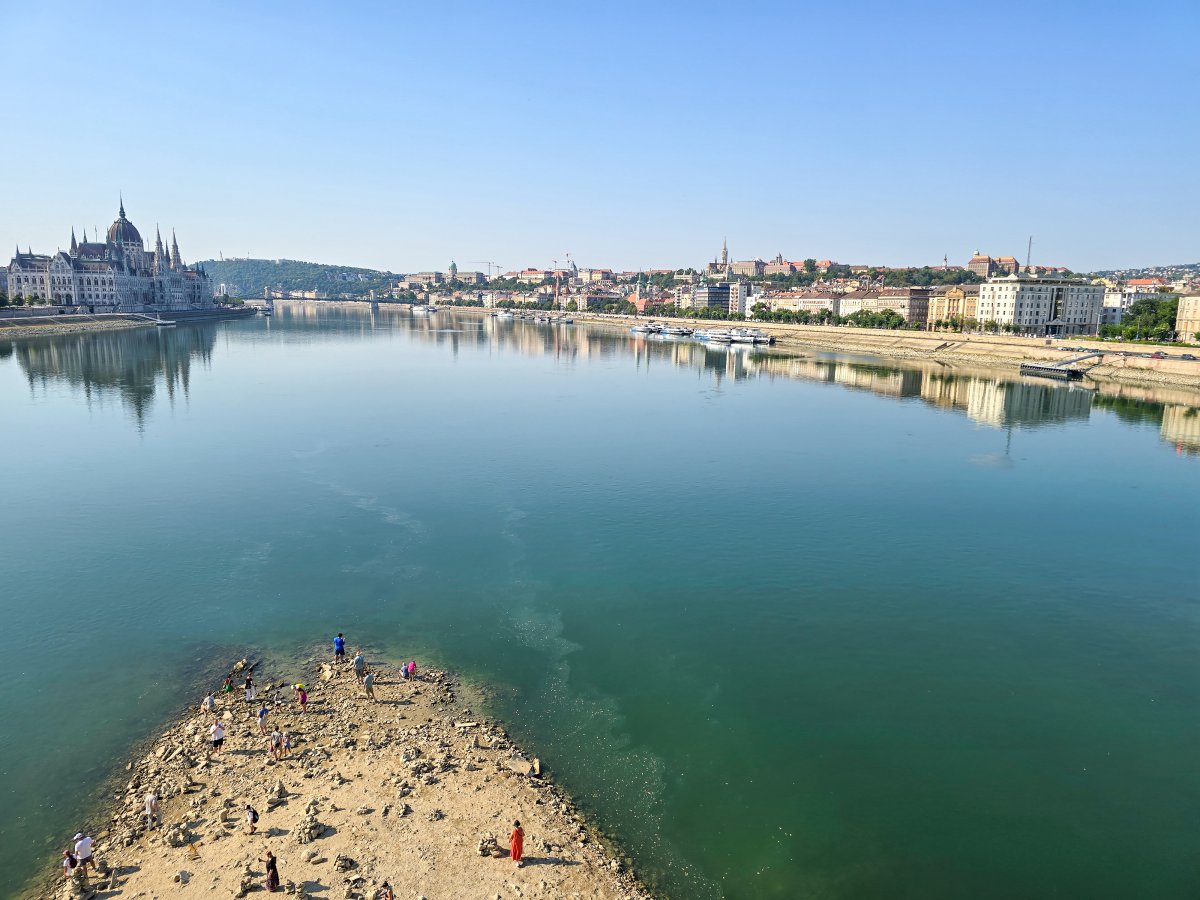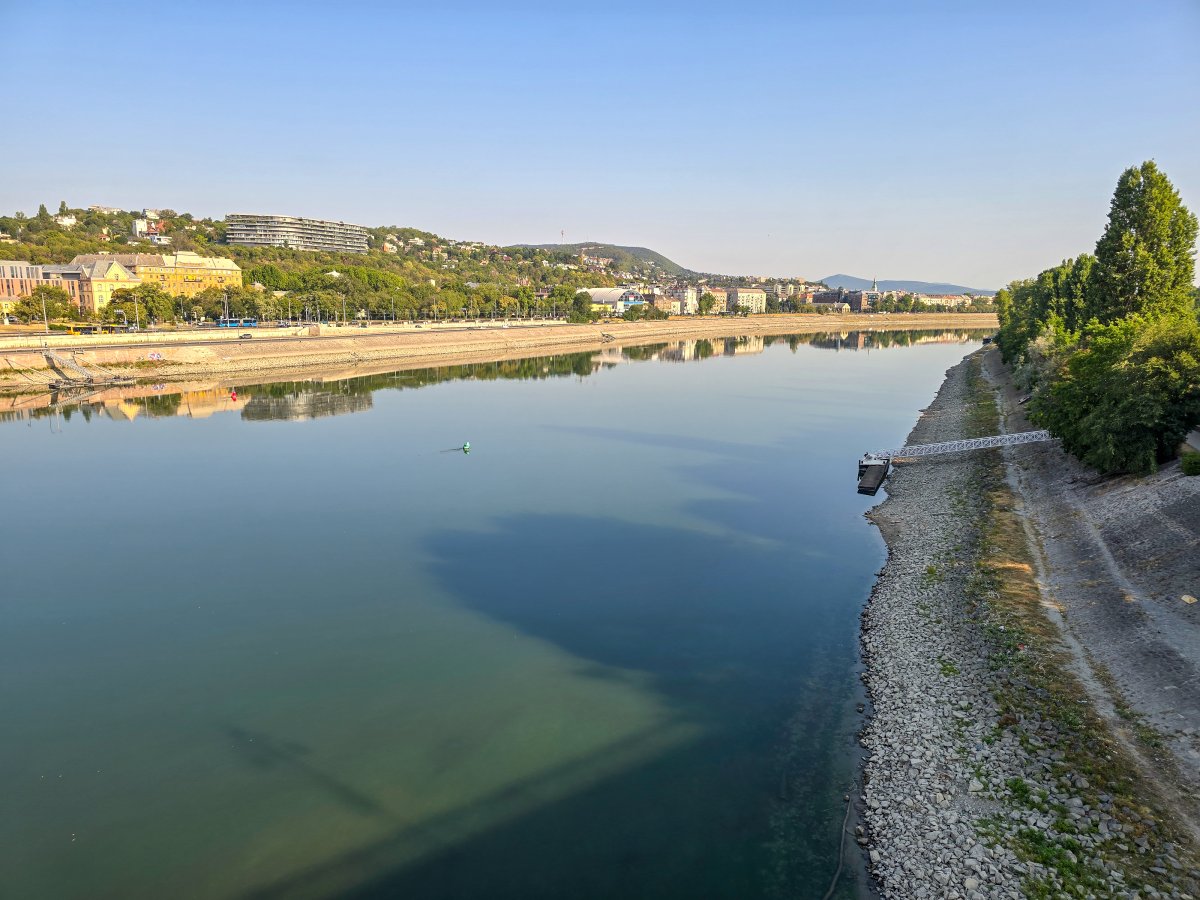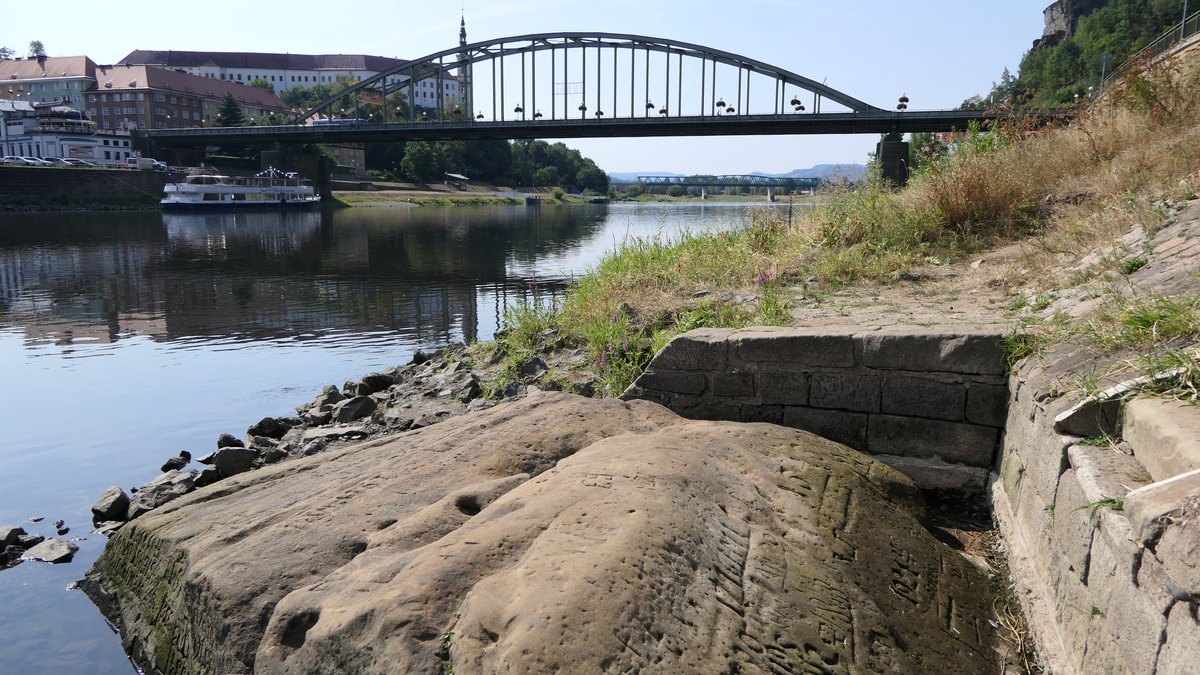



Record-low water levels exposed sections of the riverbed that had been underwater for years. During the same survey, however, the museum also found an object it considers to be unexploded ammunition from World War II, and called in bomb disposal experts. Archaeology News Online Magazine ↗
Key actors — tap for context

Intercisa
A Roman military camp with adjacent civilian settlement on the Danube frontier of the empire, at the site of present-day Dunaújváros.
Why here: It is precisely its monuments that the river is revealing at record-low water levels.
More info →Intercisa Museum
A municipal museum in Dunaújváros that manages Roman collections from the former Intercisa.
Why here: Its staff lifted the finds from the riverbed and publicized them.

Dunaújváros
A Hungarian town on the right bank of the Danube about 60 kilometers south of Budapest, founded in the 1950s as a steel-manufacturing town.
Why here: The finds appeared in the riverbed at its boundary, around Szalki Island.
More info →
Jupiter
The highest god of the Roman pantheon, lord of the sky and lightning, protector of the state and its oaths.
Why here: The first pulled altar belonged to him.
More info →
Elagabal
A sun deity from Syrian Emesa, whose cult spread through eastern units all the way to the Danube frontier.
Why here: Earlier inscriptions document him at Intercisa, but the new find is not yet connected to him.
More info →
Pannonia
A Roman province on the Middle Danube, including the territory of present-day western Hungary.
Why here: Intercisa guarded its Danube frontier.
More info →
Constantine I
Roman emperor from 306 to 337, who shifted the empire's center of gravity eastward and legalized Christianity.
Why here: During his reign, a Danube bridge was built, whose foundations have now been revealed by low water in Bulgaria.
More info →
Petrovaradin Fortress
A Habsburg fortress above the Danube near Novi Sad, built from the late 17th century against the Ottoman Empire.
Why here: Its sunken forward fortification Szigetsánc emerged from the river.
More info →
Vistula
The longest Polish river, flowing from the Beskids through Kraków and Warsaw to the Baltic Sea.
Why here: It too revealed prehistoric tools at low water levels.
More info →Searching for a monastery, found Rome
Museum staff searched with archaeologist-diver Attila J. Tóth around Szalki Island and focused on a location where they suspected a vanished medieval Pentele monastery. Instead of medieval walls, a fragment of a Roman altar dedicated to Jupiter emerged from the riverbed, and a few days later two fragments of a limestone slab with inscriptions. Múlt-kor ↗The series continued. Archaeologist-museologist Antal Tibor Szabó announced according to the city website another altar fragment which, according to preliminary reading, was dedicated to the sun god, in the Hungarian source designated as "Deus Sol," and finally a particularly decorated piece of stone with grape clusters, tendrils, and vine leaves. The latter was brought to the museum thanks to a report from three local residents. Dunaújváros Online ↗
How one recognizes which god an altar was dedicated to
The shape of the stone reveals only that it is an altar — a base, a body with an inscription field, and a capital with a shallow bowl for libations. Who it was dedicated to is told by the inscription, and Roman votive altars have very standardized formulations in this respect. Dedication to Jupiter almost always begins with the abbreviation I O M, meaning Iovi Optimo Maximo — "To Jupiter Best and Greatest." This is followed by the donor's name, his function or unit, and at the end there is usually the formula V S L M, votum solvit libens merito, meaning that the donor fulfilled his vow willingly and deservedly.Precisely for this reason, even a fragment can be sufficient for identification. I O M is one of the most common abbreviations in all Roman epigraphy, so if this abbreviation is legible on the altar in the first line, it is very strong evidence of dedication to Jupiter. With the second find, caution is warranted — the museum states that the inscription is heavily worn and the stone will require further cleaning and study. Dedication to the sun god is so far a preliminary reading, not a final result. The museum has not yet published the complete text of the Jupiter altar inscription either. Dunaújváros Online ↗
A border garrison from Syria
Intercisa was not an insignificant border settlement, but a military camp with a civilian settlement directly on the Danube limes in the province of Pannonia, that is, on the frontier of the empire, and from the late 2nd century the cohors I milliaria Hemesenorum — a thousand-strong unit of archers recruited in Syrian Emesa, present-day Homs — was stationed in the camp. The soldiers brought their home cults with them, and according to local inscriptions, the sun god Elagabal and the goddess Diana Tifatina held a special place, to whom the unit built a temple in the year 202. Princeton Encyclopedia of Classical Sites ↗Available reports do not connect the new stone with this garrison and cannot yet connect it — the inscription is destroyed and sun deities were worshipped throughout the empire. But it shows why Hungarian archaeologists expect more from cleaning than just confirming the name of the god. Inscriptions on such altars and slabs often bear specific names, military units, and dates — precisely what can be pieced together about life on the frontier of the empire. Archaeology News Online Magazine ↗
The river gives and closes again in a few weeks
Hungary is not alone. In northern Bulgaria near the village of Gigen, the foundations of a bridge erected by Emperor Constantine I and completed in 328 emerged from the water. The more than two-kilometer-long structure connected Ulpia Oescus on the southern bank with Sucidava on the northern and was among the longest known ancient bridges. However, it served only for a few decades; by 367 it was probably no longer usable according to experts. The exact time and circumstances of its destruction remain unexplained to this day. Múlt-kor ↗The team of the Regional Historical Museum in Pleven is therefore working with drones. Archaeologist Pavel Popov speaks of a rare opportunity to document and survey commonly submerged structural elements directly in the field while the rising water level again conceals them. Pravda ↗
Near the Serbian Novi Sad, remains of Szigetsánc appeared, in German Insel Schanz. This forward fortification with earthen ramparts, four bastions, a water-filled moat, and covered communication trenches was built in the mid-18th century as part of the external defense of Petrovaradin Fortress to prevent the enemy from crossing the Danube. The riverbed has since shifted, the river has washed away much of Varadin Island, and the main channel cut through, so the small fortress ended up underwater. It was last mentioned in 1999 when machinery hit its remains during the construction of an underwater gas pipeline. HVG ↗
It is not just about the Danube. Low water on the Vistula revealed an axe and a mattock made of deer antler in Warsaw territory, which experts preliminarily date to the Neolithic. They were found by the Million Explorers Team group, and according to its members, the objects likely came loose from a settlement further upstream and the water brought them to the city. STVR ↗
Stones belong to the state and munitions lie in the riverbed
The museum added a warning to reports of the finds. According to it, activity by treasure hunters has significantly increased along the Danube, while Roman and other archaeological stone fragments are, under Hungarian law, state property. Their appropriation is a criminal offense and the museum warns that it will report such cases to the police. At the same time, it points out that the river level is currently rising and the current is very strong, so entering the water can be life-threatening. Dunaújváros Online ↗The exposed riverbed is revealing not only antiquity but also war — in Budapest a German motorcycle with human remains, near Kisoroszi a half-ton bomb, near Komárno a British anti-ship mine.
Read also: The Danube revealed a German motorcycle with a soldier's remains and a bomb. Drying rivers uncover war, mammoths and hungry stones
This window on such finds is closing unevenly. On the Hungarian section, the water level rose after the historical minimum and the Paks power plant began restoring capacity. Onet ↗
The situation is opposite on the lower reaches. Romania shut down the second reactor of the Cernavodă nuclear power plant on August 13, having already turned off the first at the end of July, so the power plant is completely offline. HN ↗
What hotinfo is monitoring
- The Intercisa Museum publishes a reading of the inscription on the altar dedicated to Jupiter (the donor's name, unit, dating).
- Cleaning the second fragment confirms or refutes a dedication to the sun god ("Deus Sol").
- Traces of the presumed Pentele monastery — the original target of the survey — are found in the riverbed.
- The Regional History Museum in Pleven publishes the drone survey of the foundations of Constantine's bridge.
- Cernavodă resumes operation once the Danube rises on its lower course.