
Key actors — tap for context
24 Chasa
Bulgarian opinion-leading newspaper based in Sofia, has been published since 1991 and ranks among the newspapers with the highest circulation in the country.
Why here: It was the first to attempt to quantify how much the record low Danube cost the entire region.
More info →Triodos
Dutch bank based in Zeist, focuses on ethical and sustainable banking, founded in 1980.
Why here: Its estimate of the impacts of heat waves on the EU economy is the foundation from which the Bulgarian calculation is derived — but it does not mention the Danube.
More info →
Danube
The second longest river in Europe, flows through ten countries from the Black Forest to the Black Sea.
Why here: Its record low water level is the subject of the entire calculation.
More info →Danube Commission
Intergovernmental organization that has overseen the rules of international navigation on the navigable section of the Danube to the Black Sea since 1948.
Why here: It is among the bodies that have not yet published a comprehensive loss balance from the drought.
More info →
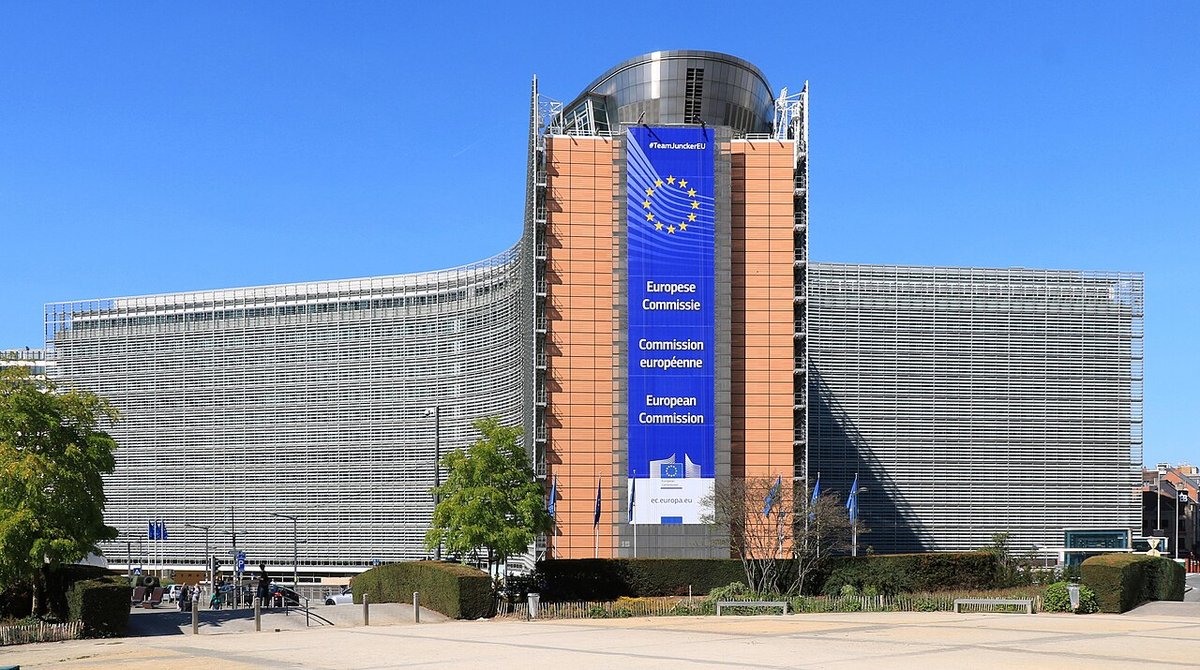
European Commission
The executive body of the European Union based in Brussels.
Why here: Its Joint Research Centre models the damage from drought, but has not published a balance sheet for this year's season.
More info →
Nature Climate Change
A peer-reviewed monthly journal published by Nature Portfolio on climate change and its consequences, has been published since 2011.
Why here: It brought a study with annual damage from drought for each EU country, including Slovakia's 84 million euros.
More info →
Cernavodă
Romania's only nuclear power plant, located on the banks of the Danube and supplies approximately one-fifth of Romanian electricity.
Why here: Due to the low water level, it had to shut down a reactor block, which is the most visible energy impact of the drought.
More info →
Paks
Hungarian nuclear power plant on the Danube south of Budapest.
Why here: Due to lack of cooling water, it reduced output and is starting up gradually, turbine after turbine.
More info →What the Bulgarian newspaper says
The 24 Chasa calculation is based on a simple calculation. Austria, Slovakia, Hungary, Croatia, Romania and Bulgaria have a combined economy of around 1,560 billion euros, with Serbia around 1,650 billion. If drought cuts one percent from the economy's performance — through lower labor productivity, a decline in agricultural production of three to seven percent, more expensive electricity and limited river transportation — the upper limit comes out to 16.5 billion euros. The newspaper got the lower limit of five to six billion from the intersection of several approaches, and then expresses the entire range as half a percent to one percent of the combined economy. The newspaper calls it the most expensive drought in European history, if it is confirmed in the fall. 24 Chasa ↗Behind this lies a peer-reviewed work, which we verified in the original. The team of Gustav Naumann from the Joint Research Centre of the Commission calculated in the journal Nature Climate Change the average annual damages from drought for each EU country. Romania is at 388 million euros per year, Austria at 244, Hungary at 162, Bulgaria at 89, Slovakia at 84 and Croatia at 72 million. Romania and Bulgaria are at the same time the countries affected most by drought in relation to the size of the economy — 0.30 and 0.24 percent of gross domestic product. Nature Climate Change ↗
The most concrete is the Bulgarian part of the account, because there the newspaper calculates its own figures. Every ten centimeters of decline means 330 fewer tons of cargo, ships sail at a third of capacity, shipping charges rose by a tenth, and overall costs in some places by a quarter. The port of Ruse does not receive around fifty of the planned five hundred ships, and rents for arable land between Vidin and Silistra have fallen by ten to twenty-five percent. 24 Chasa ↗
An Account Nobody Is Keeping
- The first account item from the previous wave is closing: Romania's Cernavodă could start up "in two to three weeks." Pro TV presents this as good news amid the energy crisis. The plant supplies approximately a fifth of Romania's electricity, and its restart depended on the Danube's water flows — the same variable that starts this entire article. Pro TV Stirile ↗
- The account doesn't close, however, but shifts to gas: Europe is once again on the threshold of a gas crisis according to a Moldovan server, and prices could exceed 100 euros per megawatt-hour. If true, it's the second half of the same equation — the less water for nuclear cooling and hydroelectric plants, the greater the demand for gas. BANI.md ↗
- Swedish Dagens Nyheter poses a question that both Cernavodă and Paks raised, but neither editorial has yet generalized: how will nuclear energy cope with a warmer climate? Cooling water is the common denominator of shutdowns from the Danube to the Rhône, and it's a systemic problem, not a series of coincidences. Dagens Nyheter ↗
- The first sectoral account outside energy and grain: French cheese producers. Le Monde quotes them saying "if it repeats next year, it will be a catastrophe," and Austrian radio the same day reports that production rules were relaxed for them due to the drought. Regulatory relief is precisely the type of cost that won't appear in any damage statistic. Le Monde ↗ORF ↗
- The human account from the previous wave got differentiation: women suffer from heat waves significantly more and die from them more often. The Swiss survey is the first data point in this series that divides victims differently than by country — and shows that even "15,800 dead" is not an evenly distributed figure. Tages-Anzeiger ↗
- And a counterexample to this article's conclusion that drought is not a loss for everyone: heat in Europe helps Croatian salt producers. Latvian public television presents it without irony — higher evaporation means higher production. It's the same mechanism that a Hungarian study described regarding food prices in 2022. LSM ↗
- The first figure that really belongs in an empty account came from Lisbon — and it's not about the Danube, but about fields. Drought and prolonged heat waves cut European summer crops this year by up to 14 percent and threaten reserves, writes Portuguese Jornal de Negócios. It's the first pan-European sectoral estimate of this season; but no one has connected it with the Danube corridor, so it still doesn't fit into the balance that's missing. Jornal de Negócios ↗
- Cernavodă has been down for the second week, and Bucharest can't say when it will start up. The secretary general of Romania's energy ministry conditioned it on one thing: "It depends on the Danube's flows." Thus, the Romanian power plant became the only item on our list that hasn't improved since the text was published, but has worsened. Digi24 ↗
- The Hungarian government immediately made it a political argument. Peter Magyar announced that Paks is running again at maximum capacity, and added: "Meanwhile, the Romanian nuclear power plant, which so-called experts previously held as an example, has been down for two weeks already." For the first time, shutdowns on the same river became a comparison of the competence of two governments. G4Media ↗
- Germany's Robert Koch Institute calculated the human side of that same summer: 15,800 deaths from heat waves, roughly two-thirds in June. It's the first official figure of this season from a state institution of any Danube country — and it's about people, not euros. Tagesspiegel ↗Süddeutsche Zeitung ↗
- Austrian statistics report slightly elevated mortality during the July and August heat waves — a more cautious formulation than the German, but from the same summer and the same river. Der Standard ↗Die Presse ↗
- In hops, one can see that the same summer didn't hit everywhere equally. According to Süddeutsche Zeitung, German growers are in ongoing crisis and have poor harvest forecasts; conversely, Austrian hop growers from Leutschach expect a good-quality harvest. A difference of two hundred kilometers on the same river is exactly why pan-European estimates can't be recalculated for Danube countries. Süddeutsche Zeitung ↗Kleine Zeitung ↗
- France is addressing its drought outside its river basin: Minister Genevard summoned prefects ahead of an emergency aid package. It shows that even countries without the Danube problem already have the season calculated enough to allocate money to it — while on the Danube, no one still knows how much is at stake. Le Figaro ↗
- And two marginal figures that show the extent of the summer better than estimates: Malta survived a hundred days without significant rainfall, and the British National Trust must feed animals with winter supplies months earlier due to drought. Lovin Malta ↗The Independent ↗
- The account can be calculated from the other side too: Paks is back at maximum power. The Hungarian nuclear power plant, which had to reduce its power due to the low Danube, is now running at full capacity again — announced Prime Minister Péter Magyar (Telex, HVG). This is the first item from this drought that has been settled and can be precisely dated. Telex ↗, HVG ↗
- Hungarian Index went to see the outage by boat — and found volunteers and a built-up riverbed threshold. The report from the site shows what the number "reduced power" actually meant: emergency modification of the riverbed so water could even reach the cooling system. Index ↗
- Austria followed it as its own topic. Both ORF and Kurier included Paks's return to full power in the news, even though the power plant is in Hungary; Kurier even has the word Danube directly in the article's URL. The river is shared infrastructure, even though each country keeps its own account for it. ORF ↗, Kurier ↗
- And from Belgrade it sounds like relief: "Hungary has caught its breath." Serbian Kurir reported on the power plant's return to full power (Kurir). The same event thus passed through Hungarian, Austrian and Serbian media in one evening — unlike the shared damage balance, which according to this article no one continues to keep. Kurir ↗
- At the Sulina Canal, 70 ships are waiting — the same artery is also being closed by Russian missiles. Reuters calculated that on the lower Danube, up to seventy vessels were stranded waiting to load Ukrainian grain because Russia intensified strikes on the ports of Izmail and Reni. Drought throttles the upper half of the corridor, war the lower — and the account for both is again not tallied anywhere. Censor.NET ↗
- Romanian perspective: the problem is not depth, but the capacity of a single navigable arm. The Sulina Canal is the only route from the Danube to the Black Sea through which seagoing vessels pass, and a queue forms in front of it even without drought. HotNews ↗
- Even Serbian press writes that the missing European balance is not a coincidence. Belgrade's Nova describes the same pattern we found in the Bulgarian calculation: individual states resort to desperate measures, the Union has neither a joint plan nor joint figures. Nova ↗
This is the point where the Bulgarian text differs from everything that has been published about the Danube in Slovak and Czech media. We covered the season event by event — Bulgaria for the first time in 52 years restricted nuclear power, Paks ramped up turbine by turbine, the Danube at Štúrov fell to a record low. No one added up the sum.
Read also: Bulgaria for the first time in 52 years reduced nuclear power. The Danube at Bratislava no longer provides water
The reason is not media laziness, but the fact that such statistics do not exist. The cited study itself warns that drought damage is recorded incoherently across sectors, its own estimate is 35 percent higher than the European Environmental Agency's figure, and according to the authors, actual losses are likely even higher than currently understood. Even the published version of the Commission's model breaks down damage into only four European regions, not individual states. Joint Research Centre ↗
One of the few direct macroanalyses of the Danube came from a commercial bank. ING's chief economist for Romania, Valentin Tataru, calculated in early August that flow at Baziaș dropped on July 31 to 1,600 cubic meters per second compared to the normal July average of 4,700, thus by two-thirds. Cernavodă, which supplies roughly one-fifth of Romanian electricity, had to shut down a unit, and cargo ships on the Romanian-Bulgarian section sailed at half capacity with premiums for low water. ING ↗
The only Danube figure that was actually counted in Slovakia this month is a contract. The Slovak National Party is asking Minister Tomáš Tarabu to verify contracts for removing sediment from the river for 137 million euros. This is a dispute about public procurement, not drought damage. Aktuality.sk ↗
Meanwhile, Hungary stopped merely counting the bill and started pouring concrete into the river. Government commissioner István Kapitány announced on Sunday that the first phase of the Danube riverbed threshold is complete; according to Telex and Magyar Nemzet, the army is dropping multi-ton concrete cubes from helicopters so the Danube doesn't wash away the threshold at Paks. This is the first item on the other side of the account — not drought damage, but the price for the nuclear power plant to have something to cool. (Portfolio ↗, Telex ↗, Magyar Nemzet ↗)
Limits of this view
The Triodos estimate, which the entire calculation relies on, does not concern the Danube. The bank talks about the impact of extreme heat on the entire EU — around one percent of GDP, roughly 180 billion euros for 2026 — and mentions the most affected countries itself: France with a drop of 1.4 percentage points, then Italy, Spain, Belgium, and the Netherlands. Not a single Danube country is among them. Transferring the EU-wide ceiling to six states on the Danube is a step the bank did not take. Triodos ↗Caution is also required in two other places. The shares of 0.30 and 0.24 percent of GDP are long-term annual averages in today's climate, not a forecast of damage for this season. And the Hungarian study on the 2022 drought, which the newspaper uses to support its estimate, has Zsolt Pinke as the first author. Zoltán Kern, whose name the newspaper mentions, is its co-author. More importantly, what it says: although production fell, the added value to agriculture then increased, because food prices skyrocketed. Drought is not automatically a loss for everyone in it. EuroChoices ↗
For the Slovak reader, the last caveat is the most important. In the same model from which the Slovak 84 million comes, Slovakia's damage with warming decreases — at four degrees to 57 million — while Bulgaria's more than triples to 327. Drought in the middle course is expected to decline slightly according to the model and increase in the lower course. The Bulgarian account is therefore a legitimate view of what the river costs the Balkans, not a ready-made warning for Bratislava. Nature Climate Change ↗
This is the final update wave for this article. The Danube drought doesn't end there — you'll find further developments in separate articles, which we'll link to in order to keep this overview readable.
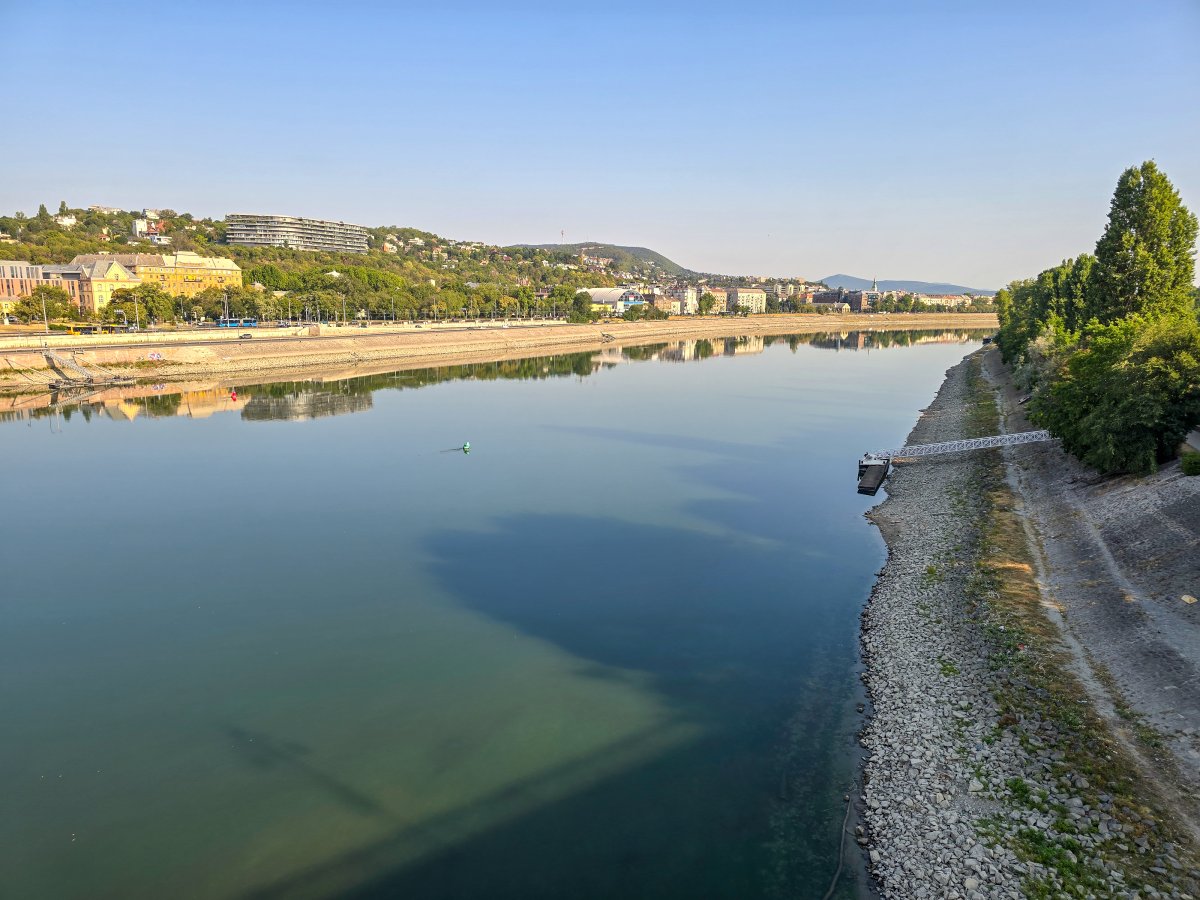
Illustration photo: low water level of the Danube in Budapest from Margit Bridge, August 2, 2026. Author Szilas, Wikimedia Commons, license CC BY 4.0. Image is reduced. Wikimedia Commons ↗
What hotinfo is tracking
- The European Commission or the International Commission for the Protection of the Danube published a summary of losses for the 2026 season.
- The Bulgarian Ministry of Agriculture calculated the yield of spring crops, namely corn and sunflower, which drought caught in full growth.
- Cernavodă returned to full operation and Paks came online with all eight turbines.
- The Environment Ministry responded to the Slovak National Party's call to verify contracts for Danube sediments for 137 million euros.
- An independent recalculation of losses specifically for Danube states appeared, which does not stem from the EU-wide heat estimate.