


Key actors — tap for context

Antti Häkkänen
Finnish Minister of Defence for the governing National Coalition Party (Kokoomus).
Why here: Introduced the amendment and defends it as strengthening NATO deterrence.
More info →
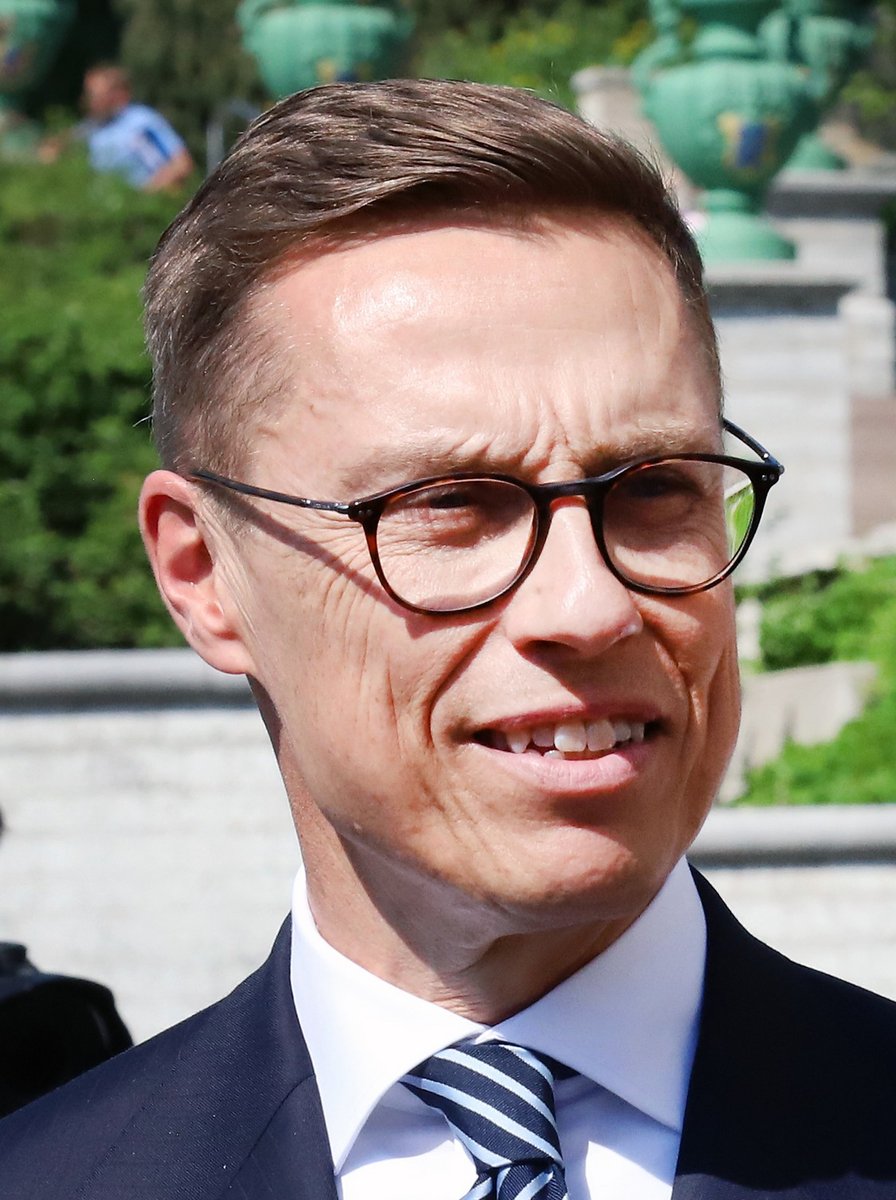
Alexander Stubb
Finnish President since 2024, former prime minister and foreign minister.
Why here: Must sign the law; reiterates that Finland does not want to host nuclear weapons in peacetime.
More info →
Petteri Orpo
Finnish Prime Minister, leader of the National Coalition Party.
Why here: Has expressed interest in France's nuclear deterrence scheme.
More info →
NATO
The North Atlantic Alliance, which Finland joined in April 2023.
Why here: The amendment aims to align Finnish law with its deterrence policy.
More info →The Vote and What the Amendment Changes
Lawmakers voted through an amendment to the 1987 Nuclear Energy Act, which until now had banned the import, manufacture, possession and detonation of nuclear explosives on Finnish territory. Under the change, it will be possible to "import, transport, deliver or possess" nuclear weapons if required by the country's defence. The original law dates back to the Cold War era, when Finland balanced between East and West. Yle ↗The bill was introduced by Defence Minister Antti Häkkänen. He argued that the amendment "strengthens Finland's defence and allows full use of NATO's nuclear deterrence as protection for Finland." The Criminal Code, meanwhile, continues to criminalize the acquisition, manufacture, development or detonation of a nuclear device; the exceptions apply to the import, transport, delivery or possession of such weapons in the context of Finland's defence, NATO's collective defence, or defence cooperation. Euronews ↗
Why Now
Finland joined NATO in April 2023 as a direct response to Russia's invasion of Ukraine, abandoning decades of military non-alignment. Membership — together with a roughly 1,340-kilometre border with Russia — also raised the question of whether laws from the non-alignment era still matched the new security reality. For NATO's eastern flank, which includes Slovakia, the Baltic states and Poland, Finland's move is a signal of how far a border country is willing to go in integrating into the alliance's deterrence architecture. Defense News ↗In doing so, Finland is opting for a more far-reaching legal change than its neighbours. According to Defense News, Sweden, Denmark and Norway have only peacetime political commitments not to want nuclear weapons on their territory; they never had a comparable statutory ban like the one Finland has just removed. Defense News ↗
Does This Mean Nuclear Weapons on Finnish Soil?
No — at least not according to the Finnish government. The official statement on the bill says that "the amendment does not mean that Finland is seeking to have nuclear weapons on its territory" and that "Finland is not pursuing this, nor does NATO plan it." Fínska vláda ↗President Alexander Stubb already stressed in March that the country does not need nuclear weapons in peacetime and that the amendment merely aligns the law with NATO's deterrence policy. The change thus creates a legal possibility, not an actual deployment. APA ↗
A majority of the Finnish public does not support deploying nuclear weapons either: according to a May YouGov survey for the ICAN organization, only 18 percent of respondents were in favour, while 58 percent were opposed. Critics from disarmament organizations further argue that the change actually endangers Finland. "Finland is making itself an obvious target and lowering the threshold for a preemptive strike," warned ICAN Executive Director Melissa Parke. Citing researchers from the SIPRI institute, the organization adds that Finland lies only about 160 kilometres from one of Russia's main nuclear submarine bases. ICAN ↗
Reactions and Next Steps
The opposition voted against the amendment, including the Social Democrats and the Left Alliance, who view it as a departure from Finland's tradition of a total ban. Euronews ↗Moscow has long opposed NATO enlargement and nuclear integration near its borders. Back when Finland and Sweden joined the alliance in 2022, Russia warned that it would respond by reinforcing its forces along its northern borders and could deploy nuclear weapons to the Baltic region. Al Jazeera ↗
The law now requires President Stubb's signature to take effect. Prime Minister Petteri Orpo, meanwhile, expressed interest in June in France's nuclear deterrence scheme, suggesting that the debate over a European "nuclear umbrella" will continue to concern Finland as well. Euronews ↗
What hotinfo Is Watching
- Whether and when President Stubb will sign the law — the final formal step toward it taking effect.
- Whether Finland shows interest in NATO's nuclear sharing mechanism (as with Germany, Italy, Belgium or the Netherlands); for now, this is not on the table.
- Russian "countermeasures" along the northern border (Leningrad Oblast, Karelia).
- Whether other eastern flank states move toward similar legal alignment.