


Key actors — tap for context
Ma7
News portal and weekly Magyar7 for the Hungarian minority in southern Slovakia, published by the Pro Media Alapítvány foundation.
Why here: According to RTL, it has received more than 4.3 billion forints from the Hungarian state budget since 2018, with the vast majority of its income coming from subsidies.
Pro Media Alapítvány
Foundation that formally operates the Ma7 portal and the Magyar7 weekly.
Why here: Recipient of nearly all Hungarian state funding for Ma7 since 2018.
Bethlen Gábor Alap
Hungarian state fund supporting Hungarians abroad, originally administered directly by the Office of the Prime Minister.
Why here: Source of nearly all support for Ma7 and, more broadly, over 144 million euros for the Hungarian community in Slovakia in recent years.

Molnár Judit
Editor-in-chief of the Ma7 portal.
Why here: Defends the funding as transparent and says the newsroom will operate even without Hungarian subsidies.
More info →Zoltán Szalay
Managing editor of the independent Hungarian-language portal Napunk.sk, operated by Denník N.
Why here: Criticizes the one-sided distribution of Hungarian state support and speaks of a distortion of the media structure in southern Slovakia.
Napunk.sk
Independent Hungarian-language news portal for the Hungarian minority in Slovakia, a reader-funded project of Denník N.
Why here: According to Zoltán Szalay, independent Hungarian-language newsrooms in southern Slovakia have received no support from the Hungarian state in ten years.

Zoltán Tarr
Hungarian minister responsible for social relations and culture in the Tisza government.
Why here: Announced a review of funding for cross-border Hungarian organizations, including media, which he says spread propaganda.
More info →
Magyar Péter
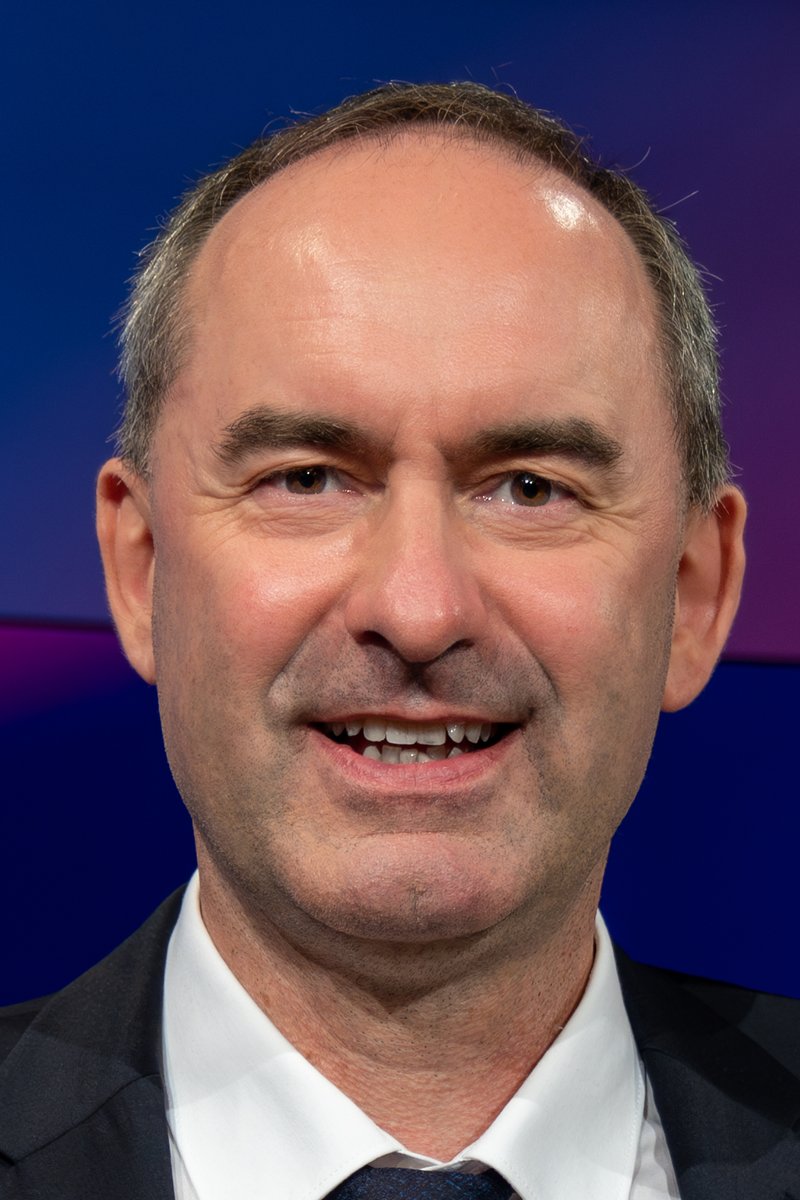
Chairman of the Tisza party and Hungarian prime minister since May 2026.
Why here: His government ended sixteen years of Fidesz rule after the April elections and is now overseeing the funding review.
More info →
Viktor Orbán
Chairman of Fidesz and Hungarian prime minister from 2010 to 2026.
Why here: His government approved funding for Ma7 every year since 2018.
More info →RTL Híradó
Main news program of the Hungarian commercial channel RTL.
Why here: Author of the investigation into Ma7's funding, on which the Hungarian dailies 444, HVG and Index based their reports.
More info →What Hungarian RTL revealed
According to documents obtained by RTL Híradó, the Pro Media Alapítvány foundation, publisher of Ma7, received nearly half a billion forints every year from 2018 onward — specifically 485 million in 2018, 491 million in 2019, 475 million in 2020, 489 million in 2021, and finally 475 million forints annually from 2022 to 2026. Index ↗ According to RTL and Hungarian dailies, both the portal and the Magyar7 weekly regularly conveyed Fidesz's messaging during the April election campaign — editor-in-chief Molnár Judit admitted at a summer discussion that the newsroom had feared Fidesz would lose the election. 444.hu ↗Molnár Judit claims the support was spent transparently and that Ma7 will operate even without Hungarian subsidies — she also announced that the newsroom would submit to the reviews announced by the new government. In response to RTL's question, Fidesz said that "it is the duty of every Hungarian government to help the Hungarian press abroad, as it is one of the conditions for the survival of Hungarian identity." HVG ↗ Minister Zoltán Tarr, responsible in the new Tisza government for relations with Hungarians abroad, had already announced a review of funding for cross-border organizations, including media, which he says served as a propaganda tool of the previous government. Index ↗
Why this also concerns Slovakia
Ma7 describes itself as a "Felvidék media family" — that is, a medium for the roughly 8-percent Hungarian-speaking minority in southern Slovakia. This funding is criticized by Zoltán Szalay, managing editor of the independent Hungarian-language portal Napunk.sk, which is operated by the Slovak Denník N. According to him, Hungarian support "over the past ten years" for independent newsrooms in southern Slovakia "hasn't come at all, not a single forint," and its one-sided distribution "has greatly distorted the local media structure." 444.hu ↗ Instead of state support, Napunk.sk relies on reader subscriptions — in its 2024 fundraising campaign, it stated that more than 2,600 people had supported it up to that point. Denník N ↗Ma7 is not the only Hungarian project in southern Slovakia funded from Budapest. According to estimates so far, the Bethlen Gábor Fund has invested about 144 million euros in Slovakia since 2011 in cultural and church organizations, media, schools and sports — including roughly 1 million euros (300 million forints) from this fund for the football academy of the DAC Dunajská Streda club (with a further roughly 6.5 million euros for the academy provided separately by the Hungarian Football Federation). World Soccer ↗ The funds go mainly to the districts of Komárno, Dunajská Streda, Nové Zámky and Rimavská Sobota — the areas with the largest Hungarian minority in Slovakia. Pravda ↗
Limits of this account
Some of the sharpest criticism of Ma7 comes from a commentary on the BUMM.sk portal, which, citing data from the daily Új Szó, claims that Ma7's own revenues totaled only 130,000 euros for the years 2018 to 2025 combined — meaning the Hungarian state paid for more than 98 percent of the portal's operations — and that the declared print run of 7,500 to 8,000 copies does not match the almost zero sales revenue in 2018–2021. BUMM.sk ↗ However, this is a commentary, not an investigation, and its author is openly critical of Ma7 — we were unable to independently verify the accuracy of her figures from Új Szó against the primary source.It should also be taken into account that the review of the previous government's funding is now being led directly by its political successor, which competed with Fidesz for the same voters — the new Tisza government has its own political interest in making the funding look as bad as possible. Finally, the claim that Ma7 "occasionally" adopted pro-Russian narratives after the outbreak of the war in Ukraine currently rests on a single testimony from Zoltán Szalay without specific cited examples — a claim that would deserve independent verification against concrete Ma7 articles.
What hotinfo is following
- Minister Tarr’s review concludes — Ma7 funding is halted, reduced, or continues
- Ma7 publicly responds to the loss of state funding, if it occurs
- The review widens to other Hungarian cross-border projects in Slovakia (schools, culture, sport)
- A Slovak-language outlet picks up the story — so far only Hungarian-language sources have covered it