



Key actors — tap for context
Harald Sandner
German non-fiction author on Nazism and the Second World War, self-taught, born in 1960 in Coburg, originally a merchant and internal auditor
Why here: Found three documents in Munich archives that move the hour the body was found a day earlier
More info →Geli Raubal
Angela Maria Raubal (1908 – 1931), daughter of Hitler's half-sister Angela, and therefore his half-niece
Why here: From 1929 she lived in Hitler's Munich apartment, where she was found dead
More info →
Adolf Hitler
Leader of the NSDAP, German chancellor and dictator from 1933
Why here: The existing chronology placed him outside Munich at the time the body was found
More info →
Franz Gürtner
Conservative politician close to the NSDAP, Bavarian minister of justice from 1922 to 1932, Reich minister of justice from 1932
Why here: Post-war literature links him to the halting of the prosecutor's investigation, but no written proof exists
More info →Münchener Post
Social Democratic Munich daily, one of the most persistent critics of the NSDAP. The Nazis silenced it on 9 March 1933, when SA units wrecked its editorial office
Why here: On Monday, 21 September 1931, it wrote about a quarrel, injuries on the body and party leadership meetings
Johannes Hürter
Historian, head of the Munich research department of the Institute for Contemporary History
Why here: In the past he criticized Sandner's itinerary for lacking a system of citations
More info →
Prinzregentenplatz
Square in Munich's Bogenhausen district on the right bank of the Isar, named after the Bavarian prince regent Luitpold
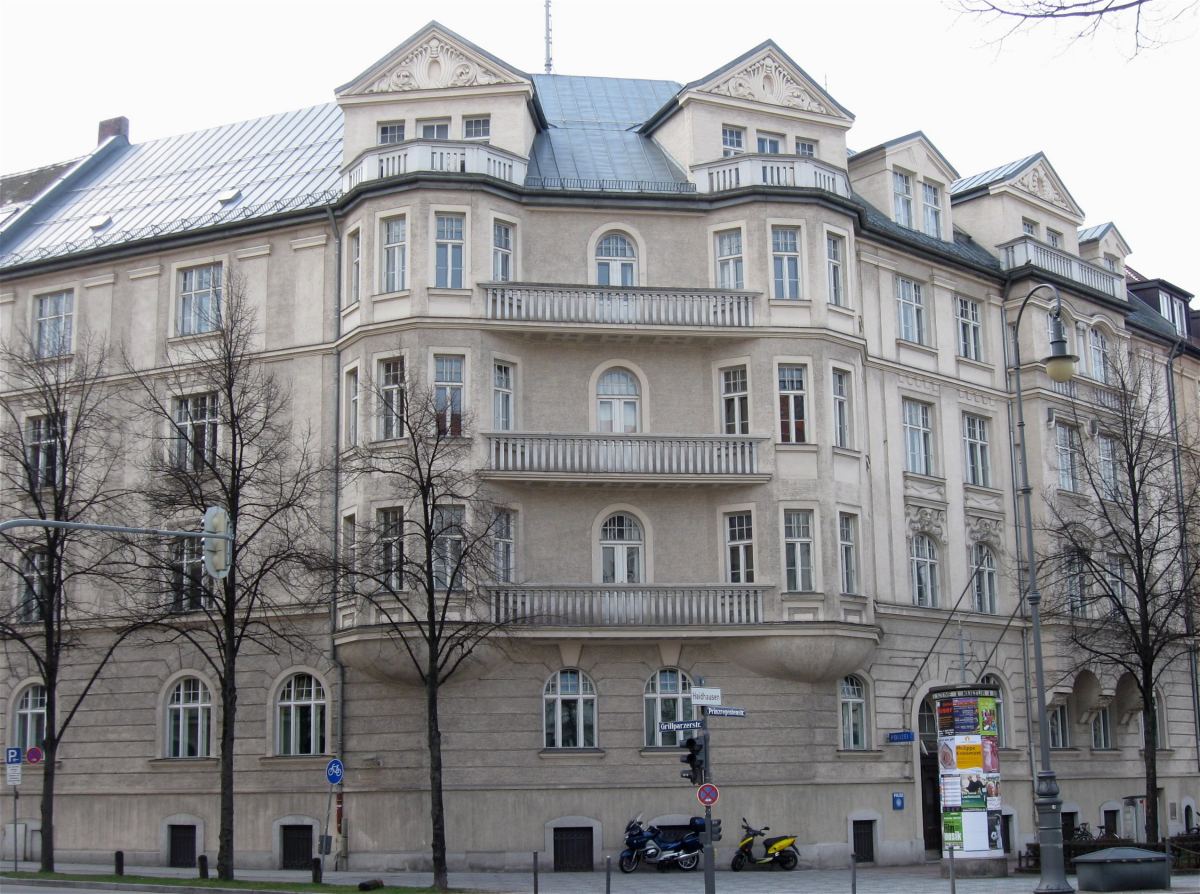
Why here: From 1929 Hitler occupied a second-floor apartment at number 16
More info →Three documents against one police report
According to the magazine Der Spiegel, Sandner searched the State Archive in Munich and the Munich City Archive and found three previously unnoticed records in them: two death notices and an entry in the death register of the Munich II registry office. All three place the discovery of the body on Friday, 18 September 1931, and the registry entry even gives the exact hour, 10:15. Der Spiegel ↗The existing chronology rests on a police report dated 28 September 1931, which places the discovery of the body on the morning of Saturday, 19 September. According to CP24, the body of the twenty-three-year-old Raubal was discovered by Hitler's servant and housekeeper Georg Winter, and according to the biographical literature, together with his wife Anni. A room locked from the inside was among the reasons why the authorities accepted the conclusion of suicide. CP24 ↗
A difference of a single day sounds like an archival trifle. Yet it changes the whole structure of the case: until now, the death could be placed within a window in which Hitler was no longer in the city.
Where Hitler was on Friday morning
Sandner is no random researcher when it comes to Hitler's movements. He is the author of the four-volume work Hitler – Das Itinerar, which reconstructs, day by day, Hitler's whereabouts and journeys from 1889 to 1945. According to this reconstruction, the NSDAP leader attended a party event in Munich on 18 September between 10:30 and 12:30 and travelled to Nuremberg only in the afternoon. L'essentiel ↗If the hour from the register is correct, the body was found shortly before Hitler, according to this reconstruction, appeared at the party event — that is, while he was still in the city. The individual accounts give different times for his departure from Munich, and some place it on the previous day. What they have in common is that they put Hitler away from the apartment in the hours around the death. But being in Munich does not mean being in the apartment: the find calls the chronology into question, not the place where Hitler was at that hour. t-online ↗
The French Le Figaro summarized it as a weakening of the alibi, not as an accusation — its headline says that the new elements "weaken" Hitler's alibi, while the question of the perpetrator remains open. Le Figaro ↗
An investigation that closed before it began
The find arrives in a case that was contested among researchers even without it. Geli Raubal's body was not autopsied; they limited themselves to an external medical examination, and the remains travelled to Vienna, where they were buried in the Central Cemetery. Transport abroad made further examination more difficult.Raubal was twenty-three years old, studied in Munich and from 1929 lived in her uncle's apartment. Contemporary testimony and later literature describe her life in Hitler's household as severely restricted.
Post-war literature links the halting of the prosecutor's investigation to the then Bavarian minister of justice Franz Gürtner, who was close to the NSDAP and became Reich minister of justice in 1932. There is, however, no written proof of such an intervention. The Social Democratic daily Münchener Post, then one of the party's most persistent critics, wrote on 21 September 1931 about a violent quarrel between Hitler and his niece, about injuries found on the body, and about meetings of NSDAP officials on how to present the matter to the public. These were newspaper claims, not findings of an investigation, and Hitler publicly denied them right away.
Sandner invokes precisely this context. He sees indications of a possible cover-up in the fact that a body with a gunshot wound was not autopsied, and in the fact that officials sympathetic to the NSDAP were then working in the Munich police. At the same time, he admits that manipulation cannot be proven. t-online ↗
What the find does not prove
The three documents speak about the hour the body was found, not about the cause of death. They do not prove murder, do not name a perpetrator and do not rule out suicide — Raubal died of a gunshot wound from Hitler's pistol, and the new material changes nothing about that. Nor can it be ruled out that the difference in dates is an administrative error, of the kind that occur in registers. Sandner himself, meanwhile, continues to regard murder as possible.The person of the finder also calls for caution. Sandner is not an academic historian but self-taught — German Wikipedia describes him as a "Barfußhistoriker", that is, an amateur historian. His itinerary has had a mixed reception in the scholarly community: the British historian Brendan Simms called it an exceptionally valuable source, while Johannes Hürter of the Munich Institute for Contemporary History faulted it for lacking a system of citations, which undermines scholarly verifiability. Wikipedia (DE) ↗
That is not a disqualification — it was precisely his itinerary that made it possible to set Hitler's Friday schedule alongside the registry entry. It is a reason to wait and see what the archives and institutes that can verify the documents say about the find. Spiegel reported on the find on 22 September, and we found no expert reaction at the time of going to press.
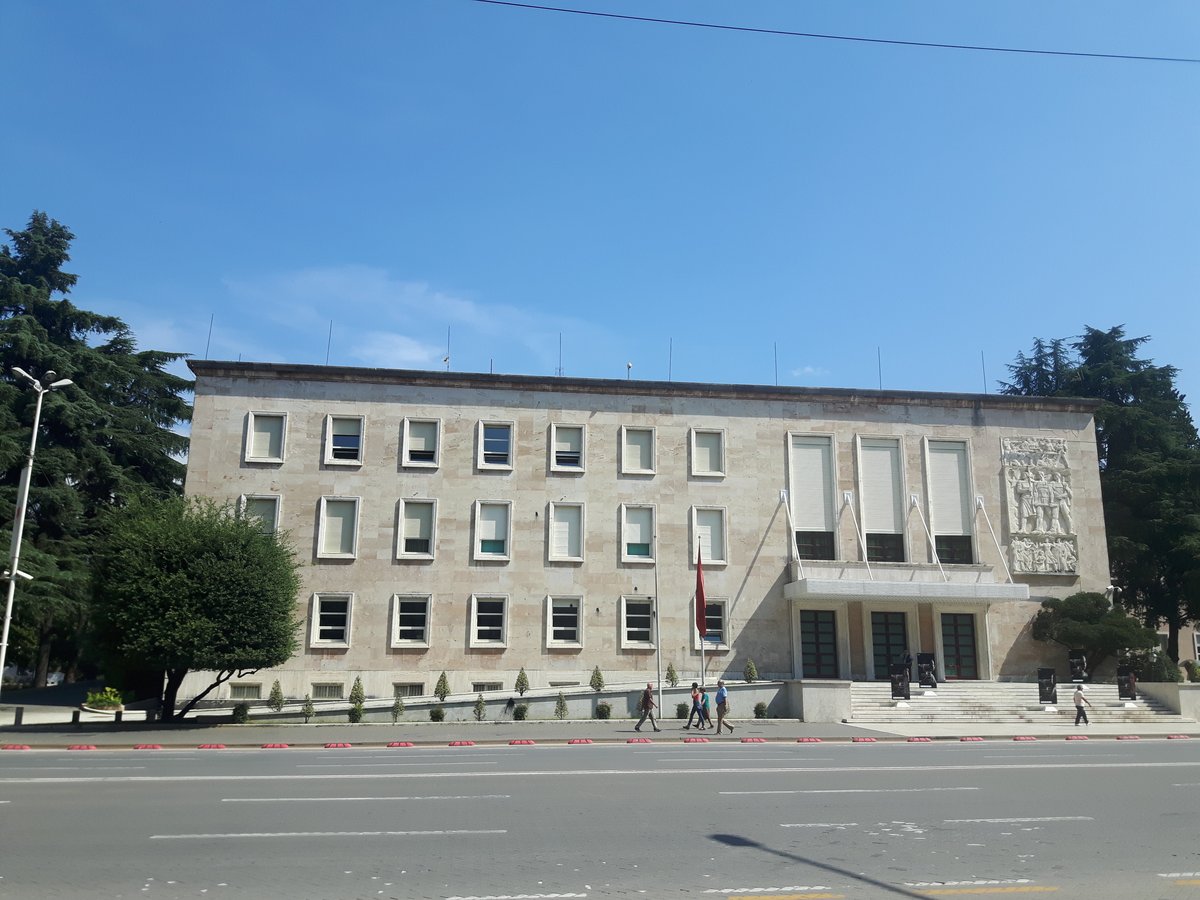
Illustrative photo: the building at Prinzregentenplatz 16 in Munich, where Adolf Hitler had a second-floor apartment from 1929. Photo: Rufus46, Wikimedia Commons, CC BY-SA 3.0.
What hotinfo is watching
- Inštitút pre súdobé dejiny alebo iné odborné pracovisko sa k Sandnerovmu nálezu vyjadrilo.
- Sandner predložil nájdené dokumenty v odbornej publikácii s doloženými signatúrami.
- Štátny archív v Mníchove alebo Mníchovský mestský archív potvrdil pravosť a datovanie troch dokumentov.
- Objavil sa doklad, ktorý rozpor medzi 18. a 19. septembrom vysvetľuje ako úradnú chybu.
- Objavil sa druhý nezávislý doklad o dátume nálezu tela.