

Key actors — tap for context

Maldives
An island state in the Indian Ocean, 1,192 islands in 26 atolls, about 200 of them inhabited. The economy rests almost entirely on tourism.
Why here: According to the WSJ, sanctioned goods bound for Russia pass through its main airport.
More info →Aeroflot
Russia's flagship carrier, itself under Western sanctions.
Why here: According to the investigation, its scheduled aircraft carry transit cargo from Malé to Moscow.
More info →
Wall Street Journal
An American business daily.
Why here: Published the investigation on which this entire report rests. It drew on air waybills, cargo manifests and emails between logistics firms.
More info →Freight Care
A Maldivian logistics company named in the investigation.
Why here: Its director was the only actor to respond to journalists, confirming the transshipment for Russia and denying any knowledge of military goods.

Kyrgyzstan
A Central Asian republic, a member of the Eurasian Economic Union.
Why here: The first country against which the EU applied its new tool against third countries used to circumvent sanctions.
More info →
Sheremetyevo
Russia's largest airport, located near Moscow.
Why here: The destination of the daily flights from Malé.
More info →How goods get disguised as transit
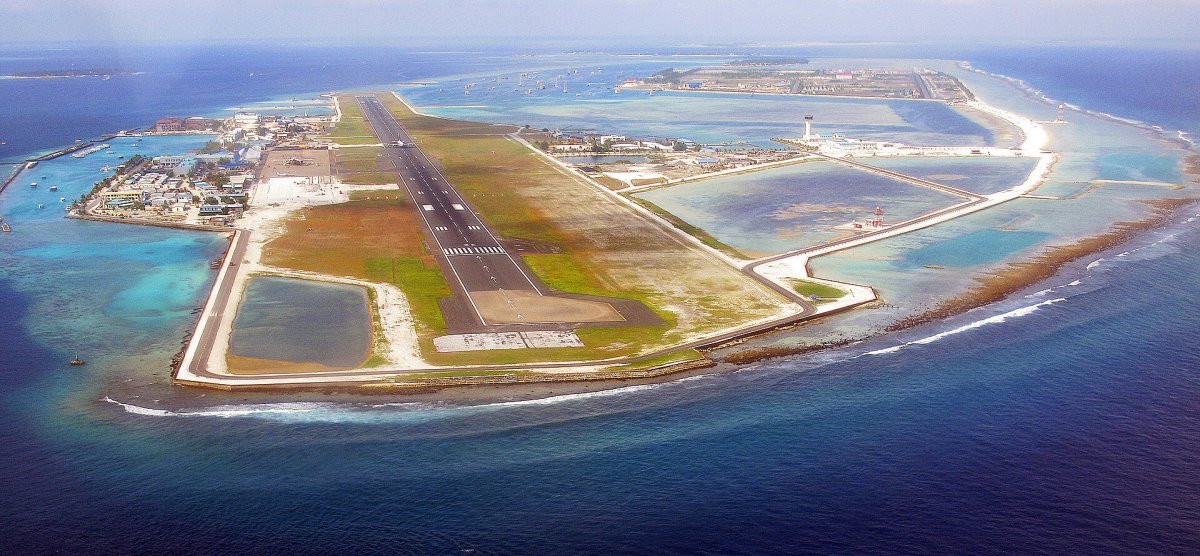
According to the WSJ, the scheme needs neither smugglers nor false bottoms. A Western or Chinese company officially sells the goods to an intermediary in a third country. The shipment flies into Malé but isn't recorded as an import. It stays in the transit zone, where customs control is practically nonexistent. A local logistics company issues a new air waybill for it, in which the original exporter no longer appears. Only the Russian consignee is listed. Kyiv Post ↗The cargo is transferred to an Aeroflot scheduled aircraft. It lands in Malé in the morning, spends roughly two hours at the airport and returns to Moscow's Sheremetyevo, with Russian tourists in the cabin and transit goods in the hold. In Russia the goods are unloaded with no visible link to the supplier. n-tv ↗
As for what goods are involved: microchips, optical instruments, aircraft components, and high-strength aircraft bolts and rivets. These are, in other words, dual-use goods, both civilian and military. Kyiv Post ↗
Two sets of books that contradict each other
Maldivian customs data know almost nothing about this trade. Russian import statistics, which the trade database Import Genius draws on, say something entirely different: under $7 million in 2021, over $630 million in 2022. That is more than a ninety-fold increase in a single year, coincidentally the very year the war began.The same data also show a second movement that doesn't make the headlines: in 2024 it was about $160 million, roughly a quarter of the 2022 peak. We have no newer hard figure. Russia has been censoring the data the database draws on since 2024, and at the start of 2025 it blocked access to it entirely. The decline therefore may not fully reflect real trade. Kyiv Post ↗
So nobody outside can see the current state of affairs. We know the channel came into being and that in 2024 it was still several times above the pre-war level.
Why the Maldives
The islands are made for such a role. In 2025 Russians were the second-largest group of tourists after the Chinese, and they can travel visa-free, so a daily connection with Moscow has a civilian justification. According to the World Bank, tourism made up roughly 21 percent of gross domestic product in 2025. Together with import duties, it accounts for the overwhelming majority of state revenue, which turns any diplomatic dispute with Moscow into an economic threat. World Bank ↗And transshipment pays off directly. Maldives Airports Company, which operates the airport, collects fees for handling air cargo and has become the country's most profitable state enterprise. The more transit to Moscow, the better for the state treasury. n-tv ↗
Compared with the main hubs, it is still small fry. Sanctioned goods worth an estimated $15 billion a year pass through China, Turkey and the United Arab Emirates. The WSJ gives that estimate without a detailed methodology, so it cannot be independently verified.
The tool exists. The EU has already used it once
The tool with which the EU can stop the export of sanctioned goods not only to Russia but also to a third country used for circumvention has existed since the eleventh package of June 2023. It is a measure of last resort: it is adopted unanimously and only after cooperation with the country in question has failed.The EU first used it only with the twentieth package, adopted on 23 April 2026, and Kyrgyzstan became the target. Brussels banned deliveries of CNC machine tools and data transmission equipment to it after imports of the items concerned from the EU to Kyrgyzstan over ten months of 2025 rose ninefold against the pre-war level, and their re-export to Russia rose thirteenfold. According to the analytical project Riddle Russia, the EU repeatedly communicated with the Kyrgyz authorities and held technical consultations during that period, and only then did the restriction come. Riddle Russia ↗
The two sets of figures cannot be compared directly. The Kyrgyz one measures imports of selected items from the EU over ten months, while the Maldivian one measures total Russian imports over a year. What they share is the pattern: a sharp jump without an industrial explanation. The islands are not yet on the list of countries against which the EU has used the tool.
Limits of this view
The entire finding rests on a single investigation. It was published by the Wall Street Journal at the beginning of September, and other newsrooms, including this article, draw on it. The only independent element is the Import Genius trade data, which itself comes from Russian statistics, that is, from a country that has since stopped publishing them.The Maldivian government and Maldives Airports Company did not respond to journalists' questions, and a manager of Go Investment, which the WSJ also names, declined to comment. The only statement came from Freight Care director Hussain Waheed, who confirmed the transshipment of Russian transit goods through Malé but denied knowingly helping to transport anything for weapons production. "We do not support any war," said.
The fact that goods passed through Malé is not yet proof that anyone on the islands knew what was being transported.
What hotinfo is watching
- The European Commission added the Maldives to the countries targeted by its anti-circumvention tool
- The Maldivian government or customs authority publicly responded to the findings
- Maldives Airports Company changed its screening regime for transit cargo
- One of the named companies was added to an EU or US sanctions list
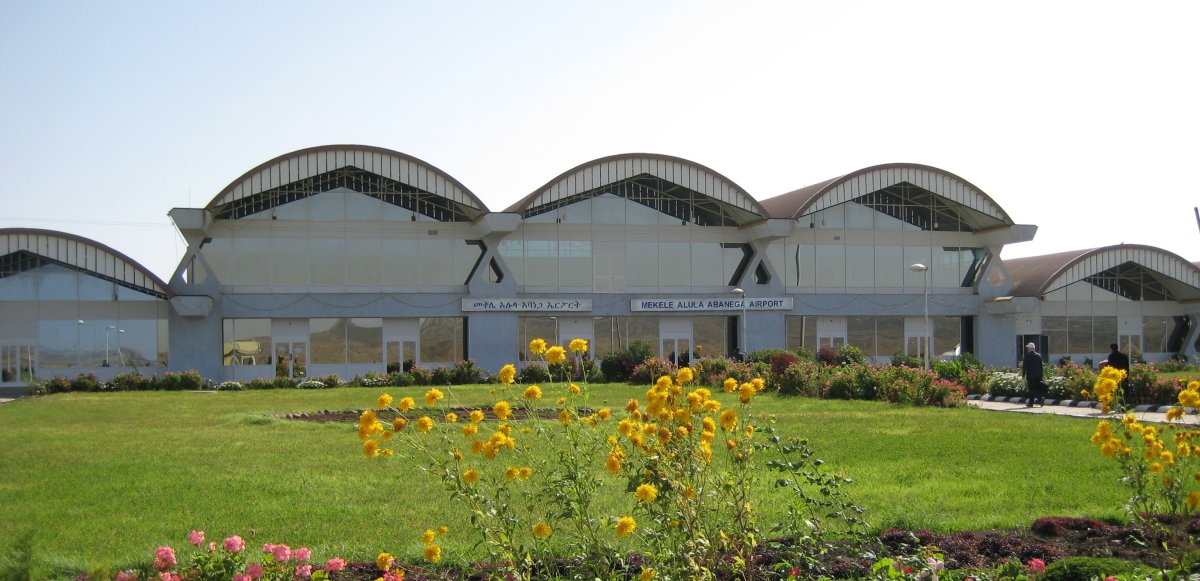
*Illustrative photo: Velana International Airport in Malé. Photo Dr. Ondřej Havelka, Wikimedia Commons, CC BY-SA 4.0.*