
Key actors — tap for context

Christoph Blocher
Billionaire and former member of the Swiss Federal Council, and a longtime leading figure in the Swiss People’s Party.
Why here: He launched the initiative and put more than two million francs into the campaign. He first announced that he would be abroad on voting day, but postponed the trip after criticism.
More info →
Walter Wobmann
Former National Council member for the Swiss People’s Party from Solothurn.
Why here: Chairman of the initiative committee, he rejects allegations of Russian support and says he personally condemns the attack on Ukraine.
More info →
Magdalena Martullo-Blocher
Blocher’s daughter, head of the chemical group Ems-Chemie and a National Council member.
Why here: She runs the company whose Russian business became the subject of an investigation three weeks before the vote.
More info →
Ignazio Cassis
Swiss foreign minister and member of the Federal Council.
Why here: He leads the government campaign against the initiative and defends so-called flexible neutrality.
More info →Lukas Golder
Political scientist at the GFS Bern research institute, which conducts pre-election polls for the public-service broadcaster SRG.
Why here: In August he spoke of a firm picture of public opinion; the second wave showed a nine-point shift.
Mark Balsiger
Swiss political analyst and communications adviser.
Why here: He said Blocher’s originally announced absence on voting day violated the unwritten rule of fair play.
Raphaël Mahaim
National Council member for the Greens from the canton of Vaud.
Why here: He led the lawsuit that forced the initiative committee to correct a sentence in the French version of the campaign newspaper.
Wolf Linder
Professor emeritus of political science at the University of Bern, dean of Swiss political science and a member of the Social Democrats.
Why here: At the age of 82, he spoke at a pro-initiative demonstration, saying that neutrality is not a matter of sympathy.
Micheline Calmy-Rey
Former Swiss foreign minister and president from the Social Democrats.
Why here: She will vote against the initiative, but, in her own words, without enthusiasm.
Massimiliano Ay
Secretary of the Communist Party in the Italian-speaking canton of Ticino.
Why here: He took part in founding the Moscow-based Sovintern network and did speak at the August demonstration in support of the initiative.
Jacques Baud
Former colonel in the Swiss army and former intelligence service employee.
Why here: The EU placed him on its sanctions list as a mouthpiece for pro-Russian propaganda; he joined the demonstration from Brussels.
More info →
Ems-Chemie
Swiss chemical group headquartered in Domat/Ems, one of the largest companies in the canton of Graubünden.
Why here: An investigation into its subsidiary’s dealings with Russian companies on the sanctions list concerns it; the company rejects the allegations.
More info →Republik
Swiss independent reader-funded online newspaper based in Zurich.
Why here: It published an investigation into the Blocher family company’s Russian business.
Pro Schweiz
Swiss conservative organisation advocating the country’s independence.
Why here: The second-largest donor to the pro-initiative campaign, contributing 1.3 million francs.

Economiesuisse
Umbrella organisation of the Swiss economy.
Why here: The largest donor to the campaign against the initiative, contributing 1.2 million francs.
More info →GFS Bern
Bern-based research institute that conducts polls for the public-service broadcaster SRG.
Why here: Its second wave recorded a nine-point shift towards rejection.
Swiss People’s Party
Switzerland’s strongest, right-wing conservative party and driving force behind referendum politics.
Why here: The only party whose voters support the initiative by a majority, although support among them has also fallen by seven points.

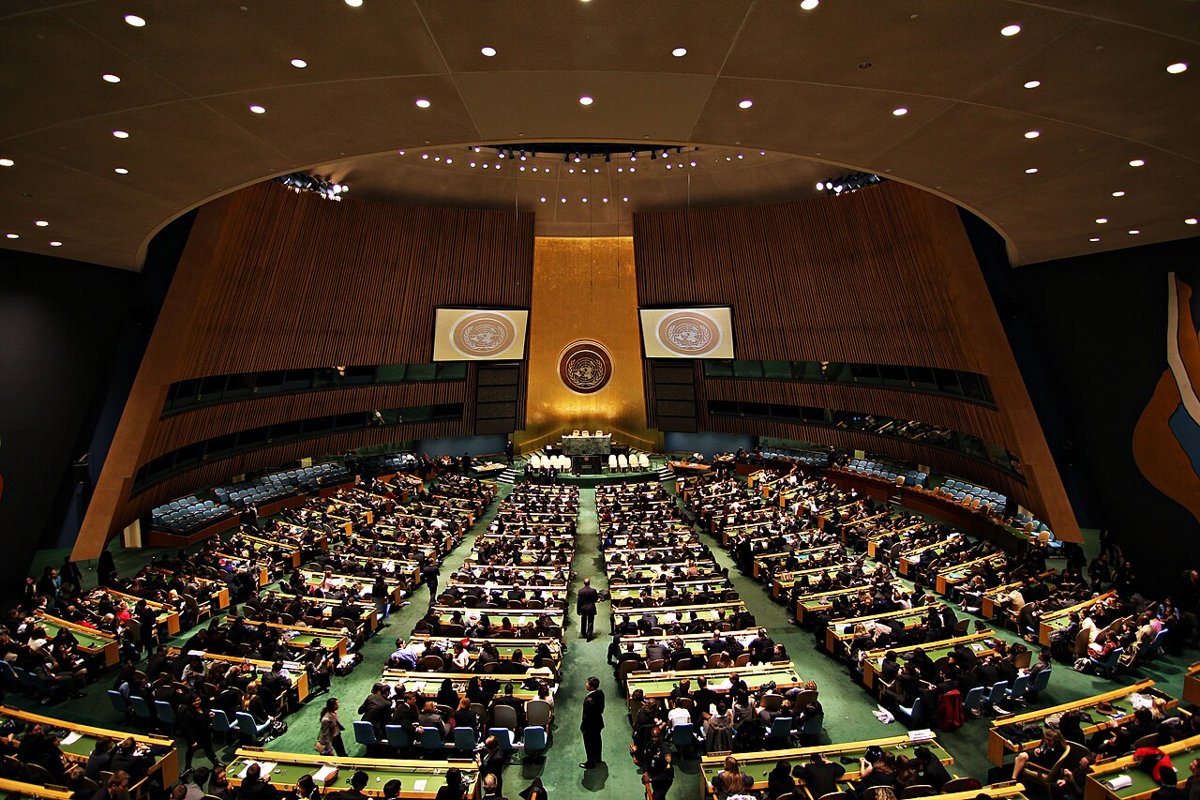
UN Security Council
United Nations body empowered to impose binding sanctions.
Why here: If the initiative passes, it would be the only source of sanctions that Switzerland would be allowed to join.
More info →The polls moved, although they were not supposed to
In August, we quoted political scientist Lukas Golder of the GFS Bern institute, who said that the picture of public opinion was fairly firm and that only mobilisation remained. The second wave of the poll for public-service broadcaster SRG, conducted from 2 to 9 September among a sample of 12,916 people with a margin of error of 2.8 points, showed otherwise. Rejection rose from 54 to 63 percent, while support fell from 42 to 34. Women moved the most: opposition among them rose by eleven points to 65 percent. The same was true of people with less education, among whom opposition rose by fifteen points to 54 percent and support fell by seventeen. By language region, the proposal lost the most in French-speaking Switzerland, where 63 percent oppose it, fourteen points more than in August. The only region without majority opposition is Italian-speaking Switzerland, at 47 percent. SRF ↗The second poll, conducted by the Leewas institute for the newspapers Tamedia and 20 Minuten on 9 and 10 September among a sample of 12,948 people, was harsher: 68 percent opposed and 31 percent supported it, a fall of five points. One detail is significant. The initiative is also losing support in its own camp: among Swiss People’s Party voters, support fell by seven points to 75 percent. Among university graduates, 83 percent oppose it. 20 Minuten ↗
A 3.8-million-franc campaign that is losing
On 28 August, the Federal Audit Office published the budgets of both camps, and the ratio is unusual. The pro-initiative camp declared 3.84 million francs. Christoph Blocher personally contributed the most, more than two million, followed by 1.3 million from Pro Schweiz and 50,000 from the Swiss People’s Party itself; the rest consists of smaller contributions. The opposing camp declared 1.67 million, including 1.2 million from the business federation Economiesuisse, 367,000 from the Social Democrats and 100,000 from Operation Libero. The declared budget of the pro-initiative camp is therefore 2.3 times that of its opponents, yet support is still falling. watson ↗The campaign featuring a dove and the slogan No War can be seen at stations and on trains. SBB railways received complaints from passengers, but replied that they had to tolerate political advertising because of a Federal Court ruling. watson ↗ Blocher, who will soon be 86, defends his cause by saying that Swiss neutrality protects the country from war. In an interview with SRF, he added a formulation that sounds strange in a campaign costing almost four million: “I have never done anything to win. I have always done what is necessary.” SRF ↗
The court objected to one sentence in the campaign newspaper
The initiative committee sent more than four million copies of its campaign newspaper to people’s letterboxes. The last page said that the left and the Greens also supported the initiative. The Green Party filed a lawsuit, and the Bern civil court, in whose district it is based, ruled in an interim measure that the French version of the sentence “La gauche et les Verts disent oui” was unlawful and had to be amended online immediately, or a fine of up to ten thousand francs could be imposed. 20 Minuten ↗The court did not publicly explain why it targeted the French version. According to 20 Minuten, the reason is the difference between the languages: the German phrase “the left and the Greens” can also be read as a description of an ideological current, whereas the French “les Verts” is the exact name of the party in western Switzerland. The committee, led by Walter Wobmann, responded cautiously, saying it would look into the matter calmly, and eventually amended the German version too, even though the court had not ordered it to do so. The Greens announced that they would consider seeking damages. watson ↗
The disputed claim was not made up. Part of the left really does support the initiative: political scientist Pascal Lottaz of the Social Democrats, former Green cantonal MP Urs Hans, whom his party has since expelled, and 82-year-old professor emeritus Wolf Linder, who says neutrality is not a matter of sympathy and sanctions hurt civilians. These are individuals, however, opposing the official positions of their parties. The Social Democrats call the initiative pro-Putin, while former foreign minister Micheline Calmy-Rey, who advocated active neutrality, announced that she would vote against it, albeit without enthusiasm. watson ↗
The demonstration turned out as expected
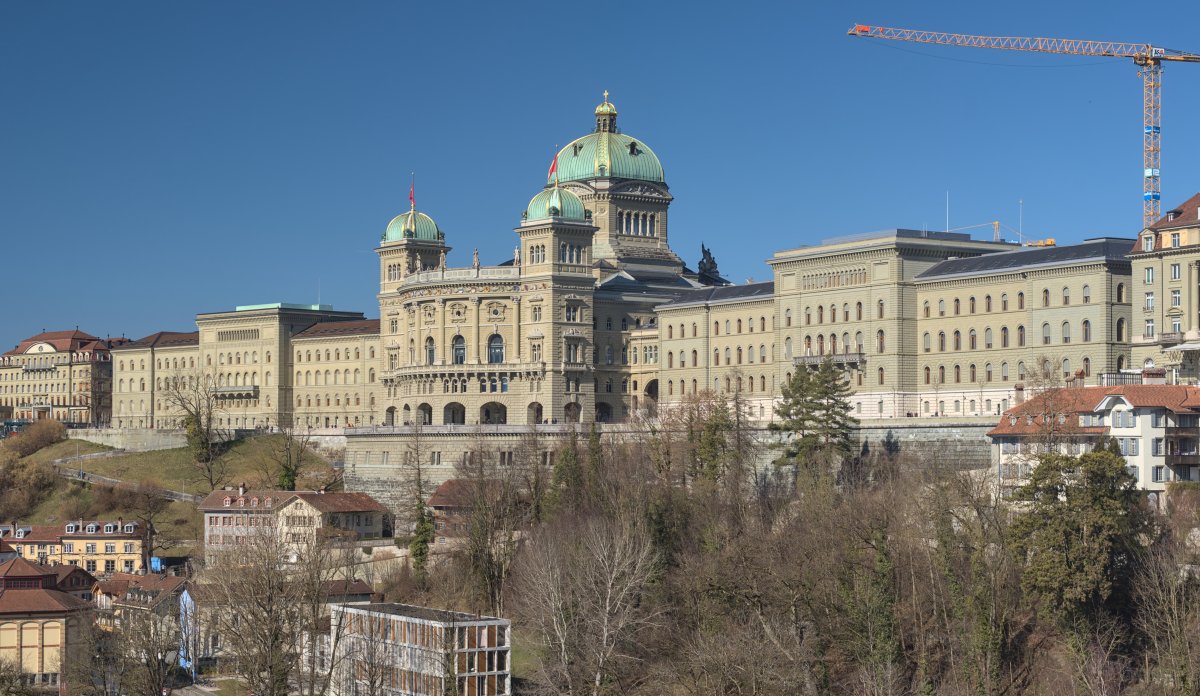
On 29 August, the announced No to NATO, Yes to Neutrality demonstration took place on Bern’s Bundesplatz. About two thousand people attended, and the Bern daily Der Bund summed up the gathering’s composition in the headline “NATO opponents, communists and critics of pandemic measures united behind the initiative”. Massimiliano Ay, the secretary of the Communists from Ticino who was in Moscow in the spring for the founding of the Sovintern network, really did take the stage. Jacques Baud, who is on the EU sanctions list, joined from Brussels. The 82-year-old professor emeritus of political science Wolf Linder also spoke, a voice from the opposite end of the political spectrum to the organisers. Der Bund ↗Read also: The Swiss will vote on banning their own sanctions. People with links to Moscow are also campaigning for neutrality
The initiators reject the accusation of Russian backing. In early August, Wobmann said they had never had contact with Russian politicians and that he personally condemned the attack on Ukraine. In his view, anyone calling the initiative pro-Putin had no arguments against it. 20 Minuten ↗
Bern has meanwhile taken the issue of foreign influence into parliament. The National Council’s Security Policy Committee is calling on the government to permanently strengthen the state’s ability to detect and counter foreign influence operations, citing a finding by the State Secretariat for Security Policy that disinformation tailored to Switzerland is increasing. The autumn parliamentary session runs until 2 October, meaning it will continue after the vote. SRF ↗
An investigation into the family company’s Russian business
On 4 September, the independent newspaper Republik published an investigation into the Blocher family’s Russian business. According to it, Eftec, a subsidiary of Ems-Chemie, still listed four Russian companies on its website among its customers as recently as June 2026. They are on both the Swiss and European sanctions lists and manufacture vehicles for the Russian army or support its soldiers. The newsroom itself writes that it has indications, not proof. The State Secretariat for Economic Affairs, SECO, says that foreign subsidiaries may not fall under Swiss jurisdiction, but that jurisdiction can be established by financial flows or instructions issued from Switzerland. Republik ↗Ems-Chemie rejects the allegations. According to its statement, it does not supply the companies in question and its Russian business is marginal. When asked whether the denial applied to the entire period since Russia’s invasion of Ukraine, the company did not answer. The question remains relevant because the initiative was launched by the father of its current head and was triggered precisely by the sanctions that Bern adopted after the invasion.
Blocher himself commented on his potential benefit before the investigation was published, in an interview with 20 Minuten on 24 August. Asked whether he would mind Switzerland becoming a trans-shipment hub for Russian oil after the sanctions were lifted, he replied: “That would not bother me.” In his view, trade relations should have been frozen at their pre-war level instead of adopting sanctions. Asked how much he and his daughter would earn from lifting the sanctions, he said he had not run the company for twenty years, so he did not know, and that the proceeds would not be significant. His daughter took over management in 2004. 20 Minuten ↗
The author of the proposal first announced that he would not be home on Sunday
In mid-August, Blocher’s secretariat confirmed to the television station TeleZüri that the initiator would be abroad on 27 September and would not comment on the result. It did not answer whether this was for professional or private reasons. Political analyst Mark Balsiger compared it to Swiss wrestling, where even losers answer journalists after a match, and concluded that the unwritten rule of fair play had been broken. He interpreted the absence as meaning that either the vote was not that important to Blocher or that he had an idea how it would turn out. watson ↗Eight days later, Blocher backed down. On 26 August, he announced that he was postponing the trip because he had to be home for such an important vote. He will therefore comment on the result, but not at a joint meeting of the initiative committee; instead, he will do so on his own TeleBlocher programme. watson ↗
This did not change an earlier episode: in March, Blocher himself confirmed that he had wanted to withdraw the initiative in favour of a counterproposal that would define neutrality in the constitution but without banning sanctions. The counterproposal failed to win a majority in parliament, so the proposal will go before voters in its original form. watson ↗
Both chambers of parliament and the Federal Council rejected the proposal itself. In the National Council, the vote was 124 against and 65 in favour, with five abstentions; in the Council of States, 29 against and 10 in favour, also with five abstentions. For adoption, the initiative would need a double majority, meaning a majority of both voters and cantons. A food initiative will also be put to a vote on the same day; in the September Leewas poll, it had even less support, at 29 percent. SRF ↗
How it has reached Slovak readers so far
Sparingly and late. On 17 September, the SKsprávy website published a separate article about the vote, based on Reuters and a statement by the Swiss government. Czech Television mentioned the issue twice, both times only in passing in articles about something else: on 17 September in a piece about neutrality in the race for artificial intelligence, and on 21 September in an article about Switzerland’s closer defence ties with the European Union. SKsprávy ↗ ČT24 ↗What is missing is precisely what makes up this article: the fall in support over a month, the budgets of both camps, the court intervention in the campaign and Republik’s investigation. Our own archive of republished news contains not a single line about the referendum over the past month. It does contain reports about Switzerland concerning footballer Granit Xhaka’s fake vaccination certificate, climate protests in Geneva and Lausanne, sheep wool on glaciers and Revolut’s application for a banking licence. This is not a language barrier: both polls were carried by news agencies, so they were available outside the German-speaking world as well.
Limits of this perspective
The drop in the polls does not mean that the initiative is politically insignificant. More than thirty percent of the vote is still a substantial minority for a constitutional proposal opposed by the government, parliament and all major parties except the Swiss People’s Party, joined by the small EDU, and the issue will not disappear as a result.Republik’s investigation is the claim of one newsroom, which itself speaks of indications rather than proof, and the company concerned rejects it. This article does not claim that Ems-Chemie violated sanctions. It describes the fact that, three weeks before the vote on banning sanctions, an investigation was published into the Russian business of a company run by the initiator’s daughter, and that the initiator himself answered a question about his personal benefit by saying he did not know.
The point we made in August also still applies: supporting the initiative is not suspicious in itself. Some of its supporters argue from a pacifist position and have no connection with Moscow whatsoever. The dispute over the sentence in the campaign newspaper also shows this; legally, it concerned the name of a party, not whether left-wing supporters exist.
What hotinfo is following
The vote is on 27 September. We are following the result and whether the difference between the language regions shown by the polls will be confirmed—namely, whether Italian-speaking Switzerland will be the only region without majority opposition.After criticism, Blocher postponed his trip abroad and intends to comment on the result on his own TeleBlocher programme. We are following whether he will comment on it elsewhere as well.
Following the court intervention in the French version of the campaign newspaper, the Greens announced that they would consider seeking damages. We are following whether they will file the claim.
In August, the National Council’s Security Policy Committee recommended, by 16 votes to 9, approving a proposal to strengthen the state’s ability to identify and counter foreign influence operations. The autumn parliamentary session runs until 2 October. We are following how the chambers decide on it.
We are following whether a Slovak or Czech media outlet publishes a separate article about the result of the vote or the campaign surrounding it.
Republik’s investigation into Ems-Chemie’s subsidiary’s dealings with Russian companies on the sanctions list remains open. We are following whether the company or the State Secretariat for Economic Affairs will provide a more detailed response.