

Key actors — tap for context

Babak Zanjani
Iranian businessman who sold oil outside Western sanctions from 2010 to 2013
Why here: The US has repeatedly sanctioned his network since January 2026, most recently the BitBank crypto exchange
More info →
Revolutionary Guards
the elite military and economic arm of the Iranian regime
Why here: according to the US, they received bitcoin worth hundreds of millions of dollars via BitBank
More info →
Scott Bessent
US Treasury Secretary
Why here: his department is sanctioning Zanjani's network as part of Operation Economic Outcast
More info →
OFAC
the US Treasury Department office that maintains sanctions lists
Why here: in January it sanctioned Zanjani and his crypto exchanges, and in July the Dot One conglomerate and his family
More info →Hormuz Safe
Iranian state-established company offering "insurance" for passage through the Strait of Hormuz
Why here: according to the US, it collected fees from tankers and sent the money through BitBank

Strait of Hormuz
narrow waterway through which a large share of the world's oil passes
Why here: according to CoinDesk, Iran charges millions of dollars for a tanker's passage
More info →From Driver to Oil Trader
According to France 24, Zanjani started out in the 1990s as a driver for the governor of Iran's central bank and then worked as a currency trader. Around 2010 the Revolutionary Guards approached him to help them access money blocked by sanctions, and over the following years he sold Iranian oil through networks of companies in Turkey, Malaysia and the United Arab Emirates. The European Union and the US placed him on their sanctions lists for this in 2012 and 2013. France 24 ↗The turning point came in Iran. He was arrested in December 2013, after the newly elected president, Hassan Rouhani, called for action against elites who had grown rich on sanctions. In March 2016 a court sentenced him to death for "spreading corruption on earth". The Iranian Oil Ministry claimed that he owed the state more than $2.25 billion for oil he had sold. NPR ↗
Euronews published a one-minute report on the verdict in March 2016:
From Prison Back to Business
The sentence was not carried out. According to Iranian investigative journalists cited by France 24, he had already left Tehran's Evin prison in June 2019 and moved to a villa in the Alborz mountains. In 2024 his sentence was reduced to 20 years in prison. In 2025 he returned publicly as the head of a conglomerate with businesses in railways, aviation, gold and media. France 24 ↗The US Treasury Department confirms part of this picture. According to it, the railway company of his Dot One group won an $800 million contract from Iranian Railways in April 2025. In July, OFAC sanctioned Dot One companies, firms in Istanbul and Dubai linked to his crypto exchanges, and Zanjani's sister and partner. US Treasury ↗
Cryptocurrencies and Hormuz
The first sanctions this year, on January 30, targeted him and his crypto exchanges Zedcex and Zedxion. The analytics firm TRM Labs linked them to stablecoin flows of roughly a billion dollars, which, it says, were connected to the Revolutionary Guards and at their peak made up most of the exchanges' activity. TRM Labs ↗In July the list was joined by the state-established company Hormuz Safe, which, according to the US, sells mandatory "insurance" to ships in the strait and accepts bitcoin. According to the Treasury, Zanjani promoted it to his followers on social media. US Treasury ↗ According to CoinDesk, the fee for a single tanker passage is one to two million dollars. CoinDesk ↗
The latest sanctions, from September 17, hit the BitBank exchange. Through it, Zanjani allegedly sent the Revolutionary Guards bitcoin worth hundreds of millions of dollars in June and July, and Hormuz Safe has been sending the collected fees to the regime through it since June. The list was also joined by the firm Pishtaz Simorgh, which develops BitBank, and three of Zanjani's associates from Dot One's leadership. "Today's designations of Iranian digital asset infrastructure make perfectly clear that efforts to finance the Iranian regime using cryptocurrencies are not beyond OFAC's reach," Treasury Secretary Scott Bessent said. US Treasury ↗ Reuters (Arab News) ↗
Read also: Iran is preparing a new zone in the Strait of Hormuz
Limits of This View
Almost everything about Zanjani's current activities comes from one side, the US government, which is at war with Iran. According to CoinDesk, in the BitBank case the Treasury did not publish a single crypto wallet address, although it did so with older crypto sanctions, so the claimed transfers cannot be independently verified on the blockchain from the announcement. CoinDesk ↗Zanjani rejected the American accusations. On X he wrote that Iran "never circumvents sanctions with ordinary cryptocurrencies" or traditional financial channels. France 24 is a broadcaster funded by the French state, and regarding Zanjani's current activities it relies on Washington's suspicions. France 24 ↗
What hotinfo Is Watching
- Iran or BitBank responded to the sanctions, or the exchange continues under another name
- BitBank wallet addresses or other evidence verifiable on the blockchain were published
- The EU sanctioned Hormuz Safe or Zanjani's crypto network
- Zanjani's criminal-law status in Iran changed
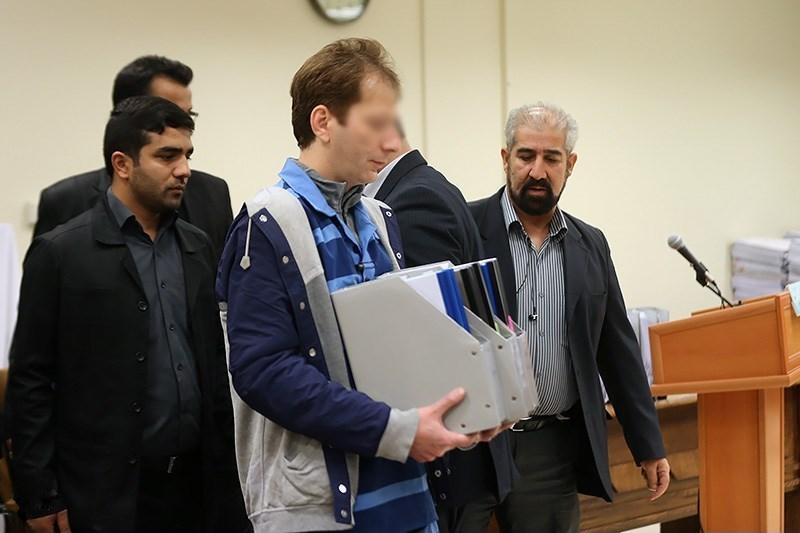
*Archive photo: Babak Zanjani (with files) at the fifth hearing of his trial in Tehran on November 1, 2015. Photo: Meghdad Madadi, Tasnim News, Wikimedia Commons, license CC BY 4.0.*