


Key actors — tap for context

John Ratcliffe
American Republican politician, CIA director since January 2025 in the second Trump administration. He served as Director of National Intelligence from 2020 to 2021.
Why here: His Tuesday trip to Moscow is the first visit by a CIA chief to Russia since the start of the full-scale invasion.
More info →
Vladimir Putin
President of Russia.
Why here: On that same day, he signed three decrees that did not appear in the public register of legal acts.
More info →
William Burns
American diplomat, CIA director from 2021 to 2025.
Why here: His November 2021 trip to Moscow is the only comparable precedent — it was followed by the invasion.
More info →
Dmitry Peskov
Spokesman for the Russian president.
Why here: At the daily briefing he declined to comment on the trip, saying he had no such information.
More info →
CIA
The United States' Central Intelligence Agency, a civilian foreign intelligence service.
Why here: Its director is the central figure in the whole story; the agency did not comment on the trip.
More info →
The Moscow Times
An independent Russian news outlet based in Amsterdam, designated an "undesirable organization" in Russia.
Why here: It was the first to notice the gap in the numbering of presidential decrees.
More info →What has been documented
- The trip has a sequel in Washington: after returning, Ratcliffe met with Defense Secretary Hegseth. Censor.NET published photographs from the meeting. Until now, this had been treated as a standalone trip by the intelligence chief; this is the first documented step linking it to the defense department. Censor.NET ↗
- A US senator says exactly what Trump denied. Richard Blumenthal stated that he hopes Ratcliffe delivered a warning to Putin in Moscow against escalation — "Forget about it. There will be consequences." Trump, however, claimed just hours earlier that no warning had been given. This is not a refutation, but a contradiction within Washington itself. Censor.NET ↗, Ukrainska Pravda ↗
- The Lithuanian president this time named not just the fact, but also the reason. According to Romania's Libertatea, he placed the trip in the context of intensified Russian hybrid attacks in Europe. The previous wave established that Vilnius had known about the trip a day in advance; this is the first time an ally has publicly offered its motivation. Libertatea ↗
- Trump spoke for the first time — and downplayed the trip. He called it "semi-routine" and added that he wants an end to the war in Ukraine and that "something may come of it." This is the first American statement on the trip at all; until Wednesday afternoon, Washington had remained silent. The Hill ↗ HotNews ↗ Aftenposten ↗
- And immediately afterward, he denied the very thing the strongest version of the story rested on. According to Trump, Ratcliffe did not warn Putin about anything; he told French journalists that he "wasn't there for any of the things you're mentioning." If true, the Wall Street Journal's version about a delivered intelligence warning collapses — and it collapses from the mouth of the president who sent him. 24 Chasa ↗ La Libre ↗
- The Kremlin has finally named who Ratcliffe met with: Russian intelligence officers. Belgrade's Danas quotes the Kremlin's statement directly; Montenegro's Vijesti confirms the same. Until now we had only vague "contacts between the services." Danas ↗ Vijesti ↗
- Lithuania knew about the trip a day in advance — and the president said so by name. Gitanas Nausėda stated that Vilnius received the information in advance and that it will learn the outcome of the talks next week. This is the first named European source in the whole story; everything else so far has rested on anonymous statements. Interfax Ukraine ↗ Do Rzeczy ↗
- Polish government sources speak of attempts to negotiate an end to the war. Onet cites them as "new information"; this is by far the most specific content anyone has attributed to the talks so far. Onet ↗
- The Kremlin not only confirmed the trip but also named its purpose — while simultaneously tempering expectations. According to Handelsblatt, Moscow confirmed the arrival while also signaling that no breakthrough should be inferred from the visit. Handelsblatt ↗ Do Rzeczy ↗
- Ratcliffe held talks with his Russian counterpart. Belgium's 7sur7 states this directly in the headline; this is the first concrete naming of the partner on the other side of the table, rather than just "intelligence services" in general. 7sur7 ↗ VRT NWS ↗
- Peskov adds that Putin was informed about the talks. The Bulgarian daily 24 Chasa quotes the Kremlin spokesman as saying that although no meeting with the president took place, the outcome did reach him. The difference between "did not meet" and "does not know about it" is the entire substance of this sentence. 24 Chasa ↗
- The Kremlin confirmed the trip. On Wednesday morning, spokesman Dmitry Peskov announced that the CIA director had indeed been in Moscow, explaining it as "contacts between the intelligence services" — precisely the phrasing that says nothing about the content of the talks. The day before, at the same briefing, he had claimed to have no such information Handelsblatt ↗Der Standard ↗Die Zeit ↗.
- The Kremlin denies a meeting with Putin. According to the Estonian daily Postimees, Peskov explicitly stated that the president did not meet with the CIA director. If true, the strongest of the three versions of the trip's purpose — a personal delivery of a warning to Putin — loses its footing Postimees ↗Portfolio ↗.
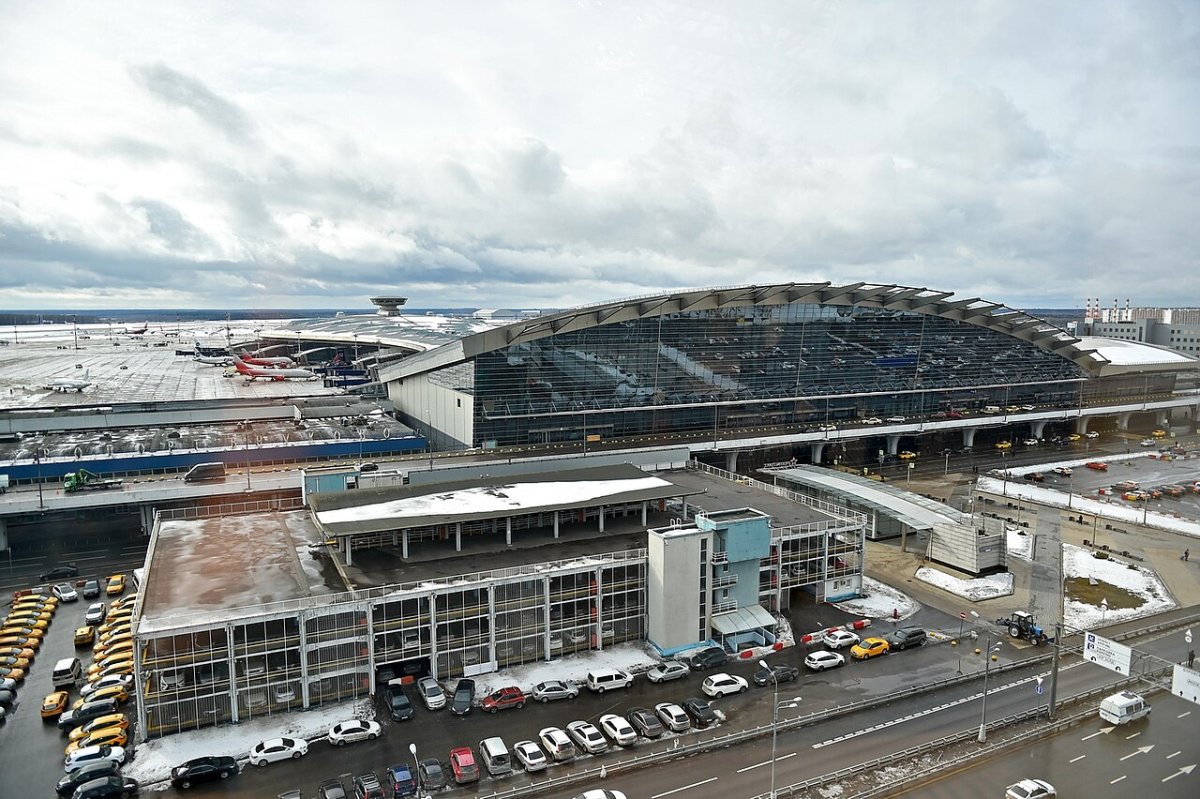
The plane. A Boeing C-17 Globemaster III military transport aircraft flew from the US to Latvia and from there to Moscow. According to Flightradar24 data, it departed Riga at 5:50 GMT and arrived at Moscow's Vnukovo airport around 7:04; in the afternoon it flew back to Riga. Footage of the aircraft landing, as well as a motorcade with American diplomatic plates in Moscow, appeared on social media. This type of aircraft is commonly used precisely for diplomatic trips. BBC ↗
It's worth noting how the landing was confirmed. Flightradar24 did not confirm it on its website — that was done by the Russian state news agency TASS, and the Russian military channel Zvezda later published video of the departure. Part of the physical trail of the trip therefore rests on Russian state media, which we cite as a mirror of the official position, not as an independent source. n-tv ↗
Kyiv's request. Before the trip, Washington informed Ukraine that a high-level delegation would travel to Moscow and asked it to suspend strikes until the delegation had departed. A senior Ukrainian official said this to CBS television; sources in government circles independently confirmed it to public broadcaster Suspilne, adding that it concerned both Moscow and St. Petersburg. According to CNN, drone and missile strikes on Moscow and other cities in northern Russia were to be halted from Monday to Wednesday. CBS News ↗ Kyiv Post ↗ n-tv ↗
Silence from both sides. Kremlin spokesman Dmitry Peskov said at the daily briefing that he had no such information. Nothing was said by the American government. The BBC contacted the CIA, the White House, and the Pentagon; it received no response. BBC ↗
What is merely a temporal coincidence
- The temporal coincidence has been given a claim of causation — and it needs to be read carefully. Bosnia's N1 writes that Ukraine paused attacks on Moscow during the secret visit, and Klix.ba speaks outright of a "mysterious flight that briefly stopped the attacks on Moscow." So far this is a media claim, not confirmation from either Kyiv or Washington. N1 Bosna ↗ Klix.ba ↗
- Britain's Mirror goes even further, claiming that Trump requested the halt in attacks. If true, this would no longer be a coincidence but an agreed ceasefire for the duration of the mission. The paper does not cite a named source, so for now this belongs here, not among documented facts. The Mirror ↗
On the same day, three signed decrees numbered 608, 609 and 610 appeared in the Russian gazette — two of them concern the replacement of the Russian ambassador to Iraq, the third changes the composition of commissions for disability and veterans' affairs. The previously published decree, signed on August 24, however carried the number 604. The numbering sequence thus points to three unpublished acts — 605, 606 and 607 — whose content the public portal does not list. They are considered classified. The Moscow Times noticed this. Lietuvos Rytas ↗
That is the entire body of evidence. No one has seen these decrees, their existence is inferred from a gap in the numbering sequence, and nothing confirms they have anything to do with Ratcliffe's visit. The Lithuanian daily, which examined the story in detail, states this explicitly: a connection between the classified decrees and the trip has not yet been confirmed, and the temporal coincidence merely set off various media versions of the story. Nevertheless, a headline formulation linking the two into a single sentence spread across Europe. Onet ↗
Paradoxically, the most interesting decree is the one we can actually read. Decree No. 604 of August 24, according to the Lithuanian daily's description, allows state authorities to take over into "temporary administration" facilities and companies whose owners failed to secure adequate protection against drone attacks. That is not speculation — it is a published text, and it speaks to how deeply Ukrainian strikes have hit Russia's domestic economy. Lietuvos Rytas ↗
What's being speculated
- The Wall Street Journal added wording to the warning, and Europe adopted it in a unified form over the course of the morning: Ratcliffe flew to Moscow to dissuade Russia from attacking NATO countries. Bosnian, Dutch, Austrian, and Belgian media all report this consistently — it's the first time the content of the conversation has been described the same way across newsrooms, though still without official confirmation. Klix.ba ↗de Volkskrant ↗Der Standard ↗La Libre ↗
- A second topic of the conversation has emerged that no one had mentioned before: Iran. Estonia's ERR and Greece's To Vima report that Ratcliffe also named the Iranian war as a NATO red line. If true, the trip wasn't just about Ukraine — and the American warning concerned two open fronts at once. ERR ↗To Vima ↗
- Trump hasn't changed his version and continues to downplay the visit. Switzerland's Tages-Anzeiger summed it up as a dispute between what American media report and what the president says — and that discrepancy hasn't budged an inch in four days. Tages-Anzeiger ↗
- Germany's Welt writes about the opposite of what the trip was supposed to achieve: according to the report, Putin is preparing an escalation, and Moscow is debating tactical nuclear weapons. This is based on a quoted expert, not a documented fact, but it's the first reaction to interpret the warning as having failed. Welt ↗Welt ↗
- The Kremlin responded that a harsh retaliatory strike would follow. Hungary's Portfolio has this in its headline as a direct response to the question of whether Russia is preparing for escalation. Portfolio ↗
- Meanwhile, a date has emerged in the background that gives the whole trip a different dimension: November 6. According to Ukrainian media, the United States will complete a full assessment of the arguments for and against its military presence in Europe by that date. A Bulgarian daily names the plan directly — it's called "NATO 3.0" and means a reduction of American forces on the continent. So the warning against an attack on NATO came from a country that is right now recalculating how much of NATO it still wants to fund. Ukrayinska Pravda ↗24 Chasa ↗
- Poland's Onet asked the one question no one has answered yet: do the Americans know more about Russian plans than they're saying? General Drewniak concedes in his analysis that a trip of this format isn't made for show. Onet ↗
- In the Romanian press, the list of possible topics has narrowed to three: Ukraine, NATO, Iran. Libertatea frames it as a question of what secret message Ratcliffe carried to Moscow — that is, as an open matter, not a finding. Libertatea ↗
- Germany's n-tv quotes an expert explaining exactly why the head of intelligence is the right person for such a message: "Ratcliffe can say: whatever you're doing right now, better stop it." This is an interpretation of the trip's format, not information about its content. n-tv ↗
- Turkey's Milliyet built the sharpest claim of the day on the trip: that Putin might resort to a nuclear weapon. The paper itself calls it a "menacing claim" following the mysterious visit. It has no support in anything the Kremlin, the White House, or Vilnius have said — it belongs to speculation, not documented fact. Milliyet ↗
- Hungary's 444 summed up the state of knowledge in a sentence that fits the whole window: the world is guessing at the trip's purpose, and the only certainty is that it doesn't mean anything good. 444 ↗
- A Belgian and a Bulgarian daily have the same question in their headline. De Standaard asks outright "What was the CIA chief doing in Moscow?", while 24 Chasa speaks of a "(semi-)routine visit that something could still come of." So after a day full of statements, the European press ends up where it started. De Standaard ↗, 24 Chasa ↗
- Handelsblatt claims the exact opposite of what Trump says: a secret warning to Putin. The German business daily has this right in its headline. So we have two irreconcilable versions from the same day — one coming from the president, the other from a newsroom citing unnamed sources. Handelsblatt ↗ Welt ↗
- Estonia's former intelligence chief doubts Putin and Ratcliffe even met. He told ERR it's hard to believe. This fits with Peskov's denial, but from the opposite direction — not as an official position, but as the estimate of someone who has spent years reading such trips from the outside. ERR ↗
- Bucharest reads Russian weakness into it. An advisor to President Nicușor Dan said "Russia is not in a good situation" and that the war isn't going the way the Kremlin leadership expected. This is the first reaction from a NATO member state on the eastern flank, and it sounds more confident than the Polish commentary. Digi24 ↗ Adevărul ↗
- Warsaw is more cautious: the visit "raises concern." TVN24 puts this in its headline, while Gazeta Wyborcza goes further and recommends assuming the worst-case scenario. Same event, two neighboring countries, two opposite readings. TVN24 ↗ Gazeta Wyborcza ↗
- Onet points out just how rare this is: it's only the fourth such case in the past decade. In a story where everything else is guesswork, this is a hard data point. Onet ↗
- The Dutch de Volkskrant notes that Ratcliffe has served as Trump's diplomat before — first Cuba, now Moscow. If this pattern holds, the trip isn't a one-off intelligence mission but a way this administration conducts negotiations outside the State Department. de Volkskrant ↗
- NU.nl sums it up in a sentence from an expert: "You only send someone like that when something is happening." A second piece from the same newsroom notes that the last time the CIA chief was in Moscow was five years ago, which itself speaks to the urgency. NU.nl ↗ NU.nl ↗
- Luxemburger Wort offers the best image for the whole debate: it wasn't Trump's "dove" who flew to Moscow, but his "bad sheriff." This is commentary, not a finding — but it explains why no one reads the trip as a peace initiative. Luxemburger Wort ↗
- Denmark's Berlingske recalls how such a line in the sand ended last time: the Russians crossed it. This is another phrasing of the same 2021 precedent discussed below. Berlingske ↗
- France's 20 Minutes highlights the contradiction in the description itself: "important and semi-official." The trip was important enough to warrant the intelligence chief, and informal enough that no one confirmed it — and it's exactly in that gap that all the versions are born. 20 Minutes ↗
- Romania's Pro TV links Lukashenko's military inspection directly to the visit. This adds to the Lithuanian thread from the previous wave; the connection remains a claim by newsrooms, not an announcement from Minsk. Pro TV Stirile ↗
- HotNews quotes a former senior British officer, according to whom Putin is approaching a potentially critical moment. This is an expert's warning, not an intelligence finding, and it fits the escalation framing shared by all three versions of the trip's purpose. HotNews ↗
- Serbia's Kurir phrases the question most sharply: hours with Russian spies — did he bring Putin a warning? A tabloid framing, but it sums up exactly the uncertainty that, even after two days, no one has resolved. Kurir ↗
- Shortly after the visit, Lukashenko announced an unannounced combat readiness inspection of the Belarusian army. Lithuanian media link this directly to the landing of a US military plane in Moscow, while Poland's Onet reports it without this connection. Which version is correct cannot be determined from the available sources. Onet ↗ Lietuvos Rytas ↗ 15min ↗
- Austria's Die Presse offers the most concrete hypothesis: was he meant to talk Putin out of expanding the war? It is a question posed in the headline, not a finding — but it is the only version that explains why Washington would send the head of intelligence rather than a diplomat. Die Presse ↗
- Poland's Rzeczpospolita gave space to two conflicting readings on the same day. General Roman Polko claims Russia cannot afford an attack; a Chatham House expert is without optimism and recalls that "the Russians have lied before." The same newspaper thus does not hold to a single line, which, given how thin the facts are, is more a sign of honesty than of contradiction. Rzeczpospolita ↗ Rzeczpospolita ↗
- An Estonian expert reads it most soberly: the trip itself shows a mutual interest in communicating. According to an analyst from the International Centre for Defence and Security, speaking to Postimees, the very fact that the conversation took place at all is information in itself, regardless of its content. Postimees ↗
- Onet summarized three circulating theories and presents them itself with reservations. Switzerland's NZZ poses the same question already in its headline. None of the newsrooms we are following has a source directly from the talks. Onet ↗ NZZ ↗
- Britain's new Prime Minister Andy Burnham responded with a defiant message on Ukraine. London thus publicly made sure it would not be read as interpreting the Moscow talks as a change of course. The Mirror ↗
There are three versions of the purpose of the trip, and not one has been confirmed. The Wall Street Journal writes that Ratcliffe may have delivered a warning to Putin based on American intelligence about a possible new phase of Russian mobilization and about plans to test NATO's resolve to respond to a provocation or escalation. Britain's iPaper — picking up a report from a Lithuanian daily — links the trip to a possible prisoner exchange — military aircraft are also used for that purpose, and Washington has long been demanding the return of several of its citizens held in Russia. The third line is simply preparation for negotiations: in recent weeks there has been repeated talk of a trip to Russia by envoys Steve Witkoff and Jared Kushner, without a specific date. Lietuvos Rytas ↗ n-tv ↗
The context shared by all three versions is escalatory rhetoric. On Saturday, Putin spoke of a "Pandora's box," which he said Kyiv had opened with attacks on Russia's interior. Lithuania's public broadcaster LRT quoted a commentator according to whom the head of the CIA may have warned in Moscow precisely against escalation directed at Europe. Estonia's Postimees framed the same event as a possible warning to Putin. These are interpretations, not findings. LRT ↗
Prečo je precedens z roku 2021 dôležitý aj nepohodlný
Ratcliffe's predecessor William Burns traveled to Moscow in November 2021, met with senior Russian officials, and spoke with Putin to warn him against an invasion. In February 2022, the invasion came anyway. Kyiv Post ↗That precedent can be read two ways, and both are worth noting. First: such a trip is a tool Washington reaches for when it has specific intelligence about an impending Russian move and wants to deliver it directly, outside diplomatic channels. Second, less comfortably: the same approach failed to avert war four years ago. So the fact that the CIA chief was in Moscow tells us neither that reassurance is at hand nor that catastrophe looms — it only tells us that Washington considered the message urgent enough to deliver in person.
At the same time, it's true that Ratcliffe's trip was the highest-level visit by a Trump administration official to Russia since January. That is a distinct piece of information, independent of whatever was said in Moscow. Kyiv Post ↗
Limity tohto pohľadu
- This is the final update wave for this text. Over four days it gained five layers, and the topic has since shifted from the question "was he there?" to the question of what the warning means for the American presence in Europe. That's a different story now and will get its own article; we continue tracking the open promises from this text in our public tracker. Spiegel ↗
- Austria's Der Standard named what matters most about the whole affair: it was a "not particularly secret" visit, and questions remain open. A trip that twelve newsrooms in ten countries were writing about within half a day was not hidden from the public — it was simply uncommented on. Those are two different things, and each leads to a different interpretation. Der Standard ↗
This text rests almost entirely on anonymous sources relayed by American media — CBS, Axios, CNN, and WSJ — and on Ukrainian government circles. Neither the CIA, nor the White House, nor the Kremlin has provided official confirmation of anything beyond the fact that they are not confirming anything. The claim that Ratcliffe met directly with Putin comes from Kremlin-linked journalists and has not been independently verified; the BBC explicitly states that it is not known whom he met with.
The claims about classified decrees rest on inference from missing numbers, not on a document. That is methodologically legitimate, and The Moscow Times is a credible source, but it is a weaker type of evidence than a published text — and if the decrees are ever published, they could concern anything, even entirely routine matters. Part of the physical trail of the trip (landing confirmation, departure video) comes from Russian state media, which has an obvious interest in how the visit is interpreted.
Čo sleduje hotinfo
- Decrees 605, 606 and 607 were published or their content leaked
- A prisoner exchange took place between the US and Russia of the kind the trip might have prepared
- The CIA, the White House or the Kremlin officially confirmed the purpose of Ratcliffe's trip→ Kremeľ potvrdil návštevu šéfa CIA Ratcliffa v MoskveKremeľ (Dmitrij Peskov) 26.8.2026 potvrdil cestu aj jej účel — kontakty medzi spravodajskými službami. Peskov najprv o pristátí lietadla nič nevedel, neskôr cestu vysvetlil. Zdroje: HVG, Telex, Tagesspiegel.
- It was confirmed or refuted that Ratcliffe met Putin directly→ Šéf CIA bol podľa zdrojov v Moskve. Naposledy tam jeho predchodca letel tri mes…Vlna 1 (26.8. 08:30): Kremeľ ústami Dmitrija Peskova stretnutie Ratcliffa s Putinom výslovne poprel (Postimees, Portfolio). Odpoveď je tým daná, ale pochádza od jednej strany, ktorá má motív ju popierať — nezávislé potvrdenie zatiaľ nie je.
- The announced trip by Steve Witkoff and Jared Kushner to Russia took place→ Rusko a Ukrajina ohlásili pauzu v úderoch na hlavné mestá. Kopíruje cestu Trump…Witkoff a Kushner pristáli 5.9.2026 na moskovskom letisku Vnukovo, v nedeľu 6.9. majú pokračovať do Kyjeva.
- Media revealed the specific content of Ratcliffe's message in Moscow→ Putinova eskalácia znepokojuje NATO aj EurópuPolitico 27.8.2026: účelom cesty bolo varovanie Kremľa pred útokom na krajiny NATO, menovite Pobaltie. Kremeľ 26.8. potvrdil len „kontakty medzi spravodajskými službami", konkrétny obsah odkazu zverejnili až médiá.