




What the campaign is actually doing
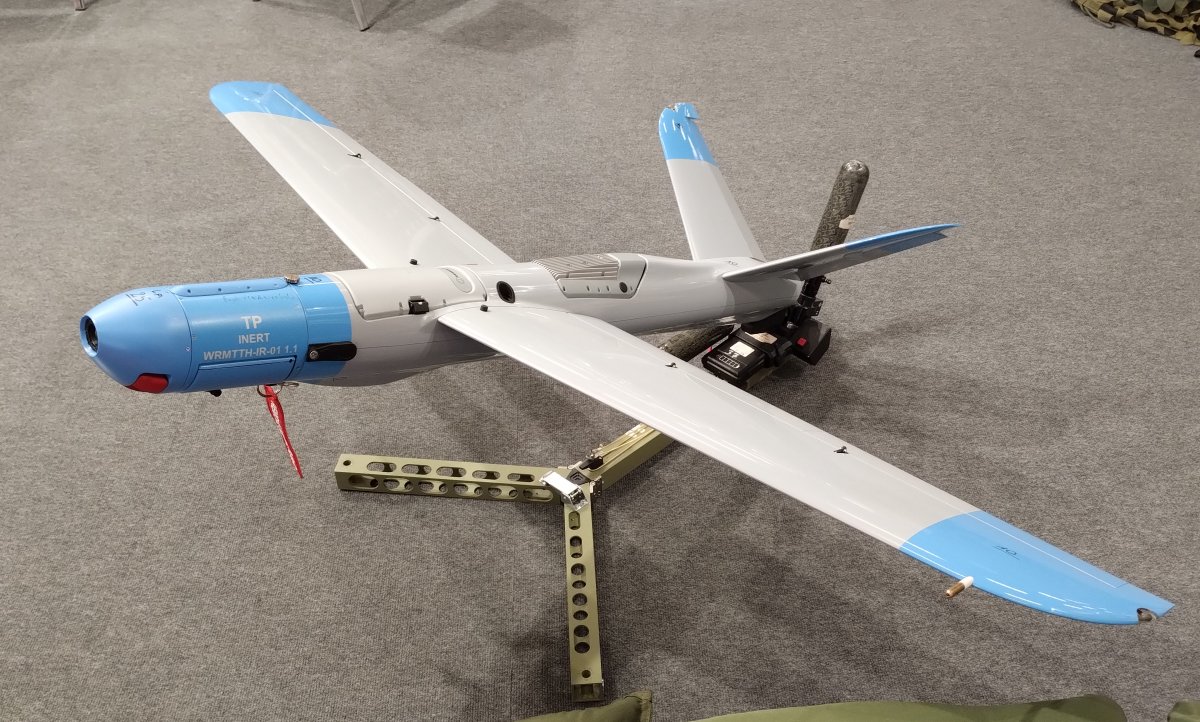
Adevărul describes the reach of Ukraine's long-range drones, and these are not merely symbolic strikes. In Moscow, cars are lining up at gas stations for hundreds of meters due to fuel shortages; on the annexed Crimea, power outages have left residents without electricity for days at a time; and across Russia, logistics warehouses belonging to Wildberries and Ozon — the country's two largest online retailers — have burned down. Adevărul ↗Closer to the front, medium-range drones are hitting Russian logistics in a similar way — disrupting the supply of fuel, ammunition, and materiel and slowing the advance of Russian units. According to data from the American Institute for the Study of War, Russia's advance has noticeably stalled since February. Tagesspiegel ↗
Three American names without which it wouldn't work
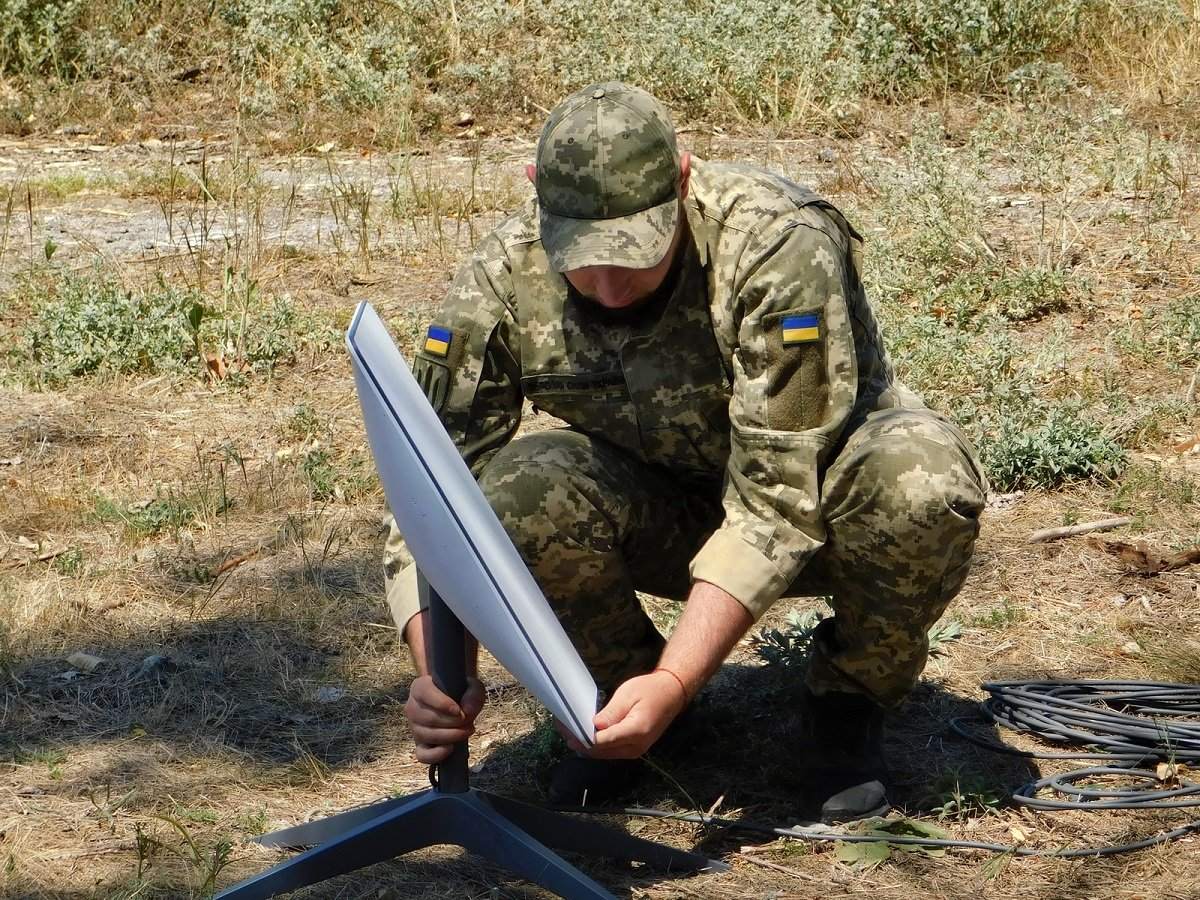
Adevărul lays out what the campaign rests on, and it is surprisingly concrete. Starlink terminals from Musk's SpaceX form the operational backbone of many Ukrainian drone missions. Hornet drones from Perennial Autonomy, a company founded by former Google chief Eric Schmidt, are considered the best medium attack aircraft Ukraine has. And Palantir, led by Alex Karp and co-founded by Peter Thiel, supplies artificial-intelligence software that is key to route planning and the effectiveness of long-range strikes. Adevărul ↗Austrian military analyst Colonel Markus Reisner summed it up for the paper by saying that it is precisely this combination — American intelligence information, artificial intelligence for operational execution, and Starlink as communications infrastructure — that allows Ukrainians to conduct and sustain such a campaign at all.
Not one of these three things is Ukrainian or state-owned. They are three private American companies.
The day Europe couldn't agree on what Musk said
Just how much this matters became clear at the end of August. On August 31, Belgian media wrote that Musk, in an interview with former minister Mykhailo Fedorov, had agreed to allow the use of Starlink for attacks against Russia, and Romania's Digi24 wrote the same day that he would be willing to permit it. Digi24 ↗A few hours later, the Kyiv Independent reported the exclusive opposite: according to its sources, Musk opposes Ukraine using Starlink for strikes on Russia, despite the earlier media reports. Kyiv Independent ↗
Germany's n-tv headlined its evening report directly as a question — whether Musk had given Kyiv the green light — noting that the reports contradicted each other. The Lithuanian outlet 15min wrote the next day that the celebration had come too soon. n-tv ↗
What matters is not which version ultimately holds up. What matters is that a key part of the Ukrainian army's capabilities depends on the decisions of a private American company — and for an entire day it was impossible to reliably determine which position actually applied.
Russia's replacement is struggling in low orbit
Paradoxically, Russia is worse off, and for the same reason. Its forces used Starlink too, even though they never had any right to it — terminals were smuggled into the country. In February, SpaceX blocked their access at Ukraine's urging. Tagesspiegel ↗The problem was not the loss of Starlink itself, but the fact that Moscow had no replacement — precisely because it had relied on the illegal use of someone else's service. Since then it has been building its own network, Rassvet, and the numbers do not look good.
For the satellites to function as intended, they would need to reach an altitude of 870 kilometers. Of the sixteen launched on July 19, not one reached the planned orbit, and most are holding between 300 and 400 kilometers. According to tracking data, at least two are already heading back toward the atmosphere. The lower a satellite flies, the shorter it lasts, because it experiences stronger atmospheric drag and burns through fuel faster. Digi24 ↗
The previous batch, launched in March, fared somewhat better — of sixteen satellites, four failed and twelve reached at least 550 kilometers by the end of July. Over two attempts, Russia thus has only twelve out of 32 satellites that reached at least 550 kilometers. Russia expert John Hardie of the Foundation for Defense of Democracies think tank told Newsweek that the failure rate so far appears higher than with the first generation of Starlink.
But failure does not mean the threat has disappeared. The Institute for the Study of War warns that even a partially functional network could improve the accuracy of Russian strikes on Ukraine.
Why Slovaks should read this too
This is not just a Ukrainian problem. The same network is currently expanding commercially across Central Europe — the Hungarian group 4iG has announced that it will bring Starlink Mobile to Hungary starting in 2027. Telex ↗The same infrastructure, whose military use depends on the rules and decisions of a private American company, is thus becoming a routine part of European telecommunications. The question that Kyiv is forced to ask under pressure is not one European governments need to ask yet — but it is the same question.
What hotinfo is monitoring
Whether SpaceX or Musk have publicly and unambiguously explained the rules for using Starlink in strikes on Russian territory.Whether Russia has launched another batch of Rassvet satellites, and how many of them reached the planned altitude.
Whether Ukraine or its European partners have announced a concrete alternative to Starlink for military use.
Whether the Institute for the Study of War or another analytical institution has assessed whether the Russian satellite network has improved strike accuracy.
Whether Starlink Mobile has launched in Hungary or in another country in the region.