

Key actors — tap for context
GCRMN
Global Coral Reef Monitoring Network — an association of scientists and reef managers that works as an executive body of the International Coral Reef Initiative (ICRI).
Why here: Published the report this article is about.
Manuel González Rivero
Marine ecologist specializing in remote and underwater mapping of reefs.
Why here: Lead author of the report.
Tracy Ainsworth
Coral biologist and vice president of the International Society for Reef Studies.
Why here: Explains how unevenly the burden is distributed among individual reefs.

Caribbean
Region in central America that includes the Antilles and Bahamas.
Why here: Region with the deepest documented decline in coral coverage.
More info →
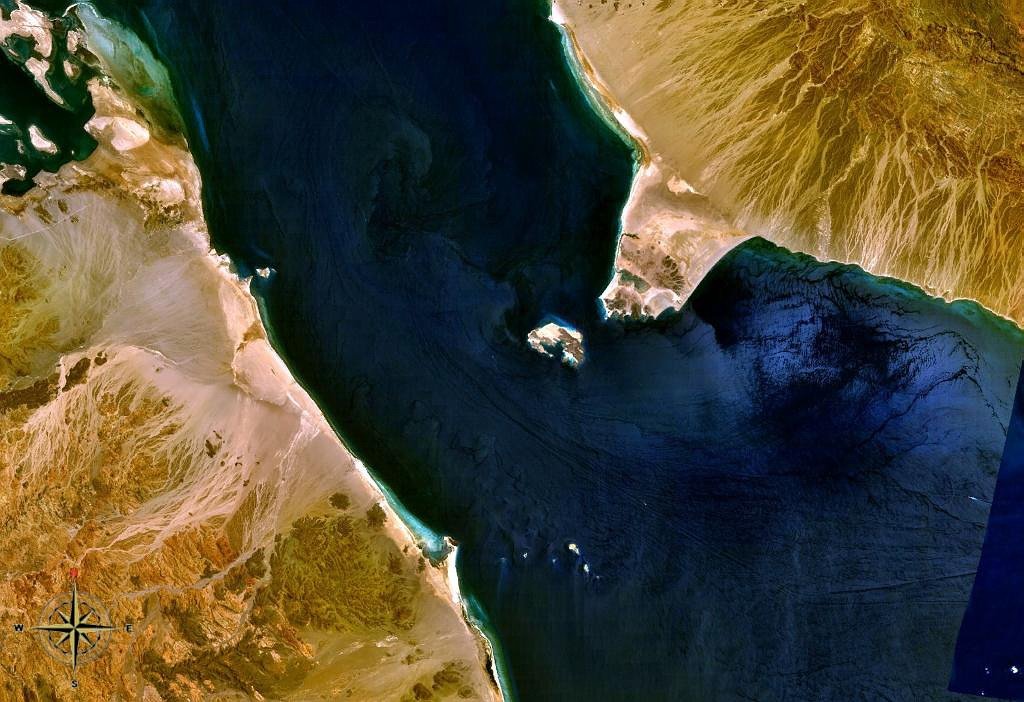
Red Sea
Sea arm of the Indian Ocean between Africa and the Arabian Peninsula.
Why here: Region whose reefs are known to most Slovak and Czech tourists.
More info →Five Years is Less Than Corals Need for One Generation
Major bleaching events used to occur roughly once a decade. Since 2010, they have repeated every five to six years. "Coral reefs used to have decades to recover from major bleaching. Today, they're lucky if they get five or six years," says the lead author of the report, Manuel González Rivero. GCRMN ↗ The catch is that many corals need at least five years to mature and start reproducing. The recovery window has thus narrowed to the time it takes a reef to barely raise one generation. "In some places, serious disturbance comes every year. Elsewhere once every few years," adds Tracy Ainsworth from the University of New South Wales in Sydney. Phys.org ↗What Exactly Declined
Average hard coral coverage declined from 30.2% in the reference period 1980 to 2009 to 27.3% in 2020 to 2024, a relative decline of 9.5%. The vacated space is being occupied by macroalgae and their average global coverage for the same period increased by 44%. Individual global bleaching waves cost reefs approximately 6.5% of coverage in 1998 and 1999, 9.9% in 2010 and 2011, 6.6% in 2016 and 2017, and 8.9% in 2023 and 2024. Of the ten regions into which the report divides the world, four are declining long-term, four show no net change, and two are growing. GCRMN ↗The Caribbean Shows Where This Shift Leads
The Caribbean has experienced the deepest decline. According to a separate regional report that GCRMN published last December, hard coral coverage there declined by 48% between 1980 and 2024, while macroalgae coverage for the same period increased by 85%. This is exactly the shift that global figures suggest on a smaller scale. GCRMN ↗For Slovak and Czech readers, however, another region is closest. The reefs of the Red Sea and the Gulf of Aden, including reefs near Egyptian resorts such as Hurghada or Sharm El-Sheikh, cover an area of 13,605 km² and constitute 5.3% of the world's reef area. GCRMN ↗ They have their own chapter in the report. GCRMN ↗
Why This Is Not an Obituary
The data also tell a second story. After the third global bleaching event, when given peace, global hard coral coverage increased by approximately 6% between 2017 and 2019. "If we give them enough time, they have the ability to recover," says González Rivero. The problem, therefore, is not that reefs have lost their regenerative capacity, but that the frequency of bleaching has roughly doubled. Before 2010, global coverage was relatively stable. The report authors also warn that coverage is today far below normal and faces the risk of irreversible decline, and at current temperatures another bleaching wave this year is very likely. Al Jazeera ↗Photo: Coral bleaching on the Great Barrier Reef, March 2016. Author Jay Galvin, via Wikimedia Commons, CC BY 2.0. Image is reduced in size.
What hotinfo Is Monitoring
- Another large-scale bleaching event was confirmed after the wave of 2023 and 2024.
- The next GCRMN survey showed global hard coral cover below 27.3%.
- The two regions that grew in the report held on to that growth in the next survey.