





What the Financial Times revealed
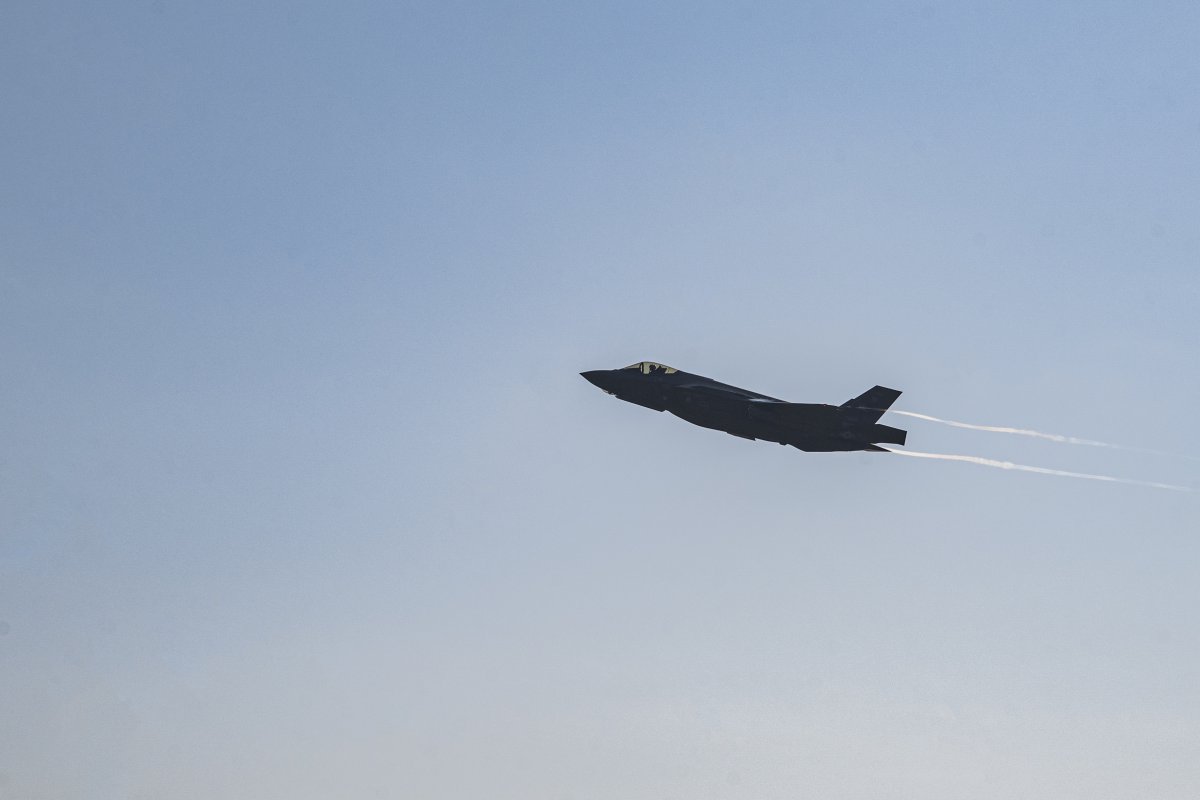
According to the Financial Times, the talks are being conducted through NATO channels and concern the deployment of so-called dual-capable aircraft — fighter jets able to carry both conventional and nuclear weapons, typically F-35A planes. Defense News ↗The program today rests mainly on five countries where American B61 nuclear bombs are stationed — Belgium, Germany, Italy, the Netherlands, and Turkey. The Financial Times also includes Britain in the broader group of approved hosts for dual-capable aircraft, though its role is different. CNBC ↗
The novelty is geographic. Interest in hosting these aircraft has come from countries lying closest to Russia — Poland and several Baltic states. Defense News ↗
Timing is key. According to the FT, Washington is considering this step as a signal that its commitment to NATO still holds — precisely at a moment when it is withdrawing part of its conventional troops from Europe and pressing allies to pay more for their own defense. The nuclear umbrella is thus meant to offset a smaller American conventional presence on the continent. CNBC ↗
Read also: Trump made the decision to withdraw part of the troops from Germany
The East asks, the West hesitates
This is where the story is richer than how domestic news outlets presented it. The alliance's eastern flank and the West are responding to the same anxiety — that American guarantees can no longer be relied upon forever — in two opposite ways.Warsaw wants concrete American capabilities as close as possible. Former President Andrzej Duda already argued last year that "NATO's borders moved east in 1999, so after twenty-six years the infrastructure should move too." Atlantic Council ↗ Prime Minister Donald Tusk is simultaneously negotiating with France over Macron's nuclear umbrella, and in early March acknowledged that Poland will one day seek its own nuclear weapons. Bloomberg ↗
Berlin is taking a different path. Chancellor Friedrich Merz rejects a German national arsenal, instead placing emphasis on a European component of deterrence built on French and British warheads — that is, on greater independence from Washington rather than on additional American bombs on German soil. German Marshall Fund ↗
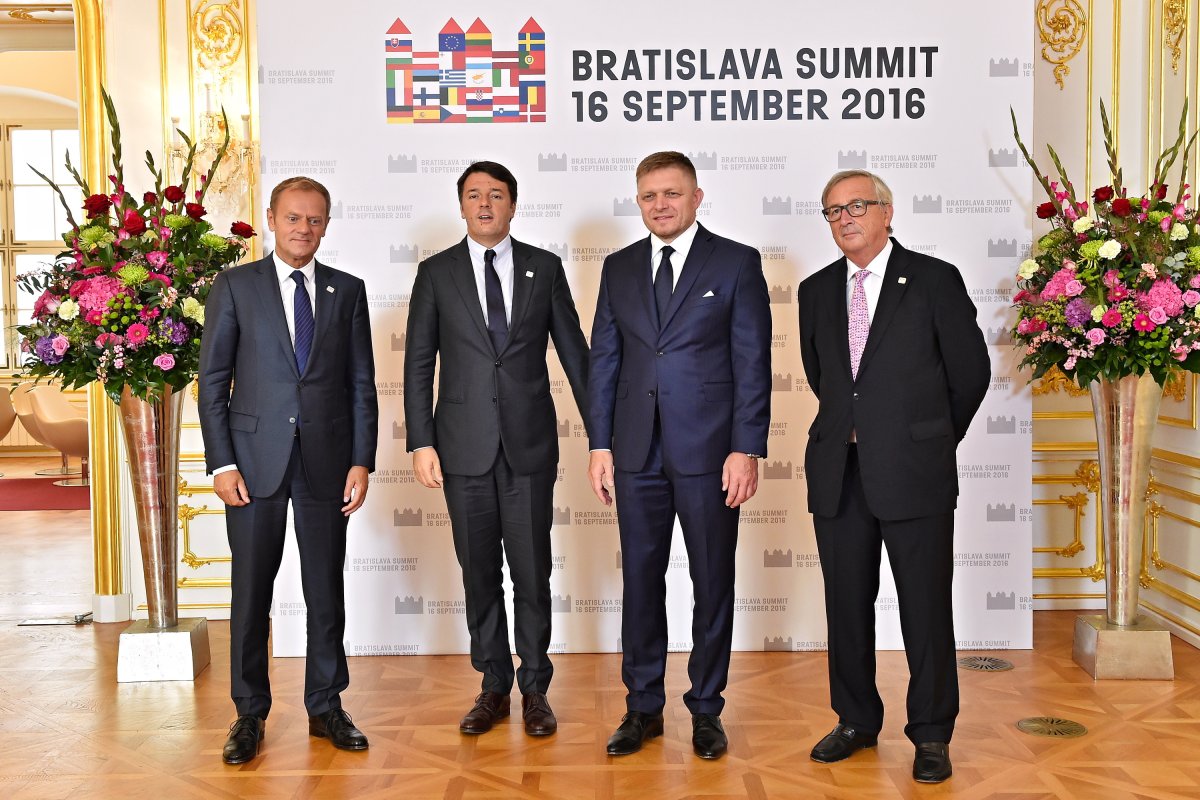
And the eastern flank itself is not uniform. While Warsaw and some Baltic states are pushing for expansion, Slovakia, Hungary, and Czechia are taking a reserved approach to new weapons in the region. A real test of their positions will come at the V4 summit on June 23 in Budapest.
Read also: V4 summit to take place June 23 in Budapest, Babiš and Fico to attend as well
The limits of this view
It's also worth noting the limits of this framing. The Financial Times reads the topic through the lens of the transatlantic security debate and allies' trust in the US — that is, through the question of how to convince the East that America will not leave. Less space is given to the opposite reading: that American warheads a few hundred kilometers from Kaliningrad could just as easily destabilize as deter.Moreover, the entire story rests on three anonymous sources. No Pentagon or NATO official has confirmed it on the record, and according to one of the sources, a deal is not close. It is thus more a gauge of sentiment within the alliance than a done deal — and some media, such as CNBC, read it straight through the lens of defense-industry stocks. CNBC ↗
What hotinfo is watching
- NATO summit in Ankara, July 7–8 — the nearest major political milestone, ahead of which a decision could be made.
- Whether any Pentagon or NATO official confirms the plan on the record (no one has done so yet).
- Which specific Baltic states officially request to host dual-capable aircraft.
- Moscow's reaction and the question of Kaliningrad, which would fall within range of the new bases.
- The V4 summit on June 23 — the stance of Robert Fico and Andrej Babiš on nuclear expansion to the eastern flank.