


Both figures predate Tuesday's escalation in the Persian Gulf, so they could not have reflected it — prices were already rising before it. According to analysts, however, the new tension is adding pressure toward further price increases. In the same week, both governments rejected a tool being discussed domestically: the Slovak government rejected a cut to the excise tax demanded by the opposition, while the Czech government rejected a cap on margins it had itself been considering. On Thursday, according to the Czech prime minister, the prime ministers of the Visegrád Four are also set to discuss fuel prices in Bratislava. TASR ↗ Shortly after this text was published, one of its underlying assumptions changed: on Wednesday morning, Brent broke through the 100-dollar mark for the first time since July, as the US attacked Iranian oil tankers and Iran responded with strikes on Jordan and the Persian Gulf. Hospodárske noviny ↗ iROZHLAS ↗
Key actors — tap for context

Andrej Babiš
Czech prime minister and businessman of Slovak origin, in office since 2025.
Why here: He refused to cap fuel sellers' margins and shifted the blame onto refineries.
More info →
Martin Kupka
Czech politician, chairman of ODS since January 2026, transport minister from 2021 to 2025.
Why here: He claims Babiš is being evasive, since he cannot impose margins on refineries.
More info →
Marián Viskupič
Member of the National Council of the Slovak Republic for the Freedom and Solidarity party, long focused on budgetary policy.
Why here: On behalf of the opposition, he is demanding a cut in the excise tax to the minimum allowed by the EU, and temporarily also in VAT.
More info →
Denisa Saková
Deputy Prime Minister and Minister of Economy of the Slovak Republic.
Why here: In May, she announced the government's decision not to lower either the excise tax or VAT on fuel.
More info →
Marco Rubio
US Secretary of State since 2025.
Why here: He sees "Iran's hand" behind the Houthi attack on Saudi facilities.
More info →Stanislav Pánis
Analyst at J&T Banka. Not to be confused with the politician of the same name from the Slovak National Party.
Why here: He acknowledges that the price of diesel could test the two-euro-per-liter mark.
Jiří Tyleček
Analyst at brokerage firm XTB.
Why here: He estimates the global diesel supply shortfall at 1.3 to 1.4 million barrels per day.
Ondrej Greguš
Analyst at brokerage firm XTB.
Why here: He points out that signs of market calming have so far never lasted.
Petr Dufek
Chief economist at the Czech bank Creditas.
Why here: He explains that Russia is losing refining capacity and sometimes even imports fuel itself.
Radovan Potočár
Analyst and editor-in-chief of the Slovak specialist portal Energie-portal.sk.
Why here: He says that a de-escalation of the conflict could bring prices down significantly.
Ryanair
Irish low-cost airline, the largest in Europe by number of passengers carried.
Why here: Due to the price of jet fuel, it is cancelling winter routes, including two from Bratislava.
More info →Česmad Bohemia
The largest trade association of road hauliers in Czechia.
Why here: It warns that diesel at fifty crowns would be a problem for a significant portion of hauliers.
More info →
Vyšehradská štvorka
A grouping of Central European states, in its four-member form since 1993 comprising Czechia, Hungary, Poland and Slovakia.
Why here: On Thursday in Bratislava, it is also discussing a common European solution to fuel prices.
More info →
Štatistický úrad SR
The central state administration body for state statistics.
Why here: It publishes weekly average fuel prices, on which the article is based.
More info →
Sloboda a Solidarita
A Slovak liberal center-right party, led by Branislav Gröhling since March 2024.
Why here: Its MP proposes addressing fuel prices through the excise tax.
More info →
Hormuzský prieliv
A strait between the Persian Gulf and the Gulf of Oman, a key route for oil exports from the Gulf.
Why here: Iran has threatened to close it again, and cargo traffic through it is restricted.
More info →
Saudská Arábia
A kingdom on the Arabian Peninsula, one of the world's largest oil exporters.
Why here: After the Houthi attacks, it shut down several energy facilities in the south of the country.
More info →
Cressier
A municipality in the Swiss canton of Neuchâtel, home to an oil refinery.
Why here: Its shutdown forced Bern to release part of its mandatory reserves of diesel and gasoline.
More info →What happened in the Gulf
On Tuesday, according to their own military spokesperson, Yemen's Houthis struck four Saudi Arabian cities with rockets and drones. Le Monde reports 73 injured civilians and a promise from Riyadh that it will respond. Le Monde ↗Saudi Arabia subsequently suspended operations at several energy facilities in the south of the country. de Volkskrant ↗ US Secretary of State Marco Rubio sees "Iran's hand" behind the attack — this is his accusation, not a proven fact. The European Union has called on the Houthis to stop the attacks. La Libre ↗
The market reacted immediately. The price of North Sea Brent crude briefly moved close to the 100-dollar mark on Tuesday — the highest point since July 24. Hospodárske noviny ↗ At the same time, according to the Portuguese Expresso, Iran's leadership threatened to close the Strait of Hormuz again. Expresso ↗ On Thursday morning, Brent was above 101 dollars. The rally continued after further escalation between the United States and Iran in Hormuz, where Iranian media reported explosions on Qeshm Island and Tehran was closing off further shipping routes. (Protothema ↗, Corriere della Sera ↗)
On Wednesday, the conflict spread directly to oil infrastructure. According to El Mundo, the US attacked Iranian tankers in response to Iranian attacks on US Navy ships, Iran struck Jordan and threatened to target tankers in Kuwait and Bahrain. El Mundo ↗ 7sur7 ↗ After the overnight attacks, several vessels in the Persian Gulf and the Gulf of Oman were left out of operation Politika ↗ and a drone also struck a Greek-owned ship. Protothema ↗ Iran also claims to have seized an American unmanned underwater vehicle in the Strait of Hormuz — so far this is only Iran's claim, not a verified fact. Cumhuriyet ↗ The market responded by breaking through the 100-dollar mark Süddeutsche Zeitung ↗ and the European gas price jumped to its highest level since the end of 2022. Tagesspiegel ↗ NU.nl ↗
On Thursday, the price accelerated. According to La Libre, Brent added five percent and surpassed 106 dollars, US WTI is at its highest since May according to Portfolio, and the Irish Times reports oil above 105 dollars alongside a further sell-off in bonds. The US Department of Energy also raised its price forecasts. La Libre ↗ Portfolio ↗ The Irish Times ↗ Novi list ↗
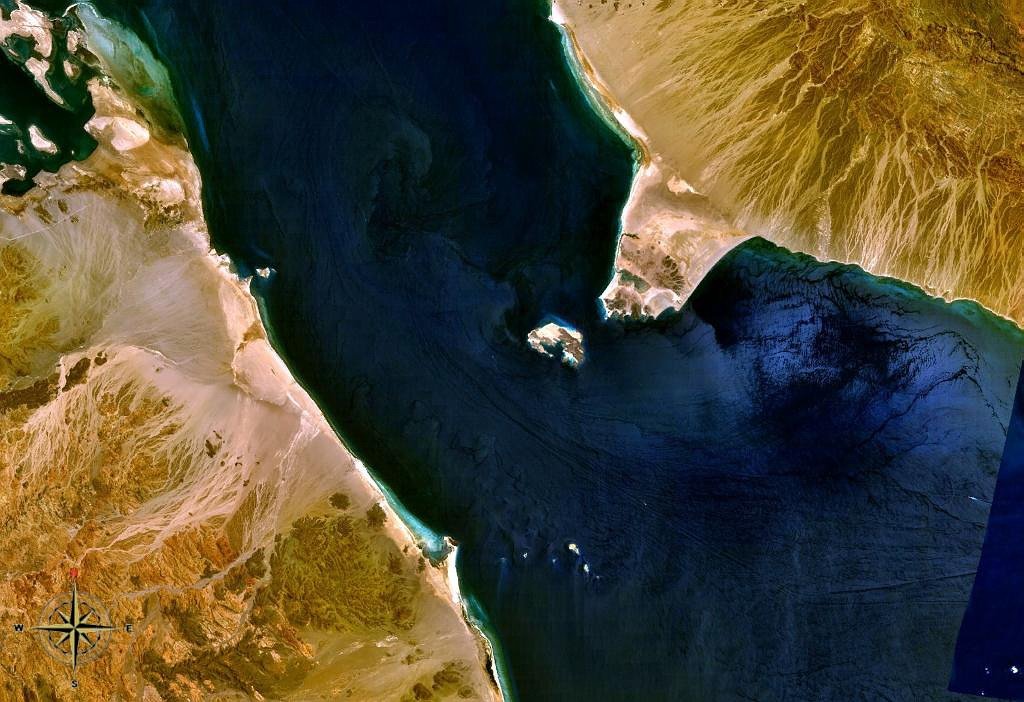
A second front has emerged along the tanker route. Yemen's Houthis have seized a port city near the Bab al-Mandeb strait, and according to RTÉ this threatens Saudi oil exports through the Red Sea. For Europe, this is a chokepoint at the southern end of the same route whose northern end is held by Hormuz. RTÉ ↗ SRF ↗
Why diesel is rising faster than gasoline
The price of both fuels is made up of the same components — oil, refining margin, distribution and taxes. But diesel is currently being pushed upward by three things at once that gasoline either lacks or feels only weakly.The first is refining capacity. According to Hospodárske noviny, it was said at the Asia-Pacific oil conference APPEC that global diesel supplies will remain constrained — there is a lack of spare refining capacity and Russia has banned diesel exports. Hospodárske noviny ↗ XTB analyst Jiří Tyleček estimates the global supply shortfall at 1.3 to 1.4 million barrels per day. Deník ↗
The second is winter. Heating oil and diesel fuel are both middle distillates and compete for the same share of refinery output. Seasonal heating demand is therefore colliding with planned shutdowns at European refineries. Seznam Zprávy ↗
The third is imports. According to STVR, one in every five liters of diesel sold at filling stations is imported. STVR ↗ Petr Dufek, chief economist at Creditas bank, notes that Russia is losing part of its oil-processing capacity, has restricted exports of other fuels as well, and in some periods even imports gasoline and diesel itself. Deník ↗
Bratislava rejected a tax cut, Prague a margin cap
Slovak opposition is demanding action on the tax. "Let's cut the excise tax to the minimum allowed by the EU. We're also saying that with such draconian prices, it would be good to at least temporarily lower VAT too," said SaS MP Marián Viskupič. The Finance Ministry called this a political statement: according to spokesperson Pavol Kirinovič, it would mean a loss of budget resources "in the range of tens to hundreds of millions of euros." The government already agreed on this back in May, when Economy Minister Denisa Saková announced that given the state of public finances, it would cut neither the excise tax nor VAT. STVR ↗In Czechia, the dispute centers on a different lever — margins. Prime Minister Andrej Babiš, ahead of a cabinet meeting, acknowledged he could regulate them again, but ruled it out afterward. "The margins that the Finance Ministry monitors are at most three crowns," he said, adding that he had been told there was no room in the margins. He shifted the blame to refineries: according to him, both the war in Ukraine and the war over Hormuz are gradually destroying refining capacity, American refiners' margins are at record highs, and Europe lacks capacity because the Union decided to move away from fossil fuels. Aktuálně.cz ↗
ODS opposition leader Martin Kupka says Babiš is being evasive, since he knows he cannot push through a margin cap on refiners. On that point he noted that "this is something the Czech government doesn't hold the keys to." At the same time, he says that regulating retailers' margins along the lines of the original summer setup would actually raise prices, and that a drop would instead come from cutting the excise tax and ending the conflict. Aktuálně.cz ↗ The Czech government did in fact regulate margins from April until mid-July this year. Respekt ↗
The debates in the two countries are thus diverging, yet converge on one point: the tool that both the Czech opposition and hauliers are proposing — cutting the excise tax — is exactly the one the Slovak Finance Ministry rejected. The Česmad Bohemia association warns that diesel at fifty crowns would be a problem for a significant share of hauliers. iDNES ↗
On Wednesday the same debate opened up in two more countries, and in each a different way. In France, the far-right National Rally is demanding a cut to the fuel tax — "if it doesn't drop significantly today, we will bring France to a standstill," declared MEP Aleksandar Nikolić — while Green MPs are instead proposing to freeze prices and invest in alternatives to the car. BFM TV ↗ BFM TV ↗ In Hungary, the government went further than Bratislava or Prague: Prime Minister Péter Magyar summoned MOL's chief executive directly to a cabinet meeting, and the cabinet is preparing a decision to support diesel. 24.hu ↗ Portfolio ↗ On Thursday three more were added, showing just how differently the same price problem is being handled. Spain faces a 24-cent-per-liter diesel price hike from October if the current discounts are not renewed. Italy is moving the opposite way — preparing to extend its diesel discount further, while targeted aid is being postponed. And Poland's Rzeczpospolita notes that gasoline in Poland is 21 percent cheaper than the EU average, though that has a flip side too. Meanwhile in France, a BFMTV poll identified the threshold drivers won't accept: €1.84 per liter. (ABC ↗, Rzeczpospolita ↗, BFM TV ↗)
On Thursday two more countries joined the tax debate. In Poland, Mateusz Morawiecki presented a plan he called "the end of plundering Poles at the pump," while Jarosław Kaczyński accused Donald Tusk of the fact that "it was supposed to be 5.19 zloty, and it's 9.15." In Bulgaria, the We Continue the Change party called on the government to restore the fuel price discount it had already introduced once before. Do Rzeczy ↗ Do Rzeczy ↗ Dnevnik ↗
Italy extended its discount again. Rome pushed back the deadline for the reduced diesel excise tax precisely because of high prices — so far it is the only one of these countries where the measure is actually in effect, not merely a demand from the opposition. Gazeta Shqiptare ↗
Switzerland tapped its mandatory reserves, but for a different reason
This week Bern authorized the release of up to 30,000 cubic meters of diesel and the same amount of gasoline from mandatory reserves, from September 8 to 20. In each case this amounts to less than three percent of stored reserves, and it is an authorization to draw down, not proof that the entire volume was actually released.This is not, however, a response to the Gulf or to prices. The cause is a technical fault: the refinery in Cressier, in the canton of Neuchâtel, which covers more than 30 percent of Swiss consumption of petroleum products, halted operations last week and is expected to restart in mid-September. The outage has hit an already tight situation — low water levels on the Rhine have limited shipping capacity for weeks, forcing supplies to move by rail and pipeline from France instead. SRF ↗ Tages-Anzeiger ↗
For a Central European reader, what's striking here is precisely that parallel: a river running low on water can disrupt fuel supply just as much as a war — only quietly, and without headlines.
The bill someone is already paying
The cost of fuel doesn't stop at the pump. On September 2, Ryanair announced it would be cutting flights in the winter schedule, and gave the reason directly: through March 2027 it has secured 80 percent of its jet fuel consumption at 67 dollars a barrel, the price from before the conflict with Iran, but the remaining twenty percent it must buy at the current roughly 140 dollars. According to the company, the cuts should reduce winter losses by 70 to 100 million euros. The airline did not disclose which routes would be affected. The daily SME found that two routes which operated last winter from Bratislava to Edinburgh and to Dalaman in Turkey had disappeared from the booking system. SME ↗Foreign newsrooms are also describing the impact further from the pump. According to La Tribune, French industry is facing a double squeeze from gas and carbon that could throttle production La Tribune ↗, and Romania's Adevărul draws attention to a UN warning that the war in Hormuz is hitting small firms the hardest. Adevărul ↗
Austria's ORF adds a side effect that will only show up in price lists with a delay: the security vacuum around shipping routes is also returning in the form of Somali piracy, and the hijacking of a ship is pushing up insurance costs as well as the cost of detours. Since April, at least six merchant ships have been hijacked off the Somali coast and more than 90 sailors taken captive; according to an analysis by the maritime journal Lloyd's List, more than 120 pirates are operating there. ORF ↗
How fuel translates into everyday numbers was shown on Wednesday by Greek inflation figures for August: 3.8 percent, with To Vima naming diesel and petrol directly among the main drivers of the price rises. To Vima ↗ And Ryanair's cuts are raising the question elsewhere too — Luxembourg's Luxembourg Times asks whether Luxair might take the same step. Luxembourg Times ↗
On Thursday, the bill reached all the way to interest rates. The European Central Bank raised rates to 2.5 percent, the second increase this year, and La Libre links the move directly to the pressure of the war in the Middle East. NZZ writes that the bank is deciding between fear of inflation and concern over government debt, and the ECB also raised its inflation forecast for 2027. For households, this means that more expensive fuel will come back to them in mortgage payments too. La Libre ↗ NZZ ↗ La Libre ↗
The limits of this view
Not everyone reads the situation as a one-way road toward further price rises. The first of these brakes fell on Wednesday. On Tuesday, iDNES wrote that oil, despite everything, remains below the hundred-dollar mark, citing weaker Chinese demand and alternative shipping routes among the brakes on growth; a day later, oil broke through that mark. iDNES ↗ Poland's Rzeczpospolita, meanwhile, pointed out that Kuwait has resumed oil exports through Hormuz and that they are recovering quickly despite the war — though on Wednesday Iran threatened to target tankers specifically in Kuwait and Bahrain. Rzeczpospolita ↗The reverse scenario also holds. Analyst and editor-in-chief of the Energie-portal.sk website Radovan Potočár notes: "If, in some ideal scenario, the whole conflict were de-escalated and exports from the Persian Gulf were reopened, that would be a good impulse for prices to fall significantly." STVR ↗
And forecasts should be read as forecasts. J&T Banka analyst Stanislav Pánis admits that for diesel, the two-euro-per-liter mark could be tested. XTB analyst Ondrej Greguš says signs of the market calming down have already been visible, but the problem is that so far they haven't held. Pravda ↗
Illustrative photo: an Orlen filling station in Strečno, August 2023. The prices on the sign date from when the photo was taken, not the present. Author: Fallaner, Wikimedia Commons, CC BY 4.0.
What hotinfo is following
- Priemerná cena bežnej nafty na Slovensku prekročila podľa týždennej štatistiky Štatistického úradu SR dve eurá za liter
- Saudská Arábia obnovila prevádzku energetických zariadení pozastavených po útokoch húsíov
- Summit V4 v Bratislave predložil konkrétny spoločný návrh k cenám pohonných látok na európsku úroveň→ O čom píše Slovensko: Prokuratúra odstavila prokurátora Kysela. Fico hostil V4,…Samit V4 s írskym premiérom sa v Bratislave konal 10. septembra, lídri sa však dohodli tlačiť na nižšie ceny elektriny a na odklad ETS2. Spoločný návrh ku cenám pohonných látok z neho nevyšiel.
- Slovenská vláda zmenila postoj k spotrebnej dani alebo DPH na pohonné látky→ Marža rafinérií pri nafte je v Európe na rekorde. Slovensko stropuje pumpy, Čes…Vláda daňovú cestu odmietla — od októbra zastropuje maržu predajcov na desať centov za liter a osobitný odvod pre rafinériu odmietla s tým, že sektorová daň už existuje. Zníženie spotrebnej dane presadzuje opozičná SaS, nie vláda.
- Česká vláda po odmietnutí z 8. septembra znovu zaviedla reguláciu marží pri palivách→ Maximální ceny nafty klesnou, u benzinu se zvýšíDoplnené kontrolou 7.10.2026: Vláda od októbra stropuje maximálnu maržu na 2,50 Kč/l a ministerstvo zverejňuje cenové stropy.