




Key actors — tap for context

Google
An American technology company whose search engine has a market share of around ninety percent in Europe.
Why here: It has rolled out changes that it itself says are making its product worse.
More info →Nick Fox
Senior Vice President of Knowledge and Information at Google; since October 2024, search, advertising, maps and shopping have reported to him.
Why here: He is the author of the statement that the changes "degrade the user experience for Europeans".

European Commission
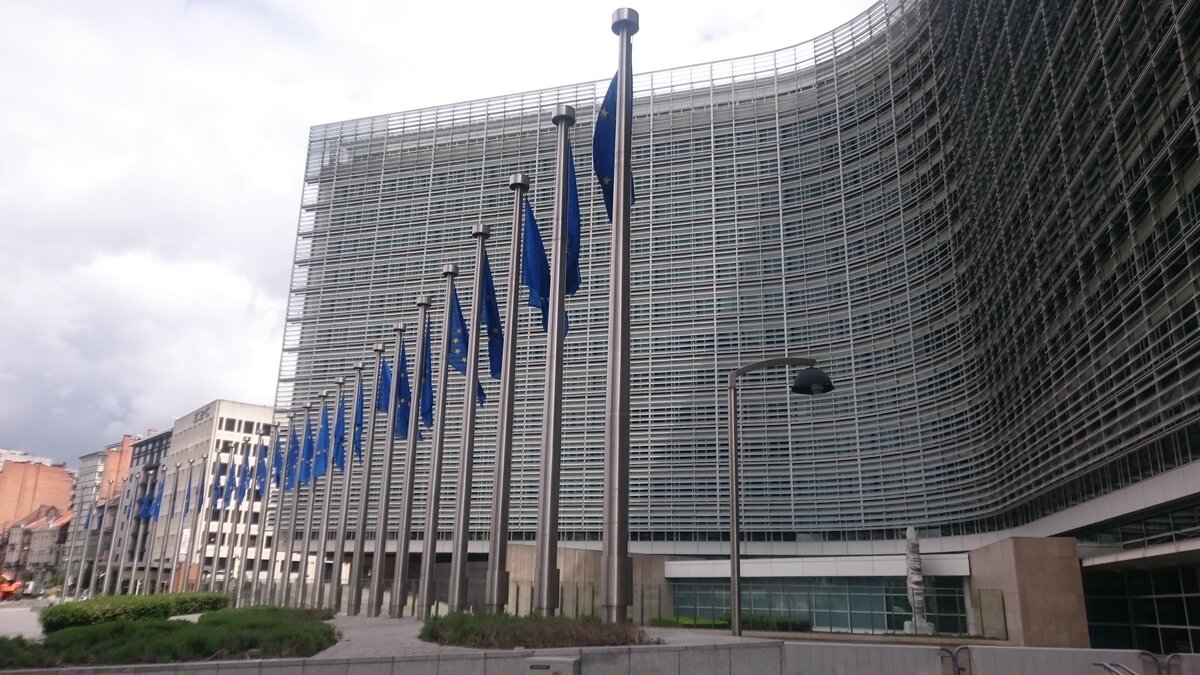
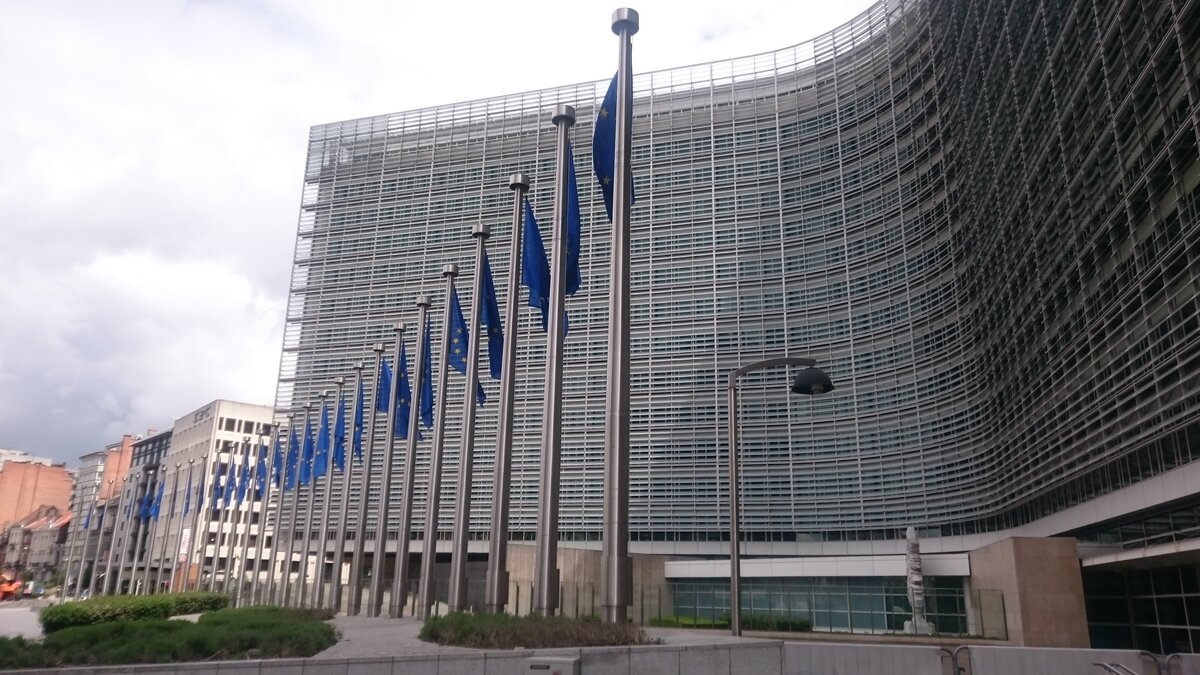
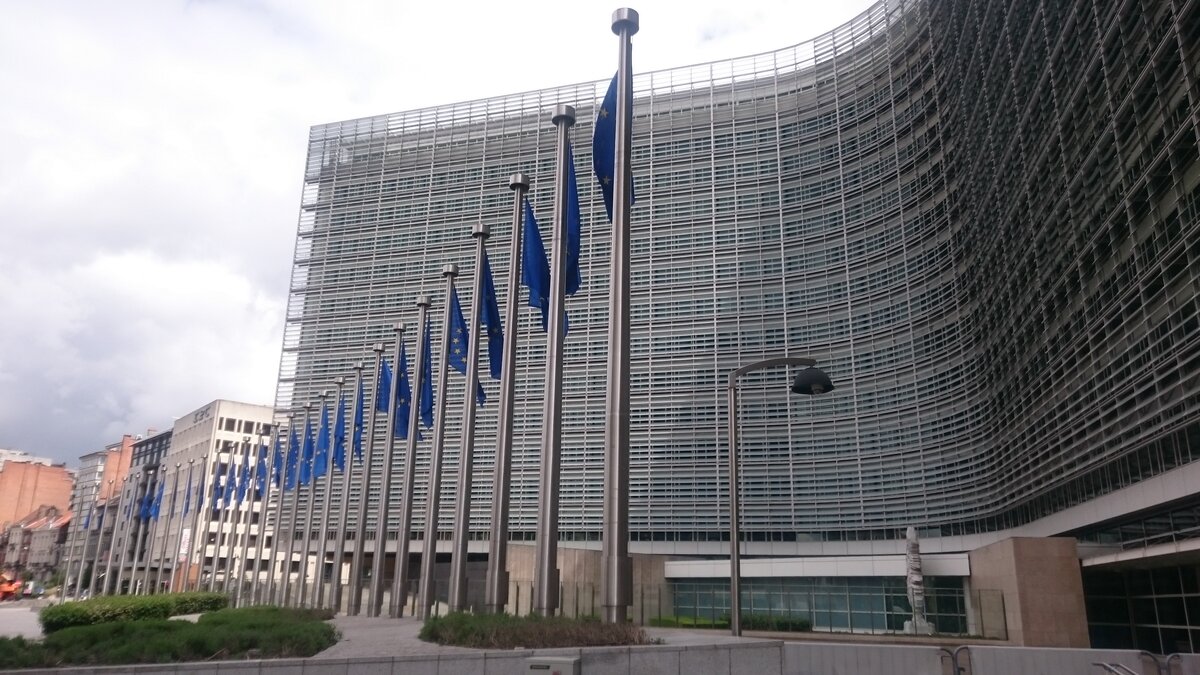
The executive body of the European Union that enforces compliance with the Digital Markets Act.
Why here: In July it fined Google 890 million euros and gave it sixty days to remedy the situation.
More info →
Booking.com
The largest European accommodation intermediary, headquartered in Amsterdam.
Why here: It is among the comparison sites that the new results layout pushes upward.
More info →Expedia
An American travel platform headquartered in Seattle, the second major accommodation intermediary.
Why here: Like Booking.com, it gains a more prominent position in the new layout.
More info →Mirai
A Spanish company that sells hotels booking systems for direct sales.
Why here: Its analysis is one of two public measurements of the first wave of changes' impact on hotel bookings.
Trivago
A German accommodation comparison site headquartered in Düsseldorf.
Why here: It is among the competitors the regulation was meant to help — it gained the least from the shift in shares.
More info →What Google changed and how it presented it
The new layout places one specialized search tool at the top of the page, below it two more with less detail, and only below those does it leave the carousel of hotels, airlines and restaurants. From this last strip, Google removed real-time prices. RTÉ ↗Senior Vice President Nick Fox told Reuters that the changes "degrade the user experience for Europeans" and "boost online intermediaries at the expense of local businesses". An unnamed company representative called it the biggest quality drop in the search engine's twenty-nine-year history. Google further claims that its internal testing on millions of European users showed frustration and repeated searches, and that the earlier adjustments reduced free traffic heading to direct bookings at European companies by thirty percent. According to Google, the changes do not affect users outside the Union. The Next Web ↗
These three claims cannot be independently verified — Google has not published either the methodology or the underlying data for them. The Next Web ↗
The reason for the changes is the European Commission's decision of 23 July. It fined Google 460 million euros for favoring its own services in search results for shopping, hotels, transport and sports, and a further 430 million for restricting app developers, for a total of 890 million. At the same time, it gave the company sixty days to remedy the situation. If the Commission does not accept the remedy, it can resort to periodic penalty payments — the regulation allows it to impose these for every day of delay, up to five percent of the company's average daily worldwide turnover in the preceding financial year. Európska komisia ↗
Read also: The EU fined Google 890 million euros for violating the DMA
What the first-wave measurement showed
Google is not the only one to measure the impact of the regulation. The Spanish company Mirai, which supplies hotels with direct-sale systems, monitored its own clients as early as the first wave of changes in January 2024.In its first analysis, it compared 3,450 hotels in markets where the regulation applies with those where it does not, and from January to April 2024 it measured a thirty percent drop in click-throughs and a decline in bookings of up to thirty-six percent in the Google Hotel Ads channel. Mirai ↗
But that is a figure for a single channel. A second, broader analysis therefore looked at it from a different angle: not at how many bookings were lost, but at how the distribution of sources from which hotels receive direct bookings changed. In a sample of more than three thousand accommodation establishments, over the eight months before and after Google began rolling out the changes in January 2024, the share of the Google Hotels module fell from 13.4 to 8.9 percent, i.e. by 4.5 percentage points. Mirai ↗
How booking sources changed
More interesting than the decline is where that share moved to. Of those 4.5 points, 3.7 reappeared elsewhere: 2.0 points were added to regular search results, 1.5 points to paid Google Ads advertising, and 0.2 points to competing comparison sites such as Trivago or Tripadvisor. The remaining 0.8 points dropped out of the breakdown entirely — and according to Mirai, that is a net loss of the direct-booking share.Let's break it down by who got what. Google's other surfaces took 3.5 of the 4.5 freed-up points. Competing comparison sites — precisely the players the Digital Markets Act was supposed to open the market to — received 0.2 points, less than five percent of the freed-up share.
The cost of the channel also changed, though not as dramatically in this breakdown as Google's statement might suggest. The larger part of the recovery came through regular search results, which cost the hotel nothing. The smaller part, those 1.5 points, came through paid advertising, where you pay for every click.
Mirai concludes from this that the missing share ended up with intermediaries: "This loss of direct revenue does not necessarily mean a loss in reservations for hotels, as OTAs are probably gaining this traffic and bookings. Unfortunately, for hotels that means a higher distribution cost due to channel shift from direct B2C sales to intermediated (OTA) sales." The abbreviation OTA denotes online travel agencies, i.e. Booking.com or Expedia. The company also concludes that, in its view, the result runs counter to the Union's regulatory intent, since the visibility of intermediaries in Google's results increased. Mirai ↗
The competing company D-EDGE arrived at a very similar picture; in June 2024 it compared the period from January to the end of April 2024 with the same period a year earlier. It measured that hotels' organic traffic fell by twenty percent and revenue from free booking links by thirty-two percent. The share of direct revenue coming from organic, unpaid Google traffic dropped from 66 to 57 percent, while the share of revenue from paid Google campaigns rose from 34 to 43 percent. According to the company, hotels' direct distribution costs rose by eighteen percent — from 3.3 to 3.9 percent of revenue. Meanwhile, intermediaries' share of the tracked hotels' online revenue grew to 62.7 percent. D-EDGE's conclusion, for the situation at the time, is that "the winners from DMA regulations are the gatekeepers, not hotels or consumers" — gatekeeper being the term the Digital Markets Act uses for the largest platforms. The company itself, however, admits that it cannot prove a direct causal link to the regulation itself. D-EDGE ↗
What this means for Slovak accommodation providers
Revenue for Slovak accommodation establishments is growing — in the second quarter of 2026 it exceeded 183 million euros excluding VAT. The statistics do not indicate what share of this comes from direct sales and what share from intermediaries. SITA ↗Mirai's analysis does not give separate results for Slovakia, and we did not find a domestic measurement of the impact, so we can only speak of the mechanism, not the measured effect. That mechanism, however, is the same for a guesthouse in the Tatras as for a hotel in Lisbon: the higher comparison sites move up in the results and the lower the link to the accommodation provider's own site sits, the larger the portion of bookings that may come through a channel that costs something — a commission in the case of an intermediary, a cost per click in the case of advertising.
The new layout has been in effect since Tuesday, and as of this deadline we found no published measurement of its impact.
Limits of this view
Neither Mirai nor D-EDGE is an impartial observer. Both are companies that sell hotels direct-sale technologies, so both have a commercial interest in direct bookings growing and the share of intermediaries shrinking. The fact that their conclusions agree is therefore weaker evidence than it might seem — they also agree in what they sell. Moreover, both analyses concern the first wave of changes from 2024, not Tuesday's, and they do not measure the same thing: Mirai's broader analysis mainly tracks the shares of direct-booking sources, while D-EDGE compares traffic, revenue and distribution costs. Their percentages therefore cannot be placed side by side.The other side is not unbiased either. Google faces the threat of periodic penalty payments and has a strong motive to portray the regulation in the worst possible light. This is not the first time competitors have accused it of a deliberately narrow interpretation of the regulation — DuckDuckGo, for instance, raised such criticism in the dispute over the sharing of search data. TechCrunch ↗
The European Commission has not yet publicly commented on the new layout, so a third voice is missing to say whether, in its view, the change complies with the regulation.
Among Slovak media, the newspaper Štandard carried the story on Tuesday evening as a short wire report. Štandard ↗
What hotinfo is tracking
- Európska komisia sa vyjadrila, či nový vzhľad výsledkov vyhľadávania považuje za dosiahnutie súladu s nariadením o digitálnych trhoch.
- Uplynula šesťdesiatdňová lehota z júlového rozhodnutia a je známe, či Komisia siahla po pravidelnom penále.
- Objavilo sa prvé meranie dopadu septembrovej zmeny na hotelové rezervácie, porovnateľné s analýzami z roku 2024.
- Slovenská alebo česká asociácia ubytovateľov sa k zmene vyjadrila alebo zverejnila vlastné dáta.
- Google zverejnil metodiku a podkladové dáta k tvrdeniu o tridsaťpercentnom poklese bezplatnej návštevnosti smerujúcej k priamym rezerváciám.