



Key actors — tap for context

Ursula von der Leyen
President of the European Commission, formerly Germany's defense minister.
Why here: She announced the proposal in her State of the Union address and presented it along with the full text of the regulation a day later.
More info →
European Commission
The executive body of the European Union, which typically puts forward proposals for European legislation and enforces the Digital Services Act.
Why here: It drafted the text of the regulation so as to unify the age limit across the entire Union.
More info →
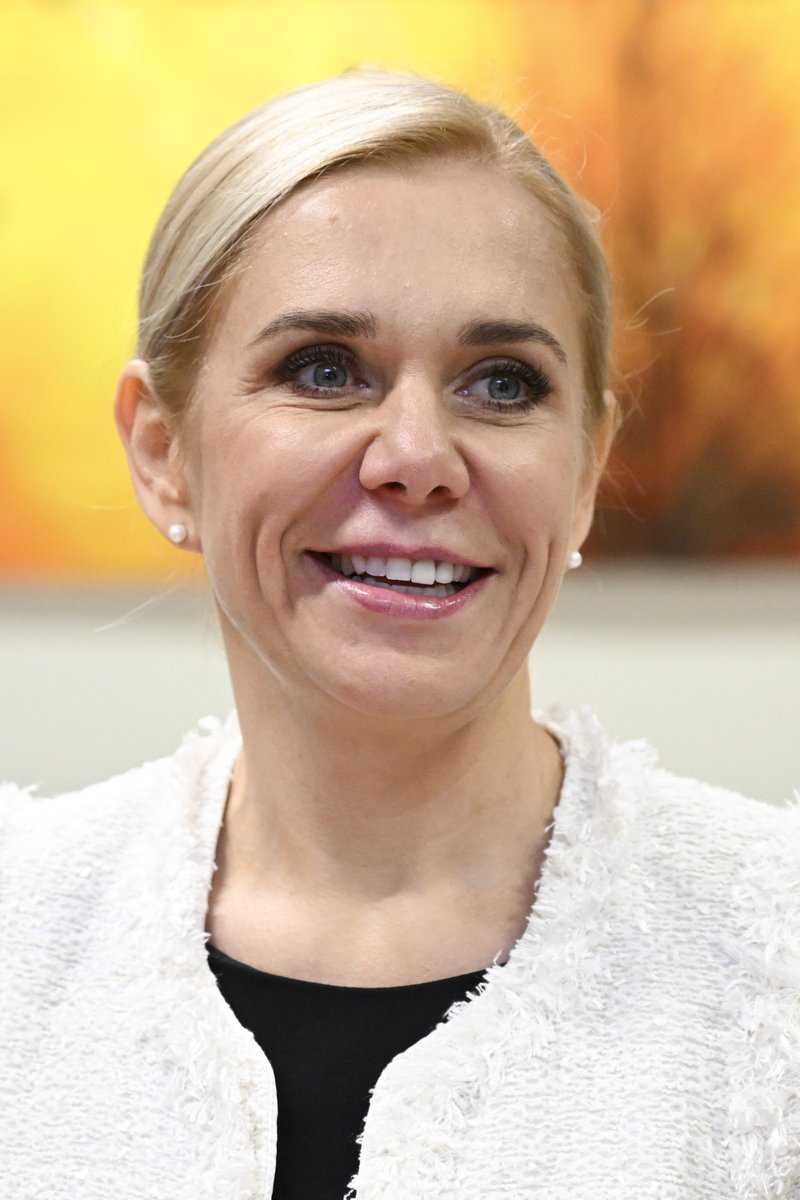
Tomáš Drucker
Minister of Education, Research, Development and Youth for Hlas-SD.
Why here: His ministry wrote the Slovak proposal with the 16-year limit and is defending it in parliament.
More info →Radoslav Štefánek
The Slovak government's plenipotentiary for artificial intelligence.
Why here: He expects the Commission to order the removal of the Slovak provisions on social media from the text.

Karin Prien
Germany's federal minister for education, family, seniors, women and youth, for the CDU.
Why here: She herself acknowledged that the key to regulating platforms lies in Brussels, and wants only a transitional national solution.
More info →
Emmanuel Macron
President of France.
Why here: He pushed for a ban for children under 15, and after it was struck down promised a legally more robust text by spring 2027.
More info →Constitutional Council
The French body that assesses whether laws comply with the constitution.
Why here: The Commission cites its August ruling in an accompanying document as evidence of the issue's legal complexity.

Australia
A federal state that on December 10, 2025 became the first in the world to ban social media for children under 16.
Why here: The Commission bases its requirement to verify age before account creation on its experience.
More info →Anika Wells
Australia's minister for communications, for the Labor Party.
Why here: She admitted that despite the ban being circumvented, not a single tech company has been fined.
More info →
EDRi
A Brussels-based network of nonprofit organizations, experts and academics that advocates for digital rights.
Why here: It called the proposal clumsy and argues that harmful design does not simply become safe on a child's fifteenth birthday.
More info →What's in the proposal
"Today, our children are engaging with the most sophisticated technologies ever created. Technology that was never created with their wellbeing in mind," Commission President Ursula von der Leyen said when presenting the proposal. The core of the text is that the burden of proof is reversed: it is the platform, not the authority, the parent, or the child, that must prove a service is safe for children. Európska komisia ↗The age staircase is only the more visible half of the text. The ban does not apply to every service, but to social networks and video platforms with risky features that the proposal names: live streaming to an indeterminate number of people, the ability to contact users outside existing connections, a recommendation system built on profiling, recommending content and contacts that the user does not follow on their own, and features that sustain continuous content consumption or send notifications drawing the user back. Children under 13 have a single exception: a parent can let them use a children's video platform through their own account, with a one-hour daily limit. The child has no account of their own. Návrh nariadenia ↗ Lupa.cz ↗
The second half concerns all minors under 18 and is a list of banned techniques. No infinite scrolling and autoplay without breaks, no notifications luring a child back with no connection to something they themselves did, no rewards for broadcasting to a mass audience, and no "streaks" that punish a child for not returning on a given day. Recommendation systems for minors are to be optimized for safety and mental health, not engagement. AI companions and chatbots must not imitate a human relationship in a way that creates emotional dependency. Európska komisia ↗ ČT24 ↗
The most important sentence on enforcement states that self-declared age is explicitly not enough. Access is to be guarded by certified age verification, which tells the platform only one thing: whether the user is above or below the threshold. Within six months of the start of application, platforms must review existing accounts and block those found to belong to someone under 15, or whose age cannot be determined. The largest platforms, with at least 45 million active monthly users in the Union, will additionally have to have a compliance plan verified by an independent auditor at their own expense, and fines can reach six percent of worldwide annual turnover. Európska komisia ↗
The regulation would start to apply six months after entry into force, one provision immediately and two only after a year. Návrh nariadenia ↗ First, however, it must be approved by the European Parliament and the member states, which can take months or even years. Tagesschau ↗
The entire press conference at which the Commission presented the proposal was broadcast live by the Reuters agency. The recording is in English and runs 29 minutes.
The Slovak threshold is not in the text
The Slovak ban is not a standalone law, it is part of a proposal on an integrated system for protection against radicalization and mobilization toward violence. The government approved it on August 26, it is meant to take effect from January 2027, with age verification for opening and using an account only from January 2028. It has not yet passed its first reading in parliament. STVR ↗ After the government's approval, Education Minister Tomáš Drucker described its purpose by saying that "we are not banning the internet," but that large platforms will not be able to provide individual accounts to children younger than 16. STVR ↗Also read: The government approved a proposal to ban social media for children under 16. In France, an almost identical ban was struck down by the Constitutional Council two weeks earlier
The European text states that the harmonized threshold of 15 is meant to be set precisely so that the internal market is not fragmented by differing national laws. Social networks are not among the categories for which a higher national threshold remains possible. According to the BBC, member states will not be able to opt out of the regulation, and according to its information, the Commission has already warned some of them that national laws adopted before it takes effect will have to be repealed. BBC News ↗
The fact that the Slovak ban would run up against European law was flagged the same morning, even before the text was published, by the outlet Živé.sk. Radoslav Štefánek, the government's plenipotentiary for artificial intelligence, told it that the proposal must go through the European TRIS notification procedure with a basic three-month standstill period, and that he expects the Commission to order the removal of the provisions on social media from the text. The outlet notes, however, that this is his expectation, not a decision by the Commission. Živé.sk ↗
The list of states with which the Commission documents market fragmentation in the proposal does not include Slovakia. Italy, France, Greece, Poland, Austria and Belgium sent their texts to Brussels, plus Norway, which is part of the internal market without EU membership. Návrh nariadenia ↗ According to the Commission, 17 member states have legislation in preparation. Oznámenie Komisie ↗
Germany is dealing with a similar dispute. Minister Karin Prien, who is responsible for education and family in Friedrich Merz's cabinet, supports a threshold of 13, but has herself admitted that the key lies "a bit in Brussels," and plans national rules only as a transitional solution until a European framework is ready. Tagesschau ↗
What Brussels took from two failures
The French ban for children under 15 was struck down by the Constitutional Council on August 14 for being blanket in scope and for lacking parental consent, as we wrote in detail in the article above. It also objected to the absence of legal safeguards in age verification, which would affect all users, including adults. The Commission cites this ruling in its communication as evidence that the topic is legally complex and requires a targeted and proportionate approach. Oznámenie Komisie ↗ The European proposal is written so that it answers the first two objections with a particular construction: the ban is tied to the listed risky features, and a parental mini-account exists for thirteen- and fourteen-year-olds. Whether it holds up is a question for the courts, not for the Commission. Meanwhile, according to Tagesschau, the French government submitted an amended version on Monday, and the Commission's impact analysis records a French notification from September 2026. Macron promises a legally resilient law by spring 2027. Conseil constitutionnel ↗ Tagesschau ↗ Analýza vplyvov Komisie ↗ RTÉ ↗From Australia, the Commission drew a different lesson. Its impact analysis states that the Australian law requires only "reasonable steps" from platforms, and that according to surveys and data from the eSafety regulator, most children who had accounts still have them, with most of them never asked to prove their age. Newer laws therefore require an age check before an account is even created. Australia's communications minister, Anika Wells, admitted this month that not a single company has yet been fined. Analýza vplyvov Komisie ↗ BBC News ↗
The same analysis also acknowledges that the benefits will arrive gradually, and that children may move to services that do not fall under the age rule.
The limits of this view
The entire proposal rests on age verification, and that is precisely where commentators see the greatest risk. The Irish Times notes that turning the European digital identity wallet or an age-verification app into a de facto condition for creating a profile will be politically very sensitive, since it asks people to upload identification. The Irish Times ↗ The Commission, by contrast, maintains that platforms do not see the documents themselves, and that every state must offer at least one free way to prove age, including for people without a digital ID. Európska komisia ↗Criticism also comes from the opposite side. "If a design is harmful at thirteen, it doesn't magically become safe on someone's fifteenth or eighteenth birthday," said Simeon de Brouwer of the organization EDRi, which called the Commission's attempts at better protection of children online clumsy. Germany's consumer advice center, meanwhile, argues that age limits alone do not solve the problem, because a business model built on maximizing attention also affects adults. The children's organization 5Rights Foundation, by contrast, welcomes the proposal, with the caveat that the devil is in the details. Tagesschau ↗
What hotinfo is following
- The Commission has responded to the Slovak bill in the TRIS notification procedure and it is known whether it asks for the social media provisions to be removed.
- Following the EU proposal, the Slovak education ministry has kept, changed or dropped the age limit of 16.
- Member states in the Council have agreed a position on the proposal and it is known whether they allow higher national age limits.
- The French parliament has passed a new law replacing the one struck down by the Constitutional Council.
- The Australian regulator has issued its first fine to a platform that failed to enforce the age limit.
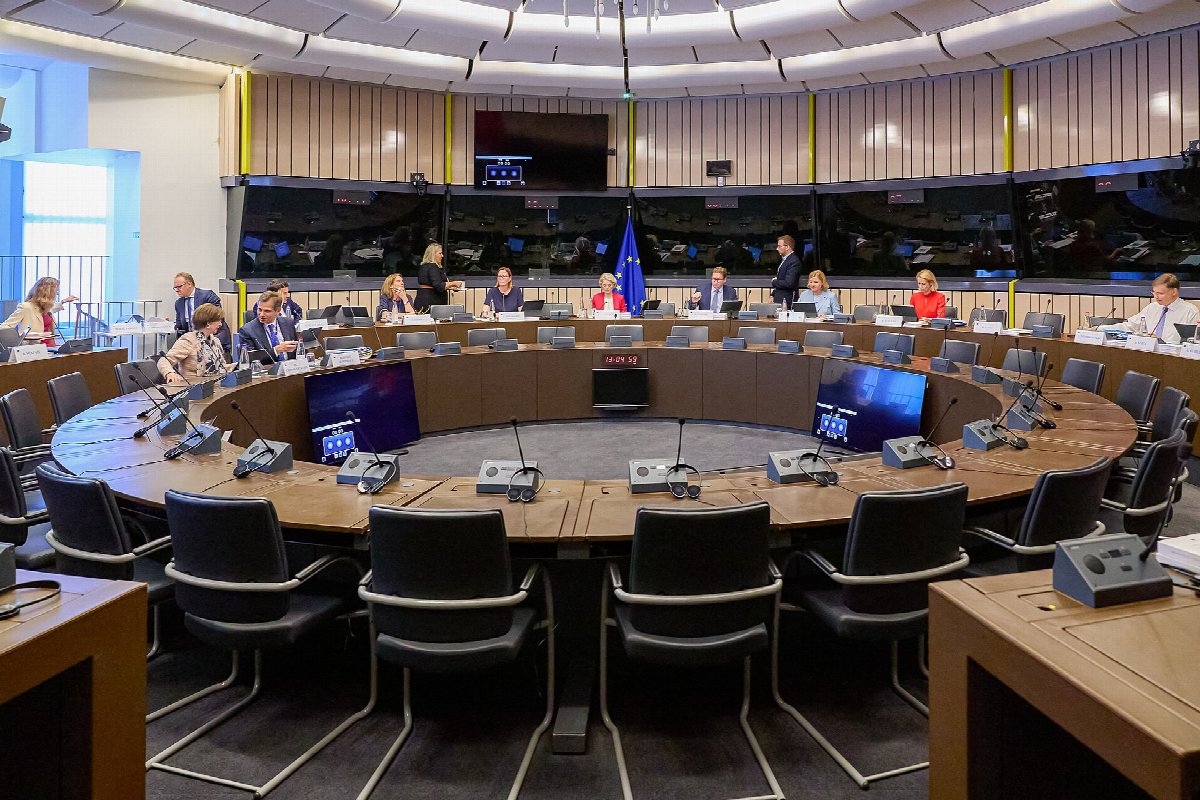
*Illustrative photo: meeting of the College of the European Commission on September 15, 2026, two days before the proposal was adopted. Author: Dati Bendo / European Commission, CC BY 4.0.*