


Key actors — tap for context
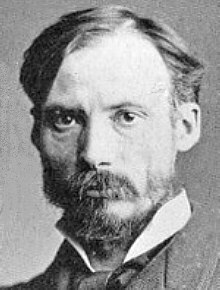
Pierre-Auguste Renoir
French Impressionist painter (1841 – 1919), one of the founders of the movement. He spent the last twelve years of his life on an estate above Cagnes-sur-Mer, where he continued painting despite advanced rheumatism.
Why here: His last home is today a museum, from which thieves took four paintings.
More info →Domaine des Collettes
An estate with an olive grove above Cagnes-sur-Mer, which Renoir bought in 1907 and had a house built on. Since 1960 it has housed a museum dedicated to the painter.
Why here: The grounds whose fencing the perpetrators cut through.
Musées Nationaux Récupération
French inventories of works of art that were returned to France from Germany after World War II, for which no original owners were found, and which the state entrusted to museums for safekeeping. These are not exclusively looted works; each piece is assigned a category according to the state of research, and the search for heirs continues.
Why here: Three of the four stolen paintings are in this fund, each in a different category.
More info →
Gabrielle Colonna-Romano
French actress (1888 – 1981), a student of Sarah Bernhardt and a longtime member of the Comédie-Française troupe. She had a relationship with Pierre Renoir and modeled for his father, Auguste.
Why here: She is depicted in one of the two paintings that remain missing.
More info →
Ambroise Vollard
French art dealer, one of the most influential sellers of contemporary art in the early twentieth century.
Why here: The second missing painting comes from his collection.
More info →
Bryan Masson
Mayor of Cagnes-sur-Mer since March 2026 and a member of the National Rally. Until April 2026 he was a member of the National Assembly, and he gave up that mandate due to incompatibility of offices. He was born in 1996 in Cagnes-sur-Mer itself.
Why here: He published a timeline of the raid and is demanding money from the state to secure museums.
More info →
Catherine Pégard
French Minister of Culture since February 2026. She previously led the institution managing Versailles for twelve years and worked as a journalist for the weekly Le Point.
Why here: On the day of the theft, she called on museums to immediately implement emergency security measures.
More info →
Louvre
The most visited museum in the world, located in Paris.
Why here: Less than a year before the theft in Cagnes, jewels worth 88 million euros disappeared from it.
More info →Agathe Voisin
An auctioneer based in Nice.
Why here: She explained why the stolen paintings are harder to cash in than the jewels from the Louvre.
Five minutes after the alarm
The theft took place in the early hours of Tuesday, September 8, at the Domaine des Collettes, the estate above Cagnes-sur-Mer where Pierre-Auguste Renoir spent the last twelve years of his life. According to the Nice Premium website, the perpetrators waited for a changeover in the security patrol, cut through the fencing around the grounds and smashed a glazed door on the ground floor. Taking the four paintings itself then took them less than three minutes. Nice Premium ↗The alarm went off at 5:48. "At 5:53, five minutes after the alarm, our municipal police were on the scene," the mayor of Cagnes-sur-Mer, Bryan Masson, wrote on Facebook. By then the thieves were already gone; only the city's cameras caught them. franceinfo ↗
Police then found two of the four paintings in the grounds' garden: Portrait of Madame Pichon from 1895 and Coco Reading from around 1905, which depicts the painter's youngest son, Claude. Both are undamaged. Investigators have not yet explained why the thieves left them behind. Le Journal des Arts ↗
The mayor's estimate of nine million euros, which was picked up by news agencies, referred to all four works together. No one has yet specified the value of the two missing paintings. The case was initially handled by the public prosecutor's office in Grasse, but it was taken over by the inter-regional specialized jurisdiction in Marseille, which deals with organized crime. The charges are theft and criminal conspiracy within an organized group. ici.fr ↗
Masson, who is a member of the National Rally and has been the town's mayor since March of this year, said after the theft that in his view the perpetrators were people who knew exactly what they were doing, and he is demanding money from the state to secure museums. According to him, local authorities cannot finance the rising costs of protecting collections on their own. Le Journal des Arts ↗
Four paintings, three wartime stories
Still missing are Woman at the Well, an unfinished oil on wood measuring 35 by 27 centimeters from around 1886, and Portrait of Madame Colonna-Romano, an oil on canvas measuring 94 by 74 centimeters. The model for the latter was the actress Gabrielle Colonna-Romano, the partner of the painter's son Pierre. The museum in Cagnes dates the painting to around 1910, while the French state database and the Musée d'Orsay date it to around 1913. Rose Valland, MNR 204 ↗ Le Journal des Arts ↗More interesting than their value is what the French state knows about them. None of the four paintings actually belongs to the museum in Cagnes; all of them are held there as a deposit from the Musée d'Orsay in Paris, and three of them are listed in the MNR fund. The abbreviation denotes inventories of works that were returned from Germany to France after the war, for which no original owners were found, and which the state entrusted to museums for safekeeping. This does not mean they share a single common fate: the Rose Valland database assigns each piece its own category, depending on how far the research into its provenance has progressed. Ministerstvo kultúry Francúzska ↗
Three works, three different categories. Woman at the Well is listed as a work probably looted. It belonged to the collection of the art dealer Ambroise Vollard; according to the record, during the war it was acquired by the German purchasing organization Otto or seized by an SS member, in 1949 it was found in Bavaria in the possession of a private individual, and that same year it was repatriated to France. Rose Valland, MNR 579 ↗
The Portrait of Colonna-Romano, by contrast, has the category work definitely not looted in the same database. It was sold from Renoir's studio to the German embassy in Paris on September 4, 1940; after the war it returned with the first convoy from Baden-Baden in June 1947, hung in Nice between 1955 and 1976, and has been in Cagnes since 1995. So it does have a wartime trail, but according to the French state, it does not involve looting. Rose Valland, MNR 204 ↗
One of the two discarded paintings is also in the MNR fund. Coco Reading is listed in the category of works with an incomplete history between 1933 and 1945: it came from the collection of Georges Bernheim, was probably taken from a Paris home in December 1940, ended up in Germany after the war, and was only returned by the Federal Republic in 1994. So a wartime past was not what distinguished the paintings the thieves kept from those they discarded. Rose Valland, MNR 1004 ↗
The fourth painting, Portrait of Madame Pichon from 1895, is not listed in the MNR fund. It entered the state collections before the war and, like the other three, is held in Cagnes as a deposit from the Musée d'Orsay. Le Journal des Arts ↗
Why they are hard to cash in
The difference from last year's robbery at the Louvre lies in what can be done with the loot. Jewels can be broken down into stones and metal. A painting cannot. "They can't be broken down the way those who robbed the Louvre did it," the Nice-based auctioneer Agathe Voisin told France 3. Whether the Louvre perpetrators actually did break down the jewels has not been confirmed; it is her assumption. France 3 ↗According to her, these two paintings "will certainly not be able to reach the market, either now or in ten, fifteen, or twenty years." Renoir's work is well documented, and every serious auction house verifies a work's provenance, so a legal sale is practically ruled out. "The real value of the item ceases to exist," she added. France 3 ↗
This is the source of a hypothesis that Voisin herself entertains: that the paintings were commissioned by a collector for themself, even though they will never be able to display them publicly. This is an expert's speculation, not a finding by investigators, who have not yet commented on the motive. France 3 ↗
Less than a year after the Louvre
The Renoir museum is a small institution. It opened in 1960 in the last house where the painter lived before his death in 1919, and besides paintings it holds sculptures, the painter's furniture, personal belongings, photographs, and an archive, including his easel and wheelchair. Seznam Zprávy ↗In France, the theft is read through what preceded it. In October 2025, four perpetrators disguised as maintenance workers used a hydraulic lift to gain access to the Louvre's Apollo Gallery, and according to the AFP news agency, it took them three minutes and fifty-eight seconds to take eight pieces of jewelry. The damage reached almost ninety million euros. Police detained suspects, but despite searches in Belgium, Italy, and other countries, the jewelry was not found. Aktuality ↗
On the day of the theft in Cagnes, the French Minister of Culture, Catherine Pégard, called on museums to immediately implement emergency measures to protect collections and visitors. She referred to an action plan the ministry launched in July of this year: a security fund of thirty million euros over three years, from which ten million was released this year for 482 priority projects, and the strengthening of the ministry's security inspectorate, which is to conduct random checks of museums and approve every loan of a work from the national collections. Ministerstvo kultúry Francúzska ↗ ici.fr ↗
The plan, which the ministry presented on July 27 and which contains 33 measures, envisions 3,127 sites under priority protection. Of these, 1,220 are museums, with the rest made up of churches and historical monuments. Cagnes-sur-Mer shows the scale of the task: the alarm and cameras there worked, and the municipal police arrived within five minutes, yet two paintings are still gone. TIME France ↗
Photo: Renoir's villa at the Domaine des Collettes in Cagnes-sur-Mer, today a museum. Author Raimond Spekking, via Wikimedia Commons, CC BY-SA 4.0. The image has been resized.