







Key actors — tap for context
Anthropic
An American company that develops the Claude language models.
Why here: Introduced the invisible text marking described in this article.
More info →
Claude
A family of language models from the company Anthropic.
Why here: Its outputs are precisely the ones that will receive the hidden signature, recognizable using a key.
More info →
Google DeepMind
Google's British-American artificial intelligence research laboratory.
Why here: Author of the SynthID Text method, which Claude's watermark is based on.
More info →Andrej Brník
Vice-rector of the University of Ss. Cyril and Methodius in Trnava.
Why here: Claims that artificial intelligence is not the main reason for the change to final theses.

Univerzita Komenského
The oldest and largest Slovak university.
Why here: Among the schools preparing to change the format of final theses.
More info →John Gruber
American technology blogger, author of the website Daring Fireball.
Why here: Objects that the watermark deprives the model of freedom in choosing words.
A signature you can't see
The watermark doesn't work like a caption under the text, nor like a hidden string of characters. When the model makes minor choices — for example, whether to describe the sky as gray or overcast — it picks from several equally valid options, and it is precisely into this choice that the watermark inserts itself. Anthropic changed the source of randomness so that a pattern emerges in the result. "That pattern is undetectable to the reader, but is detectable to anyone who has a key that encodes it," the company stated. SME ↗This is a variant of the SynthID Text method, which Google DeepMind described in the journal Nature in 2024. The company speaks of future Claude models, and says that older ones — that is, those released before August 2, 2026 — will gradually receive the marking over the coming months. Anthropic ↗ The company has also made available an interface for detecting watermarks. Živě ↗
European regulation also stands behind this step. The AI Act obliges providers to mark machine-generated content in a machine-readable way, while recognizing exceptions, for example for ordinary assistive edits. Around 190 signatories have signed on to the July code of practice on content transparency. TechCrunch ↗
What the watermark cannot do
What matters is where its limits lie. The watermark can indicate that Claude probably had a hand in a text. It cannot say whether it wrote the whole paper or merely rearranged sentences in an already-finished paragraph, and it cannot distinguish a human from another language model. In short texts and minor edits, the signal may not remain strong enough to be detected at all. Anthropic ↗Moreover, not just anyone will get access to detection. Anthropic has so far opened it, in a limited mode, to organizations that need it under European law — that is, regulators, police, media, fact-checkers, researchers, and companies with their own due-diligence obligations. Educational organizations are also on the list, but that doesn't mean every teacher will automatically get access. Anthropic ↗
Technology blogger John Gruber has also objected that the model has less freedom when choosing words, and so may not reach for the best option. This is an opinion, not a demonstrated deterioration. Anthropic states that in user evaluation it found no statistically significant difference between watermarked and non-watermarked output. SME ↗
Universities are changing the assignment
Slovak universities, meanwhile, are rethinking the bachelor's thesis itself. Starting from the 2026/2027 academic year, the University of Ss. Cyril and Methodius in Trnava will change the way most bachelor's programs are concluded. Instead of a classic thesis, there will be an internship, a portfolio, or a practically oriented output, with the specific form depending on the program. Comenius University is preparing the change and expects it from September. The University of Žilina is counting on an internship starting in 2027/2028, and for the Slovak University of Technology, its Faculty of Mechanical Engineering spoke of September 2027. Pravda ↗However, attributing all of this to artificial intelligence would be inaccurate. Andrej Brník, vice-rector of the University of Ss. Cyril and Methodius, stated that the main reason is not AI, but the effort to show what a graduate can actually do. The Ministry of Education describes the availability of artificial intelligence tools as one of the reasons, not the only one. Pravda ↗ Experts contacted by Hospodárske noviny about the situation in Czech education add that using AI in teaching is not, in itself, cheating, but that schools lack clear rules. Hospodářské noviny ↗
Turning off the asterisk does not remove the invisible marking
Gemini has gained a setting that lets you turn off the gray asterisk in the corner of generated images. You'll find it via the gear icon next to your profile name, under the item "Media watermark." The marking doesn't disappear because of this, though — the file still retains C2PA metadata as well as the SynthID watermark, which a machine can recognize. Moreover, the switch is not available to school and work accounts. Touchit ↗What else changed while you were away
In early September, Google began switching off Assistant on mobile devices and Wear OS, replacing it with Gemini. The transition will take several weeks and, in most cases, will happen on its own, though it also depends on which assistant you have set as default. For now, cars with built-in Google, speakers, and displays are exceptions. Mobilmania ↗Gemini Notebook has received a feature called Expert Intelligence, which works with e-books you own via Google Play Books, so far only with supported titles. From such a publication it can prepare an infographic, an audio overview, or a quiz, and can also answer questions that go beyond the literal text. Touchit ↗
Anyone with Revolut can get a ChatGPT Go subscription without paying. Standard and Plus accounts get three months, Premium, Pro, and Mobile get six, and Metal and Ultra get twelve. The offer has been running since the end of July. The published terms of the three-month promotion for Standard and Plus accounts state validity until July 29, 2027, and require an invitation from the bank, being at least 18 years old, and not currently subscribing to ChatGPT nor having done so in the previous three months. Touchit ↗ After the free period ends, the subscription automatically switches to a paid one at the monthly price valid at that time, which Touchit reported as eight euros at the end of July. It can be canceled no later than the day before billing. Revolut ↗
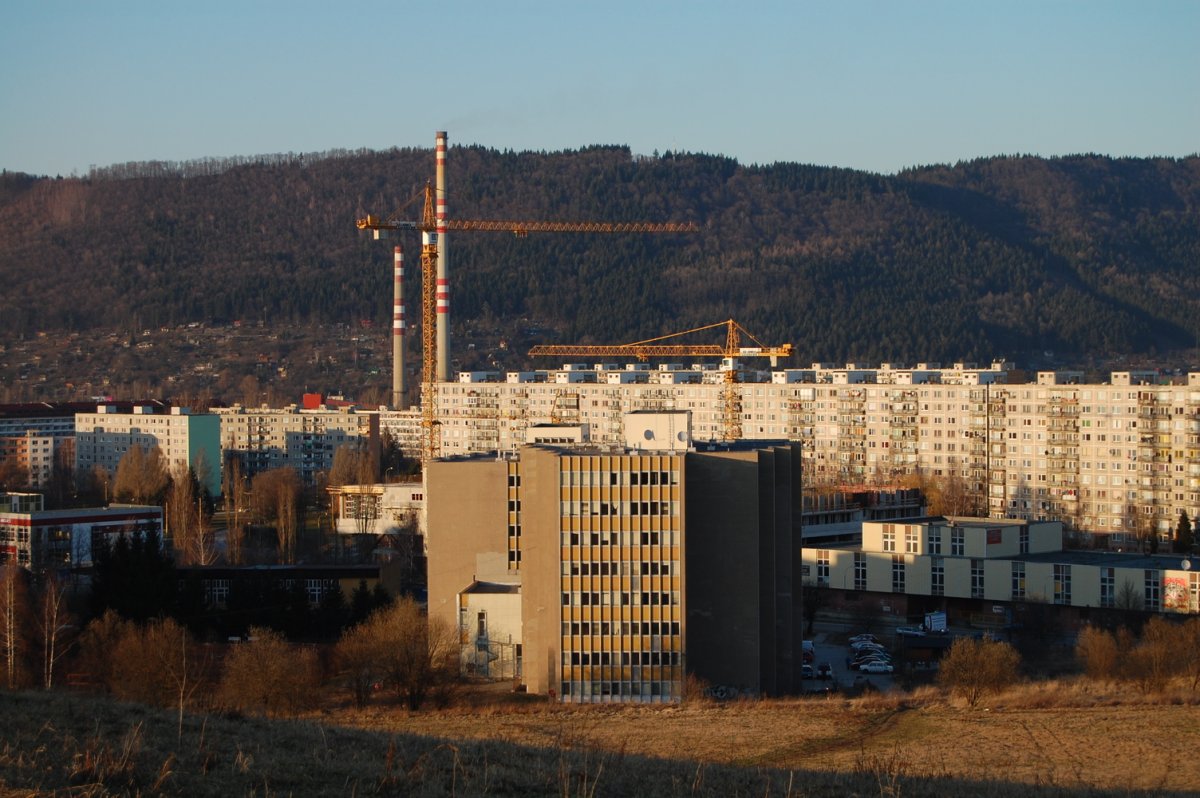
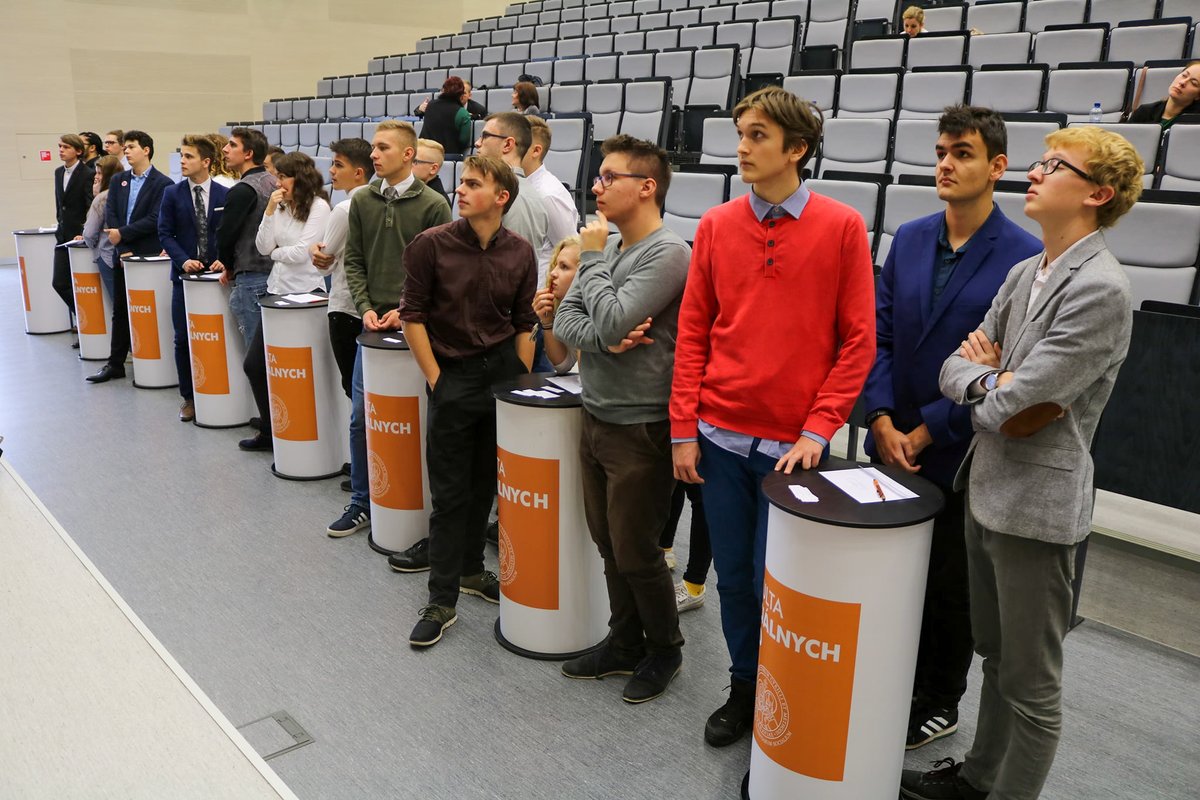
Illustrative photo: the auditorium of the Faculty of Social Sciences of the University of Ss. Cyril and Methodius in Trnava. Author UCM, Wikimedia Commons, license CC BY-SA 4.0.