

Key actors — tap for context

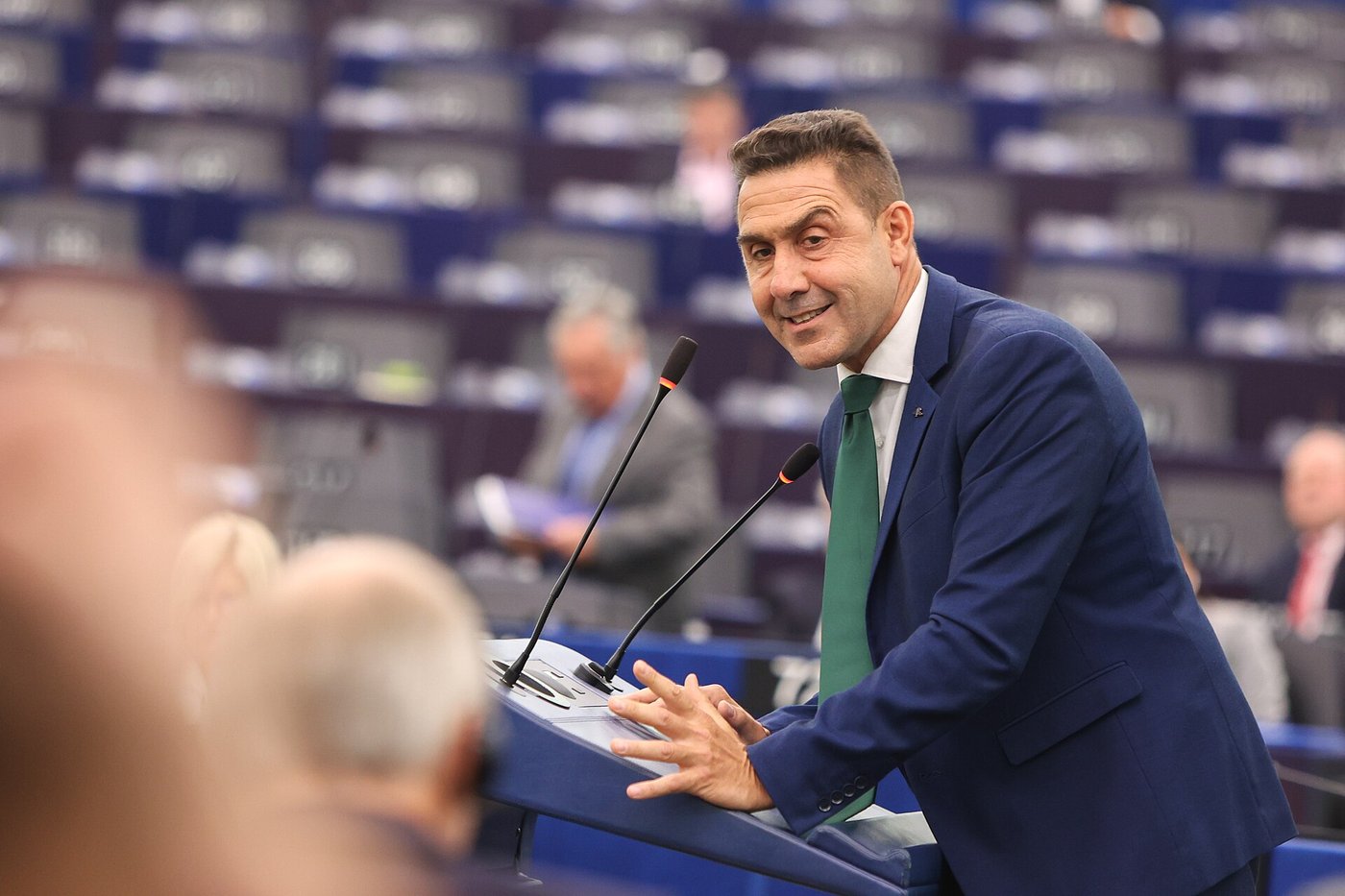
Roberto Vannacci
Former general of the Italian army, since February 2026 leader of the far-right movement Brothers of Italy.
Why here: Financial Times branded him a "Trojan horse" of Moscow, he denies it saying "I am not pro-Russian, I am pro-Italian".
More info →
Giorgia Meloni
Italian Prime Minister and leader of the Brothers of Italy party, in office since 2022.
Why here: Vannacci's rise puts her in a position of choosing whether to bring him into the coalition or keep him at arm's length.
More info →
Antonio Tajani
Italian Foreign Minister, Deputy Prime Minister and leader of Forza Italia.
Why here: From Irish Wicklow he warned that Moscow will try to influence Italian elections and did not rule out sabotage on Italian territory.
More info →
Matteo Salvini
Second Italian Deputy Prime Minister, Minister of Transport and leader of the League.
Why here: Responded to Tajani's warning by saying he was concerned about "anti-Russian anxiety".
More info →
Financial Times
British economic daily newspaper based in London.
Why here: Published the article "Russia's 'Trojan horse' in Italy puts Giorgia Meloni to the test", which sparked the dispute.
More info →European Council on Foreign Relations
European think-tank for foreign policy based in Berlin, with branches in six countries.
Why here: Author of the analysis from which the "Trojan horse" designation originally came.

Brothers of Italy
Italian far-right movement founded by Vannacci in February 2026 after leaving the League.
Why here: Seven months after its founding, it is the fourth strongest political force in the country.
More info →
Vladimir Putin
Russian President.
Why here: Vannacci calls for restoring trade with his country, which is one of the points of criticism that Financial Times adopted.
More info →What is in the analysis and what is not
The designation did not originate in the Financial Times newsroom. It comes from a July analysis by the European Council on Foreign Relations — a Berlin-based think-tank with branches in six European cities — which the newspaper adopted and expanded. According to Financial Times, Vannacci opened "a new front against Prime Minister Meloni" by attacking her strongly pro-Ukraine foreign policy — with "arguments surprisingly close to those from Moscow". The starting point was fuel prices: when petrol in Italy reached its highest level in three years that summer, the general cut his vacation short and linked it to support for Kyiv. Among his positions the newspaper also cites a demand to restore trade with Russia. Corriere della Sera ↗, ECFR ↗What is crucial is what is not in it. This is a convergence of positions, not a documented relationship. Repubblica from the Brothers of Italy circle describes it precisely that way: distrust of the ex-general is growing, but no evidence of ties to Moscow exists, and the fear is of a possible alliance, not of an agent relationship. La Repubblica ↗
"I am not pro-Russian, I am pro-Italian"
Vannacci responded on social networks and his response is politically deft. "I answer you with a trembling hand, as I just learned from your article that I am a Manchurian candidate sent by the Russian Federation," he wrote and thanked them for free advertising. Then he added a sentence that is the core of his defense: "I find it hard to accept the notion that disagreement with Brussels orthodoxy is now empirically equivalent to disloyalty toward the West." In the TV program Carta Bianca he summed it up more briefly — "they fear me, I am not pro-Russian, I am pro-Italian". Corriere della Sera ↗Read also: Vannacci's party wants to abolish the crime of femicide
In the same program he also said something that concerns Meloni more than Moscow: Brothers of Italy is in his view "a natural partner of this faded center-right majority". ANSA ↗
Two Deputy Prime Ministers, Two Answers
The ruling coalition responded inconsistently. Foreign Minister Antonio Tajani from Irish Wicklow, where EU foreign ministers were meeting, expressed solidarity with Germany after a drone attack on the airport in Leipzig and said that cyberattacks by Russian hackers are daily occurrences. When asked whether Italy could also be a target of sabotage, he answered: "I never rule out anything." He is convinced of attempts to influence elections, but added that "Italians cannot be influenced by Russians". Corriere della Sera ↗Second Deputy Prime Minister Matteo Salvini answered differently from Rome. "I don't know if Tajani has more information than I do, but I don't want to insult the intelligence of Italians in their free choice — they have never voted and I think they won't vote based on Russian, Chinese, American, Israeli or Palestinian influences," he said, and added that he was concerned about "anti-Russian anxiety". ANSA ↗
Fake Videos Exploit His Image
The information space around Vannacci is not polluted from only one side, however. The verification team of the Open portal documented a series of videos generated by artificial intelligence in which the general in uniform tears up passports to girls heading to Ibiza, raises his hand to a couple wanting to adopt a child, and slaps a woman for eating sushi instead of Italian food. The videos are made to look like authentic promotion of his movement. They are spread by an X account that first published them with feigned outrage, appealing to Meloni. Open ↗What is at stake besides Moscow
Numbers explain the timing. According to a poll by SWG agency for TgLa7 television, Brothers of Italy has 7.5 percent and Forza Italia 7.1 percent, so Tajani's party finished behind a movement that has existed for seven months. The League is at 5.7 percent, Brothers of Italy leads with 26.8 percent though their support is declining, and according to Reuters the coalition is lagging slightly behind the center-left bloc around the Democratic Party in polls. Meloni is meanwhile trying to push through an electoral reform that the Senate is to approve this month, which the opposition calls an attempt to improve its prospects. TASR ↗The dispute over who Vannacci answers to thus runs concurrently with the dispute over how votes will be counted. This is the context in which the label "Trojan horse" has a very concrete price for all parties involved.
On Thursday afternoon, legal pressure was added to political pressure — and it comes from a completely different direction than Moscow. The military prosecutor's office in Rome led by Marco De Paolis began preliminary proceedings on suspicion of reviving a fascist party under the Scelbino law. It does not concern Russian ties, but what position members of the armed forces hold in the organizational structure of Brothers of Italy; besides Vannacci, the investigation concerns national coordinator Massimiliano Simoni and Lorenzo Gasperini, responsible for the program. The complaint was filed by the military trade union Sindacato dei Militari. (Open ↗, Il Fatto Quotidiano ↗, Corriere della Sera ↗)
What matters is the stage. This is "accertamenti preliminari", preliminary proceedings — no one is accused. Vannacci's lawyer Giorgio Carta said that "no criminal offense can be seen in the described facts", and expects the matter to be quickly dismissed. Both things that have kept the ex-general this week thus happen to have the same shape: strong naming and missing documentation so far — in the Russian trace an analysis of positions without evidence of a link, in the fascist party an investigation without an accused.
Early Friday the dispute shifted from one general to the entire electoral system. The parliamentary committee on security Copasir warned intelligence services that voting is tainted by Moscow, saying that "we are already in the field". La Repubblica ↗
Historian Sergei Radchenko tells the same newspaper that Italy underestimates hybrid war risks and gave Russians too many visas — after Leipzig, visa restrictions are in his view a necessity. La Repubblica ↗ MP Ettore Rosato calls for a united front against Putin's interference: "Our autonomy is at stake." La Repubblica ↗
Figures for the first time quantified how many people are willing to follow the general. According to La Repubblica it is fifteen percent — from nostalgics to those disappointed with other parties. La Repubblica ↗ Il Manifesto meanwhile for the first time links both disputes into one label: a "Putin supporter" being investigated for reviving a fascist party. Il Manifesto ↗
Neighbors also noticed the case, in a different frame than Italian. Croatian Večernji list presented it as a warning — "a European power fears it is the new target of war, a Russian Trojan horse is planted there" — and Bosnian Radio Sarajevo titled it "Alarm in an EU member state: Moscow could try to influence our elections". Večernji list ↗ Radio Sarajevo ↗
Why Slovak readers know this
The structure of the dispute is the same as at home: a politician whose positions on Russia overlap with Moscow's, and the question of whether it is agreement of views or something more — with missing evidence and the accusation resting on position analysis. The difference is in who is whose coalition partner in that debate: in Italy, a Deputy Prime Minister whose own party was overtaken by the accused in polls had to respond to the accusation. Tajani himself did not use the label — he spoke about Russian influence in general.The same day Tajani spoke in Wicklow about Russian attempts to influence elections, the committee of permanent representatives in Brussels failed to agree on extending sanctions against Russia — and the only country that was said to be against it was Slovakia.
Read also: Slovakia to block EU sanctions extension against Russia
Limits of this perspective
The sources of this article have their own positions. Repubblica and Il Manifesto are critical of Italian right-wing, Corriere is an established center newspaper, and the European Council on Foreign Relations is a think-tank with explicitly pro-European orientation — its analysis thus evaluates Vannacci from a value framework that he himself rejects. Vannacci's own response therefore gets space in the text in his own words, though even that is not complete here.Similarly, nothing stated proves either private contacts or their non-existence. Agreement of arguments with the Kremlin is verifiable, motive is not. And as the case of fake videos shows, attacks aimed at Vannacci's image are equally part of this information space as accusations he faces.
What hotinfo watches
- Brothers of Italy either took National Future into the coalition before the election or rejected it.
- The Senate ruled on the electoral reform it was due to approve in September 2026.
- Italian security services or the government published concrete findings on Russian attempts to interfere in the election.
- Salvini and Tajani converged on assessing the Russian threat, or the dispute between the deputy prime ministers continued.
- A further poll is available showing support for National Future and Forza Italia after the "Trojan horse" row.