



Key actors — tap for context

Financial Times
A British business daily based in London, one of the most widely cited financial titles in the world.
Why here: Its investigation is so far the only source of information about the C430L programme.
More info →Fabian Hinz
An analyst specialising in Iran's missile programme.
Why here: He told the FT that a technology transfer of this kind would need political clearance from the very top in Russia.
Conflict Armament Research
A British organisation that traces the origin of weapons and their components directly in conflict zones.
Why here: Its analyst is the only named expert the Financial Times findings rest on.
More info →
Revolutionary Guards
An elite branch of Iran's armed forces, answering directly to the supreme leader and separate from the regular army.
Why here: The American strikes overnight into Wednesday targeted their positions near the Strait of Hormuz.
More info →Strait of Hormuz
The waterway between Iran and Oman carrying roughly a fifth of the world's seaborne oil trade.
Why here: Iran closed it during the war and US strikes are hitting targets around it.
More info →
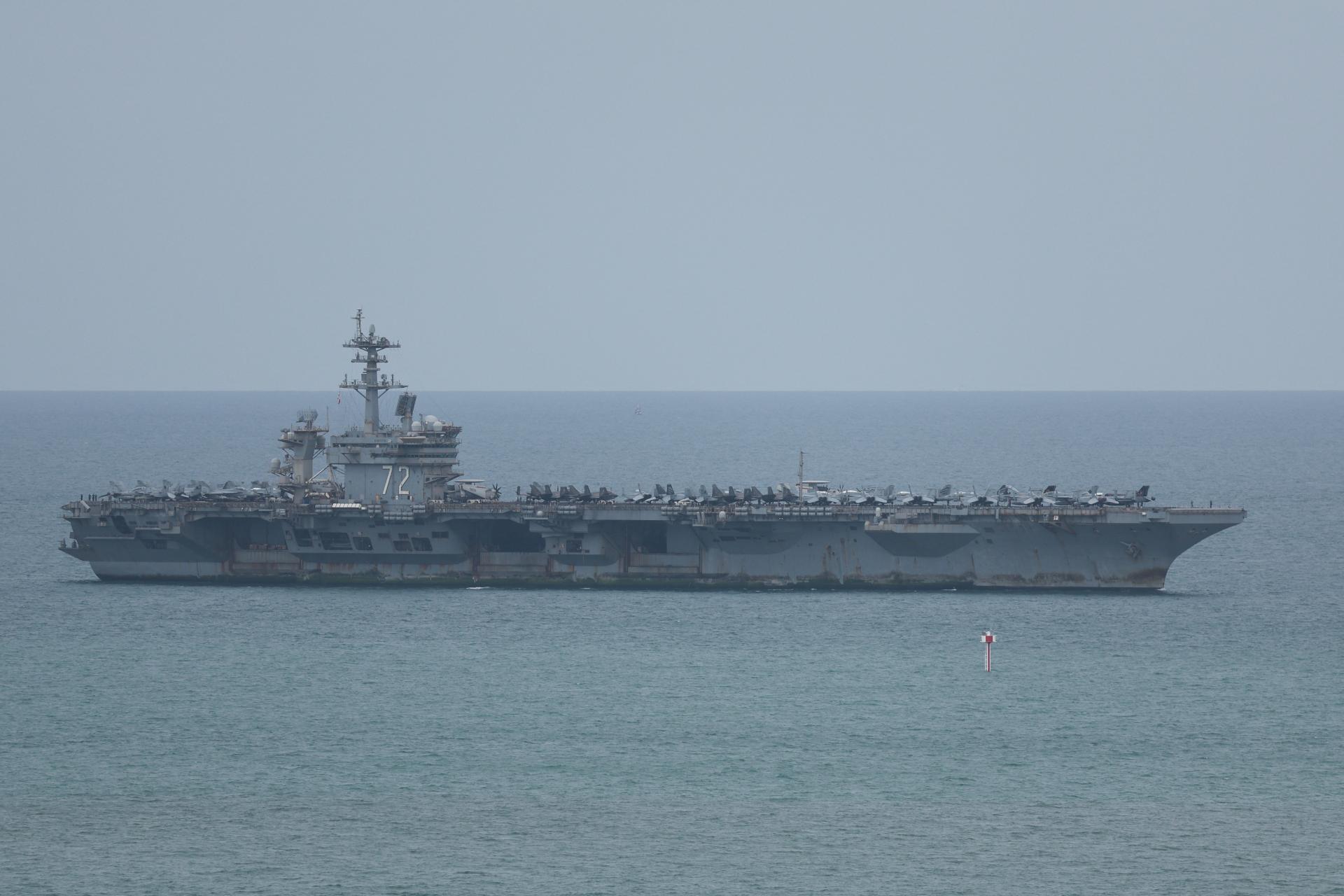
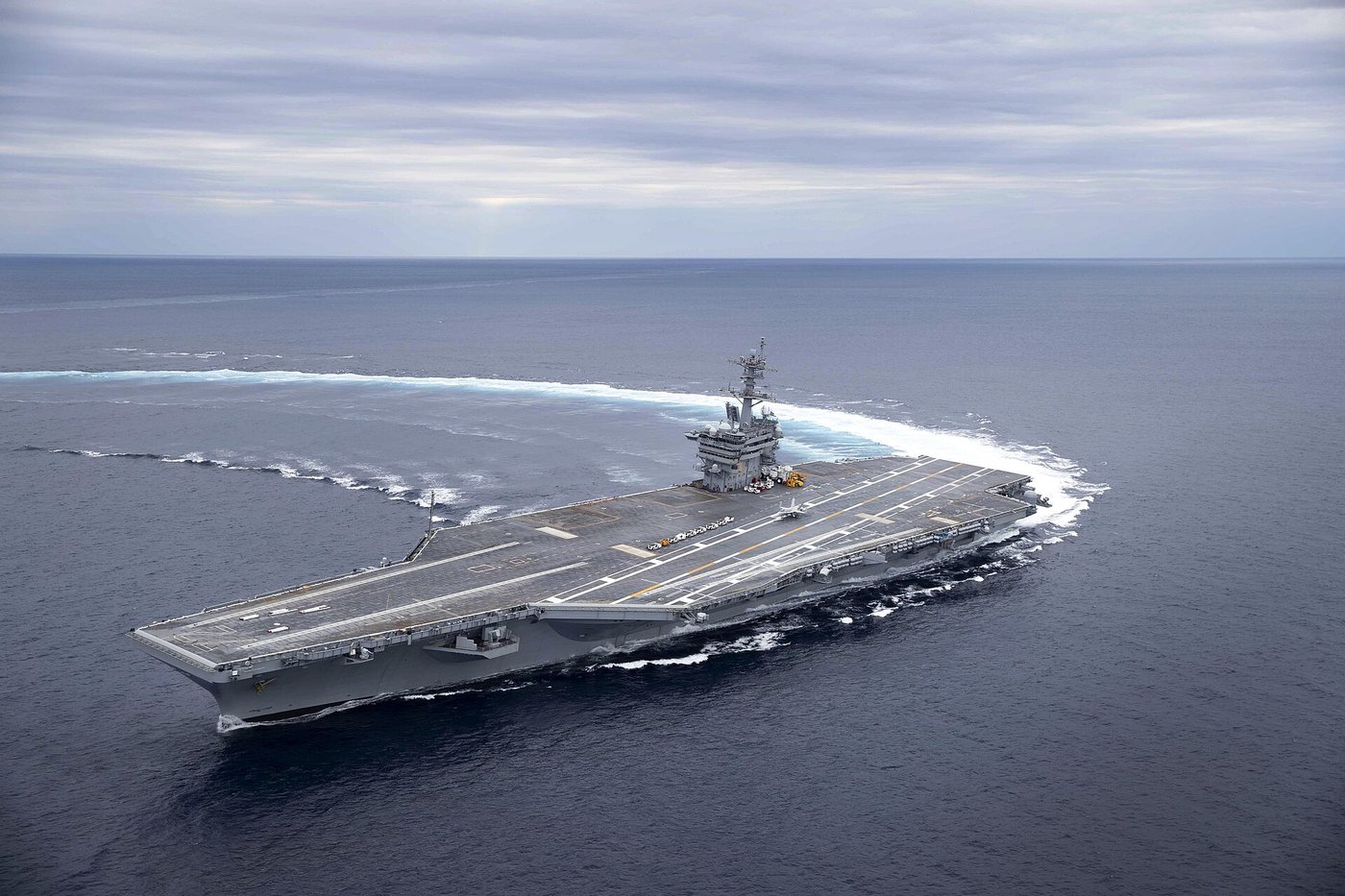
USS Abraham Lincoln
An American Nimitz-class nuclear aircraft carrier with a crew of about five thousand, in service since 1989.
Why here: Stationed in the Arabian Sea since February, it docked in Thailand on Wednesday after a record 250 days without a port call.
More info →What the Financial Times found
The paper draws on leaked Russian correspondence, travel records and an analysis of military patents. According to those, Moscow assigned some of its most experienced missile specialists to the programme, and the cooperation continued through this year's American and Israeli strikes on Iran. Financial Times ↗At the core of the programme, the paper says, is a ramjet — an engine with no moving parts that can keep a missile flying at several times the speed of sound. Experts consulted by the paper regard the technology as most likely intended for anti-ship and land-attack cruise missiles. The Mirror ↗
"This is the transfer of a highly strategically sensitive military technology from Russia that the Iranians have wanted to acquire for decades," Fabian Hinz of Conflict Armament Research told the paper. He added that a programme of this scale would require political clearance from the very top of the Russian state. The Mirror ↗
The limits of the findings matter too. Iran has already built and flight-tested a ramjet, according to the FT, but the paper offers no evidence that a missile developed with Russian help has actually been deployed.
A ramjet is a different problem from a ballistic missile
The ballistic missiles Tehran has been fighting this war with since February fly a high, arcing trajectory. Radars pick them up early and missile defences have minutes to react.A supersonic cruise missile does the opposite: it combines high speed with flight at low altitude above the sea. That shortens the window in which air and missile defences can see it at all. In the Gulf, where the US operates advanced systems both ashore and afloat, experts consulted by the paper consider that difference significant. Observador ↗
Why it lands now
Nothing establishes a direct link between the publication and events at the front, but the timing shows the state the conflict is in. Overnight into Wednesday the US military completed a second wave of strikes on Revolutionary Guard targets near the Strait of Hormuz, and Iran answered with ballistic missiles and drones against American bases in Jordan, Bahrain and Kuwait. NBC News ↗The same day, the American aircraft carrier USS Abraham Lincoln docked at the Thai port of Laem Chabang — after a record 250 days at sea with no port call. It had been stationed in the Arabian Sea since February because of the war with Iran, its deployment ran to twice the original plan, and the crew's exhaustion became a talking point in American politics. BBC News ↗
Read also: USS Abraham Lincoln docks in Thailand after record deployment
The limits of this view
The whole finding rests on a single source. The Financial Times published it on Monday evening and by Wednesday morning British, Portuguese and Indian outlets had picked it up, but no newsroom has yet confirmed it through its own reporting. Neither Moscow nor Tehran has commented, and nor has the US administration.The paper also does not say how far along the programme actually is. Developing an engine and fielding a missile are two different things, and years usually separate them. Fabian Hinz's claim about political clearance from the top of the Russian state is, moreover, expert judgement rather than documented fact.
None of this discredits the finding — the investigation rests on leaked documents, not on a single anonymous source. It is simply a reason to wait and see whether anyone confirms it independently.
What hotinfo is watching
Whether another outlet or a government confirms the existence of the C430L programme independently of the Financial Times.Whether Moscow or Tehran responds to the findings.
Whether Iran deploys a supersonic anti-ship missile during the ongoing war.
When, and whether, an American aircraft carrier returns to the Persian Gulf after the USS Abraham Lincoln's departure.
*Illustrative photo: the aircraft carrier USS Abraham Lincoln during sea trials in the Atlantic, May 2017 — not an image from this year's deployment. Credit U.S. Navy (Juan A. Cubano), Wikimedia Commons, public domain.*