

What Tages-Anzeiger saw in a Latvian classroom
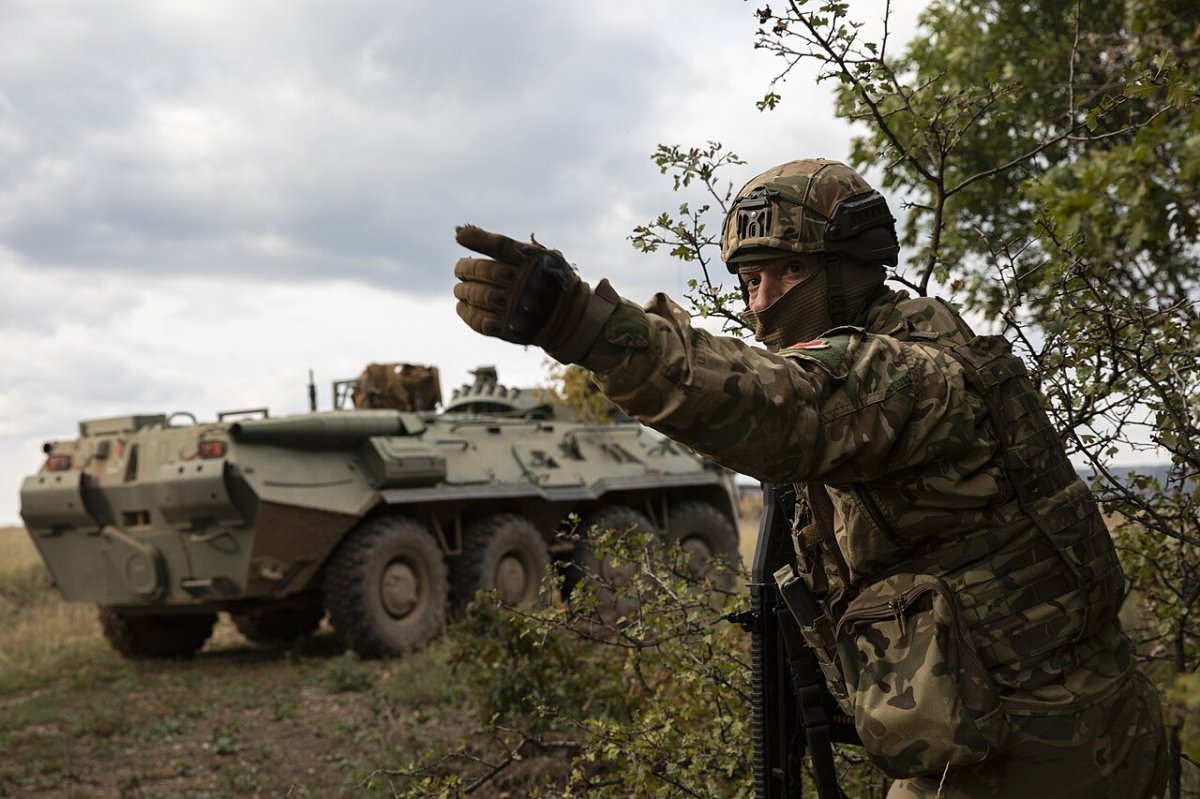
The report by correspondent Marc Felix Serra, published in both Tages-Anzeiger and Germany's Die Welt, describes a subject combining military history, first aid, crisis behavior, the NATO phonetic alphabet, and weapon handling — in a classroom with air-powered training rifles, not live weapons. Latvia has allocated 112 hours over two years for the subject; by comparison, neighboring Estonia allocates 35. One of the female students tells the journalist the subject "makes sense," and her father is enthusiastic about it. A seventeen-year-old student sums up the atmosphere with the sentence that "the world is, unfortunately, full of weapons." Tages-Anzeiger ↗Defense education, however, is not an isolated step. Latvia reinstated conscription in 2023, and a record 1,560 people signed up for the summer 2026 draft. Parliament approved raising defense spending to five percent of GDP starting in 2027 — up from approximately 2.4 percent before the full-scale invasion of Ukraine. The Defense Post ↗ The Ministry of Defense has also made available a "72 hours" handbook in Latvian, English, and Russian, advising how to survive the first three days of a crisis without state assistance — from power outages and internet disruptions to a military attack. LSM ↗
Why the reality is more complicated than "Russia is attacking"
Behind the image of a mobilized society, however, lies a paradox that Slovak news coverage has almost entirely missed. The series of May violations of Baltic airspace had no clear-cut perpetrator. On May 19, a Romanian F-16 fighter jet operating from Lithuania's Šiauliai shot down a drone over Estonia — according to Estonian authorities, likely a Ukrainian one. Kyiv apologized within two hours: "We apologize to Estonia and all our Baltic friends for such unintentional incidents," said Ukrainian diplomatic spokesperson Heorhii Tykhyi. Defense News ↗A week earlier, two suspicious Ukrainian drones entered Latvia; one of them struck a fuel depot in Rēzekne — the political fallout cost both the prime minister and the defense minister their positions. Another drone struck the chimney of an Estonian power plant, one fell into a Lithuanian lake, and on May 20, the Lithuanian side had to temporarily close Vilnius airport due to drone activity near the Belarusian border. Both Kyiv and Brussels attribute responsibility to Moscow: Ukraine claims that "Russia continues to redirect Ukrainian drones into the Baltics using electronic warfare," and European Commission President Ursula von der Leyen called the endangerment of lives on the eastern flank "completely unacceptable." Euronews ↗
In other words: several of these drones are Ukrainian or likely Ukrainian, yet suspicion points toward Russian jammers alleged to be diverting them into NATO territory. For the Slovak reader, to whom Fico's rhetoric offers the simple formula "this doesn't concern us," what matters is that the reality is ambiguous on both ends — this is neither Russian bombardment of the Baltics nor a calm that would justify indifference. It is precisely this uncertainty that is the reason the Baltics are teaching children to load a rifle.
Read also: Combat brigades cut from four to three: the US presented NATO a concrete plan to reduce forces in Europe
Limits of this view
Neither Tages-Anzeiger nor Die Welt, where the report also appeared, are neutral observers. The German publisher Axel Springer (Die Welt) writes about security matters through a distinctly Atlanticist lens, and Tages-Anzeiger conveys that perspective to a Swiss audience. The critical German commentary site NachDenkSeiten, meanwhile, faults the report for not giving space to opposing voices — it does not ask whether the students understand propaganda or the geopolitical causes of the conflict, and presents the militarization of schools more as a model to follow than as an open question. NachDenkSeiten ↗ Realistically, however, what looks like alarmism from Bratislava is, in Riga, everyday state policy supported across the political spectrum — and Latvia, unlike Slovakia, borders both Russia and Belarus.What hotinfo is following
- The findings of the investigation into the May drone incidents — confirming or refuting Russian electronic diversion of Ukrainian drones
- Whether defence education with a shooting component is expanded in further NATO countries (after Latvia, Estonia and Poland)
- The impact of the American plan to cut combat brigades in Europe on Baltic defence budgets
- How long the Russian rail crossings with Finland, Estonia and Latvia stay closed and whether Moscow gives a reason
- Latvia's summer 2026 intake (July) — whether the record 1,560 sign-ups confirm that conscription can be met with volunteers→ Nemecko a Holandsko prevzali velenie na východnom krídle NATO. Rusko v ten istý…Prihlásil sa rekordný počet 1 560 dobrovoľníkov (potreba 1 470 na 11-mes. službu); finálny júlový výsledok po zdravotných kontrolách zostáva otvorený.
- The outcome of the NATO leaders' summit (early July 2026) — new member commitments on defence spendingSummit NATO v Ankare 7.–8. 7. 2026 nové výdavkové záväzky nepriniesol: deklarácia potvrdila haagsky cieľ 5 % HDP do roku 2035 (3,5 % obrana + 1,5 % širšia bezpečnosť), 70 miliárd eur pre Ukrajinu na rok 2026 a nové obstarávania za vyše 50 miliárd dolárov. Zdroj: Atlantic Council, Janes.
- Consolidating command of the 1st German-Netherlands Corps over Estonia and Latvia (replacing the Multinational Corps Northeast from Szczecin)1. nemecko-holandský zbor prevzal taktické velenie pozemných operácií NATO v Estónsku a Lotyšsku k 1. 7. 2026, odovzdanie prebehlo 30. 6. vo Valge; zbor Severovýchod sa sústreďuje na Poľsko a Litvu. Zdroj: estónske ministerstvo obrany, ERR.