


Key actors — tap for context

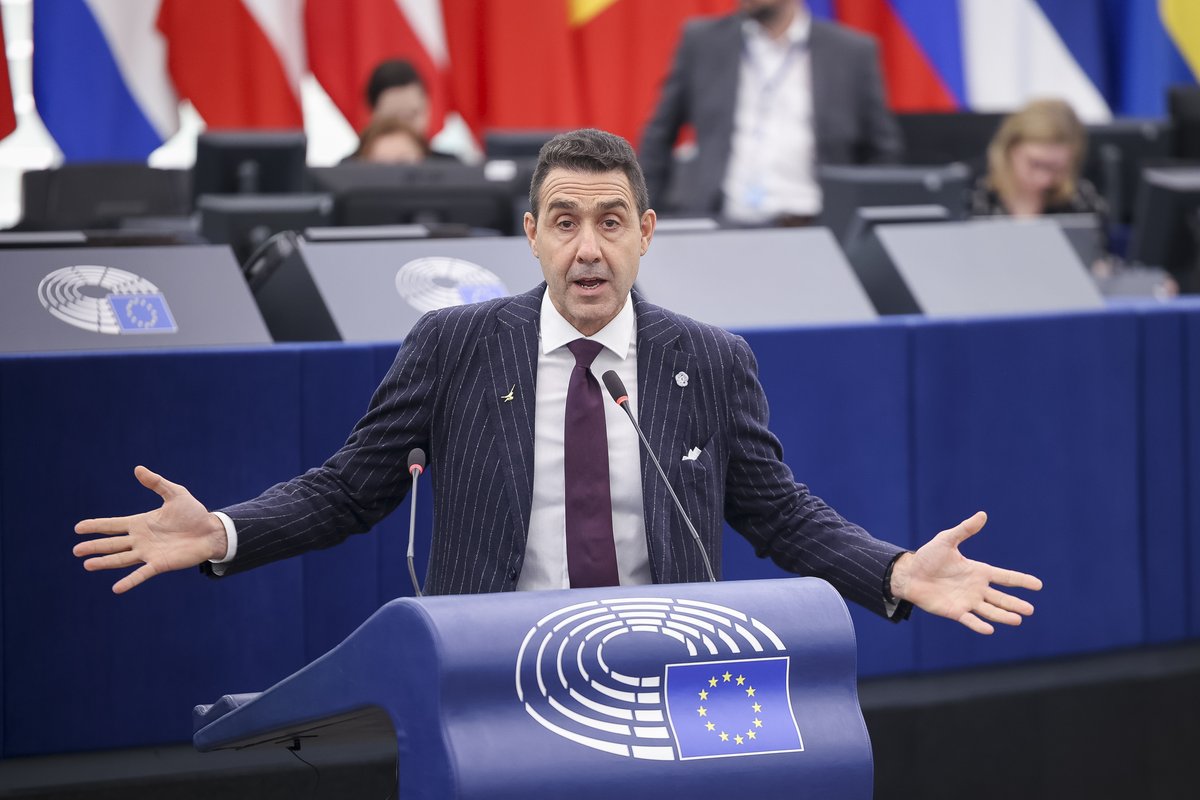
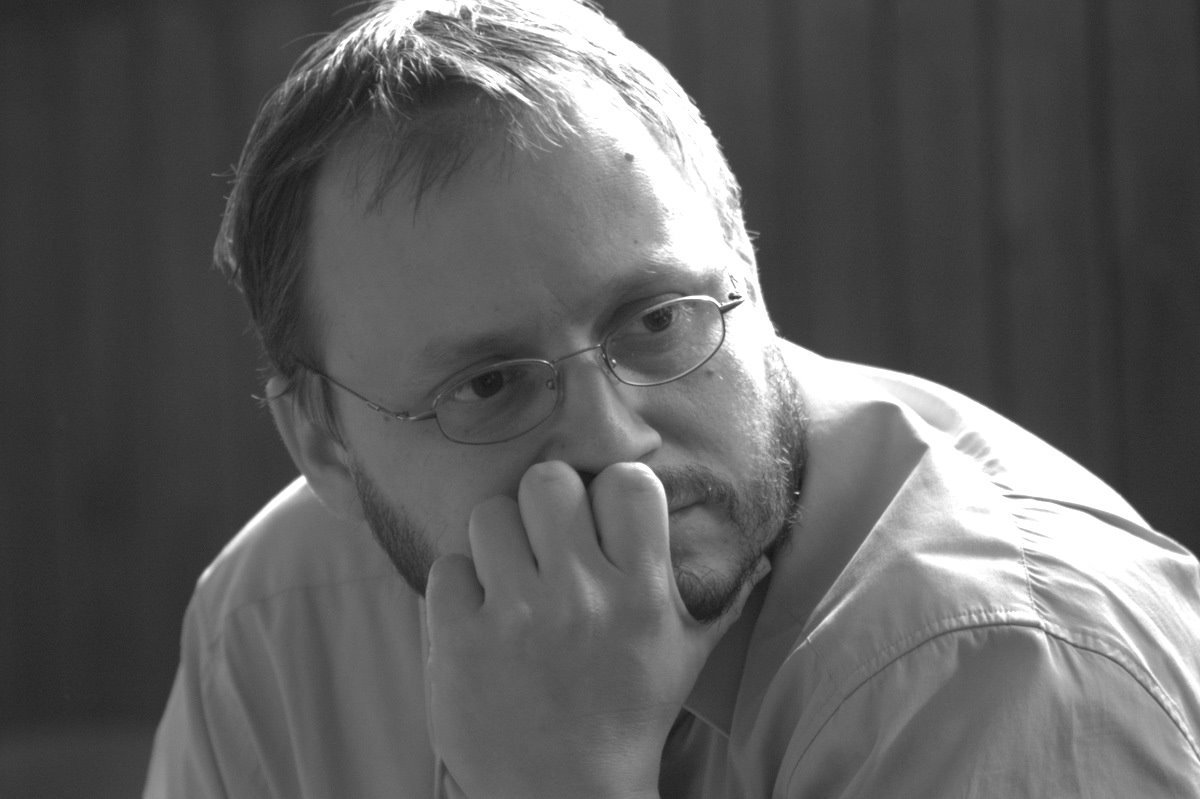
Roberto Vannacci
Former general of the Italian army, since February 2026 leader of the far-right movement National Future.
Why here: The Financial Times called him Moscow's "Trojan horse"; he rejects that, saying, "I am not pro-Russian, I am pro-Italian".
More info →
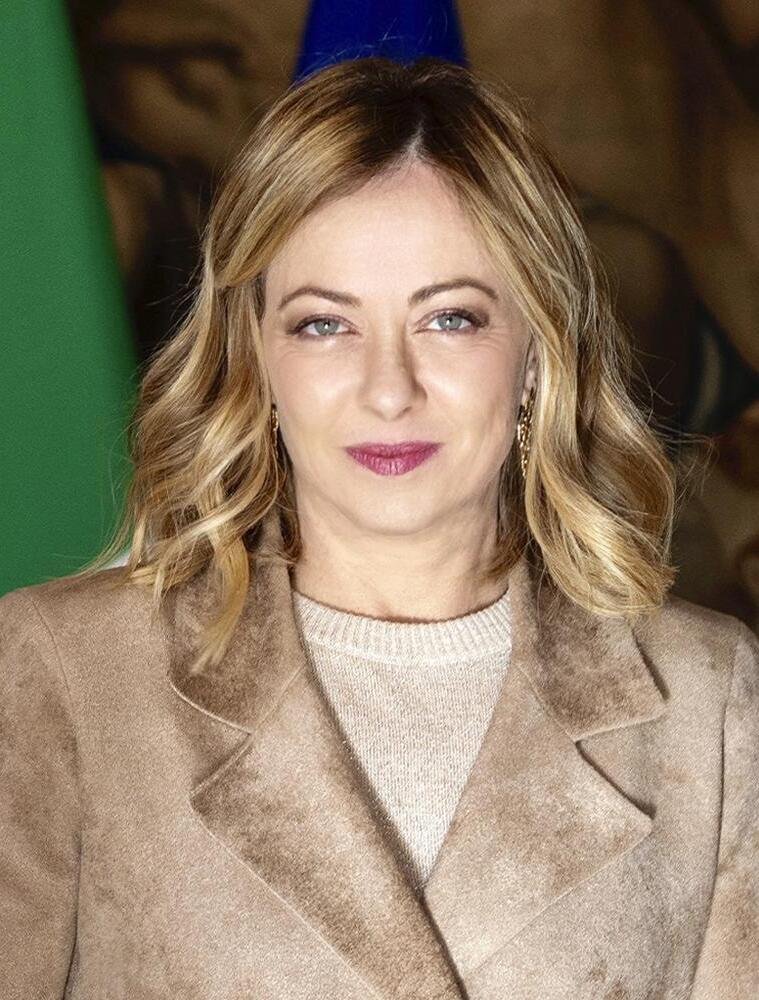
Giorgia Meloni
Italian prime minister and leader of Brothers of Italy, in office since 2022.
Why here: Vannacci's rise leaves her facing a choice: bring him into the coalition or keep him at arm's length.
More info →
Antonio Tajani
Italian foreign minister, deputy prime minister, and leader of Forward Italy.
Why here: From Wicklow in Ireland, he warned that Moscow would try to influence the Italian elections and did not rule out sabotage on Italian soil.
More info →
Matteo Salvini
Italy's second deputy prime minister, transport minister, and League leader.
Why here: He replied to Tajani's warning that he is troubled by "anti-Russian anxiety".
More info →
Financial Times
British business daily based in London.
Why here: It published the article "Russia's 'Trojan horse' in Italy is testing Giorgia Meloni", which sparked the dispute.
More info →European Council on Foreign Relations
European foreign-policy think tank based in Berlin, with offices in six countries.
Why here: Author of the analysis from which the "Trojan horse" label originally comes.

National Future
Italian far-right movement founded by Vannacci in February 2026 after leaving the League.
Why here: Seven months after its creation, it is the fourth-strongest political force in the country.
More info →
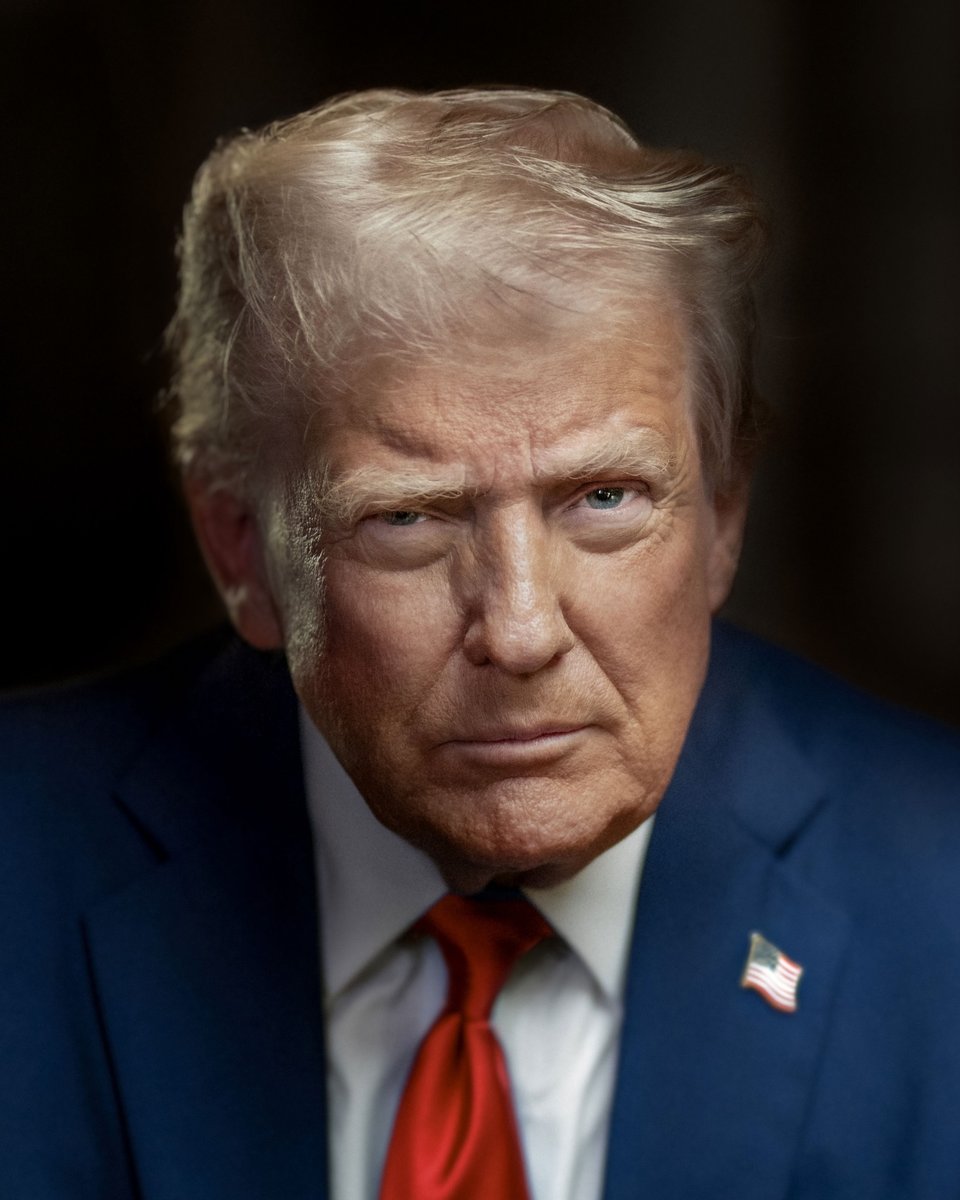
Vladimir Putin
Russian president.
Why here: Vannacci is calling for renewed trade with his country, which is one of the points of criticism picked up by the Financial Times.
More info →What the analysis says, and what it does not say
The label did not originate in the Financial Times newsroom. It comes from a July analysis by the European Council on Foreign Relations, a think tank based in Berlin with branches in six European cities, which the newspaper picked up and developed. According to the Financial Times, Vannacci opened "a new front against Prime Minister Meloni" by attacking her strongly pro-Ukraine foreign policy - and doing so with "arguments surprisingly close to Moscow's". The starting point was fuel prices: when petrol in Italy reached its highest level in three years over the summer, the general cut short his vacation and linked that to support for Kyiv. Among his positions, the paper also cites a demand to resume trade with Russia. Corriere della Sera ↗, ECFR ↗What is important is what is not in it. This is a matter of alignment of positions, not a documented relationship. Repubblica, drawing on sources within Brothers of Italy, describes it exactly that way: distrust of the former general is growing, but there is no evidence of ties to Moscow and the fear is of a possible alliance, not of an agency connection. La Repubblica ↗
That distinction has just narrowed. The newspaper Open reported that Vannacci, as a military attaché, went to dinners in Moscow paid for by Italian public money and, according to witnesses, repeated there that Russia would never attack Ukraine. So this is no longer just a convergence of views at a distance, but documented trips and statements - although even that alone is not proof of directed influence. Former U.S. diplomat Foreman adds in La Repubblica that Vannacci simply misunderstood Russia. (Open ↗, La Repubblica ↗)
And Meloni is staying silent. Il Manifesto writes about her silence toward the wind pushing Vannacci forward; according to ANSA, AfD's victory in Saxony-Anhalt shook the entire Italian center-right camp, and the "Vannacci knot" became even more tangled. (Il Manifesto ↗, ANSA ↗)
"I am not pro-Russian, I am pro-Italian"
Vannacci responded on social media, and his reply is politically deft. "I answer you with a trembling hand, since I have just learned from your article that I am a Manchurian candidate sent by the Russian Federation," he wrote, thanking them for the free publicity. He then added the sentence that is the core of his defense: "I find it hard to accept the idea that disagreement with Brussels orthodoxy is now empirically equivalent to disloyalty to the West." On the television program Carta Bianca, he put it more briefly - "they are afraid of me, I am not pro-Russian, I am pro-Italian". Corriere della Sera ↗Read also: Vannacci's party wants to abolish the crime of femicide
In that same program he also said something that worries Meloni more than Moscow: according to him, National Future is "a natural partner of this faded center-right majority". ANSA ↗
Two deputy prime ministers, two answers
The governing coalition reacted inconsistently. Foreign Minister Antonio Tajani, from Wicklow in Ireland where EU foreign ministers were meeting, expressed solidarity with Germany after a drone attack on Leipzig airport and said Russian hackers' cyberattacks are an everyday occurrence. Asked whether Italy could also be a target of sabotage, he replied: "I never rule anything out." He said he is convinced there are attempts to influence elections, but added that "Italians cannot be influenced by Russians". Corriere della Sera ↗The second deputy prime minister, Matteo Salvini, replied from Rome in the opposite way. "I don't know whether Tajani has more information than I do, but I do not want to insult Italians' intelligence in their free choice - they have never voted, and I think they will not vote, according to Russian, Chinese, American, Israeli or Palestinian influences," he said, adding that he is troubled by "anti-Russian anxiety". ANSA ↗
Fake videos exploit his image
The information space around Vannacci is not polluted from only one side. Open's fact-checking team documented a series of AI-generated videos in which the general, in uniform, tears up passports from girls heading to Ibiza, raises a hand at a couple who want to adopt a child, and slaps a woman for eating sushi instead of Italian food. The videos are made to look like authentic promotion of his movement. They are being spread by an X account that first posted them with feigned outrage while addressing Meloni. Open ↗On Friday, that same technology was turned inside out - and this time not against Vannacci, but at his own initiative. His movement released a promotional video in which AI imitates the voice of the late Luciano Pavarotti singing Nessun dorma. The tenor's family immediately objected: it had never authorized the use of his voice and distances itself from the clip. The difference from the rest of this section is essential - the fake videos were made by an outside account to damage the general; this one was published by him personally. (Open ↗, Corriere della Sera ↗, ANSA ↗)
What is at stake beyond Moscow
The numbers explain the timing. According to a SWG poll for TgLa7, National Future has 7.5 percent and Forward Italy 7.1 percent, so Tajani's party finished behind a movement that has existed for seven months. The League is at 5.7 percent, Brothers of Italy still leads with 26.8 percent, but its support is declining and, according to Reuters, the coalition slightly trails the center-left bloc around the Democratic Party in the polls. Meanwhile, Meloni is trying to push through an electoral reform that the Senate is due to approve this month and that the opposition describes as an attempt to improve her prospects. TASR ↗The dispute over whom Vannacci answers to therefore runs in parallel with the dispute over how votes will be counted. That is the context in which the label "Trojan horse" has a very concrete price for everyone involved.
On Friday, Vannacci faced his test before the audience that had so far not taken him seriously. At the business forum in Cernobbio, he brushed off the accusations of ties to Moscow with "me ne frego" - I couldn't care less - and the hall listened. Business leaders at the same time declare that "stable government is a value", so they accept both the challenger and the one being challenged. On that same day, Meloni publicly responded to him on a different issue: "Femicide exists, people kill because someone is a woman." Spanish El País turns that into a broader portrait of a "Mediterranean patriarchy" that keeps the Italian right in check. (La Repubblica ↗, La Stampa ↗, Il Fatto Quotidiano ↗, El País ↗)
One day later, it was clear how the audience took it. La Repubblica writes that the hall of business leaders stayed cold and that Vannacci was "outdone" by former prime minister Mario Monti - who told him to his face that his rhetoric was fascist. Vannacci declared at the forum, "I want a different Europe." From his own coalition, Mara Carfagna said the invitation of the former general to Cernobbio was absurd, and opposition Democratic Party leader Elly Schlein told him to go to Dongo and remember how that regime ended - the town by Lake Como is where Mussolini was captured in April 1945. La Repubblica ↗ La Repubblica ↗ La Repubblica ↗ La Repubblica ↗
On Thursday afternoon, legal pressure was added to the political pressure - and it is coming from a completely different direction than Moscow. Rome's military prosecutor's office, headed by Marco De Paolis, began a preliminary review on suspicion of reconstituting a fascist party under the Scelba law. This is not about Russian ties, but about what position members of the armed forces hold in National Future's organizational structure; in addition to Vannacci, the review concerns national coordinator Massimiliano Simoni and Lorenzo Gasperini, responsible for the program. The complaint was filed by the military union Sindacato dei Militari. (Open ↗, Il Fatto Quotidiano ↗, Corriere della Sera ↗)
What matters is the stage. These are "accertamenti preliminari", that is, preliminary inquiries - no one has been charged. Vannacci's lawyer Giorgio Carta said that "no criminal offense can be seen in the described acts" and expects the matter to be dropped quickly. The two issues hanging over the former general this week thus happen to share the same shape: a strong label and, for now, a missing proof - in the Russian case, an analysis of positions without evidence of a link; in the fascist-party case, an inquiry without a defendant.
In the early hours of Friday, the dispute shifted from one general to the entire electoral system. The parliamentary security committee Copasir warned the intelligence services that the vote is being tainted by Moscow and said that "we are already on the ground". La Repubblica ↗
Historian Sergei Radchenko says in the same paper that Italy is underestimating the risks of hybrid warfare and has granted Russians too many visas - after Leipzig, he says, visa restrictions are a necessity. La Repubblica ↗ MP Ettore Rosato is calling for a common front against Putin's interference: "Our autonomy is at stake." La Repubblica ↗
The numbers also put a figure on, for the first time, how many people are willing to follow the general. According to La Repubblica, it is fifteen percent - from nostalgics to those disappointed with the other parties. La Repubblica ↗ Il Manifesto also ties both disputes together for the first time in a single label: "Putinist", under which the reconstitution of a fascist party is being investigated. Il Manifesto ↗
Neighbors have also taken note of the case, and in a frame other than the Italian one. Croatian Večernji list presented it as a warning - "a European power fears it is the new target of war, the Russian Trojan horse is set there" - and Bosnian Radio Sarajevo headlined it "Alarm in an EU member state: Moscow could try to influence our elections". Večernji list ↗ Radio Sarajevo ↗
Why a Slovak reader will recognize this
The structure of the dispute is the same as at home: a politician whose positions on Russia overlap with Moscow's, and the question of whether this is coincidence or something more - while proof is lacking and the accusation rests on an analysis of positions. The difference is in who in that debate is whose coalition partner: in Italy, the deputy prime minister had to respond to an accusation against someone whose own party has just overtaken his in the polls. Tajani himself did not use the label - he spoke more generally about Russian influence.On the same day that Tajani was speaking in Wicklow about Russian attempts to influence elections, the committee of permanent representatives in Brussels failed to agree on extending sanctions against Russia - and the only state expected to oppose them was Slovakia.
Read also: Slovakia is set to block the extension of EU sanctions against Russia
Limits of this view
This article's sources have their own positions. Repubblica and Il Manifesto are critical of the Italian right, Corriere is an established centrist daily, and the European Council on Foreign Relations is a think tank with an explicitly pro-European orientation - so its analysis judges Vannacci through a value framework that he himself rejects. Vannacci's own response therefore appears in the text in his own words, although even that is not presented in full here.Likewise, nothing above proves either undisclosed contacts or their absence. Alignment of arguments with the Kremlin can be verified; motive cannot. And as the case of the fake videos shows, attacks carried out against Vannacci's image are just as much part of this information space as the accusations he faces.
This is the final update for this article. The case has gone through five waves, and further developments - an indictment, a Brothers of Italy coalition decision, or National Future's election result - will get a separate text with its own headline.
What hotinfo is tracking
- Brothers of Italy either took National Future into the coalition before the election or rejected it.
- The Senate ruled on the electoral reform it was due to approve in September 2026.→ Taliansky Senát odobril kontroverznú reformu volebného zákonaSenát 15.9.2026 reformu schválil 113:71 (TASR/Reuters); návrh ešte musí prejsť Poslaneckou snemovňou.
- Italian security services or the government published concrete findings on Russian attempts to interfere in the election.→ Talianskeho exgenerála označili za trójskeho koňa Moskvy. V Meloniovej strane r…Naplnené vlnou 2 (4.9.): parlamentný výbor pre bezpečnosť Copasir varoval spravodajské služby, že hlasovanie je znečistené ruským vplyvom, a odkázal, že „sme už v teréne" (La Repubblica).
- Salvini and Tajani converged on assessing the Russian threat, or the dispute between the deputy prime ministers continued.→ Talianskeho exgenerála označili za trójskeho koňa Moskvy. V Meloniovej strane r…Naplnené: spor pokračoval. Tajani a Salvini odpovedali na obvinenia opačne, vo vlne 4 sa proti Vannaccimu ozvala vlastná koalícia a vlna 5 (8.9.) pridáva ANSA o tom, že víťazstvo AfD rozkolísalo celý taliansky stred-pravý tábor.
- A further poll is available showing support for National Future and Forza Italia after the "Trojan horse" row.→ Sondaggi politici: frenano Lega e Avs, bene M5SPrieskum SWG pre Tg La7 z 21.9.2026: Futuro Nazionale 7,9 → 8,0 % a drží sa ako štvrtá sila, Forza Italia 6,9 → 7,0 %. Náskok Vannacciho strany nad Tajaniho Forza Italia je po spore o trójskom koni nezmenený — podozrenia z ruského vplyvu jej v prieskumoch zatiaľ neuškodili.