
Key actors — tap for context

Christoph Blocher
Billionaire and former member of the Swiss Federal Council, a long-time leading figure in the Swiss People's Party.
Why here: Launched the neutrality initiative and is financing its campaign.
More info →
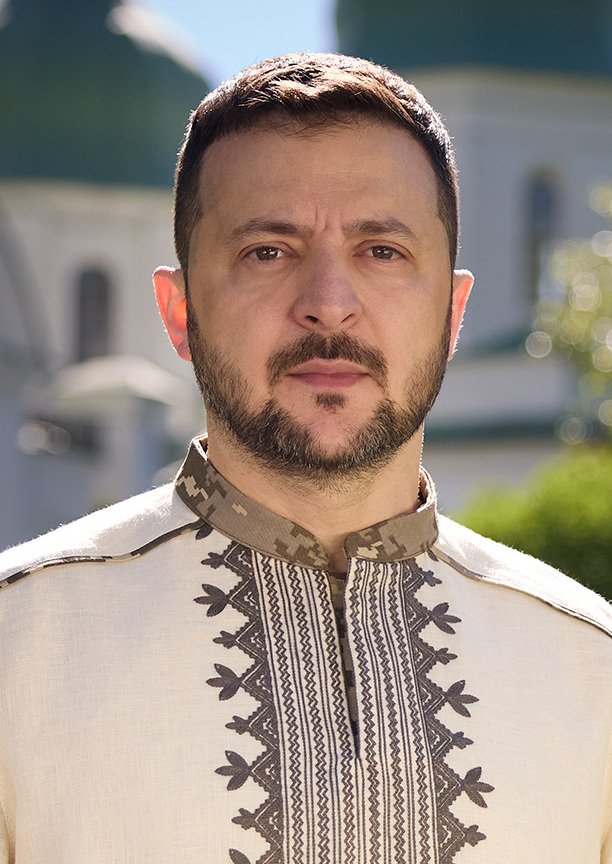
Ignazio Cassis
Swiss foreign minister and member of the Federal Council.
Why here: Leads the government's campaign against the initiative and defends so-called flexible neutrality.
More info →
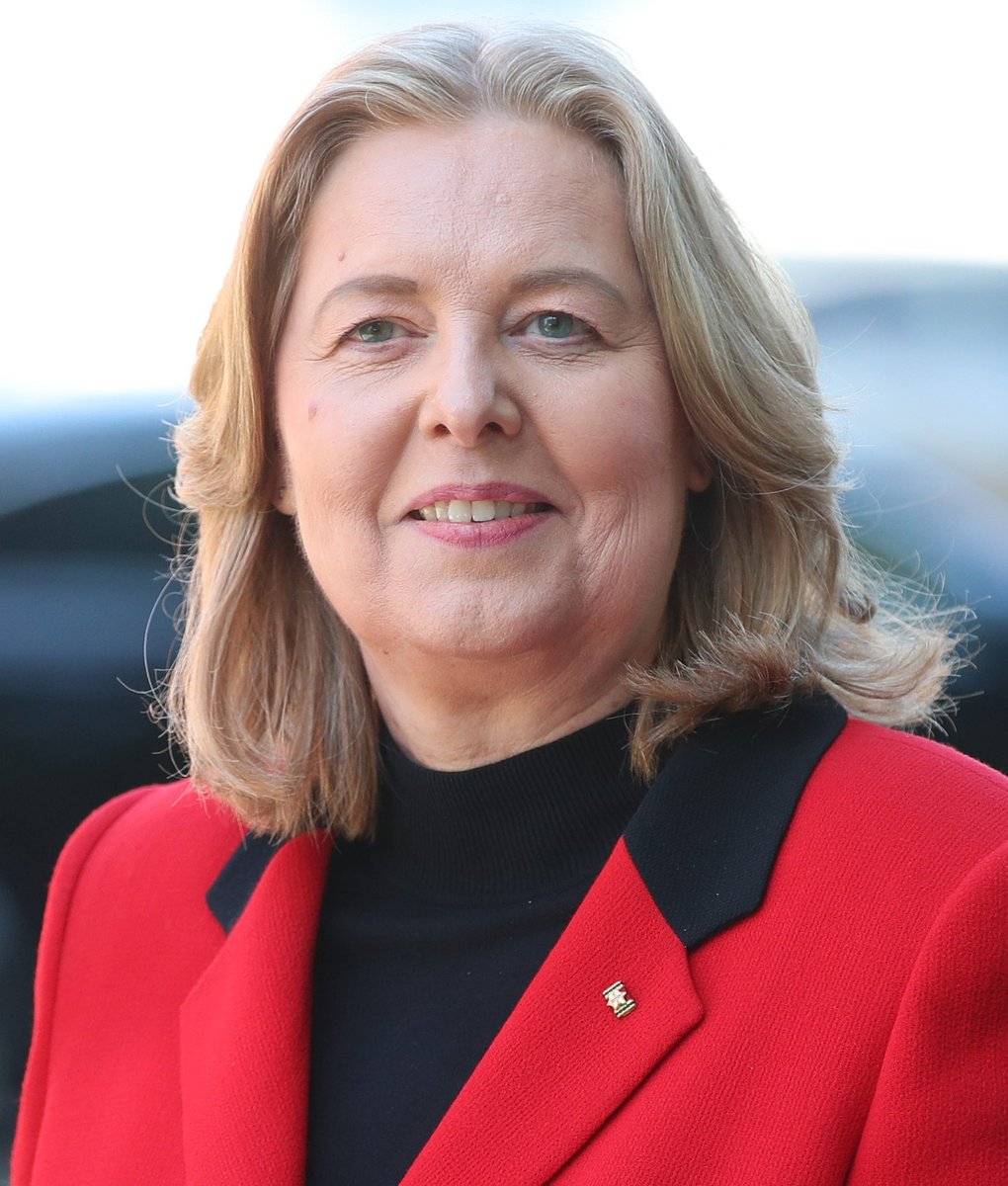
Marija Zakharova
Spokeswoman for the Russian Foreign Ministry.
Why here: Openly urged the Swiss on Telegram to vote for the initiative.
More info →
Guy Mettan
Genevan politician, former editor-in-chief of Tribune de Genève, now a member of parliament for the Swiss People's Party.
Why here: Member of the Council for Neutrality and recipient of the Russian Order of Friendship, which, according to NZZ, Vladimir Putin personally awarded him.
More info →Jacques Baud
Former colonel in the Swiss army and former intelligence officer, who also worked at NATO and the UN.
Why here: The EU placed him on a sanctions list as a mouthpiece of pro-Russian propaganda; he rejects the allegations.
More info →Massimiliano Ay
Secretary of the Communist Party in the Italian-speaking canton of Ticino.
Why here: Took part in founding the Moscow-based network Sovintern and will speak at the August demonstration for the initiative.
Ralph Bosshard
Former officer in the Swiss army, until recently president of the Switzerland-Russia Society.
Why here: One of the speakers at the planned demonstration, and in Russian media he defends the Russian view of the war.

Alfred de Zayas
Lawyer specializing in international law and former UN expert.
Why here: Member of the Council for Neutrality, who claimed that Russia did not annex Crimea.
More info →
Sovintern
An international socialist network founded in Moscow in April 2026 on the initiative of the Fair Russia party.
Why here: Through it runs the trail from the Moscow event to the Swiss campaign.
More info →Swiss People's Party
Switzerland's strongest party, right-wing conservative, and in the past decade the driving force behind referendum politics.
Why here: The only party whose voters support the initiative by a majority.

Neue Zürcher Zeitung
Swiss right-liberal daily based in Zurich.
Why here: Published the background investigation on the campaign on which this article is based.
More info →
Russia Today
Russian state television broadcaster for foreign audiences, banned in the EU.
Why here: According to NZZ, its German branch is the source of the false story about the Swiss drone.
More info →
UN Security Council
A United Nations body with the authority to impose binding sanctions.
Why here: If the initiative is adopted, it would be the only source of sanctions against warring states that Switzerland could join.
More info →Lukas Golder
Political scientist at the GFS Bern research institute, which conducts pre-election polls for the public broadcaster SRG.
Why here: Comments that voters' views are already fixed and decisive mobilization remains.
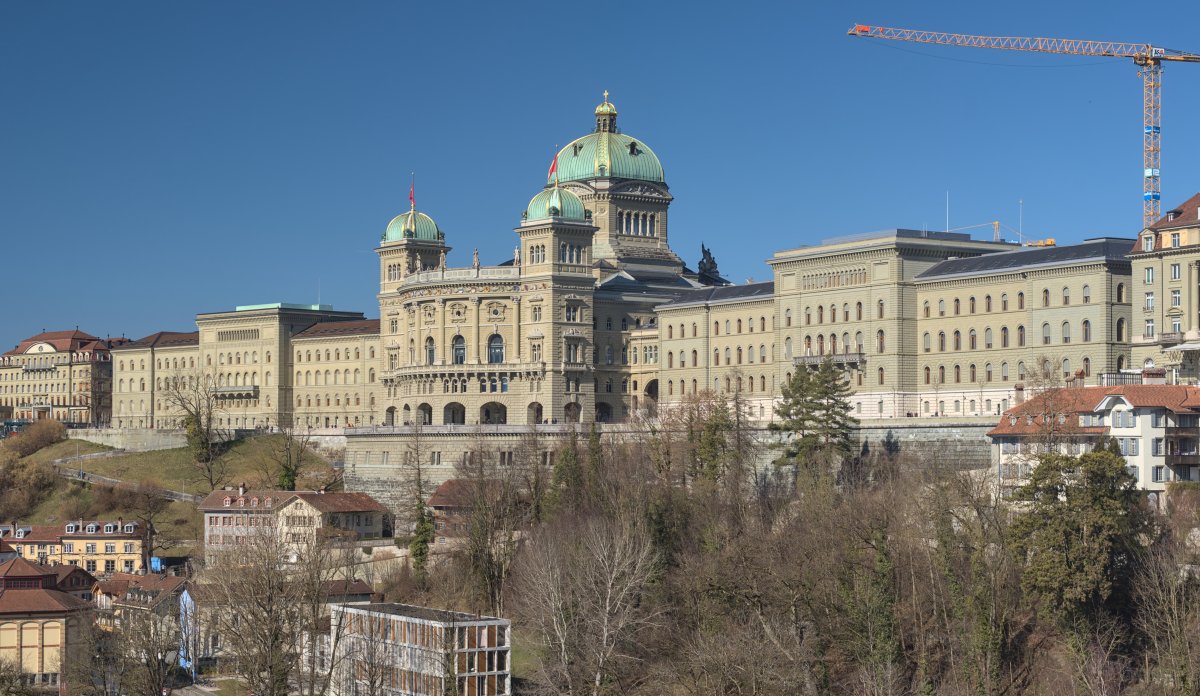
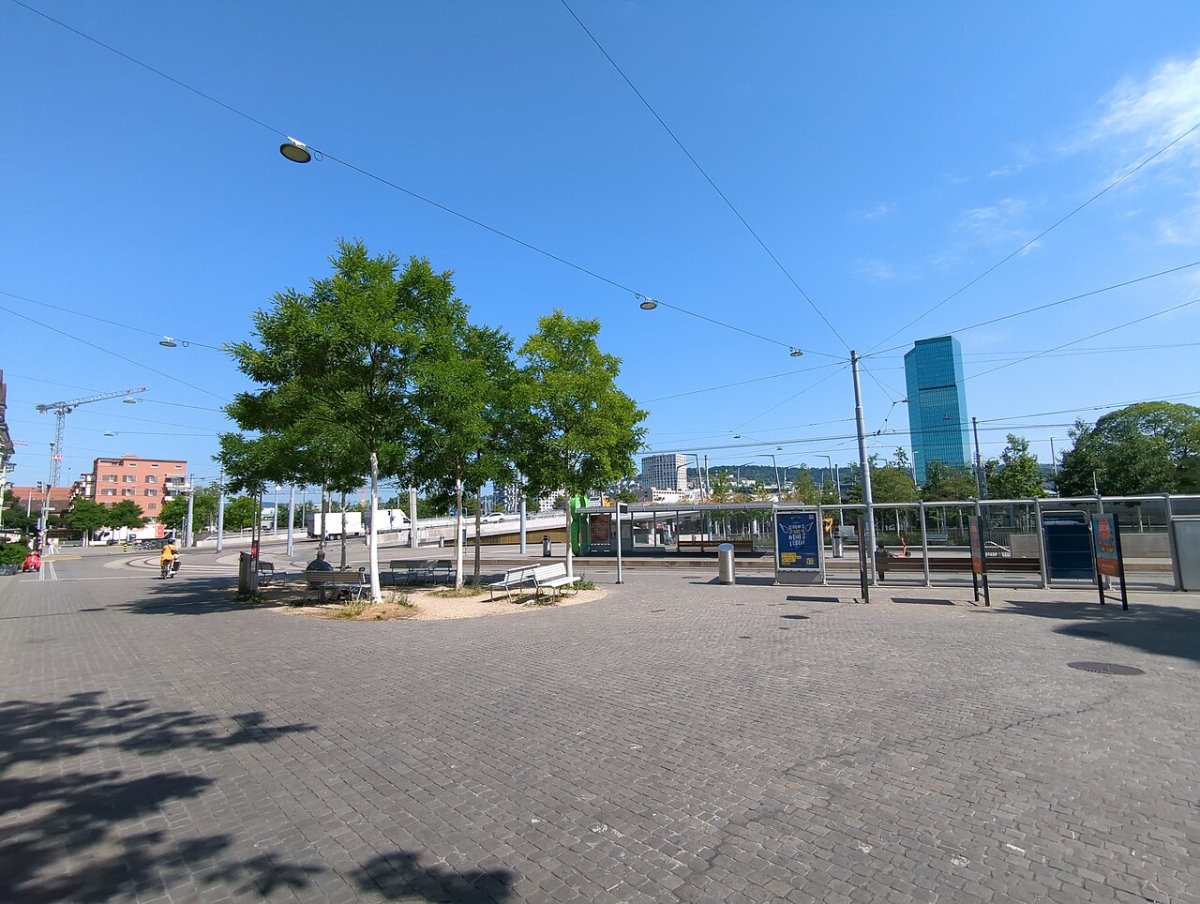
Bundesplatz
The square in front of the Swiss parliament building in Bern.
Why here: The demonstration for the initiative takes place here on 29 August.
What the initiative actually asks for
- On the very same day, a test case arrived for what the dispute is about. Around twenty Israeli figures - among them ex-diplomat Alon Liel, former Knesset speaker Avraham Burg and former Meretz chair Zehava Gal-On - wrote to the Swiss president and economics minister Parmelin asking them to stop trade relations with settlements in the occupied territories. They sent the same letter to Paris, Berlin and London. The text of the initiative targets sanctions against states at war, so this specific step would not be banned - but it shows what decisions Bern would have to weigh with a constitutional brake in hand. SRF ↗
The draft, titled Preserving Swiss Neutrality, seeks to write permanent and armed neutrality into the federal constitution. In practice, that would amount to a far-reaching ban on economic sanctions against states that are at war. The only exceptions would be sanctions decided by the UN Security Council and measures against sanctions evasion. The constitution would also bar the country from joining any military or defense alliance. Cooperation with such an alliance would be permitted only in the event of a direct military attack on Switzerland or to ward off an imminent attack. SRF ↗
Christoph Blocher launched the initiative, and its signatures were certified as valid in summer 2024. The government and parliament recommend voting against it. Foreign Minister Ignazio Cassis argues that neutrality in its present form has served the country for 180 years as a tool protecting its freedom, security and independence - and that enshrining it in the constitution would create immobility and narrow foreign-policy room for maneuver. The Irish Times ↗ NZZ ↗
Two polls, both against
The first poll by GFS Bern for the public broadcaster SRG, conducted from 3 to 16 August, gives the initiative 42 percent support and 54 percent against. Even with the full statistical margin of error, the proposal would not pass. Opinions are already settled - less than a quarter of respondents do not yet have a firm decision on how to vote. "The picture of opinion is fairly fixed," says political scientist Lukas Golder of GFS Bern. SRF ↗There is effectively only one group of voters behind the initiative. Among supporters of the Swiss People's Party, 86 percent back it, while among other parties support ranges from 31 percent among liberals to 11 percent among Social Democrats. Two other divides are more interesting. In cities, 59 percent of respondents reject the initiative, while in rural areas it has a narrow 51 percent majority. And older people are more skeptical than younger ones - especially those over 65, i.e. the generations that experienced the Cold War, according to Golder. NZZ ↗
The second poll, carried out for Tamedia and 20 Minuten by Leewas on 12 and 13 August on a sample of more than 13,000 people, is even harsher on the initiative - 62 percent of respondents were against it. That is the poll Reuters picked up and which then also appeared in Romanian media. Digi24 ↗
Who is behind the campaign
- The public broadcaster SRF named Russia's role in the campaign directly and with evidence. According to it, the Kremlin-funded RT DE platform is publishing texts in support of the initiative under the invented Swiss-sounding name Hans-Ueli Läppli. Ulrich Schmid, professor of East European studies at the University of St. Gallen, sees this as part of a broader strategy: Moscow wants to present its conflict with Ukraine as a normal dispute between two states. SRF ↗
- This is also confirmed by the office responsible for disinformation. The State Secretariat for Security Policy says that "foreign disinformation and attempts at state influence are increasing." At the end of 2025, the government set up a task force in response; parliament says that is not enough and is calling for social-media monitoring and a stronger intelligence service. SRF ↗
The Zurich daily NZZ published an investigation into who is active in the initiative campaign. In spring 2026, a twelve-member Council for Neutrality was formed, backed by the association Movement for Neutrality, founded in 2025. The association finances the council and provides its secretariat. NZZ ↗
Among others, the council includes former Swiss army officer Ralph Bosshard, who in an interview with Russia Today described Western arms deliveries to Ukraine as a dress rehearsal for a future European war against Russia, and Jacques Baud, a former Swiss intelligence officer whom the EU put on a sanctions list last winter as a mouthpiece of pro-Russian propaganda. Baud rejects the accusations. Another member is Guy Mettan, once editor-in-chief of Tribune de Genève and now a Geneva MP for the Swiss People's Party - in February 2026 he received an honorary doctorate from St. Petersburg State University, and Vladimir Putin personally awarded him the Russian Order of Friendship, according to NZZ. Sources disagree on which year this happened. NZZ ↗
The Moscow trail leads to a network we have already written about
The most interesting part of the investigation concerns an event we know already. At the end of April, a new left-wing network called Sovintern was founded in Moscow - on the initiative of the Fair Russia party, with greetings from Vladimir Putin and with the deputy speaker of the State Duma heading the organizing committee. From Switzerland, Massimiliano Ay, secretary of the Communist Party in the Italian-speaking canton of Ticino, traveled there. "Our party was asked to assess the future of Swiss neutrality," Ay later described the meeting. On 29 August, he will speak at the demonstration for the initiative on Bern's Bundesplatz in front of parliament, under the title No NATO - yes to neutrality. NZZ ↗Also read: Moscow set up a new left-wing international. Among the nine founders are a Moldovan and a Serbian party
Moscow is also involved in the campaign directly. Russian Foreign Ministry spokeswoman Marija Zakharova repeated on Telegram the claim that Switzerland is no longer a neutral country, recalled the refusal of Jewish refugees during the Second World War and openly recommended voting for the initiative. Earlier, the Russian embassy had also issued an indirect recommendation. Russia has a direct interest in the initiative's adoption - the draft bans precisely the sanctions that Switzerland adopted after the attack on Ukraine. NZZ ↗
This week, the Federal Council confirmed in response to a parliamentary interpellation that Russia has been spreading disinformation and propaganda for years. Before the vote, manipulative posts are circulating on Telegram, for example about a Swiss drone that was supposedly to have killed Russian children. Such reports are false, and their source is an article from the German-language branch of Russia Today. The National Council's security policy committee is therefore proposing to strengthen the state's ability to detect and fend off foreign influence operations. NZZ ↗
How this reached Slovak readers so far
Slovak readers have had two takeaways on this topic in the past month. On 12 August, Aktuality.sk correctly described the initiative itself and the government's position under a headline that says what it is about. Aktuality.sk ↗On 19 August, Hlavné správy, a site from our disinformation list, ran the poll. Their numbers check out - they quote the Tamedia and 20 Minuten poll correctly, and the body of the text also accurately describes what the initiative demands and that the government and parliament are against it. The headline, however, is distorted: "The Swiss population wants to wage war against Russia." In the poll, the Swiss are not voting for anything bellicose; they are simply rejecting a constitutional ban on sanctions. A rejection of the ban is thus turned into a desire to wage war against Russia. Hlavné správy (web z nášho dezinformačného zoznamu) ↗
Neither the SRG poll nor the NZZ investigation into the campaign's background has appeared at all in Slovak or Czech media so far. This is not a language issue - the Tamedia poll went through Reuters, so it was available beyond German, and Romanian media, for example, picked it up.
Limits of this view
NZZ itself keeps a brake on the interpretation, and it is fair to carry that over: supporting the initiative is not in itself suspicious, and the complaint that supporters of the proposal are automatically Putin's helpers misses the point, according to the paper. Behind the proposal lies a legitimate question of whether sanctions policy should be anchored in the constitution, and part of the electorate with no connection to Moscow will also vote for it. Moreover, according to NZZ, no state actor is behind the demonstration on Bundesplatz. This article therefore does not claim that the initiative is controlled from Moscow - it says that NZZ found people and statements around it that are sensitive for the Swiss security debate.It is also worth noting from where we are looking at it. NZZ is a right-liberal daily that is not a neutral observer in this vote - it belongs to the camp that rejects the initiative. The investigation is documented with names and dates, but the selection of figures is editorial and says nothing about how an ordinary supporter of the proposal will vote.
And finally: the Federal Council itself states that in the June vote on a ten-million-strong Switzerland, the resources poured into influence operations "very likely were not enough" to affect the result. It leaves open the question of whether the outcome would have been different had the margin been tighter.
What hotinfo is watching
- Parliament has decided on the Security Policy Committee’s motion to strengthen defences against foreign influence operations
- A Slovak or Czech outlet has picked up the NZZ investigation into the campaign’s backers or the SRG poll
- A participant in the Sovintern network has appeared in the campaign for another European vote
- The demonstration on Bern’s Bundesplatz on 29 August took place and it is known who spoke there→ Švajčiari hlasujú 27. septembra o zákaze vlastných sankcií. Blocherova iniciatí…Demonštrácia sa 29.8. konala, prišlo asi 2000 ľudí. Vystúpili Massimiliano Ay (Sovintern), Jacques Baud pripojený z Bruselu a emeritný profesor Wolf Linder. Der Bund zloženie zhrnul ako odporcov NATO, komunistov a kritikov pandemických opatrení.
- The vote on 27 September took place and the result is known, including the urban-rural divide→ Švajčiari odmietli sprísnenie ústavnej neutralityReferendum 27.9. prebehlo, návrh odmietlo ~70 % hlasujúcich; pokryté v #1587559.