
The affair broke out at the beginning of April, when the portals money.pl and Wirtualna Polska published an analysis by the firm Recoveris: average monthly bitcoin balances in Zondacrypto's so-called "hot wallets" fell from around 55.7 BTC in August 2024 to 0.18 BTC in March 2026 — a drop of more than 99 percent. According to the journalists, part of the funds went, without explanation, to other exchanges, including Kraken. OKO.press ↗
Meanwhile, the Zondacrypto website has stopped working. According to Michał Fuja, a reporter for the program Superwizjer who verified the situation on the ground, the exchange's chief Przemysław Kral, his wife, and child disappeared about two weeks ago from the apartment in Monaco where they had long resided. The prosecution's office also reports searches conducted outside Poland as well as ongoing contact with Estonian authorities (Zondacrypto is formally registered in Estonia). TVN24 Superwizjer ↗
Dispute over reserves: is 99% missing, or not?
On April 6, Kral objected on the platform X that this was a "fundamental analytical error" — according to him, the analysts looked only at operational ("hot") wallets, while the main reserves worth 4,500 BTC (over 300 million dollars) are held in cold wallets disconnected from the network. CoinDesk ↗The catch is that the company itself admits it has not had access to the keys to these 4,500 BTC for four years. They are held by Sylwester Suszek, the founder of Zondacrypto's predecessor — the BitBay exchange — who has been missing since March 2022. OKO.press ↗
Journalists from OKO.press also found further indicators along the way: between 2021 and 2024, the company's revenues fell from 24 to 6 million euros, yet in the same period management increased their salaries roughly twentyfold — from forty thousand to eight hundred thousand euros per year. The accounts also revealed an unexplained loan of 75 million euros provided to an unknown recipient. OKO.press ↗
Media finding: a trail to the Tambov group
The most politically sensitive part of the affair was opened on Monday, April 27, by Gazeta Wyborcza. The daily describes the content of a secret report by the Polish counterintelligence agency ABW (Agencja Bezpieczeństwa Wewnętrznego): according to the report, control over Zondacrypto has been held since July 2018 — when the company operated under the name BitBay — by the so-called Tambov group (also referred to in Polish media as "tambowska bratwa"), a criminal organization based in Saint Petersburg, which Polish media describe as one of the most dangerous in Russia. Wirtualna Polska ↗According to the ABW report cited by Gazeta Wyborcza, the Russians carried out the acquisition through three companies registered in the United Arab Emirates — formally founded by Suszek, though counterintelligence considers them merely a façade. According to the services, the exchange was at that time in financial difficulties, and the Tambov group reportedly bought it in two payments in the order of tens of millions of euros. The identity of the Polish intermediary who arranged the transactions is, according to GW, known to the services, but is not disclosed in the report. TVP Info ↗
The Tambov group emerged in the 1980s as extortion enforcers in Saint Petersburg. From the early 1990s it gained influence within Russian security structures and political circles — Polish media have historically attributed to it ties to Vladimir Putin dating back to when he was deputy governor of Saint Petersburg. RMF24 ↗
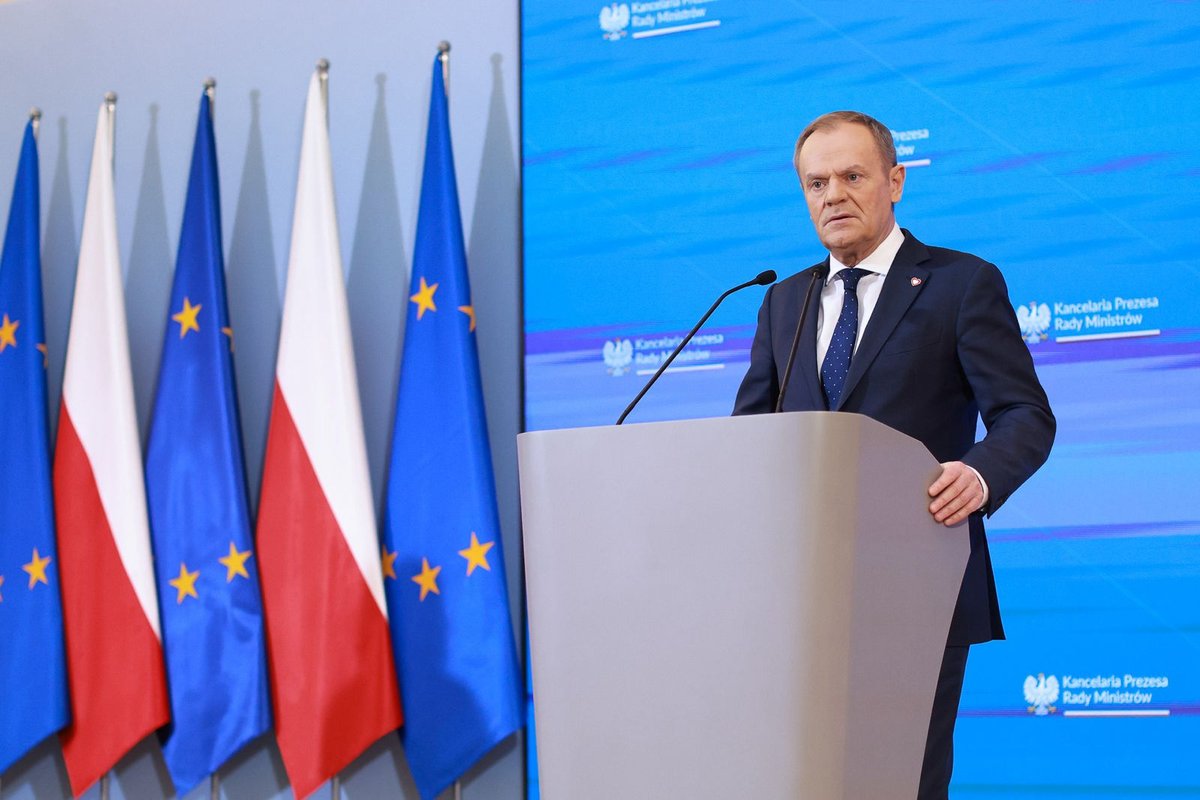
According to Gazeta Wyborcza and the portal Do Rzeczy, Prime Minister Donald Tusk spoke of a "Russian line" in Zondacrypto as early as December 5, 2025, at a closed session of the Sejm, reportedly relying precisely on the cited ABW report. The session was non-public, so a verbatim quote is not available. Do Rzeczy ↗
Key figure: the missing founder of BitBay
Sylwester Suszek, nicknamed the "bitcoin king" in Polish media, founded the BitBay exchange in 2014. At its peak (December 2017), the exchange traded more than 1.5 billion zlotys daily. Finance Magnates ↗The last traces of the 33-year-old Suszek lead to a fuel depot in Czeladź in Silesia, where he went on March 10, 2022, for a business meeting with the entrepreneur Marian W. Police in Katowice have been conducting a search since that day. Industrial cameras at the depot and at the neighboring gas station were switched off on the day of his disappearance — so the incident was not captured. Suszek's sister Nicole claims she believes Sylwester was kidnapped and murdered, and she herself has received threats; police still classify the case as a missing-person search. Bankier.pl ↗
The prosecution's office has charged Marian W. with depriving Suszek of personal liberty. In a separate proceeding, he is also accused of leading an international group that allegedly committed VAT fraud worth roughly 1.3 billion zlotys by invoicing fictitious fuel trades. According to Superwizjer reporter Michał Fuja, Marian W. currently resides in Monaco despite a court-ordered "letter of safe conduct" (list żelazny) requiring his presence at the proceedings. TVN24 Superwizjer ↗
Political battle: the president has twice blocked regulation
The affair broke out amid a political conflict over the law on the crypto-asset market — Poland's implementation of the European MiCA regulation. President Karol Nawrocki vetoed the law twice. He justified his veto by arguing that Poland should attract innovation rather than drive it away, and called on the government to produce a new version of the law that would ensure trading security and tax clarity. CyberDefence24 ↗Tusk's government has described the veto as blocking the regulator. The Sejm attempted to override the presidential veto but failed to reach a qualified majority — in the vote, 243 deputies were in favor of overriding it, 191 against, and three abstained. 263 votes were needed. money.pl ↗
After Monday's announcement of 700 victims, Nawrocki claimed that responsibility for the situation lies with Tusk's government, which he said had two months to act. Tusk and government spokesperson Adam Szłapka counter that regulation would have limited the affair and that Nawrocki's veto is a "relapse into political irresponsibility." Gazeta Prawna ↗
The role of Kral's wife under scrutiny
A final detail from Michał Fuja's report from Monaco: the president's wife, Karolina Gwóźdź, headed the legal department at Zondacrypto and, according to Fuja, "was an important figure in several companies linked to the exchange." Shortly before the affair broke, she handed over the role to a young lawyer from her own firm and moved on to another project herself. The reporter described this on the program Tak jest with the words: "It looks as if she knew what was going to happen — as if she was trying to distance herself from the exchange." Karolina Gwóźdź formally faces no charges. TVN24 Superwizjer ↗What hotinfo is following
- Whether Kral and Gwóźdź can be located — and in which jurisdiction (Monaco, UAE, Estonia)
- What the final number of victims will be (the official 700 vs. the Katowice estimate of "tens of thousands")
- The Sejm's third attempt to pass the crypto-market law, or a possible presidential alternative
- Whether the identity of the Polish intermediary through whom the Tambov group allegedly acquired stakes in 2018 will be established
- The progress of cooperation between Polish and Estonian prosecutors in securing evidence and gaining access to the wallets holding 4,500 BTC