

Both plants represent a major investment for Tata itself as well. It is building the Dholera factory for around 91,000 crore rupees, roughly 11 billion dollars, and plans to manufacture chips there using technology from 28 to 110 nanometers. It is investing 3 billion dollars in the packaging plant in Jagiroad. Business Standard ↗
Slovak readers will know Nexperia from autumn 2025, when the dispute over it threatened shutdowns at car plants. In October and November 2025, the Slovak and Czech media we monitor published 49 reports about it. It last came up on March 8, 2026, when TASR reported that China was warning of new disputes over the company. TASR ↗ Since then, the dispute in courts in both the Netherlands and China has grown further, and the Indian deal is another step by which the European part of the company is trying to manage without its Chinese counterpart.
What Nexperia is and why it matters
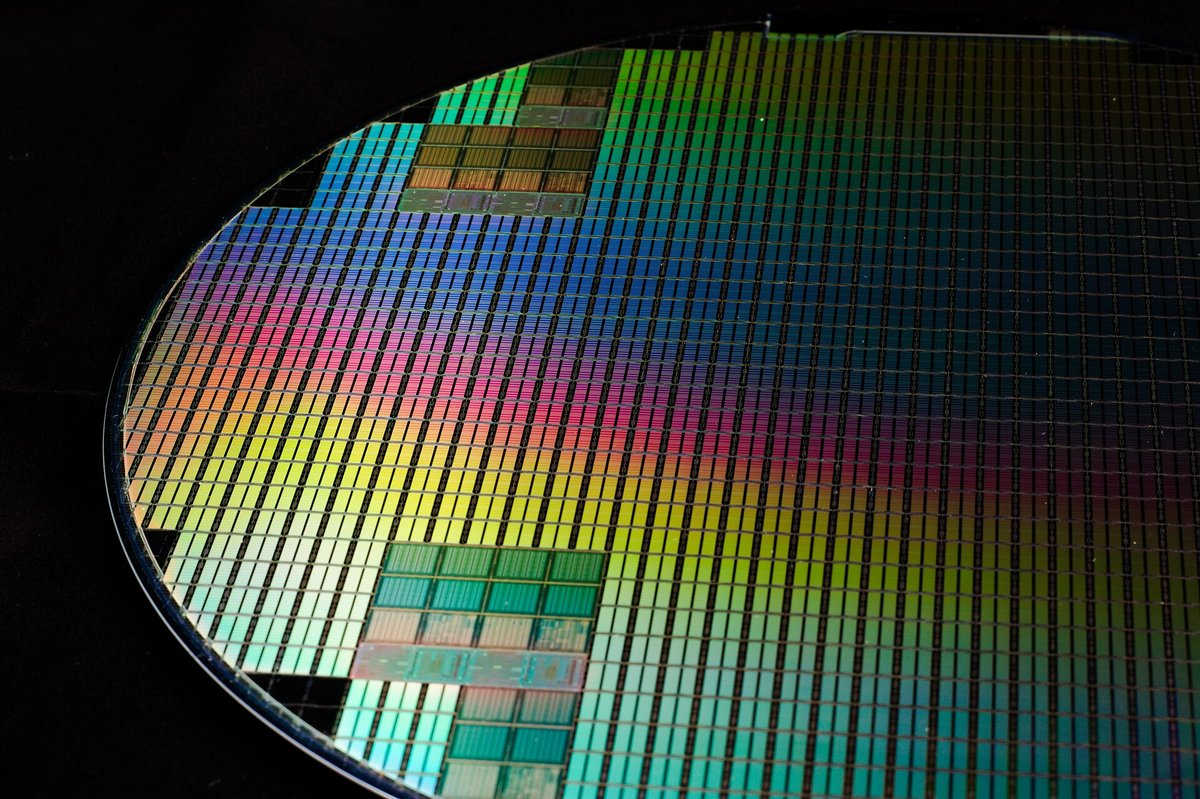
Nexperia emerged from the semiconductor divisions of Philips and NXP and is headquartered in Nijmegen, the Netherlands. It does not manufacture advanced processors but simple standard components, of which it produces more than 100 billion a year. They are found on almost every circuit board, and a modern car contains hundreds of them. NRC ↗Production has two stages. The chips themselves are made on silicon wafers at plants in Hamburg, Germany, and Manchester, Britain. They are then packaged in plastic casing and tested, in China, Malaysia, and the Philippines. Nexperia carried out most of this second phase in Dongguan, China. NRC ↗
How the company fell apart
Nexperia's shares are held by the Hong Kong company Yuching Holding. Above it stands the Chinese conglomerate Wingtech, listed on a stock exchange in China. According to the Dutch Supreme Court, the controlling shareholder of both Wingtech and Yuching Holding is Zhang Xuezheng, known as Wing, who at the time also ran Nexperia as CEO. Supreme Court of the Netherlands ↗The dispute began in late September 2025. Wingtech was on the US list of companies subject to trade restrictions, and these restrictions were then extended to Nexperia as well, through the so-called 50 percent rule. On September 30, the Dutch minister of economic affairs issued an order under the Goods Availability Act obliging the company to preserve the business and its means of production. The following day, Nexperia itself turned to the Enterprise Chamber of the Amsterdam Court of Appeal. On October 7, the Chamber suspended Zhang as director and temporarily placed Nexperia's shares, except for one, in the hands of a court-appointed administrator. Supreme Court of the Netherlands ↗
The petition was filed by Zhang's colleagues from management, who accused him of mismanagement. According to them, he used Nexperia's money to bail out his other company, chipmaker WingSkySemi, which was on the brink of bankruptcy. NRC ↗ In its ruling of February 11, 2026, the Enterprise Chamber found there were well-founded doubts about the company's proper management. It saw signs of reckless conduct amid a conflict of interest, and that the director, under threat of sanctions, had changed strategy without consulting other members of management, stopped honoring agreements with the ministry, restricted the powers of European managers, and announced their dismissal. Dutch Judiciary ↗
Beijing responded to the Dutch intervention with a ban on exports of Nexperia chips. In addition, the plant in Dongguan declared itself independent from the European headquarters in October, causing the company to lose nearly 70 percent of its packaging and testing capacity at a stroke. Automakers found themselves without components. NRC ↗
What was happening in Slovakia at the time
In late October, Volkswagen admitted the dispute could disrupt its production. SME ↗ In early November, Trend reported that the crisis could hit the Slovak automotive industry within days. "We are currently monitoring the situation very closely and assessing the possible impact on our company," Žilina-based Kia Slovakia responded at the time. According to Trend, production at Volkswagen's Bratislava plant was still running as planned. Trend ↗Tensions eased as early as November. Early that month, China allowed the export of key automotive chips Trend ↗, and on November 19, Dutch minister of economic affairs Vincent Karremans temporarily suspended the government order against Nexperia. Nexperia ↗ Headlines in Slovakia, for instance from the TASR agency and the daily SME, described this at the time as the Netherlands returning control of the company to its Chinese owner. TASR ↗ SME ↗
What was not returned to the Chinese owner
That, however, is not what actually happened. The government only suspended its order, and the court measure from October 7 remained in force. In that same February ruling, the Enterprise Chamber ordered an investigation into the company and determined that Zhang remains suspended, that the company is run by an interim director, and that its shares continue to be managed by a court-appointed administrator. They were not expropriated; they still belong to Yuching Holding, which merely lacks a majority of votes at the general meeting for the duration of the proceedings. Dutch Judiciary ↗Both Zhang and Yuching Holding appealed the October rulings to the Dutch Supreme Court. In June, Advocate General Assink recommended that all five rulings be upheld. Supreme Court of the Netherlands ↗ According to NRC, the investigation report is expected by the end of this year. NRC ↗
Wingtech is fighting for the company on multiple fronts
In May, Wingtech filed a lawsuit in a Chinese court against the holding company Nexperia Holding, the operating company Nexperia, its ITEC division, and three managers — interim head Stefan Tilger, chief legal officer Ruben Lichtenberg, and chief operating officer Achim Kempe. It is seeking damages of roughly one billion euros, invoking China's Anti-Foreign Sanctions Law. It claims it suffered irreparable harm because the defendants themselves pushed through and implemented the Dutch measures. Handelsblatt ↗ It is also asking the court to order the defendants to reverse the Dutch measures, or alternatively to have Nexperia Holding transfer full ownership of Nexperia to it free of charge. In response, Nexperia stated that Wingtech "does not appear to be interested at all in reaching a solution that would be beneficial to all stakeholders". Evertiq ↗Further proceedings are running in parallel. Wingtech has announced it wants to sue the Dutch state for 8 billion dollars in international arbitration. A Chinese court has already ruled that the European headquarters must share patents with the Chinese branch, and the Europeans have appealed. Nexperia, for its part, is seeking repayment of a half-billion-dollar loan it made to Yuching Holding. NRC ↗
The latest escalation so far is an August 28 ruling by the Dongguan Intermediate People's Court. At Wingtech's request, the court froze Nexperia's stakes in four Chinese companies and its ITEC division's stake in a fifth. They are worth more than 2.1 billion yuan, or over 270 million euros, and will remain frozen until August 2029. Evertiq ↗ IO+ ↗
Nexperia downplayed the move. According to the company, the frozen entities have operated outside its management since October 2025 and play no part in its current operations. "Property preservation orders of this kind are a routine procedural step in Chinese civil litigation, often easily granted and made without a ruling on the merits of the underlying claims," the company stated. Evertiq ↗
Where production is moving
Nexperia is replacing its lost capacity mainly in Seremban, Malaysia. The plant there, with 3,300 employees, needs another thousand people and, by the end of the year or by early 2027 at the latest, is to be able to process 70 to 90 billion chips a year — roughly what Nexperia used to produce in China. NRC ↗ According to NRC, the expansion is expected to cost more than 300 million dollars. NRC ↗ Part of the cost will be covered by a 60-million-dollar loan that the Dutch state investor Invest International granted Nexperia in February to expand its production worldwide. Invest International ↗ The company is also expanding silicon wafer production in the United States. In May, it agreed with US-based Polar Semiconductor that it will manufacture power MOSFET transistors for Nexperia at a plant in Bloomington, Minnesota. Nexperia ↗Nexperia reported revenue of 300.3 million dollars for the first quarter, and according to interim head Tilger, it sees "clear signs of recovery". Nexperia ↗ Still, it remains far from the state it was in before the split. "We are trying to restore the production chain, but honestly, we still have trouble supplying all customers," Lichtenberg told NRC in July. According to the daily, some automakers are meanwhile buying silicon wafers directly from the Hamburg factory and transporting them themselves to the Chinese branch for packaging. NRC ↗
Interim head Tilger promised improvement in July. "The biggest shortages should be resolved by the end of the year," he told Handelsblatt in his first interview since the split with Wingtech. Handelsblatt ↗ The Indian deal with Tata is a longer-term bet. The Dholera factory is still being built, and the memorandum is for now a framework for future cooperation, not a supply contract. Business Standard ↗
Read also: What Europe is writing about: Tusk warns of Russian attacks on NATO, Swedish prime minister falls, Carney addresses European Parliament on Canada's associate membership
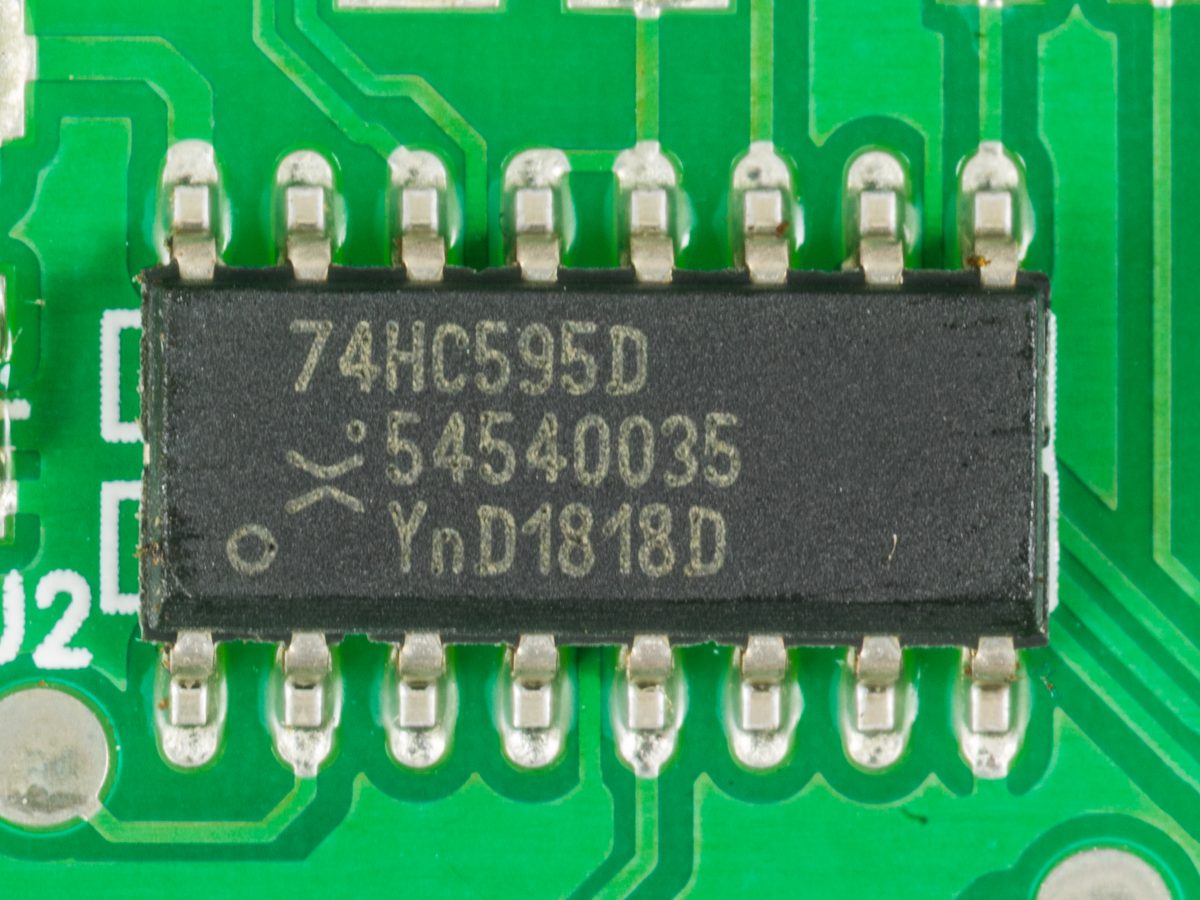
Photo: Nexperia 74HC595D chip on the board of a Philips HD8823 coffee maker. Author: Raimond Spekking / Wikimedia Commons, CC BY-SA 4.0.