



The al-Qaeda-linked Group for the Support of Islam and Muslims (JNIM) says that since Wednesday evening it has been blocking the main road access routes into Bamako, a city of three million. The movement's spokesman threatened drivers with "harsh reprisals, including death," should they attempt to pass. Drivers at the borders with Côte d'Ivoire, Senegal and Guinea confirm hundreds of parked vehicles. Le Figaro ↗
In a separate statement, JNIM called on "all patriots without distinction" — political parties, the army, religious authorities and traditional leaders alike — to join a common front (front commun) and "end the dictatorship of this terrorist junta by all legitimate means." In the new "peaceful and inclusive transitional period," the movement declares its goal of introducing sharia law. France24 ↗
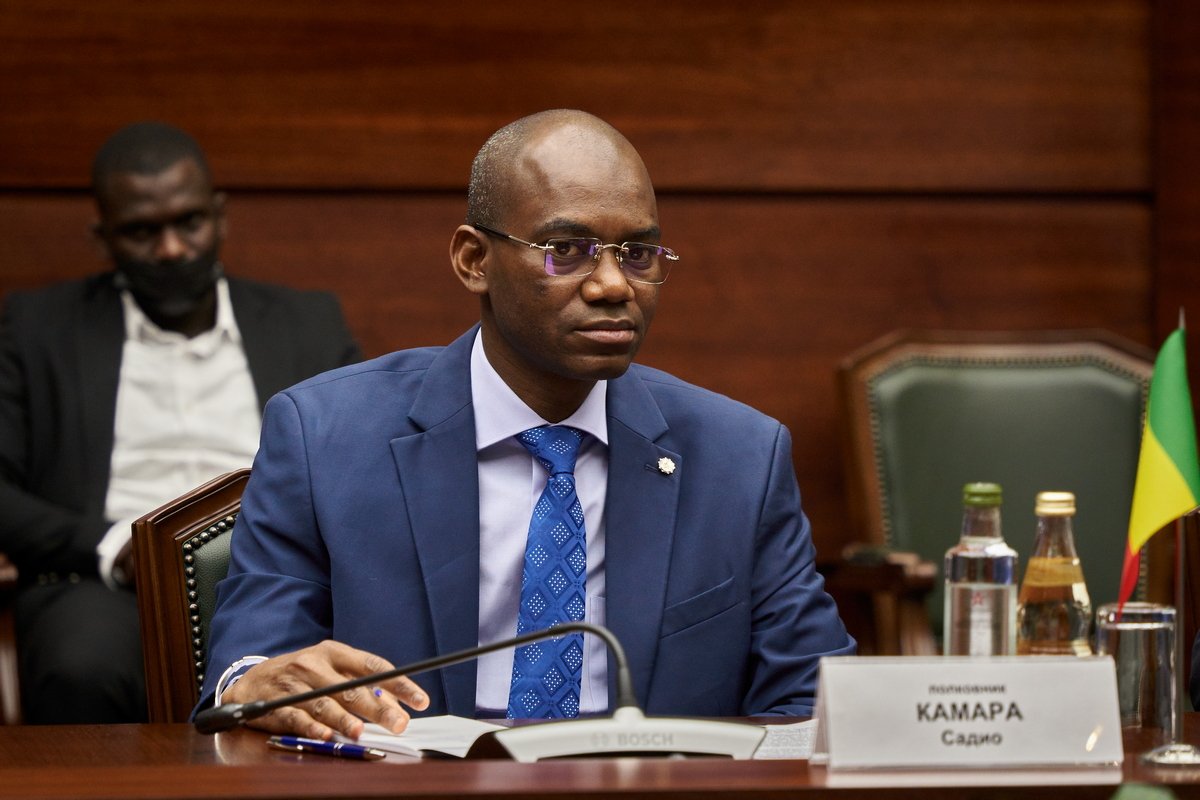
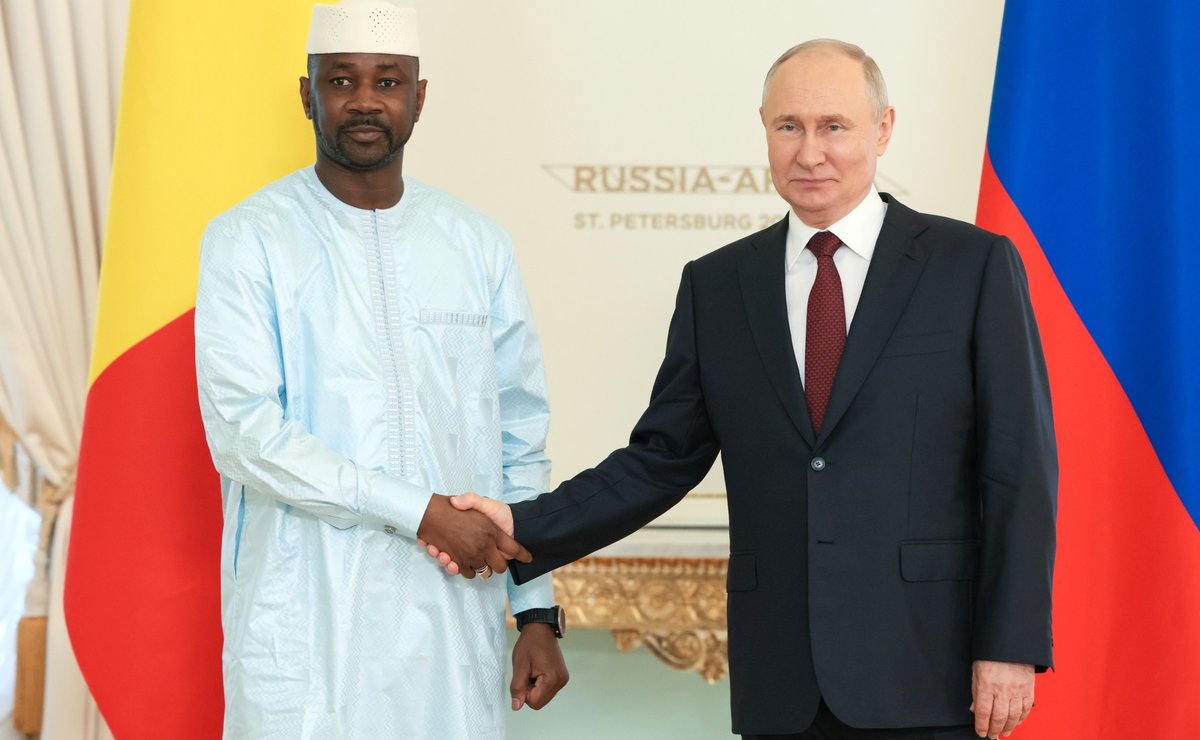
Goïta, who had not appeared publicly since the start of the offensive, was first seen on Tuesday, April 28. The AP agency released footage of his meeting with Russian ambassador Igor Gromyko at the presidential palace, and that same evening he appeared on television for his first live address: "Military operations will continue until the armed groups are completely neutralized." On Thursday, April 30, he attended the funeral of the assassinated defense minister Sadio Camara at a military engineering training ground in Bamako. AP ↗
The blockade of Bamako — from threat to hundreds of parked trucks
JNIM announced the blockade on Tuesday, April 28, and launched it overnight into Thursday, April 30. At the border crossings with Côte d'Ivoire, Senegal and Guinea — all three countries serving as the main logistical arteries for landlocked Mali — dozens to hundreds of vehicles are standing idle. "We've been blocked since yesterday. An estimated at least a hundred vehicles are parked," a driver on the road from Bamako to Conakry told Le Figaro. "We see trucks leaving Bamako, but nothing is coming in. Anxiety is rising." Le Figaro ↗BBC captured a scene on the approach road to Bamako, where families were trying to get home. "Our army can't protect us, how are we supposed to get back?" asks a woman with two children. A truck driver adds: "I've never seen anything like this." France, Canada and the United Kingdom have in recent days urged their citizens to leave the country, and the US State Department recommends staying home. The US embassy cites "possible terrorist movements within Bamako, including reports of forced school closures." BBC ↗ AP ↗
At the same time, JNIM claimed responsibility for attacks on security checkpoints in Kassela (60 km from Bamako) and Fana (127 km). The group already tried a fuel blockade at the end of 2025, which did not hit the economy as hard as expected at the time — this time it is a broader road closure. Le Figaro ↗
A common front — tactical coordination between Islamists and Tuaregs
JNIM's call is also addressed to the Front for the Liberation of Azawad (FLA), with which the Islamists have been coordinating military operations since the weekend. FLA spokesman Mohamed Elmaouloud Ramadane declared from Paris on Wednesday: "We have liberated Kidal, Taoudeni was already under our control, Gao, Timbuktu and Ménaka will be our next targets. The regime will fall sooner or later." The FLA also called on Russia to "reconsider its support for the military junta." Pravda/AFP ↗This is an unusual alliance. JNIM is a salafist group linked to al-Qaeda, while the FLA represents largely secular Tuareg separatists who fought for years against the jihadists for control of the north. The last time they made a similar tactical alignment — against the Malian army of the time — was in 2013, which provoked French intervention. France24 frames the alliance as an "alliance de circonstance" — an alliance of necessity, where the common denominator is opposition to the junta in Bamako, not a shared vision for Mali's future. France24 ↗
Read also: Mali, third day of the offensive: Kidal has fallen, Africa Corps retreated, Goïta nowhere to be seen
Camara's funeral and Goïta's television address
The funeral of Sadio Camara — the defense minister killed by a car bomb near his residence in Kati on April 25 — took place on Thursday, April 30, at a military engineering training ground in Bamako under tight security. Camara, born in 1979 in Kati, trained in Russia and, according to Ulf Laessing of the Konrad-Adenauer-Stiftung, was the "architect of cooperation with Russia" — in 2021 he proposed deploying Russian mercenaries and expelling the UN MINUSMA mission. He served as defense minister after the 2020 coup, and Goïta reappointed him after the second coup in May 2021. AP ↗On Tuesday evening, April 28, Goïta appeared on television with his first live address since the weekend offensive began. He described the attacks as "part of a broader destabilization campaign led by armed terrorist groups and their sponsors, both internal and external, who provide them with intelligence and logistical support." He did not name specific actors. Shortly before, AP had also released photographs of his meeting with Russian ambassador Gromyko at the presidential palace. AP ↗
Read also: Malian defense minister Sadio Camara killed in assassination in Kati
Moscow refuses to leave, though even its allies question its reliability
The Russian Ministry of Defense on Wednesday described the weekend attacks as "an attempted coup d'état" and stated that its Africa Corps, "in partnership with Malian security forces," had thwarted it. It claims the offensive was led by "about 12,000 attackers with sophisticated weapons" — a figure not independently confirmed by any other source. Regarding the withdrawal of Africa Corps from Kidal, Moscow stated that the decision was made by the Malian government and that its troops had previously "fought for more than 24 hours in full encirclement and repelled four massive attacks." AP notes that the Malian government has not yet provided a detailed account of the fighting, and the Russian version cannot be verified. AP ↗The background is more complicated. Africa Corps' logistical channel runs through Algeria: according to an analysis by HotInfo, Russian military aircraft landed at Algerian bases 167 times over the past year before transferring equipment and personnel to the Sahel. Bamako is still thousands of kilometers away from there, and convoys from the Mediterranean coast cannot quickly make up for losses. Le Monde ↗
Read also: 167 flights a year to Algeria. Moscow is building a logistics gateway there for Africa Corps in the Sahel
Rida Lyammouri of Morocco's Policy Center for the New South told AP that "growing frustration among the population and the military command that Russian mercenaries have failed to contain the insurgencies could lead the junta to reconsider its partnership with Moscow." According to France24, the reliability of Russian support in the Sahel is being increasingly openly questioned. France24 ↗
What HotInfo is watching
- Whether JNIM can sustain the blockade for longer than a few days — Bamako's economy could survive a short-term fuel shock, but not a long-term isolation of the capital from coastal ports.
- Whether the JNIM-FLA common front translates into a formal political structure, or remains tactical coordination without a shared platform.
- The response of the neighboring AES confederation countries (Burkina Faso, Niger) — whether they repeat last year's support for the junta or begin keeping their distance.
- The scale of reinforcements Africa Corps can deliver to Bamako via Algerian transit, and whether additional routes via Libya emerge.
- Whether Goïta moves from televised addresses to mass mobilization or declares a nationwide state of emergency.