



Key actors — tap for context
Jacob Wulfson
American F-35 fighter pilot from the squadron nicknamed the Valkyries at RAF Lakenheath base
Why here: The military tribunal found him guilty of strangling Sarah Steele and sentenced him to six months.
Sarah Steele
British academic who waived her right to anonymity to speak about the case
Why here: She described the American military trial as "humiliating" and "archaic," one in which she felt more on trial than the pilot.

RAF Lakenheath
The largest American air base in Britain, home to the USAF's 48th Fighter Wing in Suffolk
Why here: Wulfson's trial was held here, and he is serving his sentence here.
More info →
The Guardian
British left-liberal daily newspaper
Why here: Through its investigative series "Base justice," it exposed the system of military tribunals at American bases in the UK.
More info →
Pentagon
US Department of Defense
Why here: According to the Guardian, the military generally insists on trying its own soldiers itself.
More info →A tribunal behind the base fence
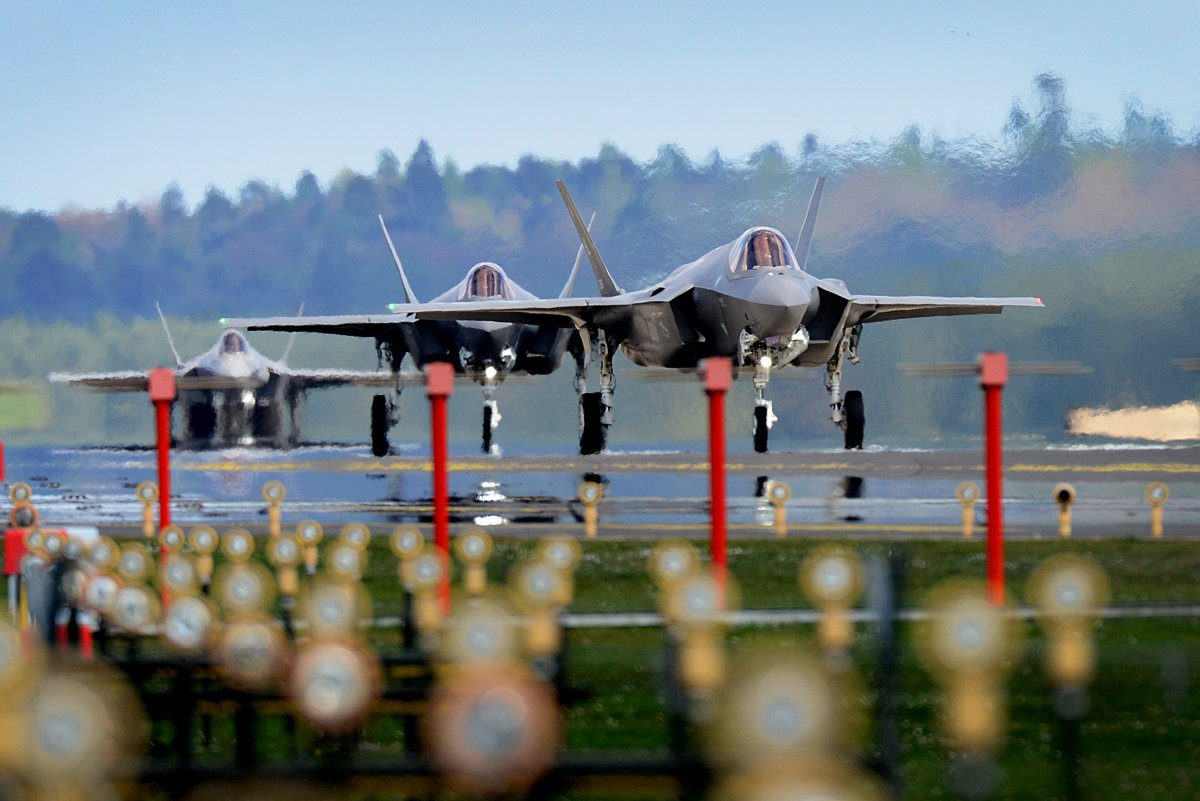
Wulfson flew the F-35, the most advanced American fighter jet, and belonged to the squadron nicknamed the Valkyries. His trial took place in April at RAF Lakenheath in Suffolk — effectively a small American town with six thousand service members, its own hospital, its own police, and a Taco Bell outlet where you pay in dollars and the emergency line is 911. The jury was chaired by the commander of the squadron that maintains Wulfson's fighter jets, and one of the jurors had himself previously been acquitted of a sexual offense charge. All the jurors were men from the same base. The Guardian ↗In an English court, according to the Guardian, the act would likely have been prosecuted as rape. Before the military tribunal, however, Wulfson faced only the lesser charge of "sexual assault" — and was ultimately acquitted of that too. He was found guilty of strangling Steele and of violating an order not to contact her after the attack. He faced a maximum of thirteen years, the prosecution sought five — the jury ultimately decided on six months in a correctional facility on the base itself. Steele, who waived her right to anonymity, described the proceedings as "humiliating" and "archaic," one in which she felt more on trial than the pilot. The Guardian ↗
Wulfson's case is not an isolated one. In its investigative series Base justice, the Guardian documented a whole range of convictions of American soldiers — from sexual assaults and sexual offenses against children through violent assaults to driving under the influence — that ended up before military tribunals at fifteen bases in the United Kingdom, where more than twelve thousand Americans serve. The Guardian ↗
The catch is in the 1951 treaty
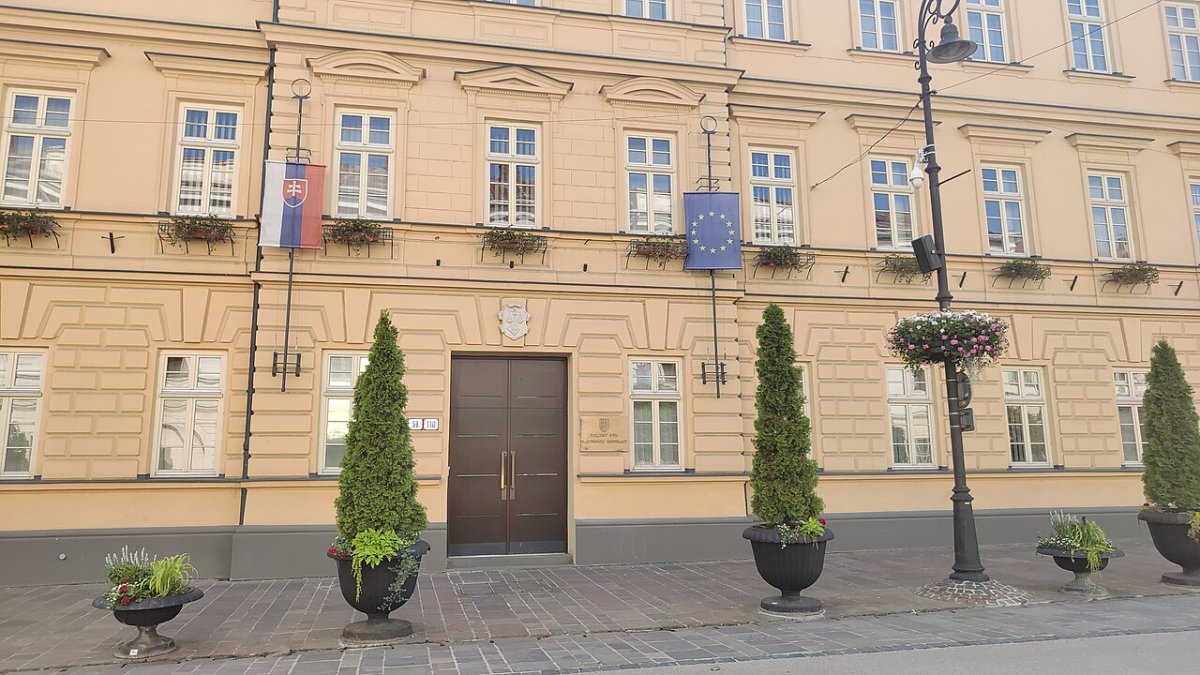
The 1951 NATO Status of Forces Agreement is clear: if a soldier offends off duty and off base, the host country has the primary right to prosecute. In practice, however, the American side claims far broader jurisdiction, and British police yield to it. "Often the British throw it back to the American military and let us prosecute it," a US Air Force expert on military justice admitted to the Guardian. This was also confirmed by police in Cambridge, who acknowledged they had ceded "investigative primacy" to the Americans. The Guardian ↗For a Slovak reader, this is not a distant exotic matter. The same type of jurisdictional mechanism was fiercely debated here in connection with the defense agreement with the US (DCA) in February 2022. Critics led by Smer warned of a loss of sovereignty and "American bases," while the government countered that jurisdiction remains Slovak and that the agreement "does not allow impunity for any offender," since it is governed by the same NATO SOFA framework. Denník N ↗ The National Council approved it with 79 votes, and the president ratified it. Pravda ↗ Slovakia does not have American bases on the scale seen in Britain, but the legal mechanism is the same — and the British case illustrates a point that got lost in the Slovak debate: even when a treaty gives priority to domestic courts, the host country can quietly waive that priority. MO SR ↗
Limits of this view
The Guardian is a left-liberal daily newspaper, and its Base justice series has a clear reformist intent, so its figures and choice of cases should be read with this in mind. The US Air Force maintains that its proceedings are "fair, transparent, and thorough," and Wulfson ultimately lost his career — the tribunal discharged him from the military with a record. Moreover, the mechanism is not an American diktat but a standard applied throughout NATO, including reciprocal rules. And when British prosecutors insist on their claim, they can keep a case — in another case, a court overturned an American claim and a servicewoman was tried before a civilian court in Norwich. One case is not a pattern, though the Guardian found more than one. The Guardian ↗What hotinfo is watching
- Wulfson's sentence will automatically be reviewed by the appellate military court in Maryland. The pilot is due to leave Lakenheath in mid-September and return to the US.
- Whether the British government or parliament responds to the Base justice series — for example, by publishing statistics on how often police cede jurisdiction.
- Slovakia: how the jurisdictional provisions of the DCA would play out in practice if an American soldier were to offend on our territory. No such case has occurred so far.
- The broader context of the deployment of American forces in Europe — some fighter jets from Lakenheath recently took part in the American bombing of Iran.