

Key actors — tap for context

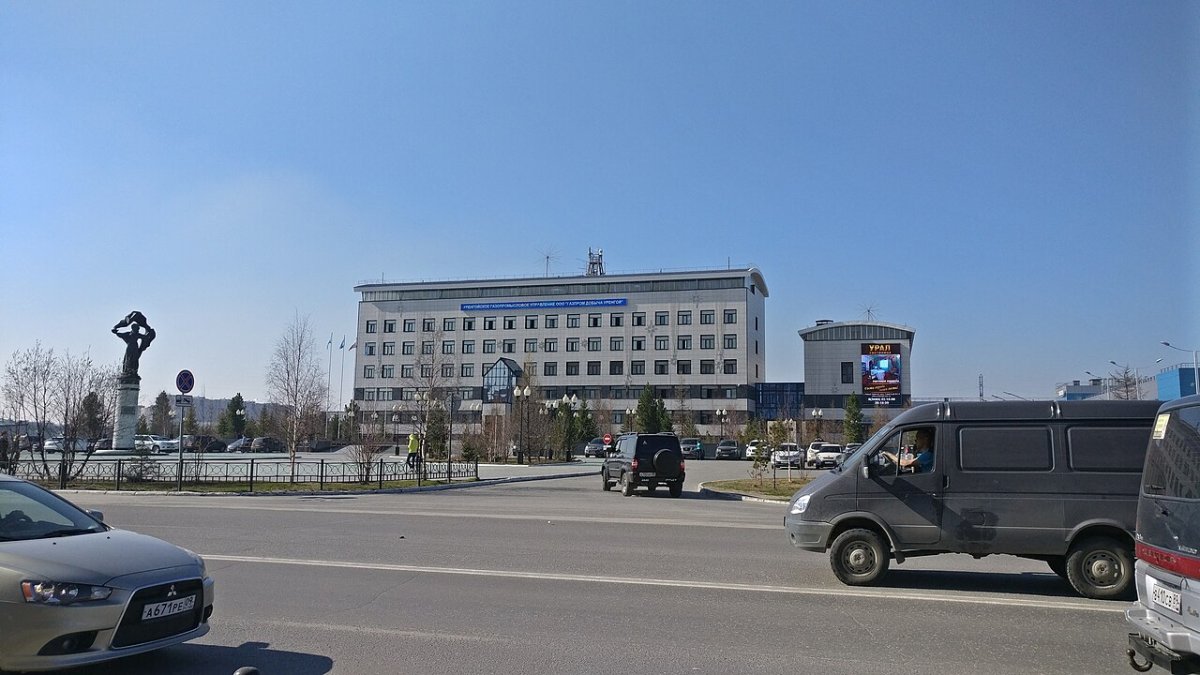
Novy Urengoy
A city in northern Western Siberia, a center of Russian gas extraction, home to over one hundred thousand people
Why here: An industrial facility here was on fire, which monitoring channels identified as a plant for preparing gas condensate
More info →
Yamalo-Nenets Autonomous Okrug
An Arctic region of Russia between the Urals and the Kara Sea, the country's main gas-producing territory
Why here: It accounts for about 80 percent of Russia's natural gas, and no drone attack had previously been reported from there
More info →
Dmitry Artyukhov
Governor of the Yamalo-Nenets Autonomous Okrug, in office since 2018
Why here: Confirmed both the drone attack and the fire, but did not name the facility that was hit
More info →Fire Point
A Ukrainian arms manufacturer based in Kyiv, producing long-range FP-1 drones and Flamingo cruise missiles
Why here: Its co-founder published the distance figure itself after the attack, which media read as a hint that it was the company's device

Khanty-Mansi Autonomous Okrug
A Russian region south of Yamal, the country's main oil province
Why here: On the same day, a drone threat was declared there for the first time and operations were halted at six airports
More info →
Omsk
A city in southern Western Siberia with Russia's largest refinery, operated by Gazprom Neft
Why here: The deepest confirmed strike to date, from July 2026, about 2,500 kilometers from the border
More info →
Artem Zhoga
Plenipotentiary representative of the Russian president for the Urals Federal District, former commander of the Donbas unit Sparta
Why here: Confirmed that the target was a fuel and energy facility
More info →What Was on Fire and Who Confirmed It
Dmitry Artyukhov, governor of the Yamalo-Nenets Okrug, wrote that a drone attack on one of the industrial facilities in Novy Urengoy had been repelled and that the fire broke out after debris fell. According to him, no one was killed or injured, and the extent of the damage is being determined, though he did not name the facility. Kyiv Post ↗That the target was a fuel and energy facility was also confirmed by Artem Zhoga, the Russian president's plenipotentiary representative for the Urals Federal District. The independent Russian outlet Agentstvo called the strike the deepest hit on Russian territory since the start of the full-scale invasion. Meduza ↗
The specific target was not named by the authorities but by monitoring channels. According to them, it was the Novy Urengoy plant for preparing condensate for transport, one of the nodes in the region's gas condensate infrastructure. After its expansion in 2024, Gazprom stated a design capacity of around 19.5 million tons of the raw material per year — a figure about the size of the plant, not about the extent of the damage. Censor.NET ↗
The Ukrainian government did not claim the attack and did not confirm the type of device used. The Ukrainian agency UNN attributed the strike to an FP-1 drone made by Fire Point and cited 3,300 kilometers in its headline, though the text quotes a post by the company's co-founder Denys Shtylerman, who himself published the figure of 3,200. A personal post is not a corporate statement, and the manufacturer of a weapon is not the one who used it. UNN ↗
Strikes So Far
715 km
September 9, 2026
How Much Is 2,800 Kilometers
Since the type of device has not been confirmed, any comparison with a specific drone is conditional. If it were an FP-1, as UNN writes, it is worth noting that the manufacturer's website credits it with an operational range of up to 2,600 kilometers and a payload of up to 60 kilograms. That is less than the distance from the border to the target. Fire Point ↗But even the manufacturer's own catalog is not a reliable measure, because it contradicts itself. The same page lists a maximum flight time of seven hours for the FP-1, a maximum speed of 205 kilometers per hour, and a cruising speed of 140 to 180. Seven hours at maximum speed works out to just under 1,500 kilometers — not even two-thirds of the declared range. These figures therefore do not allow a reliable conclusion about what the device can actually do.
It is also uncertain how far the drone actually flew. Meduza gives a straight-line distance of about 2,800 kilometers from the border, while Kyiv Post writes of roughly 3,200 kilometers. Neither the launch site nor the route is known, so the target's distance from the border is not proof of the flight's length, and the differences between the figures may also be a matter of measurement methodology. So far, only one thing has been confirmed: the location of where the fire broke out.
Where the Drones Have Reached So Far
In February, Ukrainian drones struck the Lukoil refinery in Ukhta in the Komi Republic, about 1,700 kilometers from the border. In July came the strike on Omsk. The Ukrainian General Staff announced a strike on Russia's largest refinery, operated by Gazprom Neft, which last year processed around 23 million tons of oil. Omsk governor Vitaly Khotsenko confirmed that "several drones" had breached multiple layers of air defense. That is roughly 2,500 kilometers from the border. The Moscow Times ↗From Ukhta to Novy Urengoy, that is an increase of roughly 65 percent over seven months. This is not a measurement of a single device, since the type used in each strike is generally known only from one side's claims. It is, however, a sequence of confirmed locations, and that sequence is moving in one direction.
From Refineries to the Places Where the Raw Material Originates
A few hours before Novy Urengoy, Russian authorities declared the first drone threat in the Khanty-Mansi Autonomous Okrug and halted operations at six airports, including Surgut. Kyiv Post reports that the region lies more than 1,800 kilometers from the Ukrainian border and accounts for about 40 percent of Russian oil extraction. A reported threat, however, is not proof that any drone actually reached the area. Kyiv Post ↗After Omsk, the Ukrainian General Staff stated that it was the last of the eleven largest gasoline producers in Russia to be hit, and in early July the military claimed to have taken out roughly 43 percent of Russian refining capacity. Both are claims from one side and have not been independently verified. Defense Express ↗
Wednesday, when the main oil province reported a threat and a fire broke out in the main gas-producing one, fits a picture in which strikes concern not only processing but also extraction areas. One day, however, is not enough to conclude that there has been a change in strategy.
What This Implies About Range
A number on its own says less than what stands behind it. Alongside its drones, Fire Point also produces the FP-5 Flamingo cruise missile, to which it attributes a range of 3,000 kilometers and a warhead of 1,150 kilograms — substantially heavier than the roughly 450-kilogram-class warhead carried by the American Tomahawk. These, too, are the manufacturer's declared specifications, not an independent measurement. IISS ↗What matters is that Russia's Arctic north has stopped being out of reach. In the fifth year of its defensive war, the country managed to cause a fire in a place that no previously reported strike had reached, and it did so without the weapons systems of major powers. What a single such device costs cannot be said without a confirmed type. And range is only one condition anyway, since navigation, accuracy, and overcoming air defense still remain.
Limits of This View
Neither side has confirmed the extent of the damage. Russian authorities speak of a repelled attack and falling debris, which is their usual phrasing, and no independent verification of the plant's condition is available. The identification of the specific facility was not provided by the authorities but by monitoring Telegram channels.Fire Point is a company that sells its products, so its range figures are a marketing claim. Likewise, the Ukrainian General Staff's figures on disabled capacity come from one side of the conflict. And the claim that this was the first such strike rests on the fact that no earlier strike in this region was reported, which is not the same as proof that one never happened.
What hotinfo Is Watching
- Gazprom alebo prevádzkovateľ novourengojského závodu potvrdil obmedzenie prevádzky
- Ukrajinská armáda alebo rozviedka oficiálne potvrdila vykonanie útoku na Nový Urengoj
- Dronová hrozba v Chanty-Mansijskom okruhu prešla do doloženého zásahu ropnej infraštruktúry
- Rusko doložene rozmiestnilo protivzdušnú obranu pri arktických ťažobných uzloch
- Doložený zásah cieľa vzdialeného viac než 3 000 kilometrov od ukrajinskej hranice