





Ukraine: a "logistical blockade" via artificial intelligence
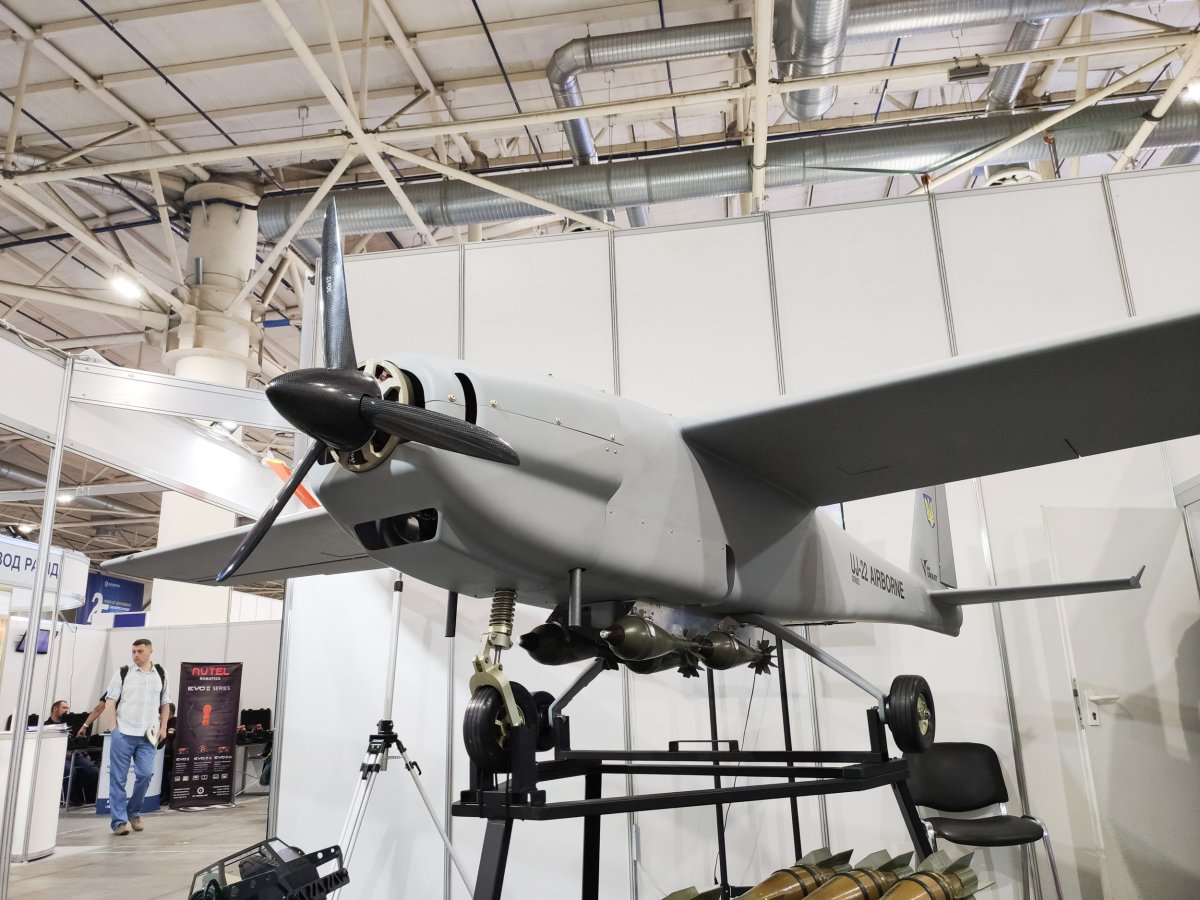
Defense Minister Mykhailo Fedorov described the strategy as a "logistical blockade." Its aim, he said, is to "increase pressure on the Russian army in the rear and deny the enemy the ability to conduct longer offensive operations." Fedorov is a former minister of digital transformation, associated with the launch of the state app Diia — parliament appointed him to head the defense ministry in January 2026 specifically with a mandate to transform the army through technology. BBC ↗The key element is the Hornet drone, guided by artificial intelligence. According to Nick Brown of the intelligence firm Janes, its targeting system is trained on thousands of hours of footage of Russian military targets gathered over four years of war. The drone connects to the Starlink satellite network, giving it both range and jamming resistance. "Ukraine can launch hundreds of suicide drones toward an approximate target area more than 150 kilometers away, and the artificial intelligence then guides them onto specific Russian targets," Brown explained. BBC ↗
The effect is measurable. Clément Molin of the think tank Atum Mundi confirmed the destruction of 150 vehicles more than 20 kilometers from the front, though he says this represents only about half of all such cases. George Barros of ISW speaks of Ukrainian "drone superiority," which has allowed Kyiv maneuvers that were impossible just a year ago. He warns, however, that the window is temporary: "Russia will almost certainly eventually develop countermeasures, so Ukraine's international partners have a rare and temporary opportunity." BBC ↗
Russia's response: cheap machines with a Chinese heart
Russia's response rests not just on the precision of individual machines, but above all on quantity, price, and gradual upgrades. In the Alabuga special economic zone in Tatarstan, roughly 1,100 kilometers from the Ukrainian border, a complex of more than a hundred buildings has grown up, according to a satellite-imagery analysis by the think tank CSIS, and today produces more than 5,500 drones a month. These are the Iranian-designed Shahed-136 machines, which Russia has renamed Geran-2, along with their newer versions. CSIS Beyond Parallel ↗Although Moscow claims that production is "one hundred percent localized," according to the specialist website The Diplomat it is in fact mostly an assembly operation using Chinese components. These have transformed what was originally simple loitering munitions into a networked strike asset: 4G modems and a MESH network, the site reports, allow the drones to operate in swarms and share data even under fire, while Chinese turbofan engines power the newest Geran-3 to speeds of up to 500 kilometers per hour. "The turbo-Shaheds are a new challenge for Ukraine and for the world, because few air-defense systems can destroy them, and the cost of doing so is extremely high," the site quotes Oleksandr Yarmak, commander of a Ukrainian drone battalion. The Diplomat ↗
The Gerans' greatest weapon is economics. A single unit costs 35,000 to 50,000 dollars, and a decoy variant as little as ten thousand — compared with about three million dollars for a single Patriot missile. According to available reports, thousands of North Korean workers are also linked to production at Alabuga, with CSIS citing a figure of up to 12,000 people and engineers sent by Pyongyang. CSIS Beyond Parallel ↗
Also read: The first confirmed Russian Shahed was shot down outside Ukraine, in Mali. Wreckage revealed Chinese components
Why this is not just Ukraine's war
This price asymmetry is precisely why the issue also concerns Bratislava and Warsaw. When Russian drones entered NATO airspace over Poland in September 2025, the Alliance deployed Polish F-16 and Dutch F-35 fighter jets against cheap Gerbera decoy machines. A Gerbera costs an estimated ten thousand dollars, while an estimated hour of F-35 flight costs more than 42,000. Western air defense, built for missiles and enemy aircraft, is losing at this kind of math. The Diplomat ↗Europe is trying to catch up. Poland spends more on defense than any other EU country and, according to the Austrian daily Der Standard, is turning into a "laboratory of security technologies" — including combat robots and unmanned tracked vehicles that the Polish research institute Łukasiewicz-PIAP also exports to Ukraine. Der Standard ↗
Also read: Romania expels Russian consul, Medvedev threatens more drones
What hotinfo is following
- Whether Ukraine can maintain its drone superiority — ISW warns that Russia will develop countermeasures
- The expansion of turbofan Geran-3 drones capable of 500 km/h and the pressure on Ukrainian air defense
- Western pressure on Chinese supply networks (sanctions, component flows through Chinese firms)
- NATO's eastern flank: further drone incursions and European investment in counter-drone defense