

On Monday evening, a few hours before the opening, two Syrian soldiers died in an armed attack on a military bus between Ras al-Ain and Ain Issa in the northeastern province of Hasakah. The Syrian Ministry of Defense called it a "treacherous attack by unknown assailants"; according to an AFP source, two more soldiers were wounded, and the investigation is ongoing. No one had publicly claimed responsibility for the act by the time of publication. Kurdistan24 / AFP ↗
Ankara frames the step through two priorities: sending home part of the 2.4 million Syrians who still live in Turkey, and supporting the government of President Ahmad al-Sharaa as it takes control of territory that, as recently as January, belonged to Washington's Kurdish allies.
Twelve years, sixth crossing
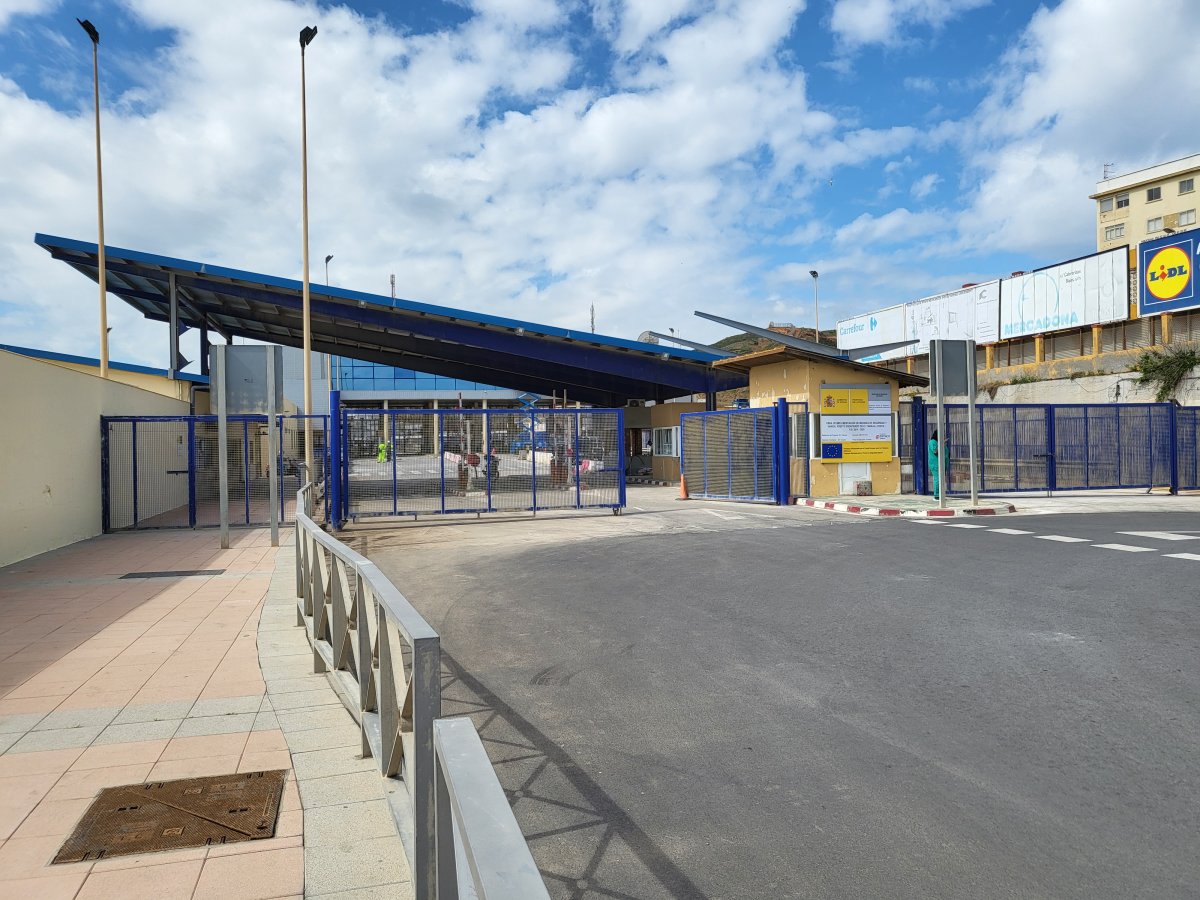
Akçakale was closed by Turkish authorities in 2014, during the most intense phase of the Syrian civil war. A year later, on June 15, 2015, Kurdish-led YPG forces — later the core of the Syrian Democratic Forces (SDF) — drove the Islamic State out of the town of Tal Abyad on the Syrian side of the crossing. Wikipedia: Tell Abyad offensive ↗ In October 2019, Tal Abyad, along with the town of Ras al-Ain, came under the control of the Turkish Armed Forces and the Syrian National Army (SNA) during Turkey's Operation Peace Spring, until customs authorities of the Damascus government took them over on January 22, 2026. Wikipedia: 2019 Turkish offensive ↗ Ankara still considers the SDF an extension of the Kurdistan Workers' Party (PKK), which it designates as a terrorist organization, which is why the border did not open even during the period when the United States cooperated with the SDF against jihadists. Kurdistan24 ↗Since 2019, the crossing had partially opened for humanitarian aid, authorized commercial cargo, and, after Turkish military operations in northern Syria, for funerals and official transfers as well. Civilian traffic, however, remained blocked. The office of the governor of Şanlıurfa announced on Monday: "In light of the normalization of life in the region, passport-based entry and exit procedures to and from the Syrian Arab Republic via the Akçakale land crossing will begin on Tuesday." Arab News / AFP ↗
On Tuesday morning, traffic was heavy from the early hours, passport checks were underway at the booths, and security measures were "at the highest level." Those permitted to travel include Turkish citizens, people holding both Syrian and Turkish citizenship, and Syrians with residence or work permits. Syrians under Turkish temporary protection status are not yet allowed to cross through the checkpoint. Türkiye Today ↗
Earlier, in December 2024, President Recep Tayyip Erdoğan opened the second major crossing, Yayladağı, in Hatay province at the western end of the border. The December 9 announcement came a day after the fall of Bashar al-Assad, and Erdoğan linked it to the return of refugees. Daily Sabah ↗ Akçakale followed seventeen months later.
How Damascus got the border back
The opening of Akçakale is not merely a bilateral Turkish-Syrian gesture — it is a consequence of what happened in northeastern Syria between January and March 2026. On January 13, al-Sharaa's transitional government launched a military offensive against the SDF, first in the eastern part of Aleppo province, extending it four days later to Raqqa, Deir ez-Zor, and Hasakah. According to analysis by the Middle East Council on Global Affairs, by the end of the month up to 80% of the territory previously administered by the Autonomous Administration of North and East Syria (DAANES) had come under Damascus's control. Middle East Council on Global Affairs ↗According to Türkiye Today, the customs authorities in Tal Abyad came under the administration of the Syrian government on January 22. Türkiye Today ↗ A week later, on January 30, Damascus and the SDF signed an agreement on the gradual integration of Kurdish armed forces into the Syrian army, the merger of Kurdish civil institutions with state ones, and the transfer of Damascus's units into the centers of the cities of Hasakah and Qamishli. This includes the creation of a military division with three SDF brigades and a separate brigade from Kobane near Aleppo. Donald Trump's envoy for Syria, Tom Barrack, called the agreement a "historic milestone" reflecting "inclusion, mutual respect, and shared dignity." Al Jazeera ↗
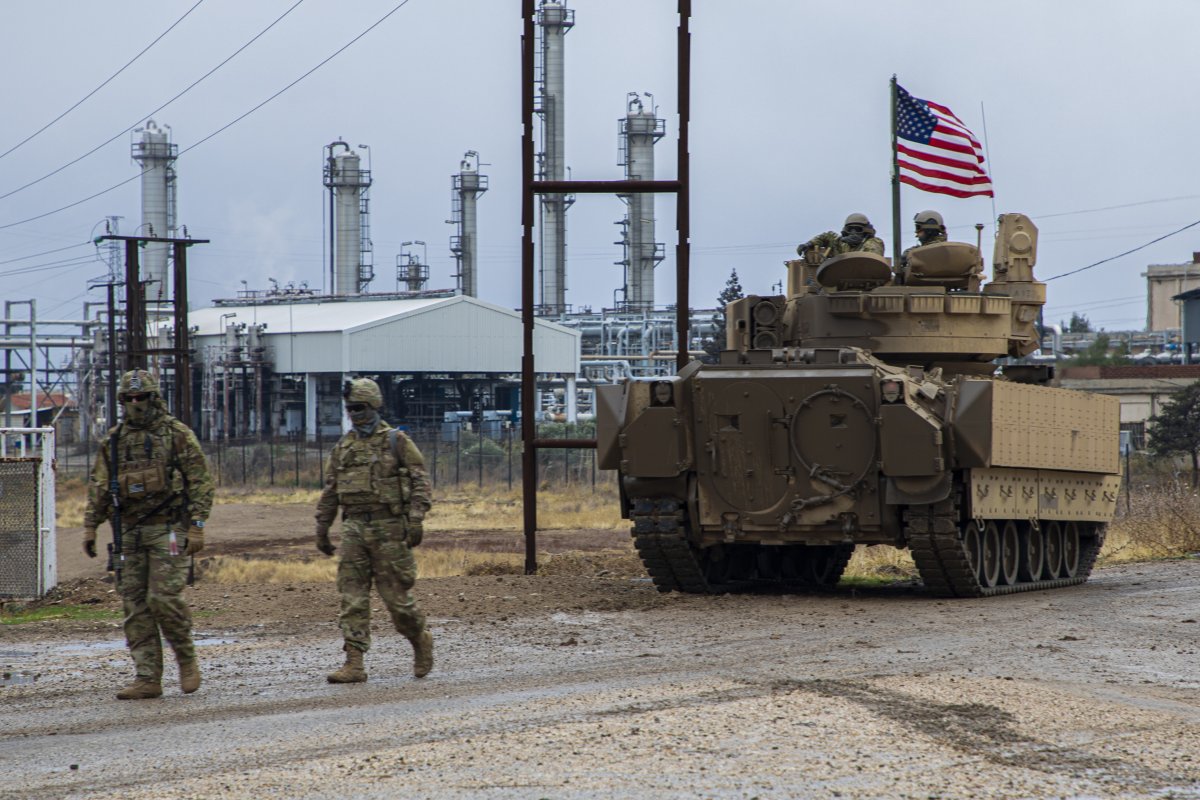
Also read: US hands over its last bases in Syria. Direct mission ends, anti-ISIS effort continues through partners
In the public announcement cited, the Turkish, Syrian, and American interpretations of the agreement were given the most space. For Ankara, it represents progress toward a long-pursued goal — limiting SDF autonomy along its southern border. For Damascus, an expansion of state sovereignty, as al-Sharaa put it in a phone call with Donald Trump, when he emphasized "territorial integrity and national sovereignty." Al Jazeera ↗ SDF commander Mazloum Abdi was not publicly quoted in the text of the agreement.
2.4 million refugees and domestic pressure
Approximately 2.4 million Syrian refugees still live in Turkey — at the peak of the crisis there were more than 3.5 million. Since 2016, according to Erdoğan's statement of November 9, 2025, 1.29 million people have returned home. After the fall of Assad in December 2024, 550,000 of them left by early November 2025, figures that come from Interior Minister Ali Yerlikaya. Enab Baladi ↗Erdoğan himself announced back in May 2024 a program for 200,000 to 250,000 housing units in thirteen residential complexes in Syria, whose construction was to be financed by international organizations. The goal was to enable the return of "at least one million" Syrians. Asharq Al-Awsat ↗ The opened Akçakale crossing could ease logistics for travelers heading to the Tal Abyad and Raqqa area, where a direct eastern road hub had previously been missing — western Syria could be bypassed via Yayladağı in Hatay province.
The shadow of Hasakah
Monday's attack on a military bus near Ras al-Ain took place in a province where Damascus extended its control only a few weeks earlier. A military source told AFP that the bus came under fire on the road to the neighboring province of Raqqa, where, earlier in 2026, four Syrian security personnel were killed in an attack attributed to the Islamic State by the Syrian state agency SANA. Kurdistan24 / AFP ↗ISIS leaders called on fighters over the winter to confront the new Syrian authorities wherever they extend their administration — precisely in Hasakah and Raqqa, where until recently the SDF, backed by American air power, stood against the jihadists. According to Kurdistan24, the Syrian government has formally joined the international coalition against ISIS, but it is unclear how quickly it can replace the operational capacity the SDF lost through integration. Kurdistan24 ↗
What this means for Europe
For Slovakia or the Czech Republic, Syrian refugees are not a domestic issue — both countries were predominantly a transit route in 2015–2016, with people seeking their final destination in Germany, Sweden, or the Netherlands. The opening of Akçakale and the gradual return from Turkey therefore primarily eases pressure on Berlin and Brussels at the EU's land borders with Turkey and the Balkans.According to a hotinfo article from April 17, 2026, the US has closed its direct mission in northern Syria, and operations against ISIS have been conducted through its Syrian partner since April 2026. hotinfo.eu — USA základne ↗ If Damascus's control is expanding faster than its security capacities, the first to notice will not be the Americans, but European intelligence services and border agencies neighboring Turkey.
What hotinfo is watching
- The remaining six crossings — when and in what order they open to full civilian traffic (Cilvegözü, Öncüpınar, Karkamış)
- Mazloum Abdi and the pace of SDF integration — whether the Kobane brigades come under the Aleppo area command by June 2026
- Returns through Akçakale — the first update to Yerlikaya's cumulative figures (June or July 2026)
- ISIS in Hasakah and Raqqa — whether Monday's attack (May 11) stays isolated or signals a coordinated wave against the new Syrian garrisons
- The EU's stance on Syria — easing the sanctions regime in banking, energy and air transport
- Domestic pressure in Turkey — the return policy in the 2027 budget and in changes to the aliens law