
The target of the "forest of antennas" — as the devices were dubbed by both Austrian authorities and German media — were, according to counterintelligence, international organizations headquartered in Vienna. Primarily the International Atomic Energy Agency (IAEA), the Organization of the Petroleum Exporting Countries (OPEC), the Organization for Security and Co-operation in Europe (OSCE), and the United Nations Industrial Development Organization (UNIDO). The Russian ambassador was summoned to the Austrian Ministry of Foreign Affairs in mid-April. The ministry demanded the lifting of diplomatic immunity for three specific individuals so that prosecutors could launch an investigation. Russia refused within the two-week deadline. The diplomats had to leave the country on Monday. Moscow Times ↗
Before Russia's invasion of Ukraine in February 2022, Austria had never expelled more than one Russian diplomat at a time. Since the invasion began, it has already sent fourteen home. Approximately 220 accredited staff of Russian diplomatic missions still remain in Vienna — the largest Russian diplomatic presence in any EU member state. Vindobona ↗
Six to eight antennas and four satellites
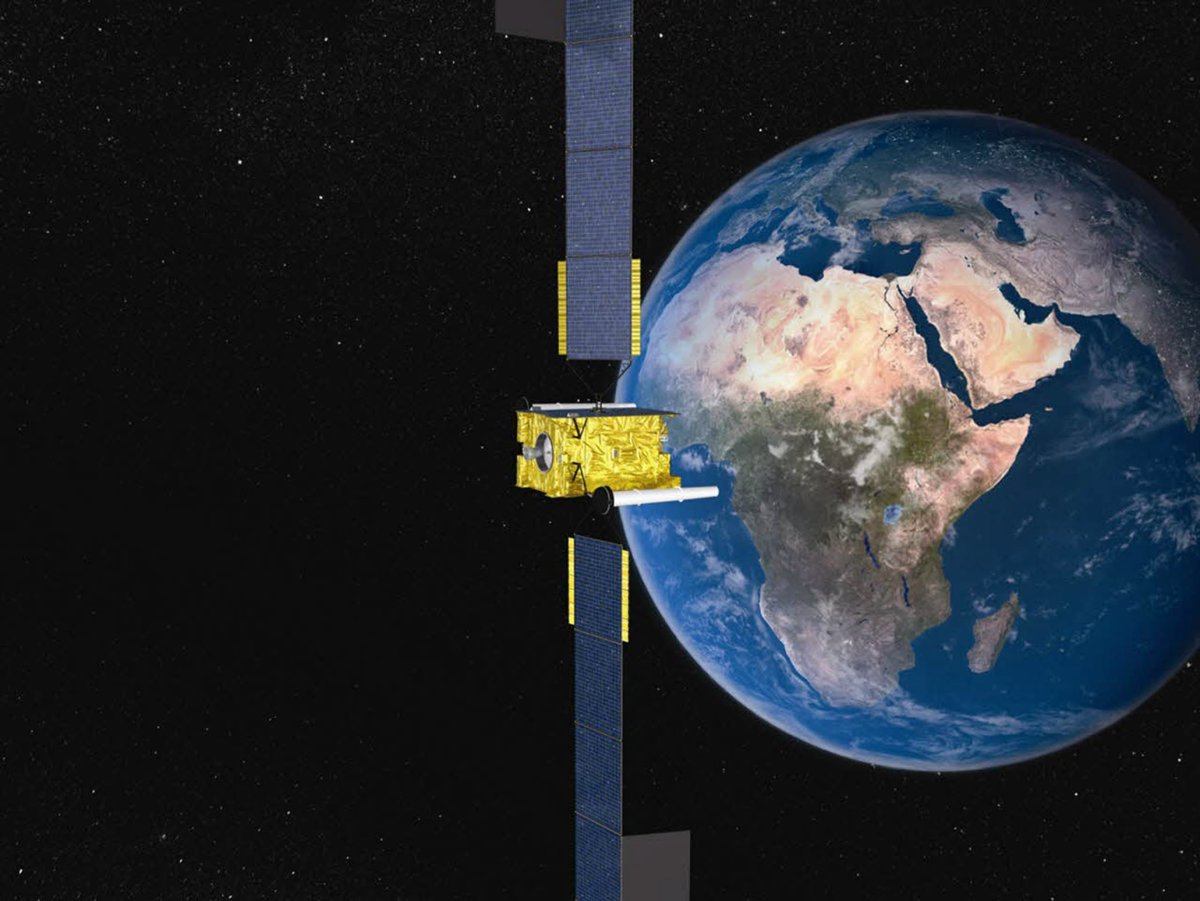
The antennas on the rooftops were nothing new either for Austrian counterintelligence or for the public. Investigative journalist Erich Möchel of ORF FM4 and the research group NomenNescio have repeatedly reported on their growth since 2022. Möchel and his team counted six to eight antennas on the embassy roof itself in the 3rd district and identified four commercial telecommunications satellites toward which, according to him, they are oriented — Eutelsat 3B, Eutelsat 10B, SES-5, and Rascom QAF1. All four sit in geostationary positions between 0° and 15° east longitude, which from Vienna means the antennas point westward. According to NomenNescio's analysis, at least one antenna is capable of intercepting signals not intended for Russian recipients. United24 ↗The complex in Donaustadt, which is less visible and lies outside the usual diplomatic routes, was also explicitly mentioned in the annual report of the Austrian Directorate for State Security and Intelligence (DSN) — under its German name, Verfassungsschutzbericht. In recent years, DSN analysts have thus publicly signaled where they believe Moscow is operating in Vienna. The expulsion decision is therefore not a discovery — it is a political step that finally accompanies a long-standing finding. t-online ↗
UN City by the Danube
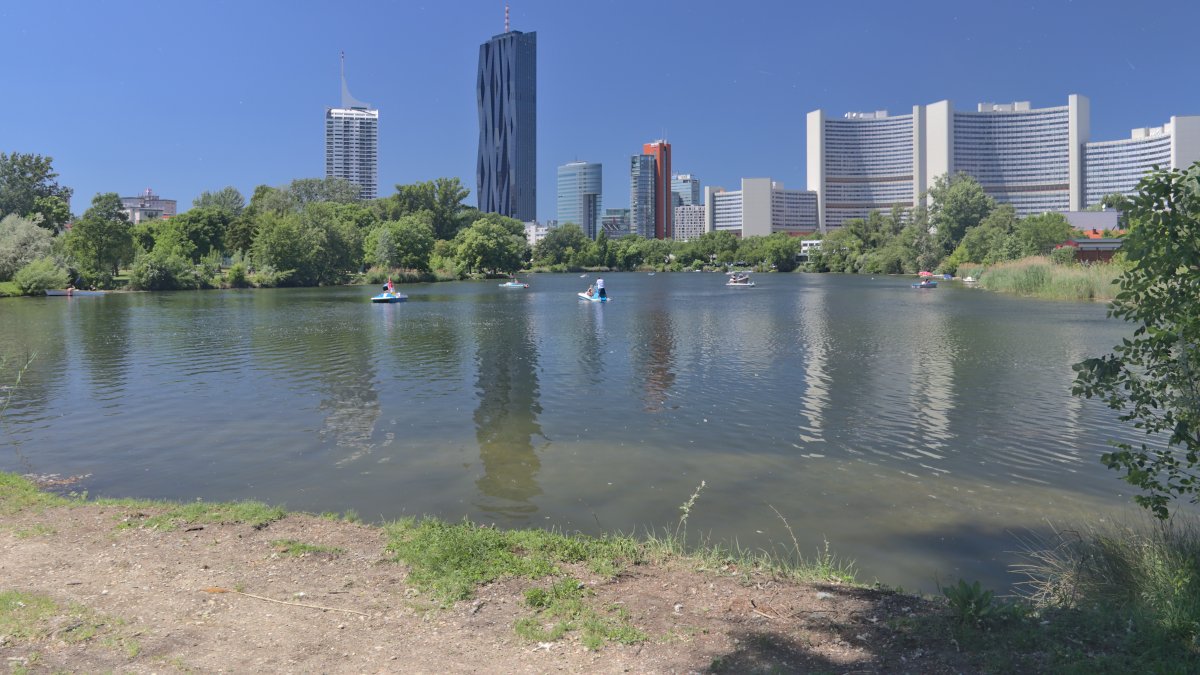
To understand why Russia invested in antennas on a plot of just a few hectares by the Danube, one need only look at a map. Vienna is home to the IAEA, which monitors the nuclear programs of UN member states; it is home to OPEC, which decides on global oil production limits; and it is home to the OSCE, which collects reports from the front line of the Russian-Ukrainian war. According to ORF, the installations could have intercepted data that these international organizations send via satellite internet — precisely through the operators toward which, according to Möchel's research, the antennas are oriented. ORF Wien ↗"Espionage is a security problem for Austria. This government has changed course and is acting against it consistently," said Austrian Foreign Minister Beate Meinl-Reisinger in a statement sent by her ministry to AFP. "We have made this unequivocally clear to the Russian side, particularly regarding the antenna array at the Russian mission. One thing is clear: it is unacceptable for diplomatic immunity to be abused to carry out espionage." According to her, Austria is also preparing to tighten its espionage laws. Moscow Times ↗
Moscow's reaction and comparison with neighbors
The Russian embassy in Vienna called the decision "scandalous" and "categorically unacceptable," accusing Austria of "purely political motives." Moscow threatened reciprocity — expelling Austrian diplomats and "further worsening" bilateral relations. The Russian side did not specify exactly what this would involve. Euronews ↗For Slovakia and Czechia, the whole story is also worth attention geographically. Bratislava is 60 kilometers from Vienna, Brno 130. Antennas oriented toward geostationary satellites at positions between 0° and 15° east longitude cover the traffic of organizations across the entire Central European region. Prague expelled 18 Russian diplomats in 2021 following the ammunition depot explosion in Vrbětice and has since kept the Russian diplomatic presence at a minimum. Bratislava expelled three Russian diplomats in March 2022 and simultaneously ordered a reduction of the Russian embassy's staff by a further 35 people. With the current expulsion, Austria has signaled that it does not consider Moscow's technical presence near UN City to be passive diplomatic infrastructure.
What hotinfo is watching
- Whether Moscow will follow through on its threat of reciprocity and expel Austrian diplomats, and if so, how many.
- Whether the Austrian parliament will actually pass the promised tightening of espionage laws — and when.
- Details of the DSN's 2026 Verfassungsschutzbericht, which may bring further data on Russian operations in Donaustadt.
- Whether the case will open a debate in Europe about the security of satellite communications of international organizations headquartered in Vienna.