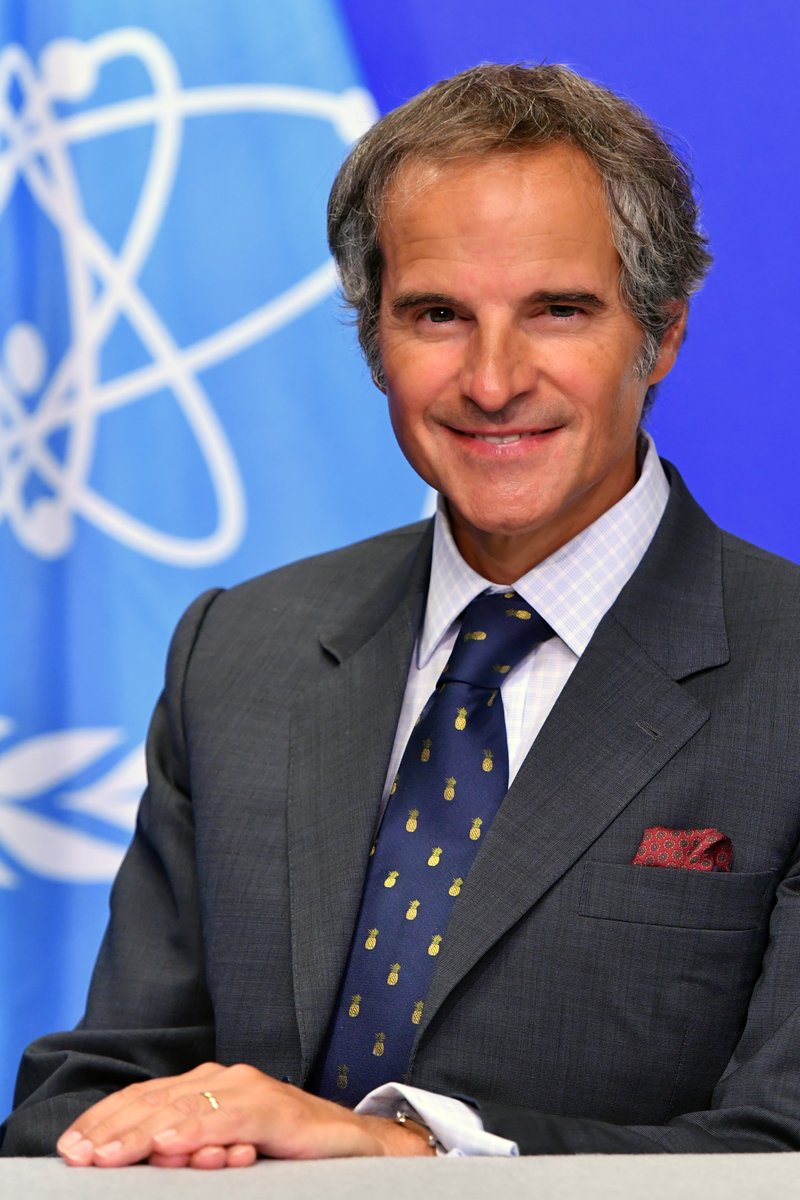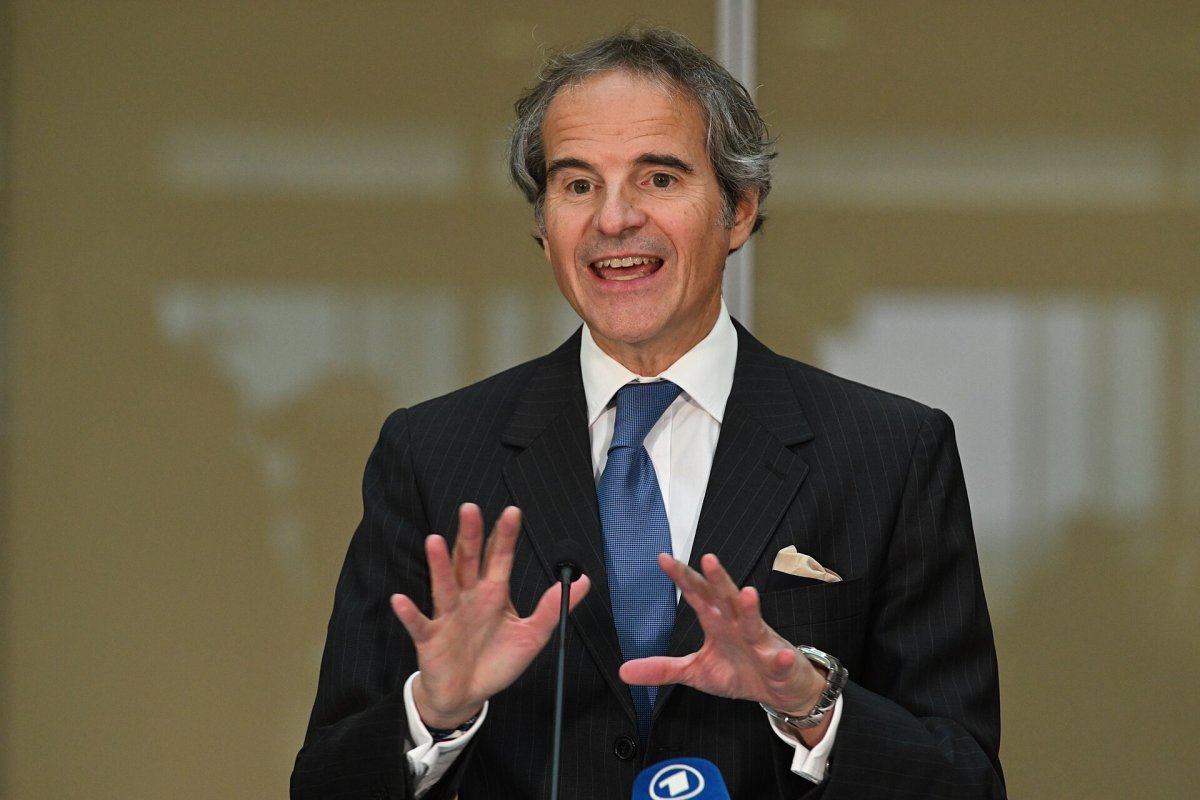

The hole measured 15 square meters, and across an additional roughly 200 square meters of panels, about 330 smaller openings were cut in; fires smoldered for more than two weeks. Statistically, almost nothing — in a war that measures damages in the billions daily. But ten months later, on December 5, 2025, IAEA Director General Rafael Grossi announced what Europe feared most: according to the agency's assessment, the NSC had lost its primary safety function, including its ability to seal off the space around the damaged reactor. World Nuclear News ↗
Four months later, on the eve of the 40th anniversary of the disaster itself, the repair is stuck on a question that has nothing to do with radioactivity: who will pay for it.
"Bauwerk für 100 Jahre, das keine zehn hielt"
That was the headline German magazine Spiegel used in its Saturday article marking the anniversary — "a structure built for a hundred years that didn't last even ten." The sarcophagus was built in 2019 for 1.5 billion euros, financed by a special fund of the European Bank for Reconstruction and Development (EBRD), to which Moscow had also contributed before the Russian invasion. It was meant to last until 2087, provided the original 1986 concrete sarcophagus could be dismantled under its roof in time. Spiegel ↗The French companies Bouygues and Vinci, which are now conducting a detailed damage assessment, speak of repairs in the range of roughly 500 million euros ($577 million). The Kyiv Post, after interviewing EBRD Vice President for Nuclear Safety Balthasar Lindauer, cites an even higher estimate — $585 million. Construction work is expected to begin at the end of 2027, with full functionality of the shell to be restored by 2030. That is an ambitious timeline for a site where dose limits for work at the top of the arch amount to only about eleven hours per worker per year — no one is permitted an annual dose higher than 20 millisieverts. Kyiv Post ↗
Of the half billion required, only 42.5 million euros had been pledged as of April 2026: 25 million from the European Union, 10.6 million from France, 6.9 million from Britain. The International Chernobyl Cooperation Account (ICCA), administered by the EBRD, holds roughly 70 million. The Ukrainian government separately allocated a further 31 million in February 2026, and in April transferred 30 million of that toward preparatory work. Adding it up: approximately 350 million euros are still missing. NucNet ↗
Greenpeace: four tons of radioactive dust
Serhii Tarakanov, appointed Director General of the Chernobyl Nuclear Power Plant in September 2025, describes the problem precisely. "If it is hit directly by another missile or drone, or if one lands nearby, it will trigger a mini-earthquake in the surrounding area. No one can guarantee you that the shelter will remain standing after that. That is the main threat." SCMP/AFP ↗Beneath the NSC still stands the original 1986 concrete sarcophagus — a makeshift structure whose official service life runs until October 31, 2029. "If the concrete shelter collapses, a radioactive cloud will rise. As we learned in 1986, radiation knows no borders. The wind will carry these transuranic elements across the whole of Europe," Tarakanov told AFP. Greenpeace, which independently scanned the interior space after the attack, estimates the contents at four tons of highly radioactive dust, fuel pellets, and other contaminants. Euronews ↗
The British consulting firm McKenzie Intelligence Services carried out a forensic analysis of the drone's flight path; its findings were summarized by Ukrainska Pravda following supplementary analysis by Greenpeace. According to the analysis, the Shahed flew at an altitude of about 85 meters, out of reach of air defenses, using preset GPS coordinates accurate to within 10 to 15 meters. "Almost certainly deliberate targeting," the British report concluded. Kremlin spokesman Dmitry Peskov stated that "our military does not do this." That night, 133 Russian drones flew over Ukraine, of which Ukraine's Air Force shot down 73. Ukrainska Pravda ↗
Half a billion in the shadow of the Midas case
The attack on the sarcophagus, however, is not the only problem facing Ukraine's nuclear infrastructure that donors are weighing. On November 10, 2025, Ukraine's anti-corruption agency NABU launched operation "Midas" — a fifteen-month investigation, built on a thousand hours of wiretaps, which uncovered a system of bribery within the state nuclear company Energoatom. OSW ↗According to NABU, the scheme worked simply: every Energoatom supplier had to hand over a 10 to 15 percent kickback from the value of their contract. Those who did not pay lost both payments and their place on the list of approved suppliers. Around $100 million flowed through money laundering in central Kyiv. NABU names Tymur Mindich — a businessman and co-owner of Zelensky's production company Kvartal 95 — as the head of the organization; he left Ukraine hours before the raid. Former Energy Minister Herman Halushchenko, who appears on the recordings under the nickname "the Professor," had his home searched by NABU on the same day; he was not formally charged with participation in the corruption scheme until February 16, 2026. The state-owned Energoatom operates all four of Ukraine's nuclear power plants and produces more than half of the country's electricity. Ukrajinská pravda ↗
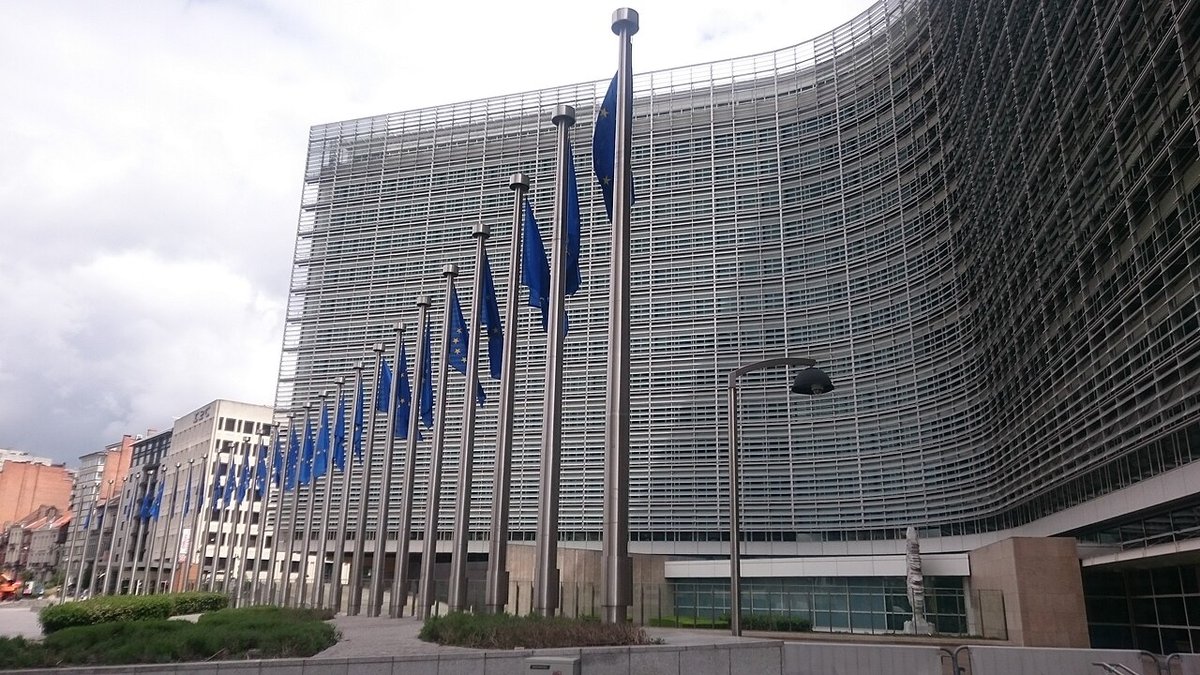
The EBRD and the EU, in approving aid for Chernobyl, now face a question that did not exist before February 14, 2025: if Ukraine is running a hundred-million-dollar kickback system in its nuclear sector, how will donors proceed with another half a billion? Operation Midas does not directly involve Chernobyl — the sarcophagus is managed by a separate entity, and financial flows are controlled by the EBRD — but politically, the bill is being tallied by the same taxpayers in Berlin, Paris, and Brussels.
Munich, 85 meters, and a question not yet asked
The attack on February 14 came hours before the opening of the Munich Security Conference, where the Trump administration first publicly distanced itself from the European framework of support for Ukraine. Polish Foreign Minister Radosław Sikorski responded that the attack strengthened the case for bolstering Ukraine's air defenses — "in our own interest, because in 1986 the cloud threatened us too." If Washington loses interest in paying for nuclear safety in Ukraine as well, the bill will not disappear — it will simply move closer to Europe.The Kremlin remains silent on the question of who in the Russian command approved the attack. The European Commission remains silent on the question of whether the original bill should be paid from frozen Russian assets. And the original director of the plant in 1986 — Viktor Bryukhanov, sentenced in 1987 to ten years for gross violation of safety regulations — was buried in Kyiv four years ago. The Moscow Times ↗
Forty years after the explosion, Chernobyl is not meant to recall 1986. It recalls something more current — that one of the most important safety structures in post-war Europe can be breached by a drone costing fifty thousand dollars, and that the bill for it may then also return to the Slovak taxpayer.
What hotinfo is watching
- The EBRD raises further tranches — whether more donors (Germany, Norway, Canada, Italy, Belgium) join beyond the pledged €42.5m
- Construction work starts in late 2027 — whether the timetable holds
- Full functionality of the shelter by 2030 — checks on tightness and corrosion
- Operation Midas: further charges around Mindich and Halushchenko, and the effect on donor sentiment
- A second hit — if a drone or missile were to strike the NSC before the repair, escalation (Tarakanov: "a mini-earthquake")
- Debate on financing it from frozen Russian assets (~€200bn in Europe)
- News about the Russian command that approved the attack (the Kremlin denies it so far)