

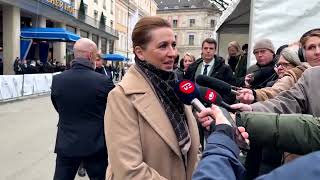
Danish Prime Minister Mette Frederiksen won the parliamentary elections on Tuesday, but with the Social Democrats' worst result in more than 120 years. Her government subsequently resigned, and King Frederik X tasked her with leading negotiations to form a new cabinet. Ahead of her lie complex coalition negotiations that will decide who will govern — and indirectly also the direction of Danish Arctic policy at a time of ongoing talks with Washington about Greenland's security.
The Social Democrats received 21.9 percent of the vote and 38 seats in the 179-member Folketing — a drop of 12 seats compared to the 2022 election, when they had 27.5 percent. The left-wing bloc took a total of 84 seats, the right-wing bloc 77. A majority requires 90. Al Jazeera ↗
The second-strongest party became the Green Left (Socialistisk Folkeparti) with 20 seats and 11.6 percent of the vote, an increase of five seats. The Danish People's Party recorded a dramatic comeback, tripling its share from 2.6 to 9.1 percent and winning 16 seats. Its leader Morten Messerschmidt called the result historic. At the opposite end of the spectrum, Inger Støjberg's Denmark Democrats fell by four seats to ten. Voter turnout reached 83.7 percent. Wikipedia ↗ The Local Denmark ↗
The key to forming a government lies with the Moderates of Foreign Minister Lars Løkke Rasmussen, who hold 14 seats. Rasmussen, a former prime minister and centrist politician, refused to be placed in either bloc. "Stop talking about borders... we are in the middle," he declared on election night. Without the Moderates, virtually no stable government can be formed. At the same time, Defense Minister Troels Lund Poulsen of the Liberal Party clearly rejected joining a coalition with the Social Democrats, narrowing Frederiksen's room to maneuver. NBC News ↗ The Local Denmark ↗
Despite being weakened, Frederiksen showed determination to continue. "Denmark needs a stable government, a competent government. We are ready to take the lead," she said. One possible scenario is a center-left coalition of the Social Democrats with the Green Left and the Social Liberals, with the support or participation of the Moderates. However, the negotiations will be complex and may take weeks. NBC News ↗
Frederiksen called the early election in February with the aim of capitalizing on the support she gained through her firm stance against Trump's claims on Greenland. Paradoxically, the issue of Greenland — despite rising geopolitical tension — was not among the main topics of the campaign. "This issue was not among the decisive ones," NBC News quoted a Danish political scientist as saying. Voters were primarily concerned with the cost of living, migration, and pensions. NBC News ↗ Al Jazeera ↗
The election result will nevertheless have an impact on the ongoing negotiations over Arctic security. US Secretary of State Marco Rubio announced in late January the start of technical talks between the US, Denmark, and Greenland on an Arctic security agreement. The Danish Ministry of Foreign Affairs stated that the negotiations focus on "how to address American security concerns in the Arctic while respecting the kingdom's red lines" — that is, Greenland's sovereignty. ABC News ↗
Whatever the coalition ends up being, Denmark continues its massive armament for the Arctic region. In October 2025, the government approved an increase in defense spending of 27.4 billion Danish kroner ($4.26 billion), including two Arctic vessels, a new command headquarters, and patrol aircraft. It also ordered 16 additional F-35 fighter jets for $4.5 billion. The chief of the armed forces, General Michael Wiggers Hyldgaard, admitted in February that spending at the level of 1.5 percent of GDP is not enough — the target is 3.5 percent, far exceeding NATO's two-percent commitment. Al Jazeera ↗ Jane's ↗
For Europe, the outcome of the Danish election is a test of stability in turbulent times. Frederiksen has been one of the most prominent voices for European defense autonomy. Her weakened position in parliament could complicate the implementation of an ambitious security agenda — at a time when Europe's security architecture is rapidly changing.
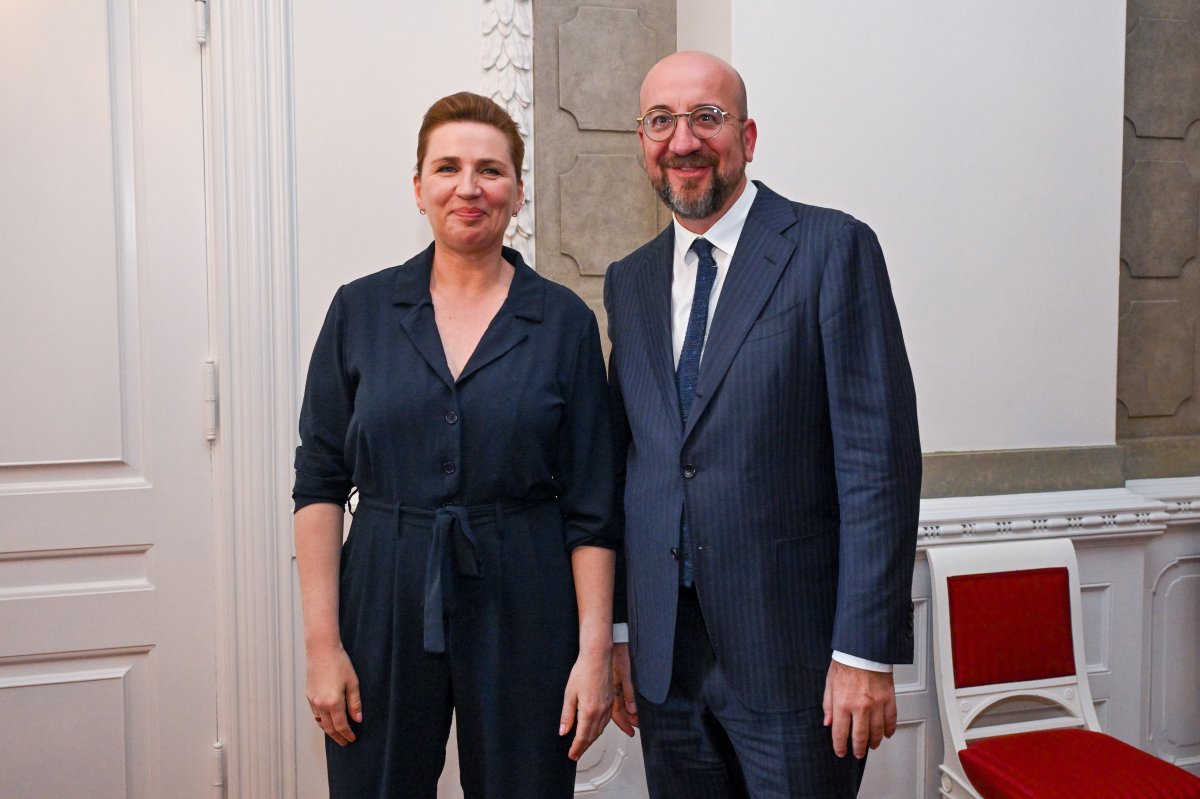
Danish elections and Greenland's future: Frederiksen weakened, but tasked with forming a government
🔥 You might also like
📰
World Politics
Frederiksen's Social Democrats win Danish election but lack a parliamentary majority
Prime Minister Mette Frederiksen's Social Democrats won Tuesday's parliamentary elections in Denmark, but the party failed to secure a majority...

European Union
What Europe is reporting: Israel closes British consulate in Jerusalem, Trump spoke with Putin by phone, disruption grounds British airports
Israel closed British consulate retaliating for trade ban. Trump spoke with Putin for an hour. Disruption grounded ten British airports. Overview from 37 countr …
📰
World Politics
Frederiksen to form new center-left government in Denmark
Danish PM Mette Frederiksen announced that after long negotiations she will form a new center-left government. The Social Democratic Party leader thus retains.. …
Geographic locations


From our newsroom original
All →
Amodei calls for slowing AI development, Trump dismisses the risks
Orbán filed a criminal complaint against Szijjártó over flights
Milan Kováč becomes new member of the National Council of the Slovak Republic
Hungary to open state security files, no one voted against. First batch on October 20 will show network records, not agent reports
Telenor allegedly gave the junta customer data, police say. It faces accusations of possible complicity in crimes against humanity
France wants Usmanov off the sanctions list in exchange for detainees. The EU extended the deadline by only seven days, and the six-month compromise fell through too
What Czechia is writing about: Babiš and Pavel finally met at the Castle, Macinka was absent. Brussels revealed family ties in Agrofert's trust fund
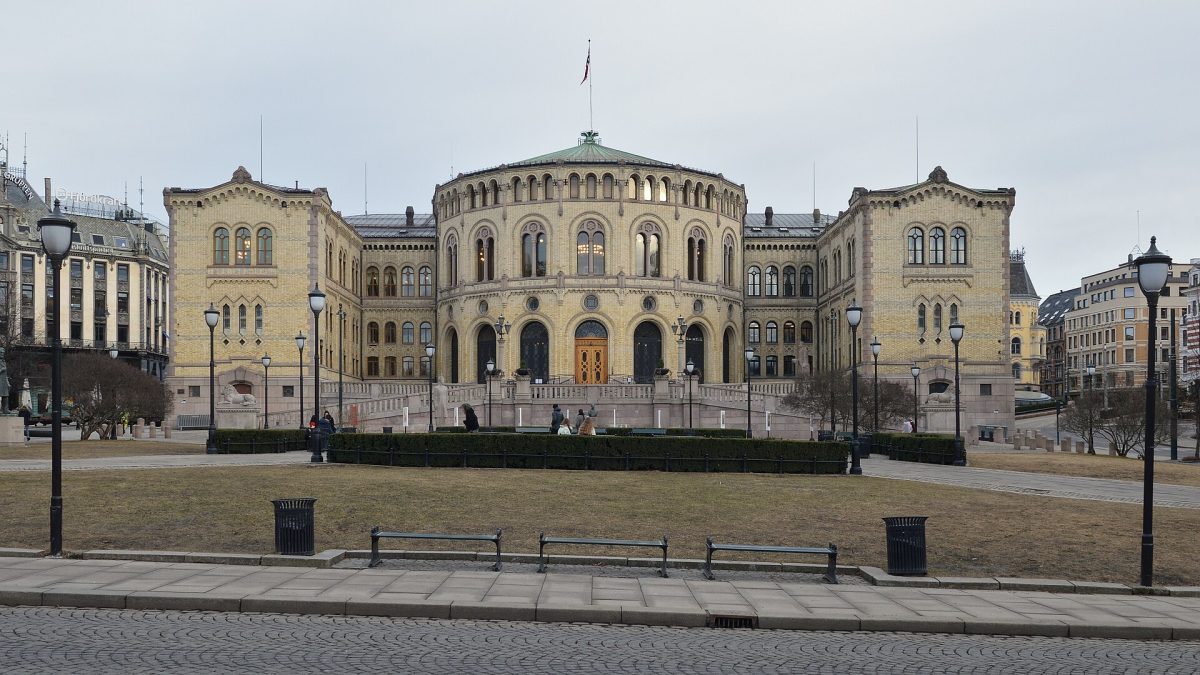
The website of Norway's parliament went down for 80 minutes. It was inaccessible from most of the world for nearly four hours after Oslo reported a return to normal