


Key actors — tap for context

Kathryn Thirlwall
A Court of Appeal judge for England and Wales who led the public inquiry into events at the Countess of Chester Hospital.
Why here: Her report identified a “complete failure” to protect babies and issued seventeen recommendations for the National Health Service.
More info →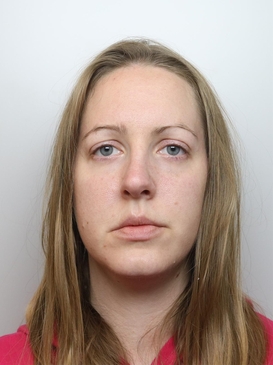
Lucy Letby
A former neonatal nurse convicted by a court of murdering seven babies and attempting to murder seven more. She denies the offences.
Why here: The inquiry proceeded on the assumption that she was guilty; in parallel, her conviction is being reviewed by the Criminal Cases Review Commission.
More info →
Countess of Chester
A hospital in north-west England where the events of 2015 and 2016 took place in its neonatal unit.
Why here: The report criticises its management for “dysfunctional leadership” and an almost two-year delay in calling the police.
More info →
Vera Baird
A lawyer, former Solicitor General and Victims’ Commissioner, now interim chair of the Criminal Cases Review Commission.
Why here: Her commission is deciding whether to refer Letby’s case back to the Court of Appeal.
More info →
Yvette Cooper
The British Secretary of State for Health and Social Care since July 2026 in Prime Minister Andy Burnham’s government.
Why here: She apologised for the failings, promised a full government response within six months and announced a unit to monitor the recommendations, as well as a new commissioner for maternity and neonatal care.
More info →Mark McDonald
A barrister who has represented Lucy Letby since August 2024.
Why here: He says the inquiry was based on a mistaken premise. Two experts withdrew from his team because of its strategy.
Ian Harvey
Medical director of the Countess of Chester Hospital at the time of the events.
Why here: According to the report, he tried to “control the narrative” and ensured that only documents supporting his version were seen.
Tony Chambers
Chief executive of the Countess of Chester Hospital at the time of the events.
Why here: The report describes him as dictatorial towards doctors; under his leadership, the hospital contacted the police only in May 2017.
Petr Zelenka
A Czech healthcare worker from Havlíčkův Brod who received a life sentence in 2008 for seven murders and ten attempted murders of patients with heparin.
Why here: He serves as a Central European comparison for how long the journey from suspicion to police involvement can take.

NHS England
The governing body of England’s National Health Service, which is due to be abolished and merged with the Department of Health.
Why here: It is to submit a plan for cameras over cots by 31 March 2027—and is itself due to disappear a month later.
More info →John Gibbs
A consultant paediatrician who worked in the Countess of Chester Hospital’s neonatal unit throughout 2015 and 2016 and was among the doctors raising concerns about the deaths.
Why here: After the report was published, he spoke out for the first time, accepted the consultants’ collective responsibility and apologised to the families.
Tamlin Bolton
A lawyer from Irwin Mitchell representing seven families affected by Lucy Letby’s offences.
Why here: She places responsibility for the delay in calling the police “squarely on the hospital’s chief executives”.
Care Quality Commission
The British regulator for health and social care, established in 2009, which inspects hospitals and care providers.
Why here: It inspected the hospital in February 2016 and admitted that it had not been sufficiently inquisitive at the time.
More info →
Nursing and Midwifery Council
The statutory regulator of nurses and midwives in the United Kingdom, maintaining their professional register.
Why here: It renewed Letby’s registration when she was already barred from working on the unit and a police investigation was under way. It apologised for the criticism.
More info →
Wes Streeting
The British Secretary of State for Health and Social Care from 2024 until his resignation in May 2026, and a Labour Party member.
Why here: Twenty-four experts asked him to suspend the inquiry or expand its terms of reference to include the possibility of a miscarriage of justice. He did neither.
More info →
Steve Barclay
A British Conservative politician who held several government posts between 2018 and 2024, most recently as health secretary.
Why here: He established the inquiry in 2023 and based its terms of reference on the assumption that Letby was guilty.
More info →Andrew Malkinson
A Briton whose 2004 conviction for rape in Salford later proved to be a miscarriage of justice.
Why here: The report on his case was published two months before the Thirlwall inquiry opened and criticised the justice system’s reluctance to admit its own mistakes.
More info →Chris Henley
A British King’s Counsel who authored the report on Andrew Malkinson’s wrongful conviction.
Why here: He criticised the British justice system for a "deeply ingrained cultural reluctance" to accept that it sometimes convicts an innocent person.
Three babies might have survived
The report’s starkest finding is its accounting of lost time. Thirlwall concluded that three children might have survived and seven more might have been protected if the hospital management had acted when doctors first raised the alarm. These are not two separate figures to be added together, but two possible intervention points, with the earlier one encompassing the later. If Letby had been removed from the unit as early as October 2015, two of the triplets referred to as babies O, P and Q would, in her view, not have died in June 2016, and five other children would not have suffered harm. If action had been taken as early as August 2015, after an undetected case of insulin poisoning, three more children would have been added to the total—the two-month-old baby I, who died in October, and two children with unexplained collapses. One of them, a girl identified as G, is now eleven, has lifelong brain damage and needs round-the-clock care. The Guardian ↗Read also: What Europe is writing about: Trump announces an energy truce, AI sparks panic, drone over Lithuania
The warning signs came early. In June 2015, three children died on the unit in less than two weeks—as many as normally died there in an entire year. Yet no one assessed them as a series. In August 2015, a fourth child, identified as E, died. His twin F survived insulin poisoning—and it was precisely his laboratory result that became a missed opportunity. According to the report, a doctor anonymised as ZA accepted that the insulin might have come from outside the body and checked whether anyone had prescribed it, but did not investigate further or alert colleagues. Had she done so, a child-protection measure should have followed. The hospital management contacted the police only in May 2017, almost two years after the June spike in deaths. BBC News ↗
Doctors who raised concerns found themselves under investigation
This section has the greatest relevance beyond Britain. The report states that senior nurses never accepted the doctors’ objections and that management focused on the hospital’s reputation. It accuses medical director Ian Harvey of trying to “control the narrative”—he ensured that only documents supporting his version reached the table and, when necessary, wrote them himself. Chief executive Tony Chambers, it says, behaved dictatorially towards doctors, and presentations to the board were an “exercise in distortion”. When Letby complained about the hospital’s conduct, it was the doctors who came under investigation: three consultants were expected to apologise to her, and her return to the unit was initially being prepared. The chair of the panel considering her complaint described the allegations against Letby as a “witch hunt”. Chester Standard ↗The report speaks of “toxic negativity” that still discourages people in the NHS from speaking out, even though whistleblower protections have been strengthened over the past decade. It adds a sentence that lies at the heart of the entire report: apparently no one understood that child-protection action is needed as soon as an employee is suspected of deliberately causing harm—not only once those around them are certain of their guilt. Suspicion is enough. The NHS still does not have a national protocol for suspected deliberate harm, although schools and social services have had one for years. Nursing Times ↗
On the day of publication, one of those doctors spoke out for the first time. Consultant paediatrician John Gibbs, who worked on the unit throughout 2015 and 2016, told the BBC that the report is "grim reading" and that consultants must share part of the responsibility collectively. "I wish we consultants had been brave enough to follow our suspicions and escalate things to the police earlier," he said. "When I say, 'we consultants', I am responsible as well and if my other consultant colleagues didn't go to the police, I should have." He apologised to the families, saying the consultants had failed the babies. Tamlin Bolton of Irwin Mitchell, representing seven families, placed the emphasis elsewhere: according to her, two senior consultants raised legitimate concerns that went unanswered, and were "bullied, threatened and marginalised" for doing so. She saw another opportunity to intervene on every page of the report, and said responsibility for the delay in contacting the police lay "squarely with the chief executives". BBC News ↗ BBC News ↗
A large part of the report is about the system, not the hospital
The section that was overshadowed by the cameras on the first day is in fact the most extensive. More than two hundred pages—roughly a third of the report according to the BBC—deal not with the hospital in Chester but with what allowed the failure to go undetected for so long in England’s health service. One witness called it "blame engineering"—according to the inquiry, managers are preoccupied with avoiding blame, which leads to "over-focus on process and reputation management". The report also describes what happens to failing managers: they are moved elsewhere, in a process witnesses called rehabilitation, which according to the evidence NHS England itself often actively facilitates. Some receive severance pay and leave "with few questions asked", because hospital trusts fear employment tribunals. Chief executive Tony Chambers had his own word for the practice, "the donkey sanctuary". The government wants to introduce a register that would ban failing managers from holding office, but the inquiry warns that it will be toothless if the system continues to turn a blind eye. In its final submission, NHS England said it would never move problematic managers to other positions "knowingly", but considers moving capable leaders a way to improve services where necessary. BBC News ↗Regulators failed too, and one of them can be summed up in a single sentence. The Nursing and Midwifery Council renewed Letby’s registration when she was already barred from working on the unit and a police investigation was under way. It apologised for the criticism. The Care Quality Commission inspected the hospital in February 2016, while Letby was still attacking babies — her offences continued until June that year. The regulator admitted that it had not been sufficiently inquisitive at the time, although it says it has strengthened its approach since then. An independent review had already warned in 2024 that its ability to detect poor performance was deteriorating. BBC News ↗
The report did not assess guilt. And in the same week, the defence team fell apart
The inquiry proceeded from the outset on the assumption that Letby was guilty, and last year Thirlwall rejected proposals from her lawyers and four hospital managers to suspend it until the Criminal Cases Review Commission had ruled on the matter. “I focused on the questions set out in the inquiry’s terms of reference, not on Lucy Letby’s guilt or her conviction,” she said when presenting the report. Meanwhile, the commission has been assessing for eighteen months material from an international panel of experts who say the medical evidence for the murders does not stand up. Its interim chair Vera Baird said the commission would read the report with interest and assess whether it had any bearing on its own review of the case. The Guardian ↗The day before the report was published, however, a blow came from the other side. Two experts withdrew from the defence team—British chemical engineer Helen Shannon and New Zealand bioengineering professor Geoff Chase, authors of a hundred-page analysis that challenged two insulin-poisoning convictions. They did not change their own conclusion: they continue to say that poisoning was “very unlikely” in those two children. But they rejected some of the further arguments advanced by the defence in the insulin cases. In a letter to the commission, they wrote that they could not support them as scientifically credible and that they had “fundamental insurmountable problems”, while barrister Mark McDonald’s strategy exposed the long-term interests of his own client to “serious, unnecessary and unacceptable risk”. McDonald disagrees, saying the case does not stand or fall on a single expert and that the strength of the new evidence lies in its breadth and consistency across disciplines. The Guardian ↗
The camera plan is to be submitted by a body due to disappear a month later
The third striking feature of Tuesday’s events is the addressee and its calendar. Most deadlines in the recommendations fall on 31 March 2027. By then, hospital trusts are to introduce board-level monitoring of all child deaths and meet requirements for controlling access to insulin; until biometric security is in place, they are to install cameras recording for at least 28 days in refrigerators containing it. Cameras above cots are different: by the same date, NHS England is merely to submit a plan for introducing them. The abolition of NHS England and the transfer of its powers to the Department of Health are, according to the government, to be completed by April 2027—one month after the deadline by which that same organisation is to submit the plan. The bill is currently before Parliament, and it is not even certain that the abolition will ultimately pass. Thirlwall Inquiry ↗ Institute for Government ↗Thirlwall said so herself: after NHS England is abolished, it is unclear which body will assume responsibility, and she is not reassured. She criticised successive governments for an “inexcusable” failure to implement reforms proposed by similar inquiries over the past thirty years. There is concrete support for this criticism: the Care Quality Commission inspected the hospital in February 2016 and was kept from key information—but the report also criticises it for not asking further questions, although the Morecambe Bay investigation into neonatal deaths had already urged it to take a stricter approach. Health Secretary Yvette Cooper told MPs that she was “deeply sorry” about the failings, promised a full government response within six months and described cameras above cots as something the authorities were preparing urgently. The Guardian ↗ Her promise includes two specific steps announced in the House of Commons: a unit will be created to monitor implementation of the inquiry’s recommendations, and a new post of commissioner for maternity and neonatal care will be established. She told MPs she "will not hesitate" to hold the system to account at every level and that this must be a "turning point" for the NHS. BBC News ↗
How long it took next door
Central Europe has its own measure of the time between suspicion and police involvement. In 2006, healthcare worker Petr Zelenka administered heparin to patients in the anaesthesia and intensive care department in Havlíčkův Brod. The department head uncovered the pattern. The hospital terminated his employment at the end of September, but did not file a criminal complaint until mid-October, and police arrested him on 1 December—by then he was already working in surgery in Jihlava. In 2008, he received a life sentence for seven murders and ten attempted murders. The journey from suspicion to the police therefore took weeks, not years. Even so, he managed to start work elsewhere. Aktuálně.cz ↗Limits of this perspective
The report is a document with clearly defined terms of reference, not a judgment. It does not assess the evidence on which the conviction rests and proceeds on the basis that it stands—a premise its critics, including Conservative MP David Davis, consider mistaken. Davis speaks of a miscarriage of justice, while McDonald says that errors from the trial were repeated in the conclusions. On the other hand, the Court of Appeal has rejected Letby’s applications twice and the Criminal Cases Review Commission has not yet decided. Until it does, the conviction is final. The withdrawal of the two experts is not a verdict on guilt either—both continue to stand by their conclusion about insulin, and their dispute concerns other arguments advanced by the defence in the same cases.The Guardian’s analysis adds cost and chronology to that criticism, strengthening it. The inquiry cost eighteen million pounds and was established in 2023 by then Health Secretary Steve Barclay on the assumption that Letby was guilty. After the Labour government came to power in 2024, twenty-four experts wrote to his successor Wes Streeting asking him to suspend the inquiry or expand its terms of reference to include the possibility of a miscarriage of justice. He did not. In her opening speech in September 2024, Thirlwall herself described criticism of the convictions as "a huge outpouring of comment" and "all of this noise", which she said caused pain to bereaved parents. Two months before her inquiry opened, Chris Henley’s report on Andrew Malkinson’s wrongful conviction for rape was published, and it criticised the British justice system for a "deeply ingrained cultural reluctance" to accept that it sometimes convicts an innocent person. The Guardian ↗
The criminal strand outside Letby’s case also remains open: three former hospital managers were arrested last year on suspicion of gross-negligence manslaughter, and according to police one of them also faces suspicion of perverting the course of justice. The investigation is continuing alongside parallel proceedings concerning the hospital’s responsibility as an organisation. Police have not released the names of the three people arrested. RTÉ ↗ The former directors named in the report commented on it publicly for the first time in a joint statement. They said they were reviewing the findings and recommendations, but while investigations are ongoing and the Criminal Cases Review Commission has not completed its work, they considered further comment inappropriate. "Our thoughts remain with the families affected by the tragic events that took place at the Countess of Chester Hospital," they said. BBC News ↗
What hotinfo is watching
- The government published its full response to the seventeen Thirlwall recommendations.
- The Criminal Cases Review Commission decided whether to refer Lucy Letby's case back to the Court of Appeal.
- English hospitals received a national Suspicion of Deliberate Harm protocol.
- NHS England set out its roadmap for in-cot cameras by 31 March 2027.
- The investigation into three former Countess of Chester managers ended in charges or was dropped.
- The government has set up the hub tracking implementation of the recommendations and filled the new maternity and neonatal commissioner post.
- The barring service preventing failed NHS managers from holding office has come into force.