



Key actors — tap for context

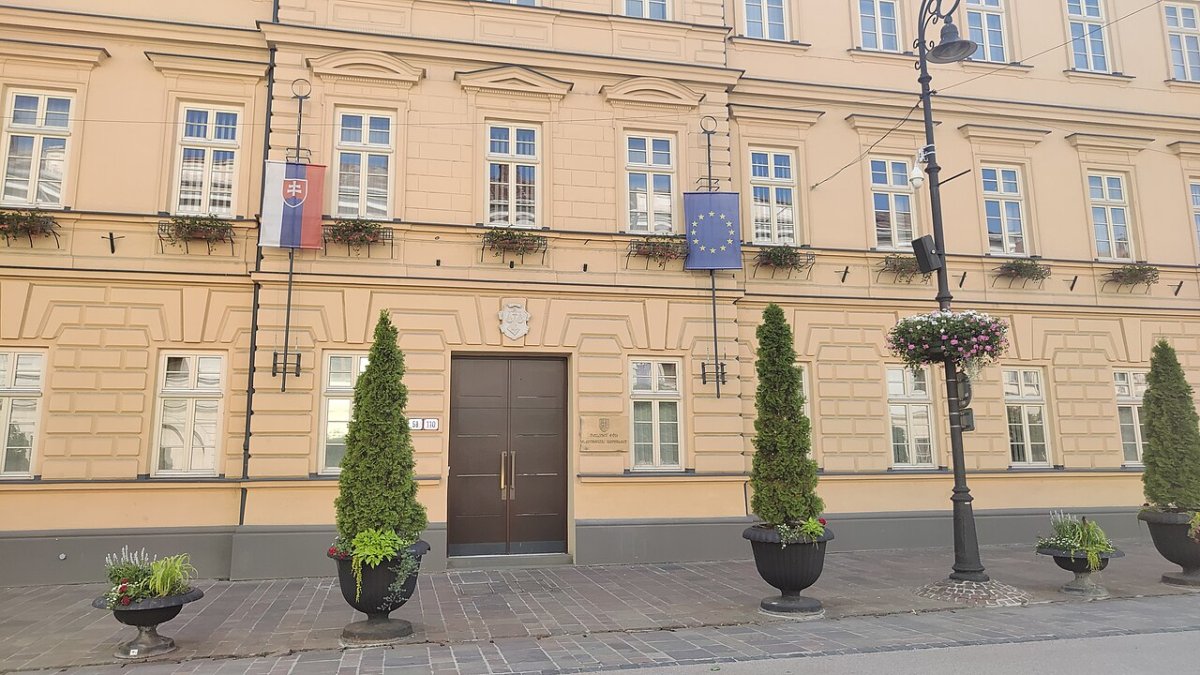
Tomáš Drucker
Minister of Education, Research, Development and Youth for Hlas-SD, formerly minister of health and interior.
Why here: His ministry drafted the proposal and submitted it for government discussion.
More info →
Samuel Migaľ
Minister of Investments, Regional Development and Digitalization. He entered parliament for Hlas, was expelled by the party in January 2025, and took over the ministry as an independent, formally on Smer's nomination quota.
Why here: He called the proposal bad and claims Drucker sent it to the government without his ministry.
More info →
Australia
A federal state that on December 10, 2025, became the first in the world to ban social media for children under 16.
Why here: It is a country where such a ban has been in place the longest, so the first measurements come from it.
More info →
France
A country whose parliament approved in July a ban on social media for children under 15.
Why here: Its Constitutional Council struck down this ban on August 14, and the decision rests on arguments that may apply to the Slovak proposal as well.
More info →
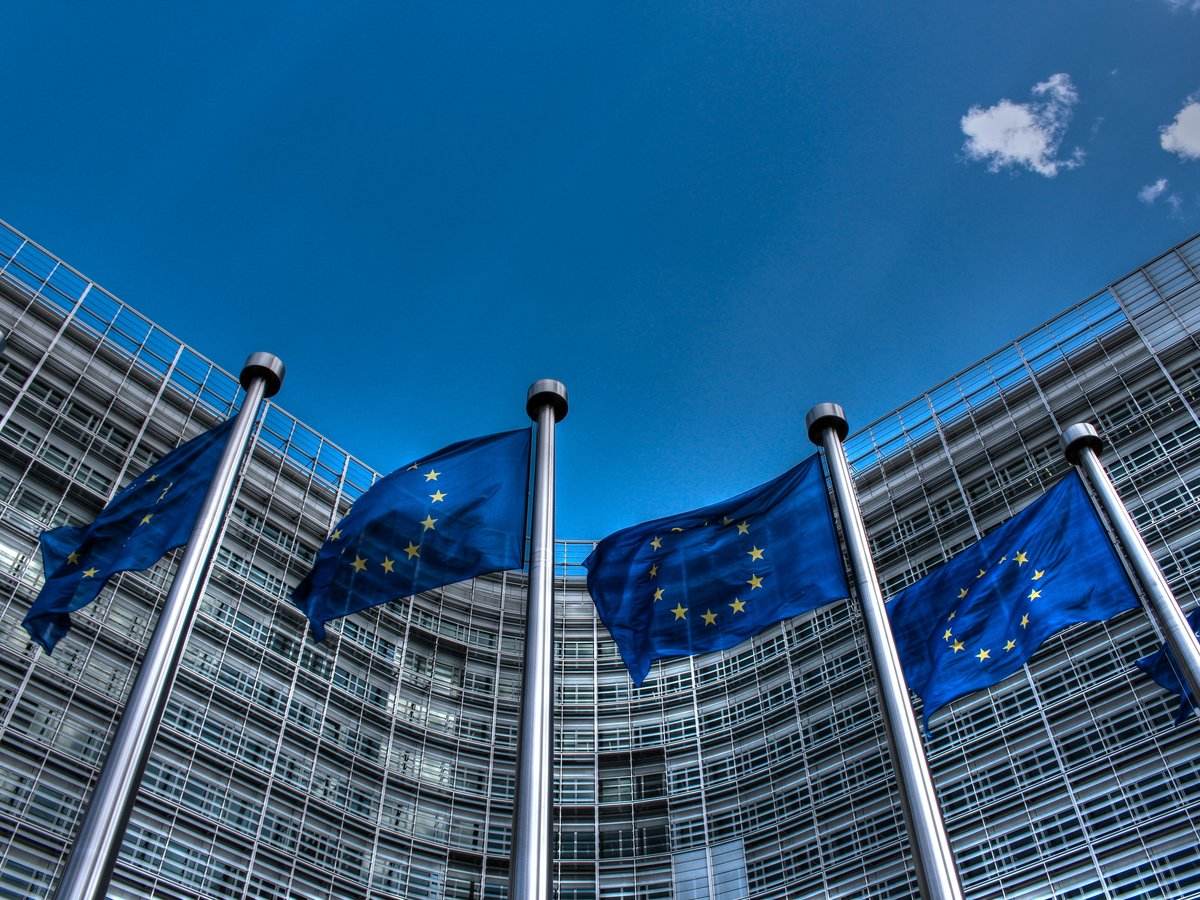
European Commission
The executive body of the European Union that enforces the Digital Services Regulation.
Why here: It prepared a joint age verification tool on which the Slovak proposal relies, and is also investigating Meta.
More info →
Meta
An American company that owns Facebook, Instagram and WhatsApp.
Why here: The Commission preliminarily found that its addictive design violates European law, and in the USA it agreed to a billion-dollar settlement.
More info →Arcom
The French audiovisual and digital communications regulator.
Why here: It was to enforce the ban and impose fines, but lawmakers struck this power from the final text before the Constitutional Council's decision.
Constitutional Council
A French body that assesses the compliance of laws with the constitution, the equivalent of the Slovak Constitutional Court.
Why here: On August 14 it struck down the article that banned social media for children under 15.

New Zealand
An island nation in the Pacific Ocean.
Why here: The ruling party there this week presented its own proposal for a ban for those under 16.
More info →Andrew Leigh
An Australian economist and Member of Parliament who serves as an assistant minister in the Labor government.
Why here: He defended the ban even after data showed its weak enforcement.
Jens Baas
Chairman of the board of German health insurer Techniker Krankenkasse, which commissioned the survey.
Why here: Despite its own findings, he opposed a blanket ban.
Techniker Krankenkasse
Germany's largest public health insurer.
Why here: It commissioned a survey according to which most German teenagers want the ban.
Lilli Bertholdová
Deputy secretary-general of the German federal student conference.
Why here: She called the ban only a last resort for German schoolchildren.
Thomas Regnier
Spokesperson of the European Commission for digital matters.
Why here: He confirmed that the Commission is in continuous dialogue with Meta about its addictive design.
Yasmin Londonová
Expert on online safety at Qustodio, a company that makes parental control tools.
Why here: Her company measured the return of Australian children to social networks and admits that restrictions simply don't work.
Qustodio
A company developing parental control software that collects data on children's app usage.
Why here: Its measurement is the source of the latest Australian figures.
What's Actually in the Proposal
The age limit is not a standalone law. It is part of a bill on an integrated system for protection against radicalization and mobilization to violence, which, besides it, introduces a national coordinator, a Council of the Integrated System, regional coordinators, and accreditation of prevention and de-radicalization programs. The ministry justifies the 16-year limit with developmental psychology and neuroscience, according to which early and middle adolescence is a phase in which children are more vulnerable to algorithmic content recommendations, manipulative practices, and radicalization narratives. Co-managers are the ministries of labor and interior. STVR ↗More important than the limit itself is the verification mechanism, because that's where bans break elsewhere. According to the proposal, the service provider is to receive only information about whether the age condition is met or not, without any other identification data. The entity that verifies age, in turn, is not to learn which service the verification was for. The ministry recommends using the European digital identity framework tool for this. Živé.sk ↗
This is not a Slovak invention. In the spring, the European Commission made available its own age verification application, built on cryptography capable of confirming a fact without revealing identity, and is asking member states to ensure all citizens have access to it by the end of 2026. Among the first countries adapting it are France, Denmark, Greece, Italy, Spain, Cyprus, and Ireland. Slovak implementation in 2027 thus comes only after the deadline by which the European infrastructure is to exist. European Commission ↗
French Ban Struck Down by Constitutional Court
The French parliament approved a ban for children under 15 on July 21 and was to apply to new accounts from September 1. However, from the final text in the joint committee, the obligation for platforms to verify age disappeared, as did the authority of the regulator Arcom to impose sanctions that could reach up to three percent of global revenue. Thus the law pronounced a ban, but effectively shifted the obligation from platforms to minor users. Tech Policy Press ↗It never came into effect. The Constitutional Council, by decision number 2026-911 DC of August 14, struck down the article introducing the ban due to conflict with freedom of speech and communication under Article 11 of the Declaration of the Rights of Man and of the Citizen and protection of privacy under its Article 2. Conseil constitutionnel ↗
What matters is why. The goal did not bother the Constitutional Council; it explicitly acknowledged the protection of the child's best interests and prevention of disruption to public order as legitimate. It was the construction that troubled it. According to it, the ban contained no condition tied to the functions or content of a specific service and applied to all minors regardless of the child's situation or risks inherent to each individual service. According to it, the ban could also apply to online communication services where risk to the health and safety of minors has not been demonstrated, and did not account for age, family situation, or the child's level of maturity. The second objection is that the text did not at all regulate under what conditions parents could lift the ban in the child's interest, limit its scope, or allow access to certain services. Conseil constitutionnel ↗ On July 23, members of the Unbowed France movement appealed to the Constitutional Council. franceinfo ↗
Both objections point to what the Slovak proposal also has. It too sets a single threshold for all online social network services without distinguishing according to what the service does. That is by the way exactly Migaľ's objection about EduPage, just stated in legal language. And in the published description of the material, the mechanism of parental consent is not mentioned, although for example Denmark takes such an exception into account from age thirteen. After the decision, the French government announced that it would prepare replacement text as quickly as possible and take into account both the constitutional court's finding and the European framework. It wants to have the law in some form by spring 2027, thus still before the end of Macron's term. Inside Privacy ↗
The Slovak proposal has one thing more compared to the French one, and that is age verification. The question it does not answer is: what happens to a network that does not use it.
Australia: Nine Months After the Ban
Australia launched the ban on December 10, 2025. The local regulator eSafety, in a report from August 1, assessed the situation three months after: while before the ban nearly 86 percent of children used at least one restricted platform, in March it was over 81 percent. Sixty percent visited daily before the ban and 58 percent after it. The regulator cited as the main reason that platforms did not implement effective age verification. Assistant Minister Andrew Leigh responded that "we never expected one-hundred-percent compliance," and compared it to the age limit for alcohol. Al Jazeera ↗Newer data come from a different source and different methodology, so they should be read separately. According to measurements by Qustodio, which makes parental control tools and thus only sees the devices of its users, data that the AFP agency published the day the Slovak government approved the proposal, use of TikTok, Instagram, Snapchat, and WhatsApp among Australian ten- to fifteen-year-olds is growing again. TikTok is used by 25.9 percent of thirteen- to fifteen-year-olds, thus only slightly more than a percentage point less than before the ban, and for ten- to twelve-year-olds the gap from the original level is six hundredths of a percentage point. "They can access those platforms through virtual private networks or by hiding their age. But it could also be simply that the restrictions don't work," said Qustodio expert Yasmin London. Le Figaro ↗
German Survey: Teens Want the Ban Too
Health insurer Techniker Krankenkasse commissioned a survey in April and May among 1,400 representative Germans aged twelve to seventeen. More than half of them want a ban on social networks. They are bothered most by advertising, cited by 57 percent, and false news by 52 percent. Among those who spend over four hours daily on networks, 49 percent report frequent or persistent bad mood, compared to 20 percent for those using up to two hours. ZDF ↗More interesting than the result is what the commissioners derived from it. Insurer chief Jens Baas opposed a blanket ban, called media literacy decisive, and said providers must be obligated to offer versions of their platforms without advertising and without algorithms promoting addiction. Federal Students' Conference representative Lilli Berthold sees a ban only as a last resort. The Slovak material takes a different approach. Prevention is carried by a system of coordinators and accredited programs against radicalization, not by an obligation for platforms to change how their product affects children.
At Home the Dispute is About EduPage
The proposal caused an immediate rift in the coalition. Minister of Investment Samuel Migaľ accused Drucker of agreeing on a joint material and the education ministry sending its own to the government, without his ministry. The substantive part of his criticism targets the definition: "Just so we don't end up protecting children at most from Pokémon. And by the way, with a literal interpretation of their work we'll ban children precisely EduPage," he wrote. Drucker sees it differently and claims the Ministry of Investment backed away from its own law and joined his ministry. TASR ↗The second lever is Brussels and it's already underway
- The Brussels lever is meanwhile softening. According to Politico, the Commission could weaken Ursula von der Leyen's plan to restrict minors' access to networks due to the risk of lawsuits and disagreements among member states. The current version is to concern children up to 13 years old and contain exceptions — including access with parental consent, which is to prevent conflict with EU norms on fundamental rights. The president wants to present her approach on September 16 in a speech on the state of the Union. According to Politico, one of the reasons for the revision is precisely the decision of the French court, which in early August blocked Macron's ban for children under 15 as contrary to EU law. Hungarian Portfolio summed it up as: von der Leyen promises a strict ban, but it's uncertain whether the proposal will survive until the announcement (European Truth ↗, Portfolio ↗).While member states are competing on age limits, the European Commission is pressing the platforms directly. The investigation of Facebook and Instagram for addictive design — namely endless content scrolling, automatic video playback, notifications and personalized recommendations — was opened in May 2024. In July of this year, it preliminarily established that Meta violates the Digital Services Regulation because it did not adequately assess the risks of addictive design on the mental health of minors and its measures are not effective. Commission spokesman Thomas Regnier said on Wednesday that Meta has "still the opportunity to offer commitments in the European Union". If the Commission confirms the findings, it can impose a fine of up to six percent of worldwide annual turnover. Hospodárske noviny ↗
In the same week, Meta agreed with 29 American states on an out-of-court settlement of up to $16.68 billion, among other things for the addictiveness of Facebook and Instagram among children, and agreed to daily usage limits for minors. While Bratislava is deciding from what age a child is allowed to register, this type of pressure changes how the platform looks for all minors regardless of the border. BBC News ↗
The list of countries is meanwhile growing. Denmark politically agreed on an age limit of 15 with the possibility of parental consent from thirteen, a New Zealand ruling party presented its own proposal this week, and approximately fifteen states declared interest in a common European standard. BBC News ↗
What hotinfo is watching
- Parliament debated the bill and it is known whether the age limit of 16 survived unchanged.
- The full text makes clear whether the bill includes a mechanism for a parent to grant a child access.
- The definition of an "online social network service" is refined in the text so that it is clear whether it also covers school and messaging tools.
- The penalty provisions are known — what a platform faces if it does not apply age verification.
- The European age verification app is available to Slovak citizens.
- The French government tabled a replacement text for the ban responding to the Constitutional Council's ruling.→ EÚ navrhla vlastný účet na sieťach až od 15 rokov. Slovenskej hranici 16 rokov …Podľa Tagesschau predložila francúzska vláda Komisii upravenú verziu 14.9.2026 a analýza vplyvov Komisie eviduje francúzsku notifikáciu zo septembra 2026 (2026/0500/FR). Macron sľubuje právne odolný zákon do jari 2027.