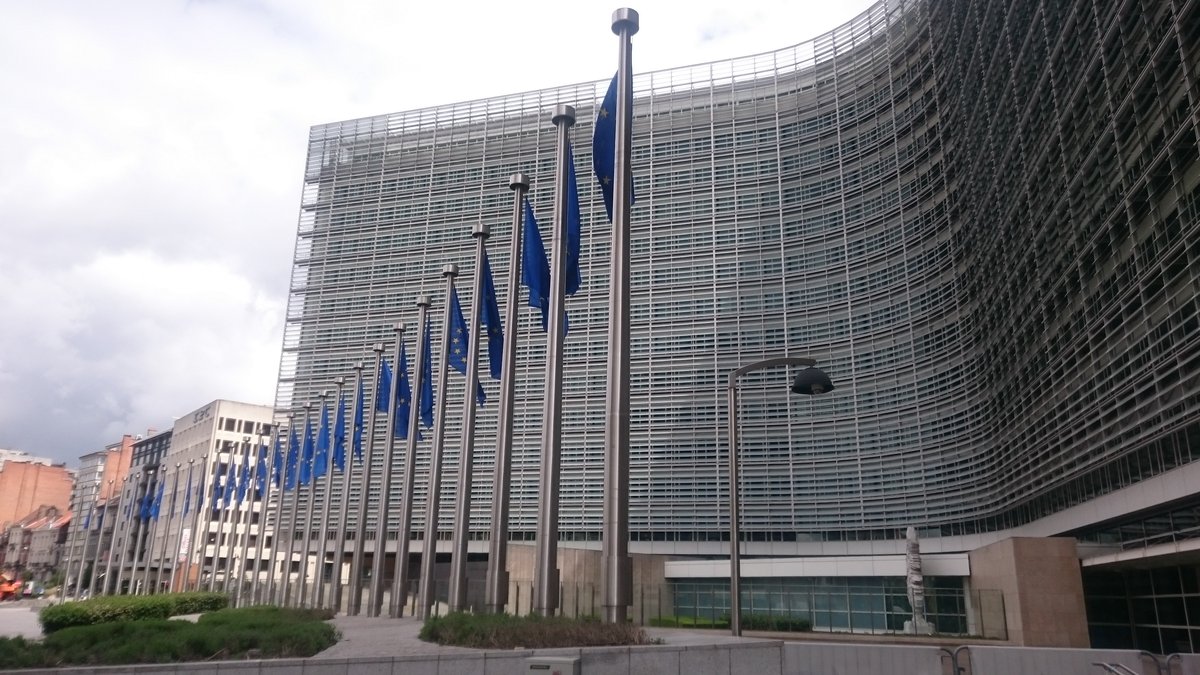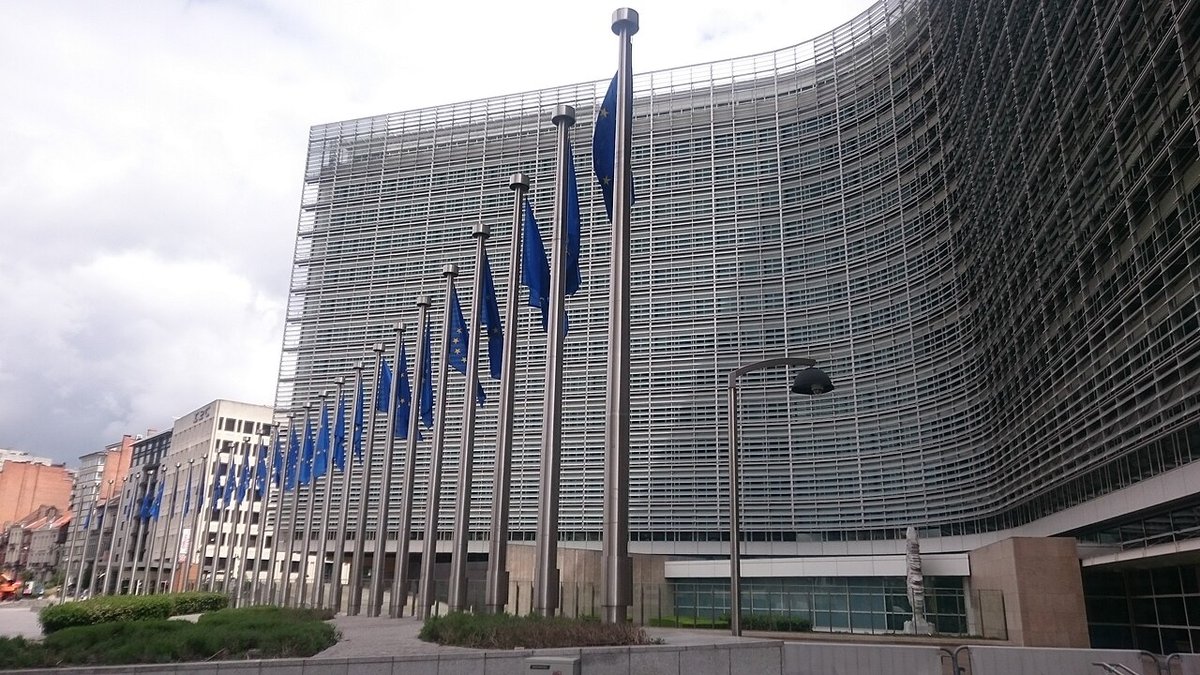


The Union does not have its own language model that would match the size of American ones. Nevertheless, it has determined how a product used far beyond its borders will behave. Political economy has a name for this phenomenon: the Brussels effect. Euronews ↗
Key actors — tap for context
Anthropic
American company based in San Francisco that develops Claude models.
Why here: It is among the first major AI companies to introduce text watermarking globally across their own interfaces.
More info →
Claude
Family of large language models from Anthropic, available also as a chatbot.
Why here: Its outputs are now receiving invisible marking.
More info →
European Union
A group of 27 member states with approximately 449 million inhabitants.
Why here: Its artificial intelligence regulation forced this change, although it does not have its own large model.
More info →
European Commission
The highest executive body of the European Union.
Why here: It assembled a voluntary code through which companies commit to marking.
More info →C2PA
An open standard for cryptographically signed data about file origin.
Why here: The technique Anthropic uses to mark images; unlike text, it can be verified today.
More info →
Meta
American corporation that owns Facebook, Instagram, and WhatsApp.
Why here: It refused to sign the code for foundational models last year, but signed the code on marking AI-generated content.
More info →OpenAI
American company, creator of ChatGPT.
Why here: It is among the signatories of the code in the provider section.
More info →
Google
American technology corporation, creator of Gemini models.
Why here: Code signatory, its chatbot reports a billion monthly users.
More info →Microsoft
American software corporation based in Redmond.
Why here: Another major code signatory.
More info →
Mistral
French company from Paris that develops open language models.
Why here: European signatory, proof that only American companies signed the code.
More info →Cohere
Canadian technology company focused on AI for enterprises.
Why here: One of the smaller code signatories.
More info →Aleph Alpha
German AI startup from Heidelberg developing large language models.
Why here: German signatory, part of Europe's effort to develop its own AI.
More info →What Anthropic Introduced
The mark is embedded directly into the text and is not visible to the reader. It survives copying and pasting elsewhere, but editing reduces its effectiveness according to the company. For image files, a different technique is used—digitally signed data about origin according to the open C2PA standard. Anthropic ↗Marking operates at the model level, meaning across all interfaces including the developer API. Models released from August 2 have it from the start; older models will receive it during a transition period. TechCrunch ↗
The company itself points out two limitations that are easily overlooked. A detected mark does not mean Claude wrote the text, as it could have only edited or corrected existing text. A missing mark proves nothing, because older models, very short passages, or heavily rewritten text may not carry a reliable signal. For files, metadata loss can also erase the trace. Anthropic ↗
Why It Applies in California Too
Anthropic could have limited the watermark to European users. It did not. Operating one product is usually cheaper than maintaining two versions with different behavior, so companies often extend the European standard to the entire market. Euronews ↗For the company, it is also a reputation gain. It publicly shows willingness to comply with European regulations while the technical details of the mark and detection itself remain under its control.
The motivation also has a concrete number. Violating transparency requirements risks a fine of up to 15 million euros or three percent of global annual turnover, whichever is higher. Euronews ↗
Anthropic is not alone. The voluntary code on transparency of AI-generated content, assembled by the European Commission, was signed by approximately 190 organizations by the end of July. Eighty-two joined the technology provider section and 152 the deployment section, with the sum exceeding the total number because some organizations signed both parts. Among providers are Google, Microsoft, OpenAI, Mistral, Cohere, German Aleph Alpha, and Meta. European Commission ↗
Meta itself is a useful indicator of how pressure manifests. In 2025, it refused to sign a separate code for foundational models and spoke of legal uncertainty. It has now signed the code on marking AI-generated content. Meta ↗
Where the Brussels Effect Hits Obstacles
The rule has outpaced the technology meant to implement it. Independent researchers point this out, not companies. Academic work on implementing watermarks in the context of EU regulation concludes that relying exclusively on watermarks to fulfill obligations is problematic because current solutions do not reliably survive routine content modifications. arXiv ↗According to the research, the most effective way to remove a text mark is paraphrasing—rewriting the text by another model or person. Translation into another language works similarly. Anthropic has not disclosed how many modifications eliminate the mark. TechCrunch ↗
More fundamentally, there is no one yet who can read the text mark. Anthropic has not released a public tool for detecting it, although it committed to supporting verification and refers to upcoming technical documentation. For supported files, the situation is more practical. If origin data remained preserved, commonly available software working with the C2PA standard can read it. Anthropic ↗
However, the Union itself has postponed some deadlines. The simplification package agreed in May postponed the obligation of machine marking and detection for systems already on the market before August 2 until December 2, 2026. Rules for high-risk systems in areas such as employment, education, and border control were moved to December 2, 2027. Mishcon de Reya ↗
What This Means for Readers in Slovakia
Practically nothing for now. Without a public text mark detector, schools and employers cannot verify it in submitted work, so announced origin verification remains on paper.Yet the risk is opposite to expectations. The problem is not that the watermark reveals too much, but that people will start attributing the weight of proof to it. The mark indicates that text probably passed through Claude. It does not say who wrote it. Human text that artificial intelligence merely corrected will carry the mark. Text entirely generated by a machine and subsequently translated may not carry it.
The topic resonated in German and Spanish media immediately; according to HotInfo monitoring, it had not yet reached Slovak and Czech media by August 12. Domestic news coverage noticed a parallel development instead—marking profiles on Spotify whose identity is an AI creation. El País ↗
What HotInfo Is Monitoring
- Anthropic publishes a public detector for the text watermark and states its reliability
- Models and systems already on the market before August 2, 2026 comply with labelling by December 2, 2026
- A national regulator issues the first fine under Article 50 of the AI Act
- The watermark appears in the rules of Slovak schools or public offices