



What you're actually buying
A mountain electric bike (eMTB in English) is not a motorbike. The auxiliary electric motor only adds power when you're pedaling yourself, and its assistance smoothly fades out at 25 km/h. Output is capped at 250 watts — so in the eyes of the law, such a bike remains an ordinary bicycle. It is precisely this kind of machine — assistance only while pedaling and a motor up to 250 watts — that is technically called a pedelec. HECHT.sk ↗You'll find the drive unit in two positions. More expensive models, better suited for the mountains, have a mid-mounted motor at the pedals — it keeps the center of gravity low and delivers power smoothly according to how hard you press the pedals. Cheaper bikes tend to have a motor in the rear hub (so-called rear-wheel drive): it's more affordable, but on steep and rugged terrain it pushes less naturally and the weight pulls toward the back. Najsport.sk ↗
The second key figure is battery capacity in watt-hours (Wh). Models with a battery of roughly 500 to 900 Wh can manage, depending on terrain, anywhere from a few dozen to over a hundred kilometers on a single charge, though range drops significantly in the hills — affected by elevation gain, surface, rider weight, tire pressure, and the chosen level of assistance. A practical detail that's especially welcome on trips: on most bikes — including the cheaper ones — the battery can be removed from the frame. That lets you charge it comfortably, for example in a hotel room, where it's also safe from theft and charges at room temperature, which benefits lithium cells far more than the cold or heat of a garage. Najsport.sk ↗
For a beginner, a hardtail — a bike with suspension only in the front fork — tends to be the more sensible choice. It's cheaper, simpler to maintain, and more than adequate for forest roads and undemanding trails; full suspension only pays off in more demanding terrain. Basic mountain electric bikes start at roughly 1,500 euros. Najsport.sk ↗
Rules: nearly identical in Slovakia and Czechia
As long as a bike meets the 250 W limit and assistance up to 25 km/h, Slovak road law treats it as an ordinary bicycle. You don't need a driver's license, a registration number, or mandatory liability insurance for it. HECHT.sk ↗For a standard pedelec, Czechia applies the same European framework: an auxiliary motor with output of at most 250 W and assistance that switches off at 25 km/h. Standalone assistance without pedaling may serve only as a start-up or push assist up to roughly 6 km/h. A helmet is mandatory in Czechia for riders under 18; experts strongly recommend one for adults as well. ekolo.cz ↗
Beware the temptation of "unlocking." A bike that assists above 25 km/h or exceeds the permitted output may no longer be assessed as an ordinary bicycle — stricter rules apply to it, and its use on regular roads and cycle paths can be prohibited. ekolo.cz ↗
Where to head for your first kilometers
In Slovakia, Bike Park Malinô Brdo above Ružomberok is among the accessible and popular options. In season, a cable car takes you to the summit, and alongside the more demanding downhill tracks you'll also find green and blue trails for less experienced riders, including a rental service. Bike Park Malinô Brdo ↗Also worth trying is the Donovaly resort between Banská Bystrica and Ružomberok, which, besides a downhill track, offers hundreds of kilometers of marked cycling routes, or alternatively the Jasná resort beneath Chopok. Najsport.sk ↗
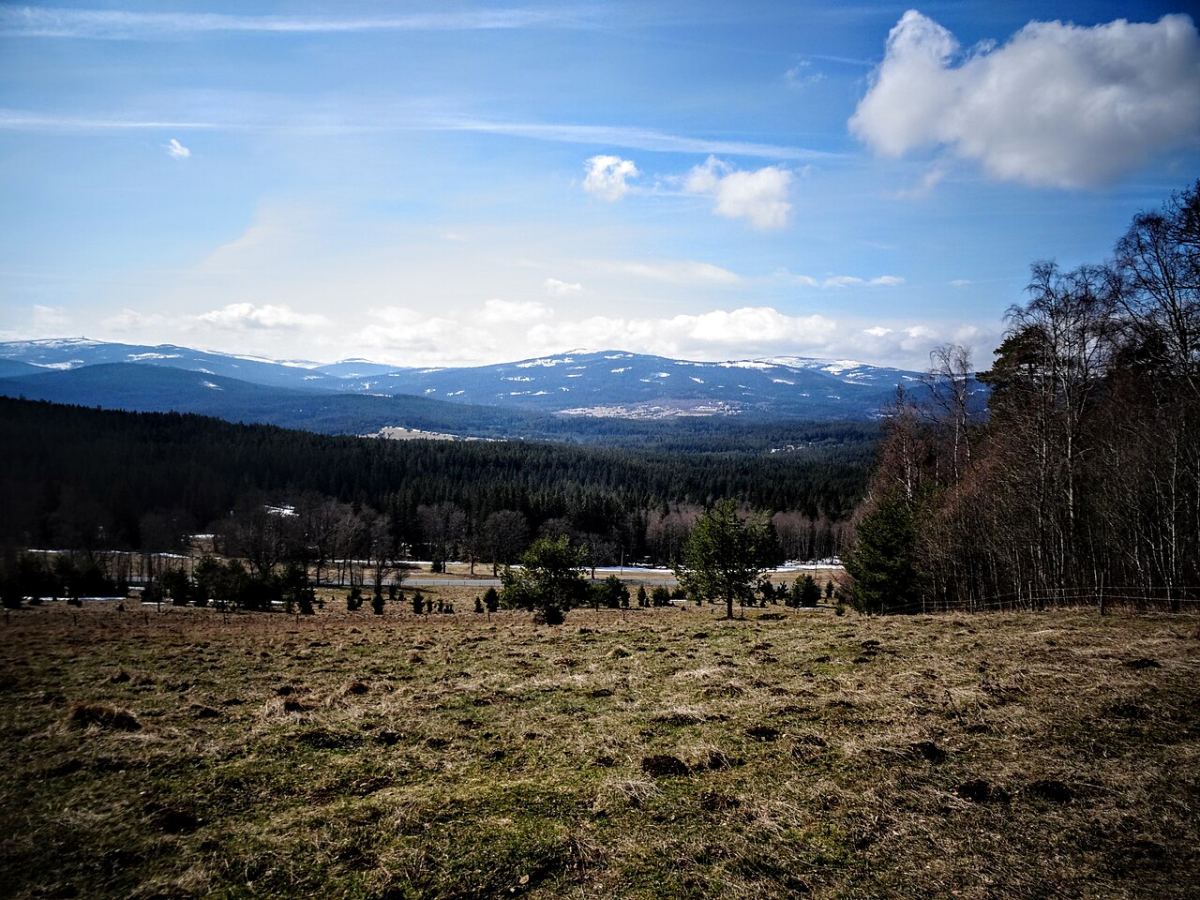
In Czechia, one of the largest and best-known trail areas is Klínovec in the Krušné hory (Ore Mountains), with roughly 30 kilometers of trails. Dolní Morava is popular with families and beginners thanks to its easy Mlýnský trail and e-bike rental service; Bike Park Špičák in the Šumava mountains remains a classic, as do the trails near the Lipno dam. Dolní Morava ↗ České bikeparky ↗
Three tips for your first ride
Start in the lowest (eco) assistance mode. Not only does this save the battery, but you'll also get a better feel for handling a heavier bike with a different weight distribution. The battery has no memory effect, so feel free to recharge it even after a short ride, ideally at room temperature. And don't underestimate the helmet or the brakes: a heavier, faster bike places greater demands on both than a classic non-motorized bicycle. Najsport.sk ↗In the next installment of the Travel the Modern Way series, we'll look at how to care for an electric bike throughout the season and in winter, and what to watch out for when making your first purchase.