








Key actors — tap for context
Zhou Yawei
Works at Zhengzhou University and specializes in bioarchaeology, the study of traces of interventions on human bones.
Why here: Leads the team that described the find.
Zhengzhou University
A state university in Zhengzhou, the capital of Henan province, one of the largest in China by student numbers.
Why here: The institution leading the study.

Sanmenxia
A city in western Henan province on the Yellow River, with approximately two million inhabitants.
Why here: The Sanzhiyuan burial site is located nearby, and the city is home to the archaeological institute that co-authored the study.
More info →Henan
A province in central China in the Yellow River basin, one of the cradles of ancient Chinese civilization.
Why here: The site of the find.

Yuan dynasty
A Mongol dynasty that ruled China from 1271 to 1368.
Why here: Its 1336 edict reintroduced nose-cutting as a punishment for cattle theft.
More info →
Ming dynasty
A Chinese dynasty that ruled after the Mongols, from 1368 to 1644.
Why here: The later boundary of the skeleton's dating falls within its early years.
More info →Texas A&M University
One of the largest public universities in the US; its dental school has long studied Chinese punitive amputations.
Why here: Anthropologist Qian Wang is a co-author of both this study and the earlier one on amputated legs.
Emperor Wen
A ruler of the Chinese Han dynasty, who reigned from 180 to 157 BCE.
Why here: In 167 BCE he abolished mutilating punishments and replaced them with flogging and forced labor.
The nasal opening was more than a third wider than in other women
The remains were excavated back in 2019 at the Sanzhiyuan burial site near the city of Sanmenxia in Henan province. It contains 299 graves, 213 of them historical. Computed tomography showed that the woman had part of her nasal bones removed along with fine structures inside the nose, while the surrounding facial bones and front teeth remained untouched. The authors therefore do not consider injury or a fall to be a likely explanation. Der Spiegel ↗The measurements back this up numerically. Her nasal opening measured 34.35 millimeters, about 35 percent more than the average of 25.39 millimeters found in other women from the same cemetery. La Brújula Verde ↗
"The most likely reason for midface disfigurement was punitive nasal amputation," the team concludes. The edges of the damaged bones were smooth and remodeled — new bone tissue can only grow in a living body, and it takes weeks to months. According to the authors, this means the woman did not survive the procedure by mere days, but by years, and that someone must have cared for her. Phys.org ↗
She was the only one buried face down
Of all those buried at this site, she was the only one placed face down, and the only one with a disfigured face. The authors read this as a further sign of punishment and social exclusion, not as a coincidence. Phys.org ↗Isotope analysis of her bones showed a diet based on millet with a small proportion of animal protein. According to the authors, she therefore probably belonged to the common population rather than the nobility — unlike the two men with amputated legs described by the same institutions in 2024. Phys.org ↗
Abolished once, reinstated by the Mongols
Cutting off the nose was one of the so-called five punishments, along with facial tattooing, leg amputation, castration, and execution. Emperor Wen of the Han dynasty abolished them in 167 BCE and replaced them with flogging and forced labor, setting three hundred lashes as the penalty for cutting off a nose. From the Sui dynasty onward, a fixed set of five punishments took hold that no longer included mutilation: two degrees of flogging, forced labor, exile, and death. Wikipedia ↗This did not mean, however, that mutilation disappeared from Chinese law for good. The chronicle History of the Yuan Dynasty records an edict from 1336 that reintroduced it for cattle theft, graduated according to the animal stolen: whoever took an ox or a horse lost his nose outright. For donkeys and mules, a second offense was enough — the first was followed by a tattoo on the forehead, the second by the nose. For sheep and pigs, the path was longer: a tattoo on the neck, a further tattoo on repetition, and the nose only on the third offense. Anyone who offended even after that was to be executed. History of the Yuan Dynasty ↗
The skeleton falls exactly within this window. Why the woman was punished cannot be determined from the bones — the edict by itself does not prove her offense.
The scale mutilation may once have reached is described in the Han-era Discourses on Salt and Iron from the 1st century BCE. In a debate over whether the state maintains order through morals or through punishments, scholars there criticize the Qin government, saying that "cut-off noses filled baskets and severed feet filled carts." This, however, is later rhetorical criticism, not a contemporary count. Discourses on Salt and Iron ↗
The same institutions found amputated legs two years ago
The study is led by Zhou Yawei of Zhengzhou University together with the archaeological institute in Sanmenxia and Texas A&M University. It was published online in the Journal of Archaeological Science: Reports and is scheduled for the November issue. Phys.org ↗The same institutions are also behind a 2024 study of two men from the Eastern Zhou period, who died 2,300 to 2,500 years ago. Each of them had a foot removed along with about a fifth of the lower leg, corresponding to a punishment called yue. In both cases, the American co-author is anthropologist Qian Wang of Texas A&M University. The bones of these two men had also healed, meaning they survived the procedure by many years. Phys.org ↗
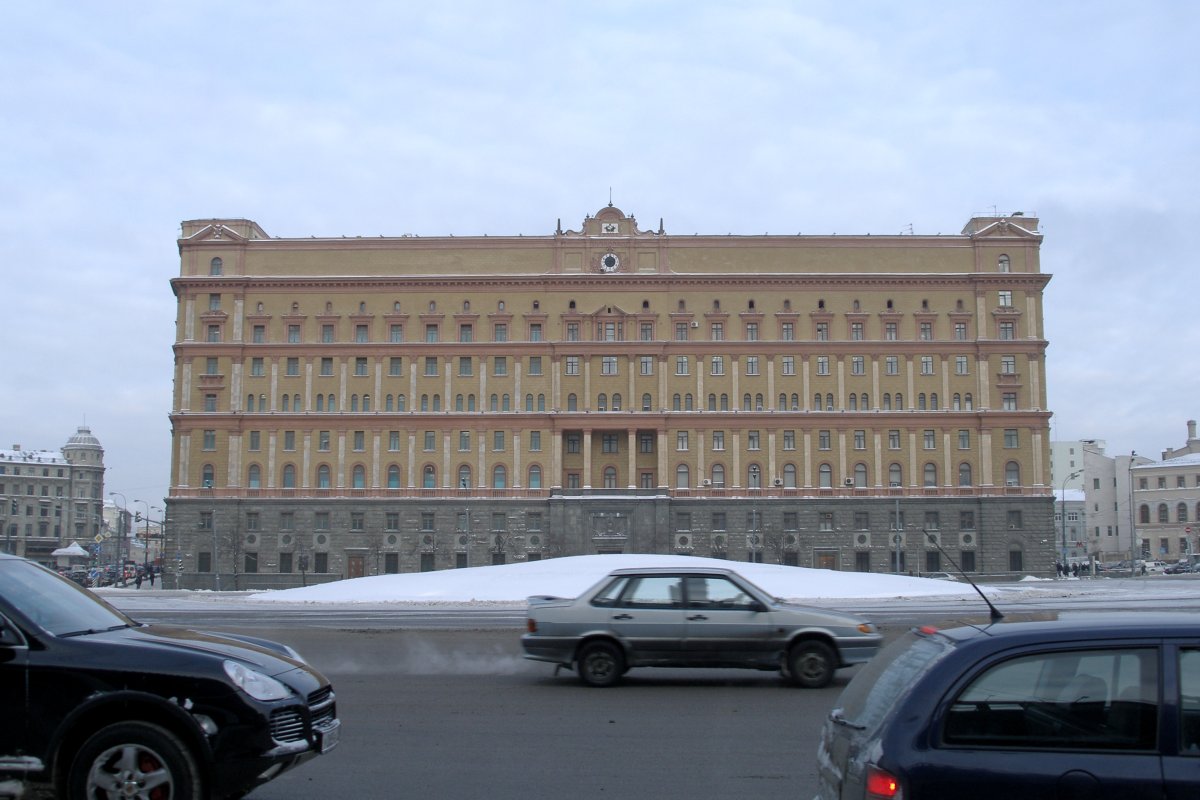
*Illustrative photo: The museum of the city of Sanmenxia in China's Henan province. The Sanzhiyuan burial site is located in this city, which is also home to the archaeological institute that co-authored the study. Author: Windmemories / Wikimedia Commons, CC BY-SA 4.0.*