

Key actors — tap for context

Ceuta
A Spanish autonomous city on the North African coast near the Strait of Gibraltar. Around 84,000 people live there in an area of twenty square kilometres.
Why here: The city where the sea barrier broke, and towards which another attempted mass crossing is reportedly heading according to calls on social media.
More info →
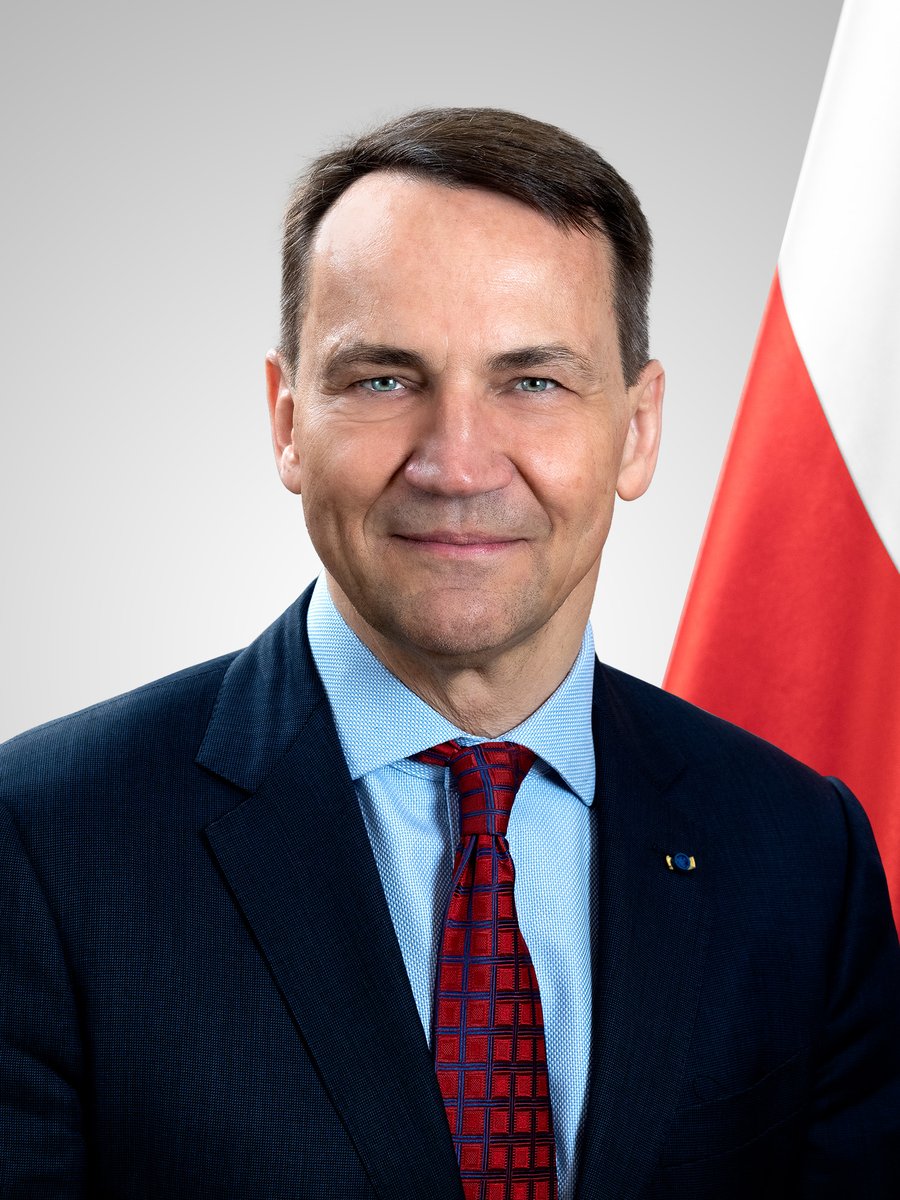
Manfred Weber
A German politician, president of the European People’s Party and its group in the European Parliament.
Why here: He flew to Ceuta on Monday and saw the torn barrier from a helicopter. He speaks of political failure.
More info →
Alberto Núñez Feijóo
Chairman of Spain’s People’s Party and opposition leader, formerly president of Galicia.
Why here: He was in Ceuta on Monday for the fourth time since the beginning of August. Next year he will face Sánchez in the election.
More info →
Pedro Sánchez
Spain’s prime minister and Socialist leader, in office since 2018.
Why here: In New York he said for the first time that Moroccan border control had failed. He had denied this for two months.
More info →
Christiane Amanpourová
A British-Iranian journalist and CNN’s chief international anchor.
Why here: It was to her, on the sidelines of the UN General Assembly, that Sánchez said the sentence about Rabat’s failure.
More info →
Fernando Grande-Marlaska
Spain’s interior minister and a former judge.
Why here: He was in Ceuta on Monday and admitted that they were following the calls on social media with concern. The next day his ministry began preparations for permanent buoys and an extension of the breakwater.
More info →
Aziz Achannúš
Morocco’s prime minister since 2021 and a businessman. He led the National Rally of Independents until February 2026, then handed the party over to Mohamed Chaouki.
Why here: His government is the target of the GenZ 212 movement, and today’s election is its first test after last year’s unrest.
More info →GenZ 212
A leaderless Moroccan protest movement organised last year through Discord, TikTok and Instagram. It demanded hospitals and schools instead of spending on football championships.
Why here: Its demands remain alive, but young people registered on the electoral rolls only in a fraction of the expected numbers.

Fnideq
A Moroccan town right by the border with Ceuta, called Castillejos in Spanish.
Why here: The July crossings began there, and according to rumours on social media another one is expected to come from there.
More info →
Juan Jesús Vivas
Mayor of Ceuta and a member of the People’s Party, in office since 2001.
Why here: He described the situation in the city as a pressure cooker that could explode at any time.
More info →
Frontex
The European Border and Coast Guard Agency, based in Warsaw.
Why here: It has about twenty people in Ceuta; Madrid requested ten more, and the opposition is pressing for a larger presence.
More info →Newtral
A Spanish fact-checking newsroom certified by the International Fact-Checking Network.
Why here: It geolocated a video circulated as evidence of a tunnel beneath the Ceuta border.
What the leader of the European People’s Party saw from the helicopter
European People’s Party president Manfred Weber flew to Ceuta on Monday and saw the problem before he landed. From the helicopter carrying him from Málaga across the Mediterranean, several bright-red pieces of hose could be seen in the water. It was meant to be a new barrier against irregular arrivals, stretched by the Spanish government after the July events and reaching one metre below the surface. Heavy waves tore it apart over the previous weekend. FAZ ↗He was accompanied by Alberto Núñez Feijóo, chairman of Spain’s People’s Party, for whom this was already his fourth visit to Ceuta since the beginning of August. Ceuta is a symbol for Spanish conservatives of the Socialist government’s failed migration policy, and the country goes to the polls next year. Weber walked along Trampolín beach, where migrants had set up an improvised market selling drinks and fruit, as well as a barber cutting hair on a discarded office chair. When young men selling baguettes gathered around him curiously and some applauded, he said he had only one thought: “Who deceived you? Because the road to Europe will not happen.” He later said that, in his view, Ceuta was suffering from political failure. FAZ on the visit ↗
On Tuesday it became clear that the damage was greater than it had seemed. According to El Confidencial, a substantial part of the barrier had deflated, and the Interior Ministry began preparations that same day: the inflatable barrier is to be replaced by permanent buoys, and the Tarajal breakwater will be extended in two stages, first by fifteen and then by one hundred metres into the sea. The extension is estimated at seven million euros, with another two million for the buoys and net, nine million in total. Cadena SER ↗
The government delegation in Ceuta, however, rejects the claim that the border has been left open. It insists that the net placed underwater remains properly anchored to the seabed and that the mechanism retains its function of marking the zone despite the visible damage at the surface. Local media add context that shifts the meaning of the whole affair: the barrier has suffered damage regularly since its installation because storms and sea currents puncture and tear it. The damage was already visible on Sunday morning, and the delegation commented on it on Tuesday, the eve of the day for which calls on social media are summoning a mass entry. Ceuta Actualidad ↗ Infobae ↗ El Confidencial ↗ El Confidencial on the breakwater ↗
Why the hose is a legal instrument, not just a fence
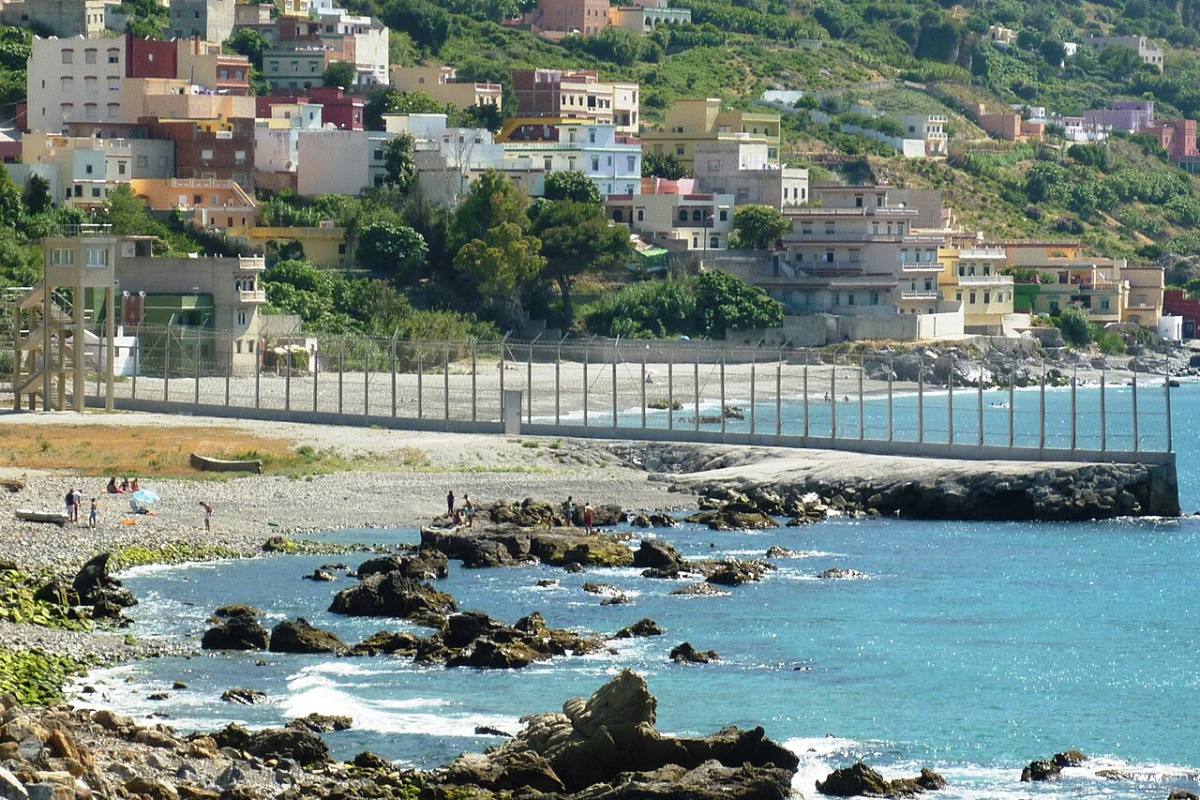
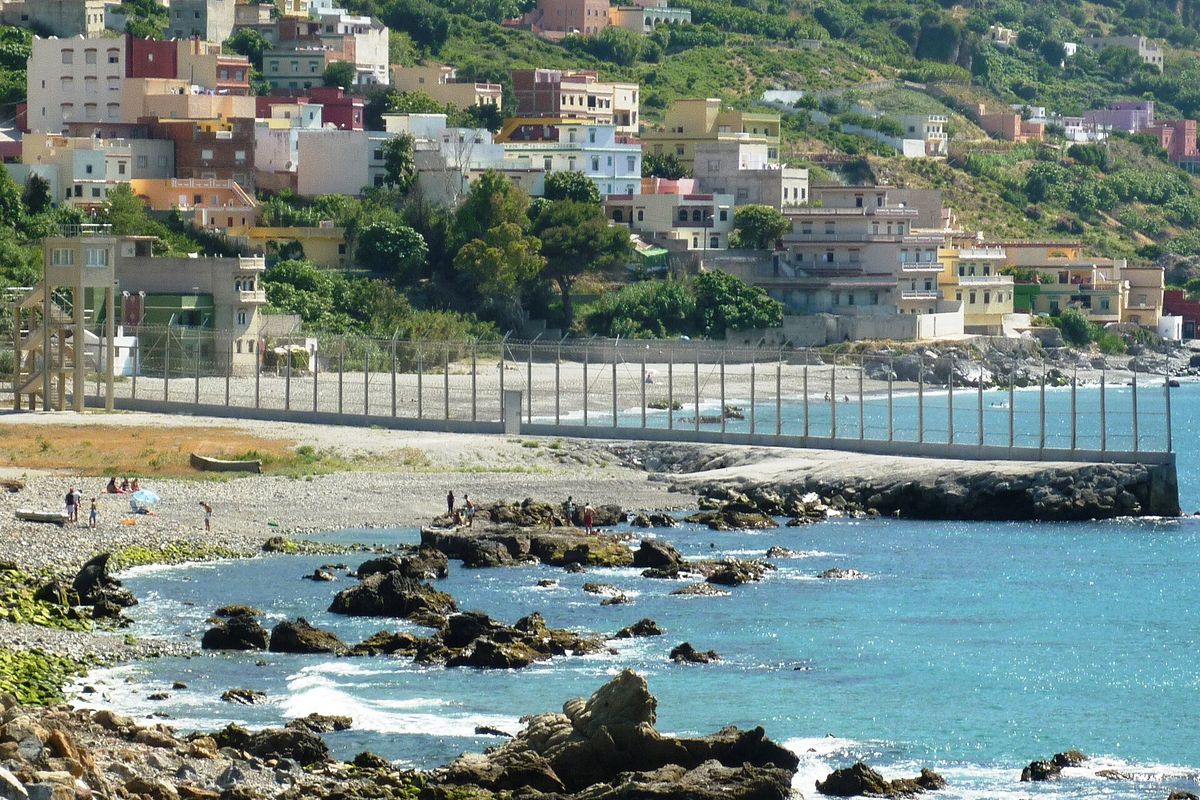
This is the part of the story that disappears from summaries, even though it determines everything else. On land, Ceuta is separated from Morocco by a fence six, and in places as much as ten, metres high; Spain removed the razor wire and replaced it with other anti-climbing barriers. On the southern maritime border there is only a fifteen-metre breakwater with a fence and watchtower, which can be swum around. That is where the Spanish Supreme Court’s decision from late June comes into play. FAZ on the border ↗Judgment 814/2026 of 29 June ruled out applying special border refusal to people who had swum over without overcoming any physical border obstacle. On land, the fence is such an obstacle; at sea, the court held, it is not enough merely to cross a line in the water. Madrid therefore extended the breakwater with a five-hundred-metre inflatable barrier, but did so only after the July surge.
What does not follow is important. The existence of a barrier does not by itself make every return lawful, nor does it cancel Spain’s obligations towards people seeking international protection. The simplified border procedure is only one possible route; alongside it is the regular return procedure, and unaccompanied minors cannot be returned en masse at all.
This is where the two versions diverge. The FAZ reporter concludes that when the hose is torn, the route is physically passable again, and that this is making both the local administration and the Madrid government nervous. The government delegation, by contrast, says the decisive element is the lower net, which is holding, so returns can continue along this section of the border. Neither position says anything about a right to enter; the dispute concerns which procedure the authorities may use. Which interpretation will stand will become clear only in the first contested case, possibly before a court. FAZ on the ruling ↗
The security forces are preparing for this. According to ABC, Spain sent 210 Guardia Civil officers and 75 police officers to Ceuta ahead of the key day of Morocco’s election, and Marlaska says the crossings have been reinforced and Morocco is so far taking its citizens back. El País is simultaneously reporting movements of sub-Saharan migrants towards the Moroccan coast near Fnideq, called Castillejos in Spanish, from where the July crossings began. According to the newspaper, these movements are what is fuelling the alarm. ABC ↗ El País ↗
Sánchez named Rabat’s failure for the first time
That same day in New York, the Spanish prime minister uttered a sentence he had not previously expressed so directly. In an interview with CNN’s Christiane Amanpour on the sidelines of the UN General Assembly, Pedro Sánchez said they were investigating what had happened in July and that they were demanding action and answers from Rabat, "because it is also clear that its border control failed" Yet as late as the end of August he had rejected Morocco’s responsibility, and at the beginning of September he spoke more cautiously about the need for different cooperation, claiming there was no firm evidence that Morocco had organised the entry. eldiario.es ↗ RTÉ ↗ Le Monde ↗The rest of the interview is just as interesting as that one sentence. Sánchez complained about the lack of solidarity from European partners, citing two cases in which Spain had shown it itself. The first was Lampedusa, the second Greenland, when other governments were questioning the territorial integrity of Greenland and Denmark. That second parallel was made on the same day that Washington, Copenhagen and Nuuk signed a security agreement on Greenland at the same summit. eldiario.es on Greenland ↗ eldiario.es on the interview ↗
Asked whether he had been warned in advance, Sánchez replied that there had been no clear evidence that anything like this would happen. He added that Morocco remained a strategic partner and that many of the people would have to be returned, but with dignity, because “migrants are not livestock but human beings.” This is in tension with declassified reports by his own intelligence service, according to which the CNI had warned the day before and spoken of a land and sea incursion. That same day it emerged that only Defence Minister Margarita Roblesová, not CNI director Esperanza Casteleirová, would appear before the committee for classified matters on 6 October, although the opposition had specifically requested her. El País ↗ ABC ↗
Morocco votes, but young people did not register
On the other side of the fence, voters are deciding today on 395 seats in the House of Representatives; more than 15.8 million voters are registered. The government of Prime Minister Aziz Achannúš, a businessman whose National Rally of Independents won 102 seats five years ago and whose resignation was demanded by last year’s protests, is seeking another mandate. He handed over leadership of the party to Mohamed Chaouki in February but remained prime minister. Polls are banned in the kingdom, so almost nothing can be predicted before the votes are counted, except that another coalition government is expected. The AP reports that the number of registered voters fell by 9.7 percent compared with 2021, even though the population grew. According to another published register from 2021, the decline would be even larger, so the precise figure depends on which baseline is used. Al Jazeera ↗One ratio is the most telling. There are about 3.89 million Moroccans aged 18 to 24, but only a fraction registered on the electoral rolls: official overviews put the figure at three to four percent of all voters, roughly half a million people. Yet it was young people who took to the streets last year under the banner of GenZ 212, a leaderless movement organised through Discord, TikTok and Instagram that demanded hospitals and schools instead of spending on football championships. At least three people died in the October unrest. The Italian newspaper Il Manifesto sums it up by saying that unemployment or emigration are the only choices left to these young people. This does not mean that the young have vanished from politics altogether—they are present on the candidate lists—but their weight among voters is incomparably smaller than their share of the population. Al Jazeera on young voters ↗ Il Manifesto ↗
Spain’s public broadcaster RTVE summed up Morocco’s pre-election situation in a report that calls abstention the main protagonist of the vote. The commentary is in Spanish.
That is the other half of the same equation. Khalid, a twenty-year-old school-leaver and student who reached Ceuta by swimming, told the FAZ reporter this: “The Spanish do not have to be afraid of us,” he said. “We are not invaders, we have no weapons. We are only looking for a better life and work.” He sees no future in Morocco. When he saw that the gate was open, he came immediately, without hesitation. FAZ on Khalid ↗
The march took place, but in the opposite direction
Throughout September, Spanish services monitored a call that had spread from Moroccan accounts since 4 September, summoning people to a march on Sunday 20 September for the liberation of Ceuta and Melilla. We wrote about it three days ago. The Moroccan government never commented on it, and conservative El Mundo, as quoted by France’s Courrier International, noted that the call had attracted nowhere near as much attention as the July one, or as another that ultimately failed on 15 August. Courrier International ↗Read also: Spanish services monitor march for the liberation of Ceuta
The march did eventually take place on Sunday, but it was called by someone entirely different. Several thousand residents of Ceuta walked from the Chorrillo esplanade to the Tarajal border crossing, carrying Spanish and Ceutan flags and chanting “where are our rights”; it was organised by the Federation of Residents’ Associations. Hundreds of motorcyclists joined them. The procession reached exactly the place where the avalanche arrived on 30 July. Organisers carried a banner reading “S.O.S. Ceuta under attack”, read out a manifesto defending the border and called on the European Union to make the dispute its own. The procession passed peacefully, with women in the majority and no incidents, although soldiers stood on the slopes of the El Príncipe district, where most Moroccans live, and police formed a human wall between the demonstrators and young passers-by. Moncloa ↗ El Correo Gallego ↗
El Mundo published footage of the march on Sunday. The one-minute clip shows the procession with Spanish and Ceutan flags on the road from the Chorrillo esplanade; the commentary is in Spanish.
What can and cannot be verified about this crisis
So much material is circulating around Ceuta that some of it is demonstrably false. Since the beginning of September, a video has been circulating showing people climbing out of a canal into a street and running off, captioned as showing Moroccans passing through a tunnel beneath the Ceuta border. Fact-checkers debunked it as early as 8 September, but it resurfaced before the election. The Spanish fact-checking newsroom Newtral geolocated it to the port of Beni Ensar in Nador province, a kilometre from the border with Melilla and more than two hundred kilometres from Ceuta. Open ↗ Maldita ↗The figures also require caution. Estimates for the entry on 30 and 31 July range from more than seventy thousand to eighty thousand people depending on which newsroom is counting; the British tabloid uses the highest figure. More important is what followed, and here two different numbers must be distinguished. According to FAZ, in the hours and days immediately after the surge, most of those who arrived returned to Morocco spontaneously—around 65,000 people—while other estimates put the figure at 65,000 to 70,000 and themselves warn of uncertainty. The official returns programme, which began only on 10 August, is almost ten times smaller: on 22 September, Territorial Policy and Democratic Memory Minister Ángel Víctor Torres reported 6,791 voluntary returns, 1,309 of them in the previous week, while another 318 people left under deportation orders, more than 7,100 in total. Spanish government ↗ Confusing the two figures produces an entirely different picture. According to Torres, accommodation centres house about six thousand adults and two thousand minors, who are subject to different rules because unaccompanied minors cannot be returned en masse. No one knows exactly how many people sleep outside the centres: on 21 September, Marlaska spoke of three to three and a half thousand, while a FAZ report estimated three to five thousand. FAZ on the numbers ↗ Courrier International on July ↗
Tension remains in the city itself. Between 30 July and 14 September, Ceuta’s courts opened 37 proceedings for sexual assault; by that date, 28 were continuing, eight had been provisionally shelved and one had been joined to another case. These are therefore not 37 proven offences. Lorenzo del Río, president of Andalusia’s High Court, speaks of a 60 percent increase in crime in Ceuta compared with the same period last year. On Tuesday afternoon the city saw several incidents, including a fight after which local media reported arrests and injuries, although the figures changed during the day. Mayor Juan Jesús Vivas speaks of a pressure cooker. ABC on the courts ↗ El Español ↗ El Confidencial on the brawl ↗
The limits of this view
The key dispute in this text remains unresolved, and the reader should know that. Whether the damaged barrier means an open route or not, the two sides say opposite things and neither is impartial: the government delegation has an interest in making the system appear functional, while the opposition and some media have an interest in the opposite. For now, the only verifiable facts are that the surface part of the barrier is damaged and that the government insists the lower net remains anchored.Most of the on-the-ground detail in this text comes from the FAZ report produced during a trip organised around the visit of Manfred Weber and Alberto Núñez Feijóo, two politicians for whom Ceuta is an argument against the Sánchez government. The facts about the barrier and the numbers remain valid, but the selection of what appears in the text has an author. Crime figures are reported by ABC and El Español, newspapers long critical of the government, while figures on migrant care come from El País, which is closer to the government line. Court proceedings are different: they come from an inspection report by the General Council of the Judiciary and are reported consistently by agency media, so there is no political selection involved there.
It is equally true that a call on social media is not the same as an announced march, and neither is Moroccan state policy. The Moroccan government did not comment on the calls for 20 or 23 September, and no one has produced evidence of state direction of the campaign. The fact that the surface part of the barrier is damaged is just that—a fact—as is the government’s insistence that the lower net remains functional. The claim that another mass crossing will take place on election day is, for now, a concern of the security forces and speculation on social media, not an event.
What hotinfo is following
- Another mass crossing into Ceuta happened, or the election window passed without one
- Spain restored the sea barrier at Tarajal or extended the breakwater by the announced hundred metres
- The Moroccan election has a result and the new government has stated its position on the claim to Ceuta and Melilla
- The CNI director testified before lawmakers about the July crossing
- Morocco answered Sánchez request for an explanation of the border failure
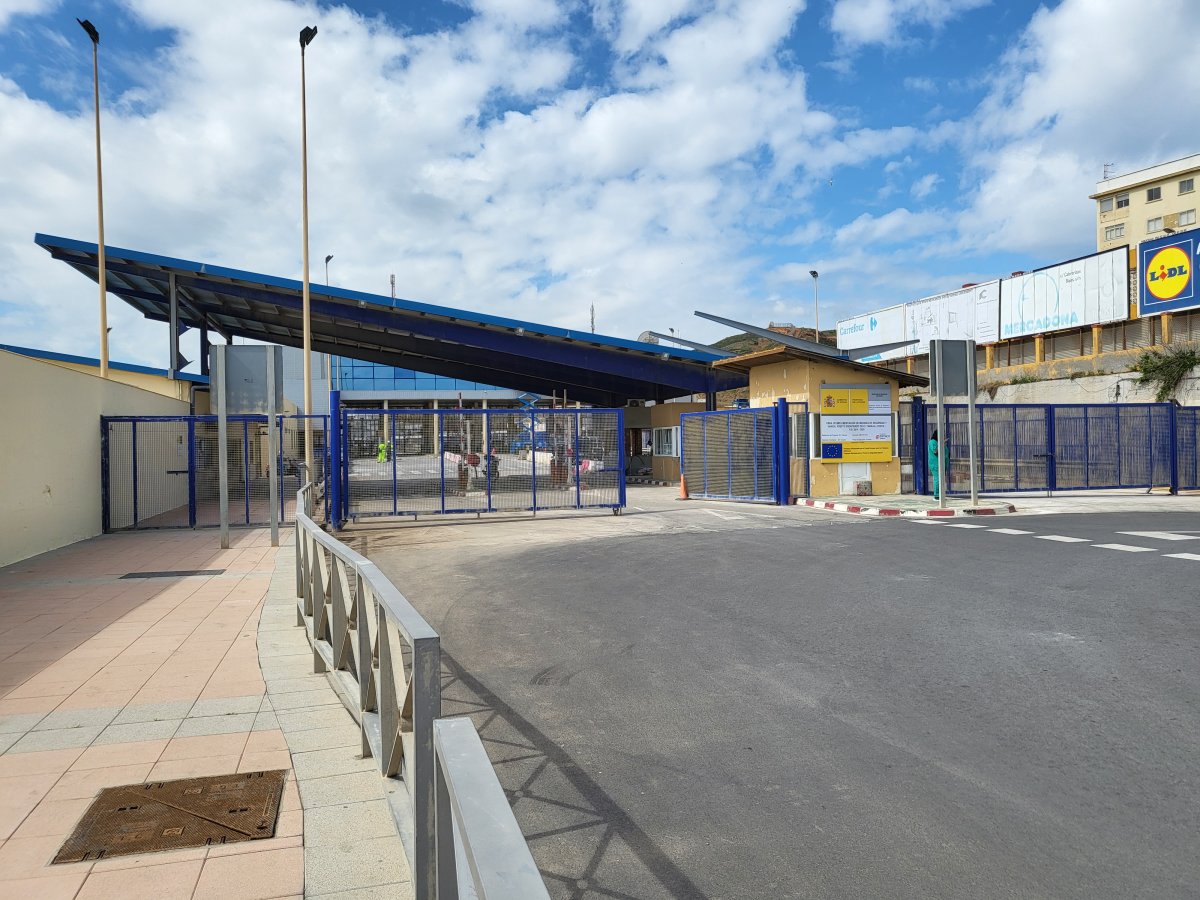
Photograph: the El Tarajal border crossing between Ceuta and Morocco. The image dates from 2022, when the crossing was still closed because of the pandemic. This is where Spain sent reinforcements before Morocco’s election. By Xemenendura, Wikimedia Commons, CC BY-SA 4.0 licence.