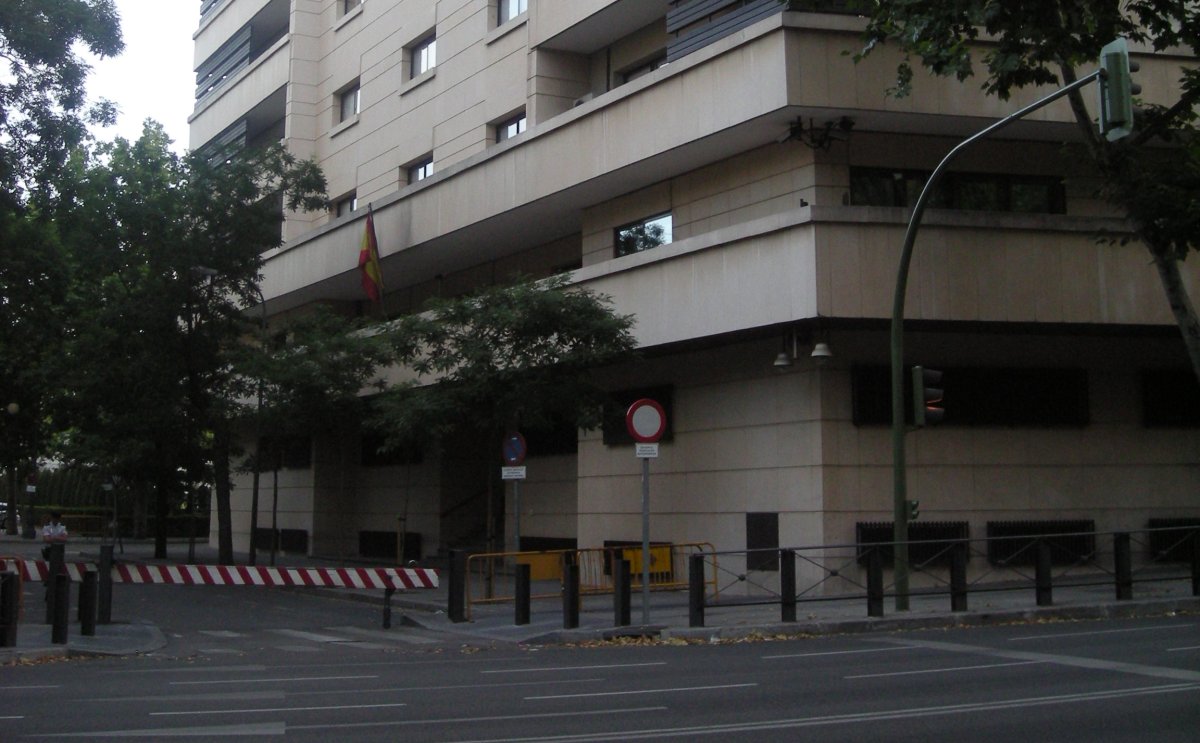


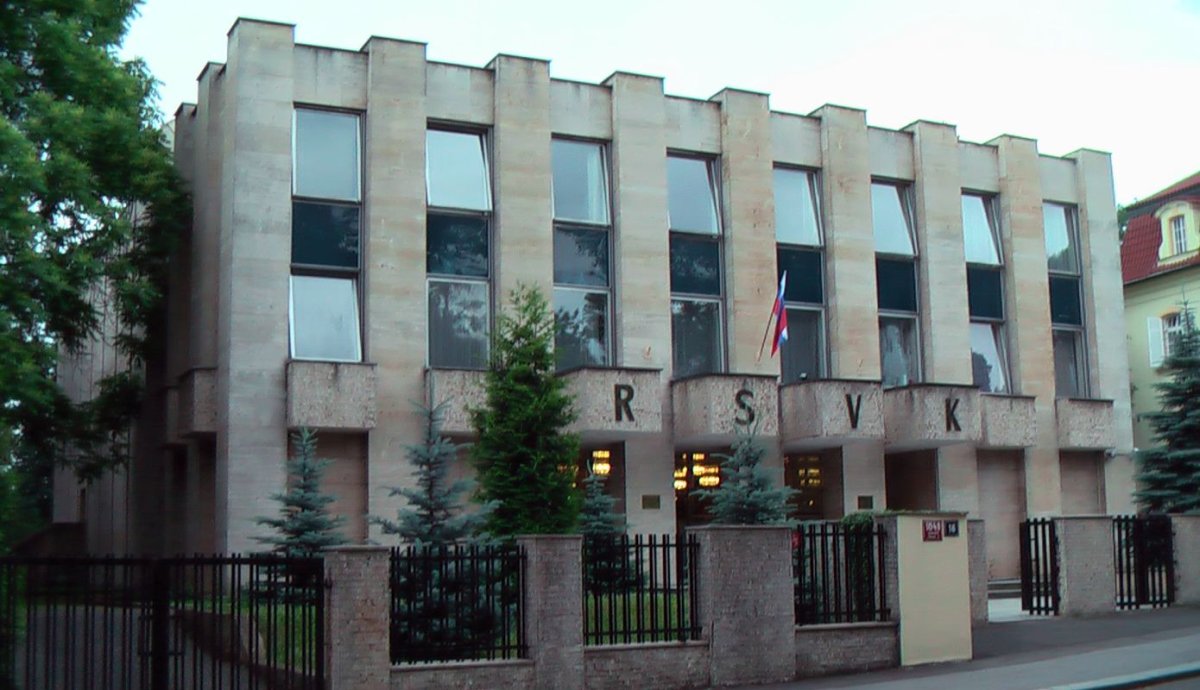
According to police, an unknown perpetrator threw several firebombs at the building of the Russian Science and Culture Center in Prague's Dejvice district on Thursday evening, three of which exploded. The attack hit the windows of the institute's library. No one was injured. "We are searching for the perpetrator, who is suspected of the criminal offense of damaging another's property," police stated on X on Friday morning. The investigation was taken over by criminal investigators specializing in terrorism and extremism. The motive for the attack is not yet known. ČT24 ↗
The institute's director, Igor Girenko, described the attackers to the Russian agency TASS as "terrorists and inhuman creatures" and emphasized that the attack took place shortly before the closing events of the Days of Russian Culture. Spokesperson for the Russian Ministry of Foreign Affairs Maria Zakharova condemned the attack as a "barbaric act." According to statements by Russian officials, this is the fifth such incident in the past four years. Novinky.cz ↗
On Friday afternoon, Russia summoned the Czech ambassador in Moscow, Daniel Koštoval, over the attack. On the Czech side, Interior Minister Lubomír Metnar condemned the attack, stating that an attack on any facility is unacceptable regardless of its nature or ownership. The Czech Ministry of Foreign Affairs also condemned the attack. iRozhlas ↗
The Russian House, officially the Russian Science and Culture Center, is operated by the state agency Rossotrudnichestvo. Following the start of the Russian invasion of Ukraine in 2022, it was placed on the European Union's sanctions list for spreading pro-Kremlin propaganda. The Czech counterintelligence service BIS has long linked the building to intelligence activities, and experts have repeatedly recommended that the government close it. Czechia refuses to recognize the building's diplomatic status, which frustrates Russia. Warsaw Institute ↗
The building on Na Zátorce street has long been a flashpoint of tension. In May 2025, Russian ambassador Alexander Zmeyevsky complained about an "unhealthy atmosphere" and "hooligan attacks" against the institution. In April 2025, dozens of activists from the Voice of Ukraine initiative protested in front of it with Ukrainian flags, demanding its closure and the confiscation of Russian property as part of the MakeRussiaPay campaign. Radio Prague International ↗
In June 2025, a scandal erupted over an excursion by grammar school students from Sedlčany, who were offered the opportunity to study in Russia during their visit. The governor of the Central Bohemian Region, Petra Pecková, called the excursion "absolute madness," pointing out that Russia is a wartime aggressor. The school's director admitted he had not known about the institution's sanctioned status. ČT24 ↗
The Prague attack comes at a time when similar incidents have appeared elsewhere in Europe as well. In February 2025, two French researchers from the National Center for Scientific Research threw three projectiles at the Russian consulate in Marseille on the third anniversary of the invasion of Ukraine. Two suspects were arrested and identified at a pro-Ukrainian protest. France 24 ↗
In April 2023, a fire seriously damaged the Russian Science and Culture Center in Nicosia, Cyprus. The director reported two loud explosions, and witnesses saw firebombs, although firefighters did not find any in the debris. In March 2022, shortly after the invasion began, a Molotov cocktail struck the Russian House of Science and Culture in Paris, and an arson attack damaged the Russian Lomonosov school in Berlin's Marzahn district. The Moscow Times ↗
Czech-Russian relations are at a historic low. In 2021, Prague expelled 18 Russian diplomats after it was revealed that agents of the GRU military intelligence service were behind the 2014 explosion at the Vrbětice ammunition depot. In September 2025, Czechia became the first EU country to ban entry to holders of Russian diplomatic and service passports, with the exception of diplomats accredited in Prague. The reason given was the finding that "the diplomatic network conceals networks of agents threatening the country's security." The Moscow Times ↗
Rossotrudnichestvo operates in 71 countries and has run a program since 2014 that brings hundreds of young people to Russia each year for "patriotic education," including Kremlin-approved history lessons and mandatory social media sharing. Analysts at the Warsaw Institute describe it as a soft-power tool aimed at spreading the concept of "Russkiy mir" abroad. Warsaw Institute ↗
Firebombs Thrown at the Russian House in Prague: Police Investigate Attack, Moscow Speaks of Repeated Incidents
Videos
🔥 You might also like
Politics (General)
Germany prepares retaliation for drone in Leipzig. It has not named the culprit even after almost a month
Merz promises a response coordinated with the EU and NATO, but the government has not confirmed the date or content. Lawyers point out that the threshold for mi …
📰
Ukraine
Evacuation of civilians begins in occupied Oleshky
In the Ukrainian city of Oleshky in the Kherson region, occupied by the Russian army, the evacuation of residents began on Friday, October 30.
Ukraine
Russian drone hit railway station in Dnipro, 14 people killed
A Russian drone attack on a railway station in the Ukrainian city of Dnipro killed at least 14 people and injured several others on Thursday.
Geographic locations


From our newsroom original
All →
EU and Canada to Create Alliance for the Future

Trump Plans to Visit Iowa and Kansas Again After Canceling Rallies
Zeman and Schuster become the first recipients of the Czech-Slovak Mutuality Award

Mecca Pact Countries Held Their First Joint Talks in Tehran. They Agreed Only to Keep Talking

Cruise ship with over 3,300 people on board collided with two container ships in Bremerhaven
Swiss court convicts Belarusian over disappearance of Lukashenko opponent in 1999
Orbán for UN Secretary-General? WSJ Editorial Says Washington Is Pushing Him, Moscow Points to Latin America
International Criminal Court may use American software even under US sanctions