


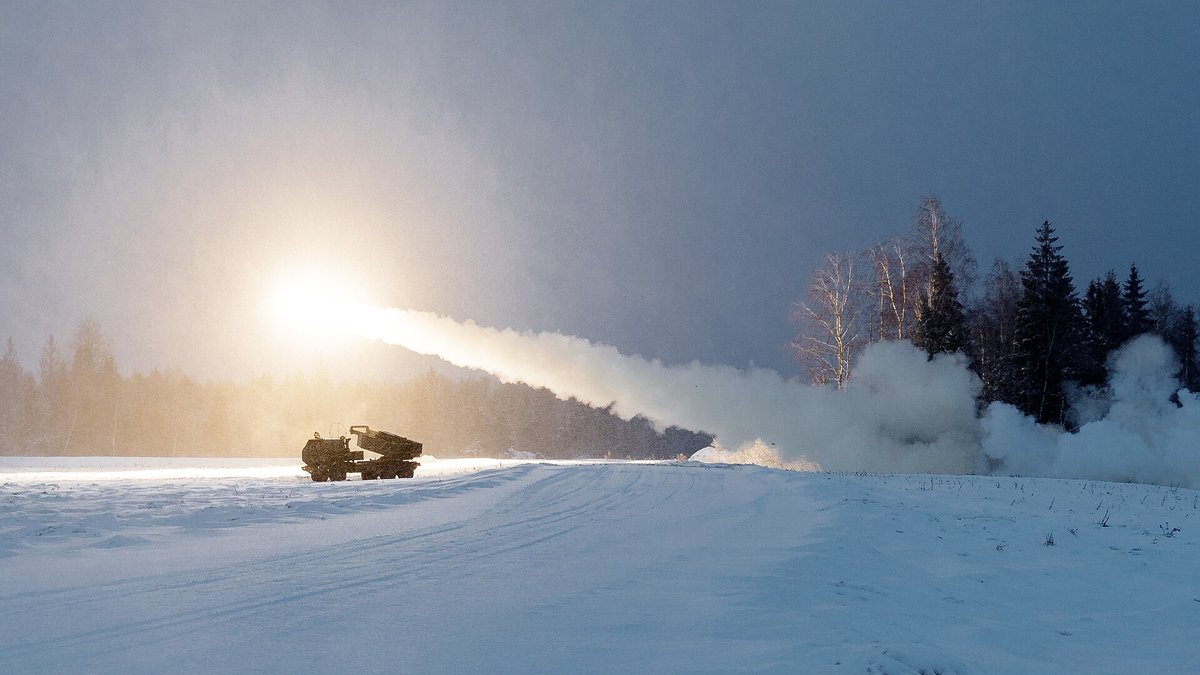
More interesting than the purchase itself, however, is what was agreed around it. Ammunition for the system is to be manufactured by Swedish factories and training and technical maintenance is to be taken over by Finland. The contract was signed in Uppsala by Swedish Defense Minister Pål Jonson and his Finnish counterpart Antti Häkkänen jointly. Expressen ↗
Key actors — tap for context
HIMARS
American wheeled rocket launcher that became famous for its deployment in Ukraine.
Why here: The system Sweden is buying - according to Expressen it hits targets at 80 to 300 kilometers depending on ammunition type, the planned PrSM missile is to go even further.

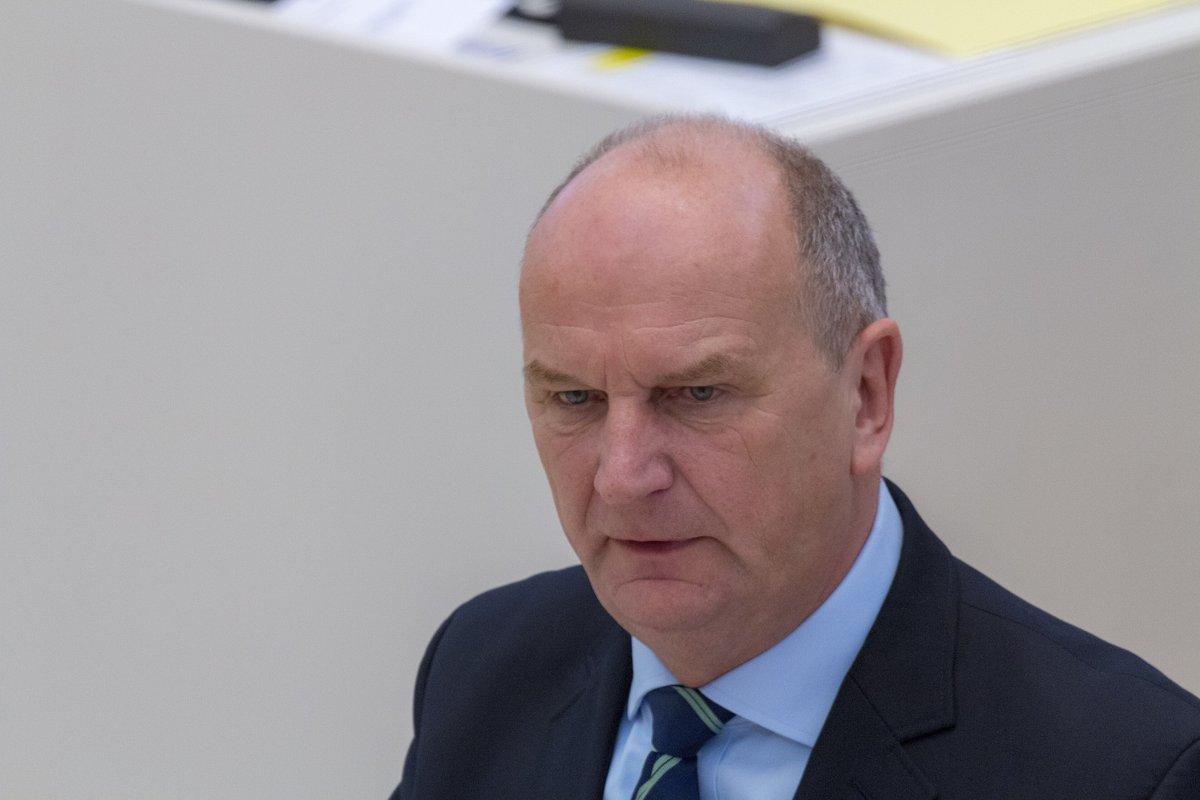
Antti Häkkänen
Finnish Defense Minister.
Why here: Admitted that Finland lobbied Sweden for a year to buy a system compatible with the Finnish one.
More info →
Pål Jonson
Swedish Defense Minister.
Why here: Signed the purchase and says it is a capability that has been lacking in the Swedish army so far.
More info →
Tampere
Third largest city in Finland.
Why here: Home to the first European service center for the fire control of rocket launchers.
More info →
Lockheed Martin
Largest American defense contractor, manufacturer of HIMARS and F-35.
Why here: Partner of Sweden in ammunition and Finland in service center.
More info →
Saab
Swedish defense and aerospace company.
Why here: Signed an agreement with Lockheed to manufacture the PrSM missile with a range of 500 kilometers in Sweden.
More info →Insta
Finnish technology company based in Tampere.
Why here: Third partner of the service center alongside the Finnish army and Lockheed.
CSG
Largest Czech defense holding.
Why here: Exports more than 95 percent of production, mostly to NATO countries.
More info →STV Group
Czech ammunition manufacturer.
Why here: Last year achieved record revenues and exports 90 percent of production.
Ammunition is a bigger problem than firing systems
The rocket launcher itself is not rare goods. Ammunition for it is rare, and there is a shortage of it in the world. That is exactly why on the same day an agreement was also signed between Swedish Saab and American Lockheed Martin to manufacture the precision PrSM missile with a range of five hundred kilometers directly in Sweden. Without this, Sweden would have firing systems but would wait in line for ammunition. SVT ↗That queue is real. According to Swedish reports, there is information that the United States is holding back deliveries of some HIMARS ammunition for its own needs. Buying an American system and relying on American warehouses is therefore a risk that Stockholm clearly did not want to take. Dagens Nyheter ↗
Finland lobbied the customer for a year
The most interesting part of the story, however, is not Swedish. Finnish Defense Minister Häkkänen said it openly to the newspaper Helsingin Sanomat on Monday, and the newspaper put it right in the headline: Finland, according to him, lobbied Sweden for a year to buy heavy rocket launchers compatible with the Finnish ones. He used a formulation worth remembering: "The equipment of the rear countries is used in NATO for the benefit of the front-line countries." Helsingin Sanomat ↗The reason is practical. Finland has American tracked rocket launchers MLRS that use the same ammunition as HIMARS, and also has units that have known how to handle rocket artillery for many years. Sweden has never had a similar system and must build up the knowledge from scratch. Finland offered it to them - and thus became an indispensable part of Swedish armament. SVT ↗
Häkkänen added to this for Finnish public television what Helsinki is aiming for in the broader picture. They want as many countries using American rocket launchers as possible to concentrate service precisely in Finland. "And now Sweden is the first to do it. It strengthens our defense industrial base and increases our technological expertise," he said. A more precise estimate of the economic benefit for Finland is not yet available. Yle ↗
The service center was paid for by fighter jets
This center, which is at issue here, did not come into being this week. The Finnish army, Finnish technology company Insta and Lockheed Martin agreed on it at the end of June 2026 and it is being built in Insta's premises in Tampere. It is the first European service center for the fire control system of rocket launchers M270A2 and HIMARS - that is, not for the entire system, but for its control unit. Lockheed Martin ↗And here is a detail that explains the entire procedure. Lockheed Martin designates the center as part of indirect industrial cooperation linked to Finland's purchase of F-35 fighter jets. Finland thus directed the industrial benefit from one major purchase into the infrastructure for a completely different weapon - and found its first customer for it in its neighbor. Defence Industry Europe ↗
Norway decided differently
Sweden chose between the American HIMARS and the South Korean K239 Chunmoo system. Norway chose the Korean one earlier this year. The Nordic trio thus does not have a unified solution, and that is exactly where the Finnish move is readable: compatibility is not a foregone conclusion that does not need to be pursued, but the result of concrete lobbying. Dagens Nyheter ↗Estonia noticed above all what follows from the agreement for the region - that Finland will be responsible for maintenance and repairs of the Swedish systems. Postimees ↗
Two models of how to turn armament into domestic industry
For a Slovak and Czech reader, there is something interesting in that comparative aspect, because the same thing is being done at home, just differently.Czechia is going the product route. The Defense Ministry concluded contracts with weapon manufacturers last year for 122 billion koruna and in eight months of this year for another roughly 33 billion, most with domestic companies. STV Group last year achieved record revenues and exports ninety percent of production, the largest holding CSG more than ninety-five percent, mostly to NATO countries. Most in demand are 155-millimeter grenades, but their deployment is limited by a shortage of suitable charges. ČT24 ↗
Slovakia so far is operating at one level lower and offers cooperation. In early September, it offered Bulgaria cooperation on ammunition technologies within the Visegrad Group. HN ↗
See also: Police thwarted a napalm attack on a Slovak drone factory. Three European gun factories burned five days before
The difference compared to Finland is in what is being sold. Czech companies sell a product, and when an ally changes suppliers, the contract is gone. Finland is trying to sell a position - a service center that is still the only one of its kind in Europe. No one has to go to it precisely, that is exactly what Häkkänen has declared as his goal, and Sweden is the first country that has decided to do so. That is why it was worth a year of lobbying for Helsinki.
Limits of this perspective
No one has calculated the economic benefit for Finland yet, Häkkänen himself says that a more precise estimate is not available. For now it is about agreements of intent and declarations, not finished contracts with volumes - this also applies to ammunition production in Sweden, where Saab and Lockheed so far have signed an agreement, not a contract.It is also true that "first in Europe" is a temporary advantage. Nothing prevents a similar center from emerging elsewhere, and Finland's head start is a matter of years, not decades.
And finally, the comparison with Czechia and Slovakia is a comparison of models, not an evaluation. Exporting ammunition at a time when there is a shortage of it in the world is, from a short-term perspective, more profitable than operating a service center.
Illustration photo: HIMARS during live fire during an exercise in Estonia. Photo U.S. Army, public domain.
What hotinfo is monitoring
- Saab and Lockheed Martin turned the PrSM letter of intent into a binding contract.
- The first HIMARS launchers arrived in Sweden on the announced schedule, in 2027.
- Another European country besides Sweden joined the Tampere service centre.
- Finland published a concrete estimate of the economic benefit of the cooperation.
- Slovakia's munitions cooperation offer to Bulgaria turned into a concrete contract.