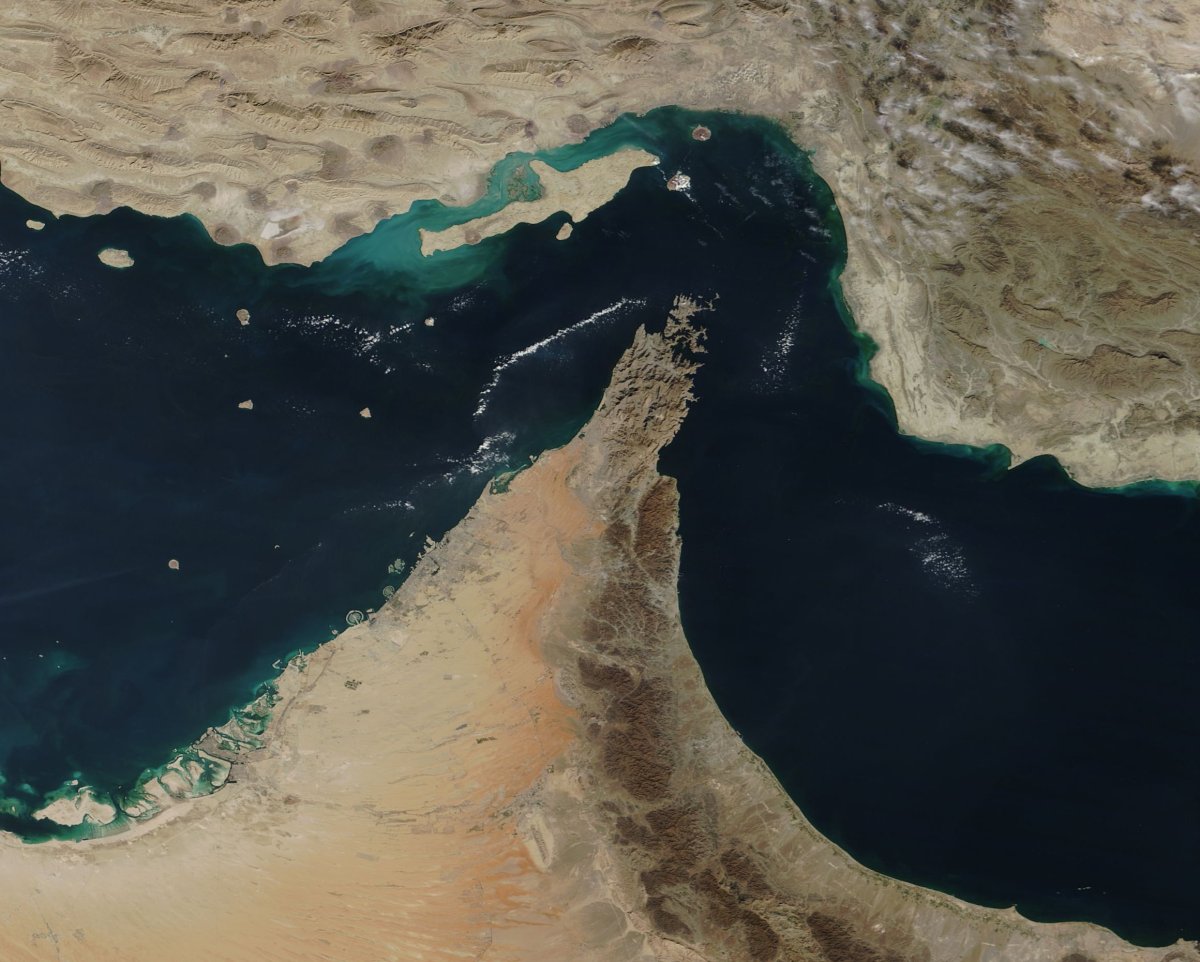








But while tanker captains in the queue beneath Hormuz wait for the oil crisis to be resolved, a different kind of conflict is opening up beneath the surface — quiet, without images of explosions. Meta and its partners have paused work on 2Africa Pearls, one of the world's most ambitious submarine cables. According to reports from Al Jazeera and an analysis by The Conversation, American data centers in the Persian Gulf have been hit by Iranian drone attacks. And according to Doug Madory, director of internet analysis at Kentik, the world has for the first time come close to a situation where both key sea routes for global internet cables — the Persian Gulf and the Red Sea — are simultaneously inaccessible to repair ships.
Hormuz ≠ just oil
Attention around Hormuz almost always goes to the tankers. What lies beneath them gets less. Submarine cables in the Persian Gulf serve Iran, Iraq, Kuwait, Bahrain, Qatar and the UAE. Together with the Red Sea, they form two of the most critical points of the global internet. "Closing both chokepoints simultaneously would be a globally disruptive event," said Madory, whom the Washington Post called "the man who can see the internet." "I don't know that it's ever happened." Rest of World ↗According to analysts, roughly a third of global data traffic passes through the region. Kentik data also show another symptom: internet traffic heading into Iran has fallen sharply since the end of February and remains significantly restricted. Stimson Center ↗
Meta pauses 2Africa Pearls
On March 12, 2026, the French company Alcatel Submarine Networks (ASN) — the contractor laying cables for the Meta Platforms consortium — declared force majeure. In an official statement, it said it could no longer safely operate in the Persian Gulf. The ship Ile de Batz, which was supposed to complete the 2Africa Pearls connection, docked in Saudi Arabia. Tom's Hardware ↗2Africa was originally meant to connect Africa to the global network. The Pearls extension was meant to expand it further through Oman, the UAE, Qatar, Bahrain, Kuwait, Iraq, Pakistan and India — turning the "gigantic African cable" into a multi-continental Africa-Europe-Asia route. A large part of the cable is already on the seabed, but the onshore landing stations needed to activate it are still missing. Capacity Media ↗
Reported attacks on data centers
The most sensitive moment came on March 1, 2026. According to reports carried by Al Jazeera and analyzed further by the academic outlet The Conversation, two Amazon Web Services (AWS) data centers in the UAE were reportedly hit directly by Iranian Shahed-type drones, and a third in Bahrain was damaged. The reports describe structural damage, power outages, and the activation of fire suppression systems. The impact reportedly affected EC2, S3, DynamoDB, Lambda and RDS services — the backbone of the cloud infrastructure that runs banking applications, the ride-hailing service Careem, and corporate software in the region. The Conversation ↗The IRGC — Iran's Revolutionary Guard Corps — according to the same sources, claimed responsibility and openly stated its reasoning: AWS was allegedly hosting AI systems used by the US military for intelligence analysis and simulations. According to Iranian sources, these reportedly included Anthropic's Claude model. According to The Conversation's analysis, this was one of the first documented attacks on the physical infrastructure of a major American hyperscaler. Al Jazeera ↗
On March 31, the IRGC threatened to continue targeting American companies in the fields of information, AI and advanced technologies. This was a threat, not a confirmed attack on the submarine cables themselves — although according to analysts at the Stimson Center, carrying it out would have a global impact. Defense News ↗
A parallel with the Red Sea
The exact same scenario has already been playing out in the Red Sea for years. Houthi attacks there have, since 2024, practically halted new submarine cable projects, and repair ships cannot operate without risk. Now that the same has begun to apply in Hormuz, the world has for the first time reached a situation where both major sea routes for data infrastructure are simultaneously inaccessible for repairs. According to analysts, some existing cables suffered damage as far back as late 2025, but repairs still cannot be carried out.Saudi Arabia, Qatar and the UAE are therefore quietly funding alternative overland routes through Syria, Iraq and East Africa — competing projects meant to ensure that if the submarine network is severed, data can still travel by land. Rest of World ↗